Categories
Health

5 Questions you should ask about your medications…

Medication errors can happen for many different reasons, but you can work along with your health care providers to prevent these errors, both as a patient and as a person who helps a friend or relative with their medications. An important way to prevent errors is to have all the right information…

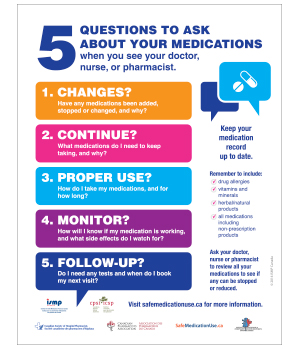
With that in mind, the Institute for Safe Medication Practices (ISMP) has developed a list of 5 questions you should ask whenever you are:

  • Being discharged from hospital

  • Having an appointment with your doctor or specialist

  • Talking to your pharmacist or

  • Having a visit with a home care nurse

These times are referred to as “transitions of care” and are the most likely times that your medications might be changed and mistakes could happen. Asking questions will help ensure you understand how your medications are supposed to be used. These occasions also give you an opportunity to learn more about your medications, such as what each does, how it is to be used, how long it should be taken, and what side effects you should watch for.

Here are the recommended questions you should ask:

  1. Changes? – Have any medications been added, stopped or changed and Why?

  2. Continue? – What medications do I need to keep taking and Why?

  3. Proper use? – How do I take my medications, and for how long?

  4. Monitor? – How will I know if my medication is working, and what side effects to I watch for?

  5. Follow-Up? – Do I need any tests, and when do I book my next visit?

To make this easier, ISMP has organized these questions onto a page you can download and fill in on your computer or tablet, or just print off and take to your doctor, pharmacist or nurse. You can download it here.

Be aware that most pharmacists can book an appointment with you to review your medications in detail. For some people, this may be a benefit of your prescription medication insurance coverage. But even if it is not covered, it can be a good investment in your health if you take several medications or have a complicated medical therapy. If you specifically ask the pharmacist to look for medications that can be stopped or “deprescribed”, a review may mean you have lower medication expenses and a simpler medication program in the future.

It is also important to keep an up-to-date medication record. You can find a free app for your computer or phone (Apple, Android or Blackberry) by clicking here or googling “my med rec”. Be sure to include a list of drug allergies, any vitamins or minerals, herbal or natural products, and any non-prescription products in your medication record. This list can be especially helpful when being admitted to hospital or when trying to determine if any medications can be discontinued.

More medication means greater chances for drug interactions. While drugs can be life saving, drug interactions and unwanted side effects can harm your health. Sometimes a drug is added solely to counter a side effect of another drug you are taking, when the problem could have been solved by changing the original medication.

So, learn as much as you can about your medications and how to benefit most from what you are taking. Communicate clearly with your doctor, pharmacist and nurse practitioner that you want to be taking the least number of medications possible for the shortest time necessary to keep you healthy. And, lastly, learn what lifestyle or diet changes can be tried to improve your health. Work hard to make these changes so you can minimize the medication you need to control chronic diseases like diabetes, heart disease and arthritis.

The CEO of the Canadian Patient Safety Institute (CPSI), Chris Power, advises:

“Be as informed as you can be and go into that relationship with your doctor, your nurse or your pharmacist or whomever is providing care, knowing that you’re a partner and you have a right and a responsibility to ask questions and to understand what’s happening with your health care.”

Categories
Health

Testosterone – Women need it too!

Testosterone has been described as the hormone of desire… Although it’s in the androgen hormone class, considered to be “male” hormone, both men and women produce testosterone. It’s the difference in amounts produced and the balance between estrogen and testosterone that determine male or female body characteristics.

Interestingly, many more articles have been written about overproduction of testosterone in women, as can occur in polycystic ovary syndrome, for example. Underproduction can also be a problem for women, but doctors rarely test for this.

With low testosterone, women can feel fatigued and notice less interest, not only in sex, but in doing things they normally like to do. The term “lack of a sense of wellbeing” has been used to describe how women with low testosterone can feel.

Physically, they may notice decreased muscle size and strength, and reduced hair growth on the body, particularly underarm, pubic and leg hair. These physical changes often carry more weight when speaking with your healthcare provider about the potential for this type of hormone imbalance.

Interestingly, taking hormones by mouth can lead to low testosterone effect. The liver filters virtually everything you swallow as soon as it is absorbed from your digestive system. This is referred to as the “first pass effect”, where the drug is changed or partially removed from the blood stream before it has a chance to reach the rest of the body. This is one reason that transdermal drugs (or drugs administered through the skin) are generally used in lower doses. With the transdermal route, the drug reaches the body before the liver has a chance to metabolize it. Hormone preparations are generally 1/10th the dose when given through the skin, as compared to dosing by mouth.

However, with oral hormones there is another known effect… In response to swallowed hormones, the liver produces a special protein, called sex hormone binding globulin (SHBG) that binds to hormones making them unavailable to act in the body and, essentially, inactive.

When estrogen is swallowed, such as with hormone replacement or birth control tablets, the liver is stimulated to produce SHBG, presumably a mechanism developed to protect us from accidentally ingested hormones in our food.

However, SHBG binds testosterone 10 times more strongly than estrogen. This means that taking estrogen by mouth will result in increased SHBG that will scoop up much of the testosterone your body is producing. Testosterone is still being produced but you may experience the symptoms of low testosterone. Regular blood tests for total testosterone would show a normal amount, but a test for “free testosterone” (testosterone not bound to proteins) would show the effective deficiency.

So, what can be done to correct testosterone deficiency? I always recommend treating the cause if one is identified so, for women with a secondary deficiency caused by taking estrogen by mouth, a simple solution is to change the estrogen to a patch, cream or gel formulation, eliminating the first pass effect on the liver and reducing production of SHBG.

If this is not the cause, and total serum testosterone is found to be low, testosterone replacement can be considered. Swallowed testosterone is known to be hard on the liver, with increased liver cancer reported with some oral forms. As well, available tablets and capsules currently on the market are dosed for men and contain far more hormone than women need. I’ve seen prescriptions for women to take one man-sized 40mg capsule once or twice a week, but even this is more than women would produce, and would result in swings in testosterone blood levels that would be far too high on the days immediately after taking a dose.

Women produce less than 1mg of testosterone daily. It is easy to understand that a 40mg capsule would come with the recommendation to stop taking it if she developed facial hair growth or acne. Even the cream formulas that are available come in 25 and 50mg pouches or pumps with no accurate way to measure a lower amount.

However, testosterone cream can be accurately compounded by a pharmacist and loaded into needle-free syringes for accurate measurement. I always prepared the cream as 1% testosterone (10mg/ml) making it easy to calculate the desired dose. A 1ml syringe would contain 10mg – generally enough for 10 days of testosterone replacement, although some women have reported results with doses as low as 0.15mg!

Because hormones are stored away in fatty tissues in the body, I generally recommended using 2mg daily for the first week or two (since some of this would be stored away) then reducing to 1mg or less daily to avoid any chance of overdosing. One of the first signs of too much testosterone is often an outbreak of acne. I encourage women to identify the lowest dose that is effective for them – the “normal” amount can vary from person to person, and we need to remember that we are adding to the amount being produced, which can also vary from person to person.

Men can also become deficient in testosterone. Some refer to this as “andropause”… others have jokingly called it “grumpy old man syndrome” since deficiency most commonly occurs later in life, the man may be stooped and thin due to decreased muscle and possibly the onset of osteoporosis, and his mood may have become less than cheery.

Testosterone replacement for men is readily available in capsules, injections and creams and, although somewhat less convenient, the creams or injections would be preferred to reduce the effect of hormone on the liver. However, as injections are generally given every 2 to 4 weeks, they have the disadvantage of producing a higher blood level of hormone immediately after the injection and a lower level before the next injection is scheduled. A simple blood test would confirm that testosterone is needed and that the dosing is correct.

So, if any of the symptoms of low testosterone sound familiar, talk to your doctor about it. If you are interested in more information, I would recommend “The Hormone of Desire” by Dr. Susan Rako as an excellent source of information on testosterone deficiency in women.

Categories
Health

How to handle food in a power outage

Just days after arriving in Florida, hurricane Matthew began its advance up the coast. A category-4 hurricane was a new experience for my husband and me…what should we do? Stay or go? This was a frequent topic of conversation with neighbours, even those we didn’t know…

We decided to take the safe route and flee, but what to do with a fridge full of food when we returned? I learned from others how to reduce health risks from spoiled food after you get back…unfortunately, most of it only after the storm, although ideally some preparation should have been done before leaving.

Many of these tips would apply to any power outage situation, so I thought I’d share these with you…

The best approach is to start preparing at the first warning of the approach of a storm. Turn down the settings of both fridge and freezer so you are starting with a lower temperature – a cooler refrigerator and deeper freeze will last longer when the power goes out.

Frozen jugs or ziplock bags of clean water will work as ice packs in the fridge and freezer, maintaining the coolness and, at the same time, eliminating air space. We know that heat rises and cold air falls, so filling up the dead space will reduce the air exchange that occurs each time the door is opened.

These frozen bottles and bags will also provide clean drinking water later if needed. Often tap water is deemed unsafe for several days after power is restored while the system is flushed, especially in warmer climates… This is not such a worry in Canada, where most power outages occur in the winter, but for those of us in rural areas with our own water supply, no power means no pump and no water!

Next, you want to pack your foods closely together to mimic how they would be packed in a cooler, rather than being nicely spread out on the shelves. Just as a block of ice takes longer to melt than smaller chunks, a block of tightly packed foods will stay frozen or cool longer, especially if surrounded tightly by ice packs, creating a “cooler” within your fridge.

It’s relatively easy to determine how long the power was out, especially if you are able to stay at home, but it can be more difficult to know how long the food in your refrigerator stayed cold or frozen.

The rule of thumb you will find on government websites is: food will stay cold in an unopened refrigerator without power for at least 4 hours, frozen food in a full freezer for up to 48 hours and in a half-filled freezer for about 24 hours. That being said, a lot depends on the quality of the refrigerator and how the food is packed into it.

The ideal way to monitor the fridge temperature is with a probe thermometer similar to those often used in cooking these days. An ordinary fridge thermometer inside the fridge will tell you the temperature but you need to open the fridge to see it, allowing cold air to escape each time you do this…definitely not recommended if the power is out! Checking the temperature after the power is back is helpful if it’s still below the recommended 5C (40F), but if the temperature is higher you have no way to know how long it’s been out of the safe zone.

A “min/max” thermometer, used for storage of critical items such as vaccines, has a probe (sometimes wireless) that is placed inside the fridge, while the thermometer itself remains outside where it can be read without opening the fridge door. It records the minimum and maximum temperatures and the times that these occurred. It can also be set with the desired temperature range sounding an alarm and noting the time that the temperature left this range…valuable information if you have to leave home during the storm. Like many electronics these days, prices of these units are dropping and can be found for under $100 (I found one for $35CDN for my vaccine storage!). It might be worth the investment if you lose power often and end up discarding food because you don’t know if it is safe.

A simple tip, however, which I learned from a hurricane-savvy friend, is to freeze a glass of water and place a coin on top. If the water thaws then refreezes before you return, the coin will no longer be sitting on top of the ice. If it is halfway down, your ice was partially thawed then refrozen; if it is at the bottom, then it is likely that your food, like the ice in the glass, completely thawed before the power came back on. Nice trick!

Some foods are more likely to spoil than others. These include meats, dairy, eggs and leftovers. It is suggested to remove these from the refrigerator and store them in a cooler packed with ice. This system is easier to monitor and the ice can be replaced as it melts, extending the life of the food. If you’re in a cold climate, it is recommended to freeze water outdoors to restock your cooler, rather than actually putting the cooler outside – sunshine can warm the food even if it is below freezing outside, and animals can also be attracted to the food.

Be aware that juices from meat can contaminate other foods – store separately or in leak-proof packaging. As a general rule, store foods that will not be cooked before eating above meats and fish in the refrigerator so juices cannot drip onto them, potentially causing contamination.

Government sites suggest that food poisoning occurs in 1 person in 8 each year… Never taste food to determine if it is spoiled. When in doubt, throw it out!

If you are interested in more detail, including a list of stability of various foods, check out this site: http://www.fsis.usda.gov

We survived the experience with no damage to our condo and only minor damage to our boat. But it is so sad to see many others who did not fare so well, and it was stressful just worrying about what might happen. I think I’d take a good old Canadian snowstorm over a hurricane any time!

Categories
Book review Health

A Healthy Diet Should Be Easy and Fun…

What makes a diet healthy? Does it have to be complicated? Do we really need to learn about saturated fat, omega-3’s, carbohydrates, and antioxidants? Maybe it’s time to simplify what and how we eat…

A recent news report described how the scientists, who first claimed that saturated fat was bad for us years ago, had received payments from the sugar industry. Newer reports are saying that it is really sugar, and not fat, we should avoid to prevent chronic conditions like diabetes and heart disease. Other reports say that refined white flour acts very similar to sugar once it is absorbed into the body.

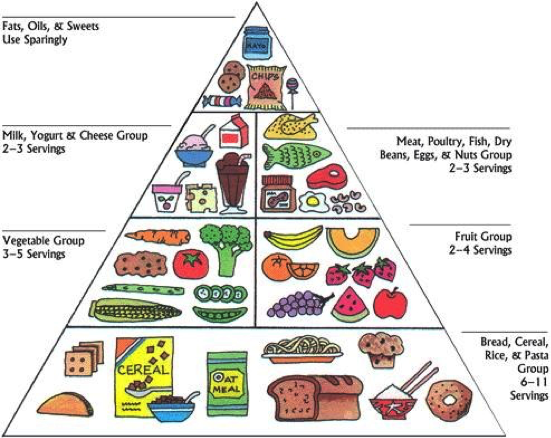
Even the basic Food Pyramid – remember this? Its emphasis on grains and drastically reduced fat intake is being questioned after so many years of use. Current thought is that it is too vague, with no indication of serving sizes, and places too much emphasis on carbohydrates.

It seems that eating healthy has become a complicated matter, with conflicting recommendations. Scientists seem to be searching for which nutrient is causing increased rates of chronic disease in North America. The fact that they seem to change their minds about what is good or bad for us every few years suggests that we need to look at the bigger picture rather than single nutrients in food.

Nutritional science is a relatively new field, in existence for about 200 years. Some have compared this “science” to the surgery in the 1600s… not yet very advanced! Well-meaning scientists’ attempts to identify individual nutrients that are causing the problems have led to a great deal of confusion for consumers. The reason behind all this research is that our Western diet has been linked to obesity, type-2 diabetes, about 80% of cardiovascular disease, and over one third of all cancers. The good news is that changing from a Western diet to a healthier one results in rapid improvements in health.

Many very different traditional diets exist that are not associated with chronic diseases. These include the high fat diet of the French, the high animal protein diet of the Masai tribes in Africa, and the high carbohydrate diet of Central American Indians. None of these traditional diets have been linked to the chronic diseases that we see associated with the typical Western diet, although they are very different from each other. Our Western diet is unique in containing large amounts of processed food and meat, lots of added fat and sugar, and lots of refined grains, but very little vegetables fruit and whole-grains.

So, after so much talk about what to avoid, what should we eat?

I think I’ve found a good answer in a little book I stumbled across called “Food Rules, An Eaters Manual” by Michael Pollan. He proposes 3 simple rules that make a lot of sense:

  1. Eat food

  2. Mostly plants

  3. Not too much

Sounds easy, right? I certainly thought so. Let me explain the rules a little and you will see why they make sense to me…

1. Eat food

This means, eat real food, with ingredients that you would find in your Mom’s cupboard, food that has not been highly processed. Food processing is designed to make food last longer on store shelves, not to make it taste better or to be healthier for us. The amount of processing of food is a major difference between the harmful Western diet and healthier traditional diets.

2. Mostly plants

Vegetarians generally tend to be healthier than those who eat meat. It is suggested, however, that using meat as a flavoring or in small amounts can result in a diet that is just as healthy as a vegetarian one. Whether it is some component of meat or the fact that larger amounts leave less room on the plate for vegetables has not been determined, but simply reducing the amount of meat in your diet and eating more plant foods is a simple rule to follow to improve your diet.

3. Not too much

How much you eat and how you eat it may be as important as what you eat. When you are distracted while eating, you tend to eat more so eating in front of the TV or while driving or working means you will likely eat more. When you eat quickly, you also often eat more, since it takes about 20 minutes for your brain to register that you are full. You should eat only until no longer hungry, rather than eating until you are full or have finished everything on your plate (in spite of what your mother may have told you!). Eating more slowly will allow you to more readily detect when you are no longer hungry before you have actually overeaten.

Here are some other suggestions for healthy eating:

  • Shop mostly on the outer areas of the grocery store; avoid the centre aisles that are mostly processed packaged foods. Buy at a farmers’ market as often as you can – they sell locally grown, whole foods that don’t need to be preserved to reach their market. If you worry about food spoiling, freezing is often the best way to preserve food without losing the nutritional value.

  • Avoid “lite”, “low-fat” and “nonfat” foods – generally these tend to be more highly processed and often sugar is added to boost flavour that is lost when fat is removed.

  • Eat only food that will eventually rot – if bacteria and fungi don’t go for the food, we probably shouldn’t either!

  • An old Chinese proverb says “Eating what stands on 1 leg (plants, mushrooms) is better than eating what stands on 2 legs (fowl), which is better than eating what stands on 4 legs (cows, pigs, etc).” Of course, this ignores healthy legless fish, but it’s an easy rule to remember!

  • Eat your colours – a variety of colours indicates a variety of nutrients and it helps your meal look more appetizing too!

  • Eat food that is grown in healthy soil (this often means organic) or is fed healthy food (usually this means pasture raised rather than grain fed). Just like us, plants and animals need healthy food to be healthy themselves! More nutritious food generally has better flavour and is more satisfying…

  • Alcohol of any kind has health benefits. It is best taken in moderate amounts with food and on a daily basis rather than binge drinking. How alcohol improves health is not well understood but it is part of several healthy traditional diets, notably the French diet.

  • “The whiter the bread, the sooner you’ll be dead” is an old saying that has merit…white flour is not much different from sugar once it’s ingested. The substances that are removed from whole grains to make them white are the most nutritious part of the grain – it just makes sense to eat the whole grain.

  • Eat when you are hungry, not when bored, as a reward, or for entertainment. Be aware of why you are eating.

  • Use a smaller plate and smaller serving containers. We eat more when a larger portion is served, and we serve ourselves more when using a larger plate or serving from a larger container.

  • Make eating an enjoyable experience – share meals with others whenever possible, take your time and enjoy the taste of the food and the company you are sharing it with. Treat the preparation and eating of meals as a family or social ritual to be enjoyed, to elevate it from a biological necessity to the enjoyable part of life that food should be!

Lastly, what matters is what we do routinely – breaking the rules for special occasions can be good for our happiness and probably also for our health. So all we really need to do to be healthy, is to keep “Everything in moderation” along with the basic 3 rules: “eat food, mostly plants, and not too much”!

To learn more, read Michael Pollan’s short, well-researched book, Food Rules: An Eater’s Manual or his more detailed In Defense of Food: An Ester’s Manifesto.