Categories
Health

Considering injections for arthritis? Read this!

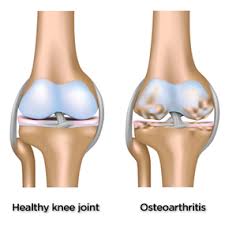
Injections of steroids into a joint to reduce pain and inflammation from arthritis is a relatively common practice. But this week, I read two studies that questioned this treatment…

The first study compared knee injections of the steroid, triamcinolone, with saline and the injections were given every 12 weeks for 2 years. Although both groups experienced some pain relief, the difference wasn’t significant. And, the group that received triamcinolone had significantly greater cartilage volume loss than those who were injected with saline. Cartilage forms the natural cushioning layer inside our joints.

This study was published in the Journal of the American Medical Association on May 16, 2017.

The second study was reported in Univadis, a health news service I read every week, and the study was posted on Pubmed, a service of the National Health Institutes in USA. This study compared injections of sodium bicarbonate (baking soda) plus calcium gluconate, with injections of the steroid, methylprednisolone, given into the knee joint monthly for 3 months.

Although both groups showed benefit, the sodium bicarbonate/calcium group showed significantly greater improvement than the group who received the steroid injection. These results build on earlier research showing that bicarbonate/calcium injections were helpful for inflammatory joint disease, published in 2015 in BMC Musculoskeletal Disorders.

Taken together, these studies suggest that steroid injections should no longer be used to treat osteoarthritis, at least in the knee joint. Sodium bicarbonate and calcium gluconate are readily available in injectable form, are relatively inexpensive, and the second study suggests they may offer a beneficial substitute.

Sodium bicarbonate neutralizes acid, producing a more alkaline environment, and calcium acts as a buffer, also reducing acidity. So, in my mind, this begs the question: can osteoarthritis patients benefit from adjusting their diets to provide a more alkaline system? And would this help to reduce joint inflammation? Lots of health sites promote this as fact, but hard science is lacking, perhaps due to lack of funding to run proper studies.

However, the alkaline diet is a healthy one, consisting of whole fruits and vegetables, green juices and salads, beans and nuts. It is a plant-based diet that avoids added sugars, processed foods, excess meat and animal protein, and alcohol, caffeine and artificial sweeteners. Might be worth a try along with your doctor-recommended treatment – it seems highly unlikely a diet such is this could do any harm.

In fact, a diet similar to this is recommended for avoiding other chronic diseases like heart disease and diabetes so, whether or not you have arthritis, I’d recommend shifting your diet to contain more plant-based foods and less added sugar, processed food and animal protein. This brings me back to Michael Pollan’s recommendations I wrote about in an earlier blog:

  • Eat real food

  • Mostly plants, and

  • Not too much!

Simple rules to live by, and easy to follow!

Categories
Book review

Memorizing numbers can be easy

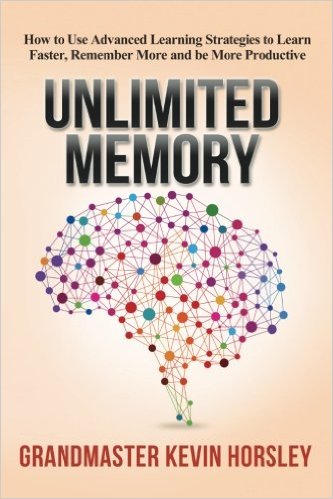
This week I want to tell you about a nifty system to remember numbers that I read about in Kevin Horsley’s book, Unlimited Memory. Here is how it works:

Each number is represented by a sound. The letters A, E, I, O, U, W, H and Y are filler letters that “don’t count” and are used to make words from the sounds that represent the sequence of digits you want to remember.

Learn the sounds that stand for each number, then create words using filler letters to form sentences or phrases you can easily remember and convert back into numbers.

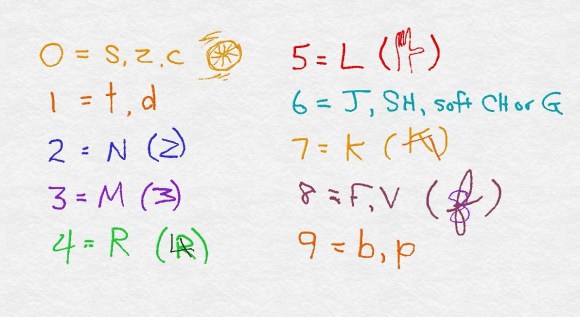
Here is the list of sounds associated with each number:

0 = s, z, or soft c (think of a hissing wheel)

1 = T or d (think of the upright line in these letters)

2 = N (picture the 2 as a sideways N)

3 = M (picture the 3 as sideways M)

4 = R (a bit of a stretch, but superimpose a 4 on top of the R…)

5 = L (picture your hand with fingers together and thumb extended, forming an L …like the loser thing but with all 5 fingers)

6 = J, SH, soft CH, soft G (6 could be imagined as looking like a writing J, and the other sounds are similar)

7 = K, hard C

8 = F, V (associate the digit 8 with a hand-written curvy f)

9 = b, p (can you see the 9’s there?)

This visual version might help you remember more easily…

So, here is an example. An old phone number I once had is 506 – 458 – 0201. Using the code above, and a little imagination, I came up with “lazy Jerry – life snoozed” (no one says it has to make sense -just make it something you can remember!). With practice, you’ll be able to quickly code and decode lists of numbers you need to remember.

In summary, there are several things you can do to improve your memory.

  • Learn and use memory systems to attach new information to old memories/knowledge

  • Use senses, exaggeration, and action when using memory systems to make new knowledge more memorable

  • Eliminate blocks to improving memory: multitasking, stress, being unwilling to try

  • Review information regularly to form solid long-term memories

  • Practice techniques regularly to improve

Reference: Unlimited Memory by Kevin Horsley – an entertaining read!

If you’re interested in reading this book, it is available at Amazon.com or Amazon.ca

Categories
Book review

More ways to remember…

There are many ways to improve your memory. The Association technique… connecting new information to things you already know, like parts of your body or items in your home, as discussed last week, is only one method. I hope you had fun practicing this technique!

PEGLISTS

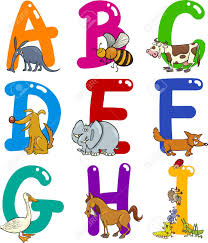
Creating “peglists” is another way it to store information you want to remember later. In this memory technique you use words that rhyme with a known list, such as numbers or the alphabet. For example, 1 – bun or fun, 2 – shoe or blue, 3 – tree or bee, etc. using rhyming words that will remind you of what you want to remember. You can also create a story that connects the items in a list you want to remember with the rhyming words. For example, 1 is fun, the fun you are going to have at the party tomorrow (and you want to bring a gift). With letters you have even more flexibility – you can use a rhyming word or a word that starts with the letter, alphabetical order or letters that form a word that is easy to remember.

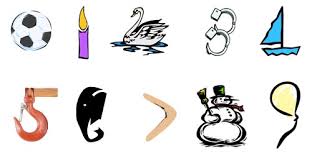
You can also use the shapes of letters or numbers to represent items that you can then associate with creative actions that will trigger your memory. Here’s an example: 1 is like a candle; imagine it’s on a birthday cake; picture yourself lighting it, to remind you to get a cake mix. Number 2 is shaped like a swan; swans like swimming in water, so this can remind you to buy bottled water. The digit 3 looks like handcuffs and could remind you to get a key made, or sideways, number 3 looks like two bowls and could remind you to get soup mix or salad. You get the idea… Use different images to remind you of what you need to remember and add action if you can to make the memory more solid.

Although these techniques may seem like more work at the beginning, with practice they will become second nature – an easy way to make a list of items stick in your mind!

NAMES

Remembering names has never been my strong suit. Repeating names often, even if only in your mind, or writing them down can help. Try creating a file of names and “clues” to who this person is on your phone or computer to help your memory. A friend who is particularly good at remembering names, told me she often does this…it works!

Another memory technique for faces and names, is to link a feature with an image that reminds you of their name. For example, a woman named Angela who has beautiful blonde or white hair, might remind you of an angel (or angel hair pasta…). When I was in university, and wore blue jeans constantly, my friends called me Jeans – perhaps they originally did this to help remember my name, Jeannie!

You can use any association that pops into your mind – the sillier, the better – but, if it’s not complimentary to the person, don’t let on how you remembered their name so easily!

I think that’s enough to practice for another week. As Mark Spitz, winner of seven gold medals in the 1972 Olympics said, “We all love to win but how many people love to train?”. Most don’t. But training will always help you improve. Working at learning memory systems and making them habits will enable you to have a better memory.

One more memory technique to come next week…be sure to sign up on my email list so you’ll get a direct link to part 3!

Reference: Unlimited Memory by Kevin Horsley

Categories
Book review

Unlimited Memory…

You have two choices: accept the memory you were born with and believe that it cannot be changed, or decide that remembering is like a habit and can be improved with practice and training… What you believe is your choice!

Unlimited Memory”, by Kevin Horsley, documents his journey from having difficulties in school to achieving success in memory contests… by learning and practicing established memory techniques. He explains in detail the tested memory techniques he uses regularly to be able to quickly memorize lists, facts, people’s names… or anything else he wants to learn. This is a review of his book… I hope you can use these techniques to improve your memory too!

Horsley describes the “4 C’s” of improving memory:

  • Concentrate

  • Create imagery

  • Connect new information to something you already know, and

  • Continuously use memory improvement techniques so they become a habit

CONCENTRATE

You are much less likely to remember something (like where you put your keys, for example) if you do it absent-mindedly. Focussing on what you are doing will help you remember later.

Worry and conflict can occupy your mind and distract you, reducing your ability to concentrate on the present moment. Deal with your conflicts and do something positive to lessen your worries, and you may find your memory will improve.

CREATE IMAGERY

Your mind likes and remembers images and action more than words and numbers. Creating “stories” using facts you want to remember helps your brain form more solid memories that are more easily retrieved later. The more outrageous and the more action in the story, the more easily you will recall it later!

CONNECT

Associating new information with already-formed memories and lists you can easily recall, helps your brain create a storage place for the new information. Remembering the associated old memory, will help you to recall the new information you have mentally attached to it. Many memory techniques use associations like this, often linking with something as simple as numbers, the alphabet or rooms in your house.

CONTINUOUSLY PRACTICE

Like anything you want to improve, using memory techniques will become easier and more automatic if you practice them every day. Start by doing an intentional exercise each day, using one of the techniques I will describe below. Challenge yourself, for example, to memorize a list of groceries you need to pick up or errands you need to do. Bring a backup list if you think you need it, but look for real life memory exercises you can do each day.

So, here is your first memory technique:

  • Associate items you want to remember with things in a room. Let’s use items on your grocery list and make up a story about things in your kitchen:

    • Here is your list: milk, fruit, coffee, bread, flour, dish detergent, garbage bags

    • Now, create a silly story…maybe about monkeys having fun in your kitchen (did you see the movie, Jumanji?)

      • Wild monkeys invade your kitchen, open the fridge and spill milk on the floor, and throw fruit around the room from the bowl you keep next to the fridge. One is up on the counter eating a sandwich and he’s white from flour that’s been spilled on him. The coffee maker is next on the counter, and it’s been knocked over into the sink. You’ll need dish detergent and garbage bags to clean up the mess!

      • Did I cover everything on the list? When you enter the kitchen, you pass the fridge, a bowl you use for fruit, a stretch of counter, the coffee maker, then the sink, and the garbage is kept under the sink: milk, fruit, bread, flour, coffee, dish detergent, garbage bags.

  • The sillier the story and the more action it has, the easier it will be to remember – use your imagination. Associating details of the story with items in a room will help you to remember each detail. If you run out of items in one room, just move on to the next one!

Of course, no one needs to know your silly story. Just let them be impressed by how good your memory has become!

Today I wanted to remember several things to pick up at home while checking up on the work being done on our house – we were hit by lightening last Friday, so I’m having quite a week… I used my body, top to bottom, to map out my simple list: ears, eyes, body, feet, and hands to remember that I wanted to get my headset, contact lens solution, bathing suit (there’s a pool at the hotel we’re staying in!), more socks and a pair of light gloves in case I decide to do some walking in our new temporary neighbourhood! I also made a point to remember that I needed 5 things in total. It wasn’t a long list, but I’m just learning to use these techniques…trying to “continuously practice”! This is the same technique as above, but using parts of the body instead of items in a room.

Next week, I’ll share more techniques you can use to help your memory along. Meanwhile, have fun with this approach – be sure to practice every day! Click “JOIN MY MAILING LIST” if would like the link for part 2 of Unlimited Memory sent directly to your email inbox!

My American friends can order the ebook through Amazon.com HERE

and the paperback can be ordered in Canada HERE.

Note: any purchases made using the supplied links will result in me receiving a small payment, while you will pay the same price! Trying to offset some of the costs of creating this blog, Thanks!!