Categories
Health

On family dinners and living longer…

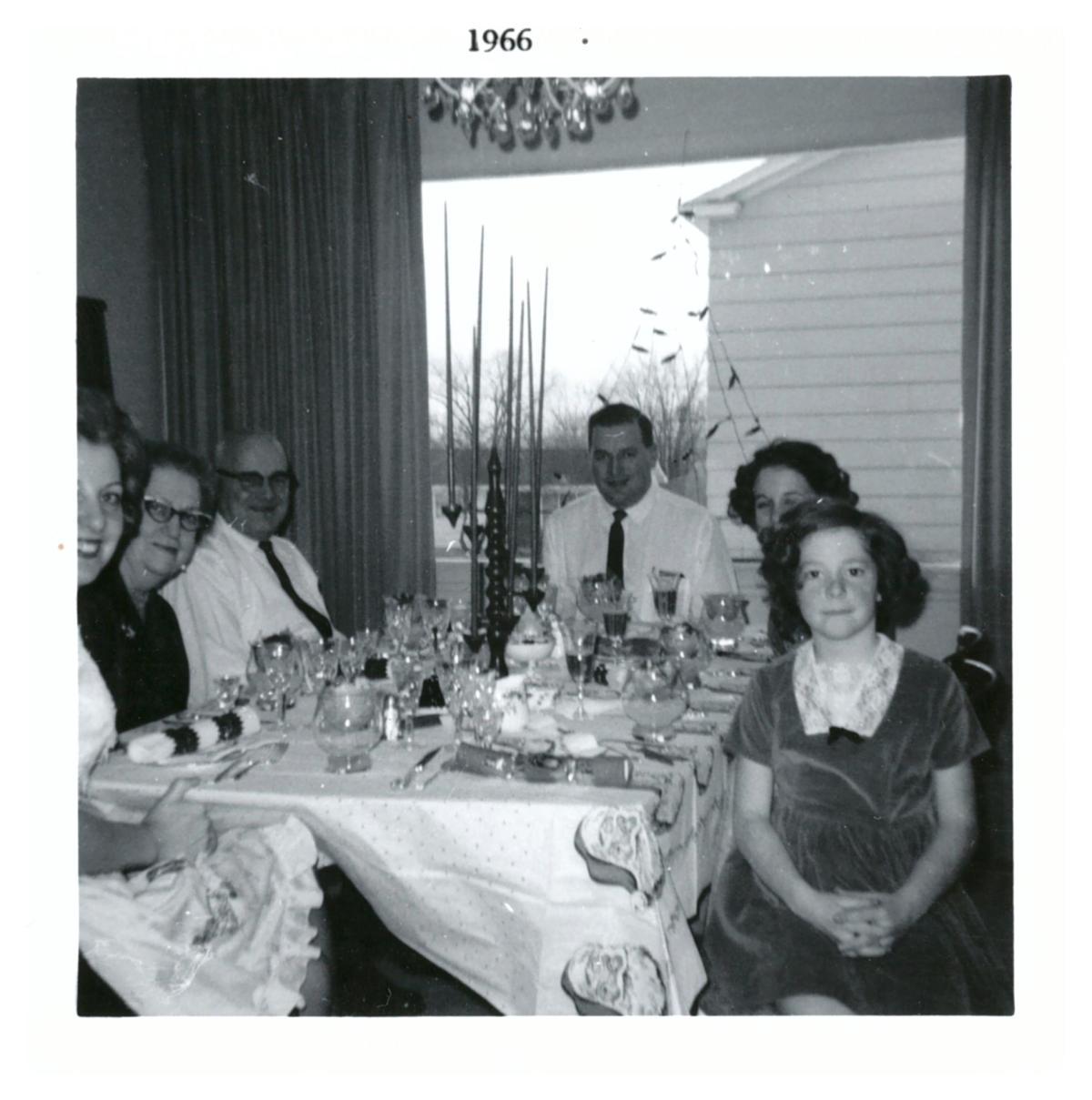
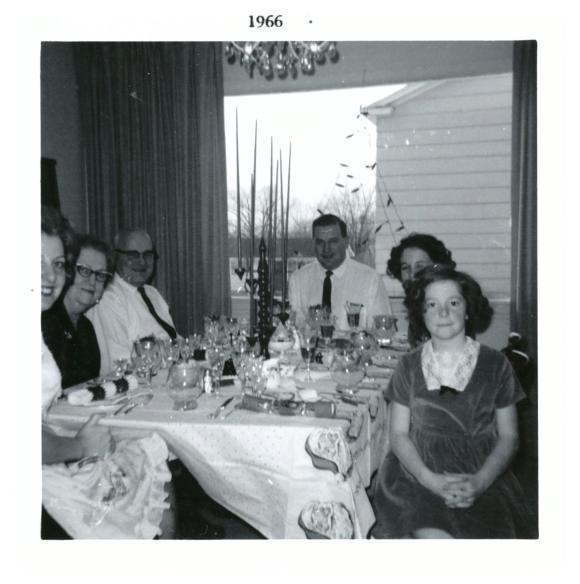
I remember Sunday dinners that seemed to go on for hours when I was growing up… My grandparents would join us, we’d have dinner, then coffee for the adults, and just hang around the table talking for ages. My dad loved to get a good discussion going, often about current news or sometimes about mischief he and his brother did as kids (that was our favourite topic!). This photo was taken by 11-year-old me, with my new camera in 1966!

So, it struck a chord when I read about a study done in Quebec that conducted surveys of families with young children to find out whether the environment during a typical family meal might influence learning, lifestyle and socializing.

They began by surveying families with 6-year-olds to determine the environment of a typical family meal. Four years later, when the children were age 10, they conducted more surveys: asking parents to assess their children’s lifestyle habits, teachers to gauge academic achievement, and the children themselves to assess their social adjustment from their point of view.

They found that improved family meal environment quality (eating together and engaging in conversation during the meal), predicted higher levels of physical fitness, decreased soft drink consumption, and less physical aggression and oppositional behaviour. Maybe all those family dinners had something to do with my dislike of Coke and joining the gymnastics and track and field teams… who knows?

But frequency of family meals is reported to be generally in decline. The Euromonitor International’s annual study of global consumers reports a world-wide trend towards less structured meal occasions, resulting from busy lifestyles, more unconventional working hours, increased single parent households and increased numbers of working women.

Breakfasts, once a regular sit-down meal, are reported to have become less consistent and are often now eaten on the run or skipped altogether. Snacking has increased because of smaller breakfasts and generally shorter lunch breaks (with many eating in their car while doing errands or even at their desks due to work pressures), leading to an increased demand for pre-packaged portable foods, unfortunately often highly preserved to increase shelf-life.

The annual study found that younger, urban consumer groups have particularly been trending towards more flexible and informal eating habits. Only approximately half of the populations around the world they surveyed still cook a meal entirely from raw ingredients at least once a week.

However, researchers also found a trend in recent years toward eating in rather than out. They reported that this was likely due to financial pressures from the recession that began in 2008. Use of prepared ingredients, such as sauces, is also reported to be on the rise, making home-cooked meals easier to prepare for those with less time. The researchers opinion was that now would be a good time for a public awareness program to encourage more frequent family dinners with conversation between adults and children, what they termed a quality eating environment.

Many of us just enjoyed a wonderful family dinner on Christmas day. The studies described above suggest that we should consider making this a regular event, especially if there are small children in the family.

But socialization is important for adults too. Studies of communities around the world with higher proportions of centenarians (people over 100 years old), referred to by researchers as “Blue Zones”, looked for shared characteristics. This is a list of what these communities had in common:

  • Family and social engagement

  • Semi-vegetarianism (majority of food from plant sources)

  • Legumes commonly consumed

  • Consistent moderate physical activity as part of life

  • Less smoking

This list seems to fit with the idea that eating food at home in a quality family environment could result in improved physical, academic and social outcomes for young children that persist for years. It also echoes Michael Pollan’s food rules (“Eat real food, mostly plants, and not too much”) that I discussed in an earlier blog.

Having a longer and healthier life does not have to be complicated. Plan simple meals that include plenty of fruits and vegetables, eat with family and friends whenever possible, and keep active throughout the day to stay fit — all good habits to start creating a healthier lifestyle. Some claim you could add 10 quality years to your life by following this simple strategy.

So, doesn’t that sound like a great New Year’s Resolution? Here’s to a healthy 2018 for all of you!

References:

Euromonitor

Quebec study

Categories
Health

10 Ways to Reduce Jet Lag

I’m back from Spain! Glad to be back, but dealing with some nasty jet lag… so, I decided to write a blog about it. Should have written it before I flew home because I learned a few ways to reduce symptoms and shorten the duration of jet lag.

What is jet lag anyway?

The dictionary defines jet lag as “a feeling of extreme tiredness and other physical effects after travelling a long distance through different time zones by plane”. Some sources simply describe it as a “temporary sleep disorder” but, while it is temporary it can affect more than just your sleep. Some people are more sensitive to time change than others and will even notice mild effects when adjusting clocks for Daylight Savings Time in the spring and fall.

Medically, it is referred to as “desynchronosis” and is believed to result from difficulty adjusting the body’s circadian “day/night” rhythm or internal body clock to match the local clock. Shift workers can experience symptoms similar to jet lag when readjusting to normal hours after working the night shift. Strategies for reducing jet lag may be helpful to shift workers as well.

What are the symptoms?

Symptoms can include daytime drowsiness, tiredness, lethargy, slight disorientation or dizziness, insomnia, sometimes headaches, difficulty focussing, loss of appetite, and digestive upset such as diarrhea or constipation.

Of course, a long trip itself can be fatiguing, and dehydration and lower oxygen levels in planes can contribute to the symptoms experienced. More time zones travelled generally result in worse jet lag, with some individuals being more susceptible than others. Older adults and those with other health conditions often have worse symptoms and take longer to get back in sync, while children are often minimally affected.

What are circadian rhythms?

Many of our body’s systems, including those that regulate sleep, waking, eating and body temperature, run on cycles over the 24-hour day. This is called the circadian rhythm or “body clock” – the regular ups and downs of hormones and functions that occur at certain times each day.

A little technical stuff for those who are interested in detail…

The theory behind jet lag, is that there are two groups of neurons or nerve cells in the base of the brain that control sleep:

  • An area associated with deep sleep and physical recovery and repair

  • An area that controls the dream state, known as “rapid eye movement” or REM sleep

    • During REM sleep the brain sorts out thoughts and memories.

    • The REM area takes longer to adjust to a new sleep/wake cycle, and the two sections become out of sync, throwing off the sleep cycle and reducing quality of sleep.

So, the body clock is driven by an internal time-keeping system, but it’s affected by external factors like light and darkness. For example, we know that production of melatonin (a hormone that is associated with sleeping) is blocked by light falling on the back of the eye. This is why it is recommended to have your room completely darkened for a good night’s sleep and why it might be a good idea to use a sleep mask when trying to sleep on a plane or during the day.

Most references state that travelling east tends to cause more symptoms than travelling west, but I have always found the opposite to be true for me. However, I think it depends somewhat on your behaviour when you arrive at your destination, and on the timing of the flights you take.

My experience…

On my trip to Spain, I took an overnight flight. Although I only had a very few hours sleep on the plane, I was excited about arriving and needed to buy groceries so spent time outside in the sunshine. I pushed myself to stay up until close to a “normal” bedtime for where I was and, being exhausted by then, had a great night’s sleep. Of course, the next day I was out in the sunshine seeing the sights, and light exposure (especially sunshine) helps you to adjust to a new time zone more quickly.

In contrast, when I came home, it was a daytime flight with a late-night arrival which, for me, meant arriving finally at home at 7:30 the following morning, Spain time! And since it was still part of a normal but extended day for most on the final flight, it wasn’t a good sleeping environment… no rest for me! Since I’ve been home, it’s been mostly cloudy with sunset at 4:30pm so much less light exposure. I’ve also been busy indoors catching up after being away for 2 months and, of course, it’s chilly compared to the Costa del Sol, so that’s keeping me indoors more too!

Here’s what you could do next trip to experience less jet lag than I did:

  1. Prepare ahead if possible:

    1. Heading east – get up and go to bed early for a few days before the trip.

    2. Going west – delay bedtime and waking as above.

  2. Set your watch to local time at your destination as soon as you board the plane.

  3. Keep active during the flight – stretch, do seat exercises, walk along the aisle.

  4. Use an eye mask and ear plugs and try to sleep when it’s night time at your destination.

    1. Aim for 20-minute naps during daytime hours to reduce fatigue.

  5. Drink plenty of water on the flight, and avoid alcohol and caffeine to reduce dehydration (If you do decide to have a glass of wine, drink extra water along with it…).

  6. Wear sunglasses during your destination’s nighttime hours during the flight if you can’t sleep. This may help your brain to start to adjust by altering light exposure.

  7. Although not well tested, taking melatonin at the destination’s bedtime on the plane and for a few nights after you arrive may be helpful, researchers suggest.

  8. When you arrive, try to sleep at a normal time for your destination, realizing you will likely want to sleep later when going east and rise earlier when going west.

    1. If you’re on a short trip, and your schedule allows it, you may be able to adjust your day to stay closer to “home”, clock-wise. On a 4-day trip to Vancouver (4 hours “earlier” than my home on the east coast), I decided to just get up very early and skip some late-evening social activities. My conference friends were so impressed with my daily 6am walks in Stanley Park, but it was just a leisurely 10am “walk in the park” in NB time!

  9. Spend as much time as possible outdoors, preferably in sunlight, when you arrive or at least expose yourself to bright indoor light. It’s the cycle of light and darkness that prompts the brain to realign itself to your new time zone.

  10. If you know you are prone to severe jet lag, consider breaking up the trip or making part of your travel overland, rather than by air to adjust to the new time in stages. It’s the speed of travel that causes jet lag, not simply the time change itself.

Give these suggestions a try on your next east/west trip and let me know if they help you to have a “bon voyage”!!

References:

Mayo Clinic

Medical News Today