Categories
Health

Mid-Life Memory Problems – Part 2

There are many factors that can dull your memory… Here are a few more to be aware of:

Sleep

Getting a good night’s sleep is crucial to having your brain perform at its best. However, sleeping pills can leave you drowsy and can even impair your memory. There are many ways to improve your sleep, starting with good “sleep hygiene” or sleep habits. A good place to start is with the Sleep Well Nova Scotia website, https://mysleepwell.ca/ created by the Nova Scotia government to help reduce use of sleep pills.

For women – Hormones: Estrogen and Progesterone

Hormones can help to improve brain function. Sufficient levels are necessary for optimal function of the frontal lobe and hippocampus of the brain (centers for memory and decision-making), to increase neurogenesis (formation of new nerve cells), as well as being needed to properly use the neurotransmitter, acetylcholine, that passes messages from one neuron to the next. Estrogen also acts as an anti-oxidant and appears to reduce the effects of beta-amyloid (the protein that causes problems in Alzheimer’s Disease). Studies of women who take estrogen supplements after menopause report improved brain function, but those who take the synthetic progestin, medroxyprogesterone, along with it, do not. Unfortunately, real progesterone has not been widely tested for its effects on the brain, but progesterone receptors have been identified on the myelin that protects nerves, indicating that it is active in this tissue.

I recall a co-worker who had early menopause explaining the difference she noticed in herself when she changed from medroxyprogesterone, which was causing several side effects, to progesterone capsules. She had been having difficulty remembering drug names (so embarrassing for a pharmacist!) but improved dramatically after the drug switch to having no difficulty with names at all. I also had several women clients who referred to their progesterone cream (that I compounded for them) as their “memory cream”, as they had noticed a distinct difference with its use. I suspect it would only have this effect if the woman was lacking progesterone, but this is an area where I would like to see more research.

However, research into hormone effects on the brain (and elsewhere) slowed after the release of the results of the Women’s Health Initiative (WHI) study in 2002. Although this study was intended to examine the benefits of estrogen in older women who were well past menopause (the date of their last period), the results were thought to apply to all women, and many doctors and patients thought it was too dangerous for general use.

Reanalysis of the results of the WHI study and further studies have shown that hormone replacement provides more benefit than risk if started soon after menopause to control symptoms of hormonal change. Women at risk of breast cancer, blood clots, or heart disease, however, are still recommended to avoid use, and doctors screen women carefully before prescribing hormones. Now, hormones that are exactly the same as those produced by women’s bodies are available in tablets, creams and patches. It is recommended to use the lowest amount of hormone for the shortest time necessary until further long-term safety studies are done to show how long it would be safe to use them for issues such as memory and decision-making problems. However, progesterone (the hormone that is the same as the one our bodies make) is considered a very safe hormone – federal law in US actually does not require a prescription for its sale, although some pharmacy state laws override this.

Cortisol

Cortisol is a long-acting stress hormone. When it prepares you to deal with a stressful event, it increases blood pressure, speeds the heart, raises cholesterol, and pushes blood away from digestion and to the muscles to ready them for action. Just this much description of its effects suggests it causes several health problems if it stays in your blood stream constantly because of ongoing stress. Although it is necessary for life and initially sharpens memory and brain function, too much in your system for too long creates many health problems, including lack of sleep which will dull your memory. Studies in rats showed that excess cortisol caused neurons in the hippocampus (an important area of the brain for memory) to shrink, and reduced branching, connections and formation of new brain nerve cells.

Exposure to stress as a very young child, often results in an increased stress response as an adult. Studies have identified that highly stress-prone adults have considerably more memory impairment and risk of developing Alzheimer’s than their non-stressed counterparts. So, not everything is under our control for ourselves, although we may be able to make a difference for our children.

But, it makes sense to try to reduce stress (and consequently the stress hormones that accompany it), by using techniques like yoga or meditation, as part of a strategy to help improve your memory. Personally, I’m a big fan of just listening to relaxing music or taking a walk on the beach to release stress. But note that the vitamin, B5 (pantothenic acid), is reported to reduce cortisol levels. Taking this vitamin (or a B-complex vitamin that contains it) at bedtime can help some people with high cortisol get a better night’s sleep. Remember that cortisol keeps you awake, activating your stress “fight or flight” system that keeps you alert and ready to fight off danger or run away from it.

Brain Derived Neurotropic Factor (BDNF)

Scientists have suggested that cortisol may interfere with the production of Brain Derived Neurotropic Factor (BDNF) which stimulates branching and growth of new brain nerve cells. BDNF is controlled by a particular gene – one-third of humans inherit a variation of the gene that results in poor production of BDNF, so if you seem to have inherited your mothers “poor memory”, it could be that you’ve inherited this less-effective gene. Interesting… but environmental causes of poor memory are at least as important as the genes you inherited.

On the up side, essential fatty acids, like omega-3’s can help to counteract cortisol’s effect of reducing growth of new neurons… another reason to have a healthy diet with plenty of “good fats”.

Medications

Sleeping pills and tranquillizers are known to decrease memory and can even cause periods of amnesia in some people. While this may be due to the drowsiness they cause, slowing brain function, it could also be because of the receptors they block in the brain.

Receptor blocking is thought to be the problem with anticholinergic drugs that can cause marked memory decrease in some people. These drugs block the neurotransmitter, acetylcholine, from doing its work in the hippocampus memory center, either as their mode of action or as a side effect. Anti-nausea drugs, antihistamines and some anti-depressants have this anticholinergic effect; the more drowsiness the drug causes, generally the greater the anticholinergic effect it has.

Beta-blockers, a class of drugs used for blood pressure and after a heart attack, can also reduce memory, as can some stomach drugs, in particular, Zantac and Pepcid.

Corticosteroids such as prednisone, which mimic our cortisol, can decrease memory by the same mechanism that high natural cortisol levels can, as described above.

And chemotherapy can cause a general brain fogginess, due to its toxicity, that is nicknamed “chemo brain” by some patients.

Diseases and medical conditions

Lastly, some medical conditions can reduce brain function. Weight loss, where sugar intake is reduced, results in a decreased supply of the brain’s favourite food. Insulin resistance is a condition where the body becomes insensitive to insulin, requiring higher amounts to be released into the blood to move blood sugar into muscle and storage sites, resulting in less sugar available for brain function.

Lyme Disease, caused by a bacterium that is carried by infected ticks, can eventually affect brain function and memory if the initial infection is not detected and treated.

Stroke can also affect the memory if it occurs in one of the areas of the brain where memories are processed. And, of course, a brain tumor in one of these areas could show up initially as a memory problem.

So, as with any serious change in your health, it is always wise to consult your doctor if you detect a noticeable change in your memory to find out whether there is an underlying cause of your memory problem.

References:

Carved in Sand ; When Attention Fades and Memory Fails in Midlife by Cathryn Jakobson Ramin

Finding it hard to focus? New York Times

Categories
Health

Mid-life Memory Problems – Part 1

Have you ever gone to the kitchen or bedroom, only to completely forget what you wanted to do once you’d arrived? Have you ever been unable to find a common word or lost your train of thought, mid-conversation? It’s enough to make you worry you might be losing your mind… and it happens to too many of us after age 50 or even 40…

Yes, it’s happened to me too – so embarrassing and frustrating – and to many of my friends and family. We try to laugh it off as an “old-timer moment” or a “brain fart” although secretly we worry it might be an early sign of serious memory problems. But how would you know? I decided to do some reading to see what I could learn…

Like every part of the body, your brain cells age over the years. Researchers once thought we were born with all the brain cells we would ever have, but in more recent years they’ve realized this isn’t correct. Your brain is “plastic” – it grows and changes with use, creating new nerve cell branches and connections as you make new memories and learn new skills. And new neurons are created too, a process called “neurogenesis”.

“Use it or lose it”

So, the first piece of advice for maintaining a good memory, is to continue to learn throughout your life so you will constantly create new brain nerve cells (called neurons) and new connections between these neurons in your brain. If you aren’t building new connections and reinforcing old ones by using them, the number of connections (and the efficiency of your brain!) will gradually decrease over time. And it’s never too late to start…

The more complex the skill is that you are learning and the less familiar you are with the concept, the better it is for your brain function. For example, learning a new language is highly recommended to keep your overall brain function sharp. I guess I made a good decision when I started learning Spanish several years ago. Trying something that is out of your comfort zone is also recommended, as you will need to work harder at learning – presumably creating more new brain pathways in the effort.

Another approach you could consider, to use and build your brain, is one of the online “brain exercises”. One I came across, MyBrainTrainer.com, is worth looking at, especially if you have frequent memory problems and want an easy way to start rebuilding. It uses a gaming format and compares your scores with their average user, so you can track your improvement. It’s free for the first 3 months to see if you find it useful.

Diet

The second piece of advice I learned, is to look at your diet. While a healthy, balanced diet is recommended to support all parts of the body, fats are needed for healthy brain cells, and specifically omega-3 fats. Nerve cells in the brain have a fatty coating called myelin, that you could think of as “insulation”. When it becomes damaged, the nerve can short-circuit. In Multiple Sclerosis, many nerves lose their myelin protection, and nerve signals to muscles and organs (such as the eyes) can completely fail resulting in inability to move or blindness. In the brain, with its billions of nerve cells, the loss of function of individual neurons is not always so obvious.

Omega-3 fats are found in seafood but be aware that some fish contain methyl mercury which can harm your memory, especially large lazy fish like tuna (albacore and ahi tuna), swordfish and shark, that eat smaller fish, concentrating the mercury or those caught in lakes that contain large amounts of run-off surface water (the Great Lakes, for example). Salmon, shrimp, tilapia, canned light tuna and catfish are said to generally have lower mercury levels. And little fish like sardines, anchovies, and scallops tend to be low, being lower in the food chain that concentrates mercury. An omega-3 supplement that has been tested for methyl mercury content might be a good choice to increase your intake, unless you can verify the mercury content of the seafood you purchase.

The main fuel for your brain is glucose, so eating complex carbohydrates is thought to be helpful for memory. These foods – whole grains, beans, peas and vegetables – release their glucose more slowly, keeping your brain supplied with its favourite fuel much longer than simple sugary foods do.

You also want to avoid “brain rust”, oxidation damage to your brain cells. Oxidation is a natural process: oxygen radicals, that are produced as a by-product of our metabolism, cause damage to healthy cells. As we age, we become less efficient at repairing the damage they cause. Eating anti-oxidant foods can help prevent as much damage from occurring. Colourful fruits and vegetables contain lots of antioxidants, hence the recommendation to serve a colourful plate. But other foods can contain high levels of antioxidants too. These include onions, artichokes and russet potatoes; green and black tea; red wine, grape juice, and pomegranate juice; nuts, such as peanuts with their skin, almonds and pecans; and spices, such as cinnamon and turmeric. It’s been reported that in India, where the average diet contains plenty of turmeric-containing curry and seafood, the occurrence of Alzheimer’s disease is one-quarter of the rate in North America.

I have more to say about helping your memory, but it’s August and I know there are too many things to do outside to spend time reading a long article… So, I’ll continue this topic next week with other information I learned about how to keep your brain at its best!

If you haven’t already, sign up to my mailing list to make sure you don’t miss Part 2 of how to improve your Mid-life Memory Problems… just click the red button beside or below!

References:

Carved in Sand – Cathryn Jakobson Ramin

Mercury guide

Progesterone: The Multiple Roles of a Remarkable Hormone – Dr. John Lee

Categories
Book review Health

The “Back Whisperers” — Back Pain Part 3

Like everything else, it’s better to prevent back pain than to have to treat it. But what do you do if you already have chronic non-specific back pain? The simple answer, according to several experts, is to strengthen weak back muscles and change bad habits, but this can be easier said than done…

What about surgery and steroid injections?

An estimated 38% success rate is reported for back surgeries, with some patients actually worsening after the surgery instead of improving. Steroid injections, which can give temporary reductions in pain and inflammation, can also cause side effects of bone loss and weakened muscles in the injected area. Misplaced injections have caused serious injury, including paralysis (referred to as a spinal “stroke”). Because several existing treatments have not been highly successful, new programs have been developed, some by back surgeons who were disillusioned by their inability to help their patients through surgery. Investigative reporter and author of Crooked, Cathryn Jakobson Ramin, refers to these non-surgery back experts as “Back Whisperers”.

The “Back Whisperers” – Exercise specialists

One such doctor is Brian Nelson, a former back surgeon who decided to develop a different method to heal chronic back problems, and he founded the Physicians Back and Neck Clinic. Recognizing the need to strengthen the weakened muscles of the back and that many people do exercises incorrectly (using gluteus “butt” muscles or leg muscles instead of the muscles of the back that need strengthening), he invented an exercise machine called MedX that made his patients do their exercises correctly as part of a broader rehabilitation program. The machine is now used in many high-end back rehab programs world-wide.

Canadian University of Waterloo kinesiology professor, Stuart McGill, made a career of studying the mechanics of why back muscles, bones and ligaments fail so commonly. While he recommends customizing exercise according to what is “mechanically” malfunctioning in each individual, he did design “Stuart McGill’s Big 3 Exercises” to develop core stability, supporting the back. You can view these strengthening exercises on You Tube. Ask your doctor or therapist if they are right for you. He also recommends walking, even for short periods of time, several times a day as an excellent exercise. He recommends doing this in a somewhat “military” style, swinging the arms to loosen tightened back muscles.

Movement techniques to correct posture, such as Feldenkrais, the Alexander Technique, Tai Chi (tie-chee), and Qigong (chee-gung) are designed to help you undo unconscious habits, helping you to develop “conscious control” and bring your system and posture back into balance. Some of these techniques can help you to realize which bracing, “protective” postures that you may be unconsciously holding that create pain and spasms, and can teach you how to relax and let go. And some forms incorporate an element of active meditation that can help reduce stress. Here’s a small example on YouTube of simple Qigong exercises… but ideally you would want to join a class to be instructed properly.

Yoga, while helpful for relaxation, can often tend to overwork lumbar and cervical regions of the spine with forward bends that load extra pressure on the spine that can be painful in those who are already deconditioned and weakened. Low back trauma is reported to be the most common type of yoga injury. However, two styles of yoga, Viniyoga and Iyengar, are considered more suitable for people with joint and muscle problems. A skilled instructor can help to identify and correct problems that are causing chronic pain.

Using the mind/body connection

One of the worst things for the back is to tighten and guard against painful movements. A diagnosis of “degenerative disc disease” can frighten a person into avoiding any kind of exercise, in case they further damage their “fragile” spine. However, most people benefit from exercise and learning not to fear possible pain once they have a proper diagnosis and treatment program. Some of the most effective programs include “cognitive behavioural therapy”, where patients are taught to take a positive view of their condition: that their situation is not hopeless and that they can learn to manage their pain.

Ron Seigel describes the central issue of chronic non-specific back pain as being the fear of back pain in his book, Back Sense. “Pain causes distress, which causes muscles to tighten, which causes more pain” in a downward spiral. Dr. John Sarno observed that emotions caused the unconscious mind to create painful spasms in many of the back pain patients he treated over the years, as described in his book Healing Back Pain. He claimed that many patients could make a dramatic recovery once they realized the source of their chronic pain.

Red flags

But before you would consider an exercise program for a chronically painful back, you should have your doctor assess for “red flags” — symptoms that suggest the possibility of a serious problem. These include long-standing pain that is unaltered by a change in position (possibly suggesting a tumor and a need for imaging such as an MRI), or a history of fever and chills (suggesting the need for a bone scan to rule our low-grade infection).

However, scans to diagnose back problems are generally not recommended, especially early in the course of an episode and barring any “red flags”, as changes in spine structure do not correlate well with the cause of the pain, leading to unnecessary surgery in many cases. Degeneration of discs between vertebrae is common as we age, and is often seen in images of spines of people who have no back pain. Ruptured discs are reported to heal when pressure on them is avoided for a period of time, eliminating the need for surgery to correct the problem.

In summary…

If you have chronic back pain, ask your clinician about non-surgery options and specialized back rehabilitations programs. If you are taking opioids for long-term back pain, ask your doctor how you can transition off these, perhaps to an anti-inflammatory medication if it’s safe for you to take.

The main reasons to avoid NSAID anti-inflammatory medications is existing stomach problems or kidney disease. However, because the dose needed is much lower, when anti-inflammatory creams are used , they can often be substituted for the pill version.

Be aware that these creams need to be applied to specific areas, known as the “trigger point” for your particular muscle spasm, and it may not be the most obvious painful area. Ask a therapist who is familiar with the work of Drs Travell and Simons to show you exactly where to massage the cream. A self-help book I’ve used for many years that explains these well is The Trigger Point Therapy Workbook by Clair Davies.

Acute back pain

If you have an acute (less than 1 month) or a sub-acute (less than 3 months duration) back problem, realize that most will recover from this. The worst thing you can do is stiffen and guard against painful movements, or take opioids that could cause side effects and long-term problems, and could even eventually worsen your pain. Remember from Part 1 of this blog series that anti-inflammatory medications (by mouth or as a cream) and sometimes short-term muscle relaxants can give relief. Total bed rest is no longer recommended and, instead, gentle rhythmic exercise as tolerated, such as walking, has been found to help improve the problem more quickly. Applying heat or ice can also provide some relief. A visit with a physiotherapist or skilled massage therapist can set you on the right track for a full recovery. If the pain is severe, you may benefit from an assessment by your physician. Once you’ve recovered, work with a therapist for a visit or two to strengthen muscles that support the back to prevent future episodes.

In response to my first article in this series, a reader who is an occupational therapist described to me how they recommend their patients strive for a balance in work (purposeful activity), rest and play, and in mind, body and spirit. It seems that the cure for back pain is not the same for everyone, but it’s all about strengthening without overworking, avoiding painful activities unless being supervised by a professional, addressing stress and associated muscle tension, and learning to move without fear. Several experts have stated that 90-95% of back pain sufferers can recover without surgery.

Additional reading:

Crooked by Cathryn Jakobson Ramin

Healing Back Pain by John Sarno

Categories
Health

The “Sitting Disease” — Back Pain Part 2

If you think your latest back problem was caused by lifting a heavy object, or from twisting the wrong way, or whatever the event was that brought it on, you would likely be wrong. Most back problems don’t just happen “all of a sudden”. They are the result of things you’ve been doing (or not doing…) for many years. Here’s what the experts say…

Posture

First, your posture can set you up for back problems. How we sit and stand can set us up for pain down the road. For example, when you cross your legs knee over knee, your back twists to compensate. Since humans are creatures of habit, we tend to assume a posture we find comfortable frequently, sometimes for hours at a time. Chronically twisting the back, even if it feels comfortable at the time, eventually results in shortened muscles on one side and a back that doesn’t quite straighten out when you stand up. But you are unlikely to notice the change yourself. Other positions like slouching with the neck extended, shoulders rounded and back curved to compensate also set you up for future pain.

The Sitting Disease

Second, just sitting for long periods of time means there are muscles that aren’t being used. And these can become weak over time, setting you up for painful muscle spasms when you do try to use them to lift or twist. It isn’t really the “lift” that is the true cause of the pain, it’s the fact that your muscles have withered from lack of use. Humans were designed to move, not to sit for hours at a time at a desk!

Stress

Third, many people notice that their back “goes out” more frequently when they are stressed. And there is definitely a connection between the mind and the body… I’m sure you’ve heard the term “tension headache” — it’s a headache caused by spasm of the muscles in the scalp, usually brought on by stress or fatigue. Other muscles can spasm for the same reason, including muscles of the back and shoulders, causing back or neck pain. Back expert, Dr. John Sarno, calls this “Tension Myositis Syndrome” and cites it as a major cause of back, neck, shoulder, buttocks and limb pain in the many patients he has treated over the years of his practice. His book, Healing Back Pain written in 1991, still has valuable information for back pain sufferers.

I’m certainly “guilty” of tensing my shoulders when I’m stressed, and too frequently have a stiff neck that I blame on a car accident 40 years ago or on having spent too much time with my head turned to one side or upward the day before (or all of the above…). Like many writers, I sometimes study and write about subjects I am personally concerned about, while also helping my readers! I’ve already put some of what I learned for this article to use…

And constipation?

Fourth, constipation can make low back pain worse for some people too! The bowel is suspended from the lower spine by a web called the mesentery. When the bowel gets full and heavy because the contents aren’t moving along as they should, it tugs on the lower sections of the spine, compressing nerves and causing discomfort. Also, when you consider that opioids cause constipation, for some the “cure” could be making the pain worse! And treating the constipation may help to improve low back pain.

What can you do?

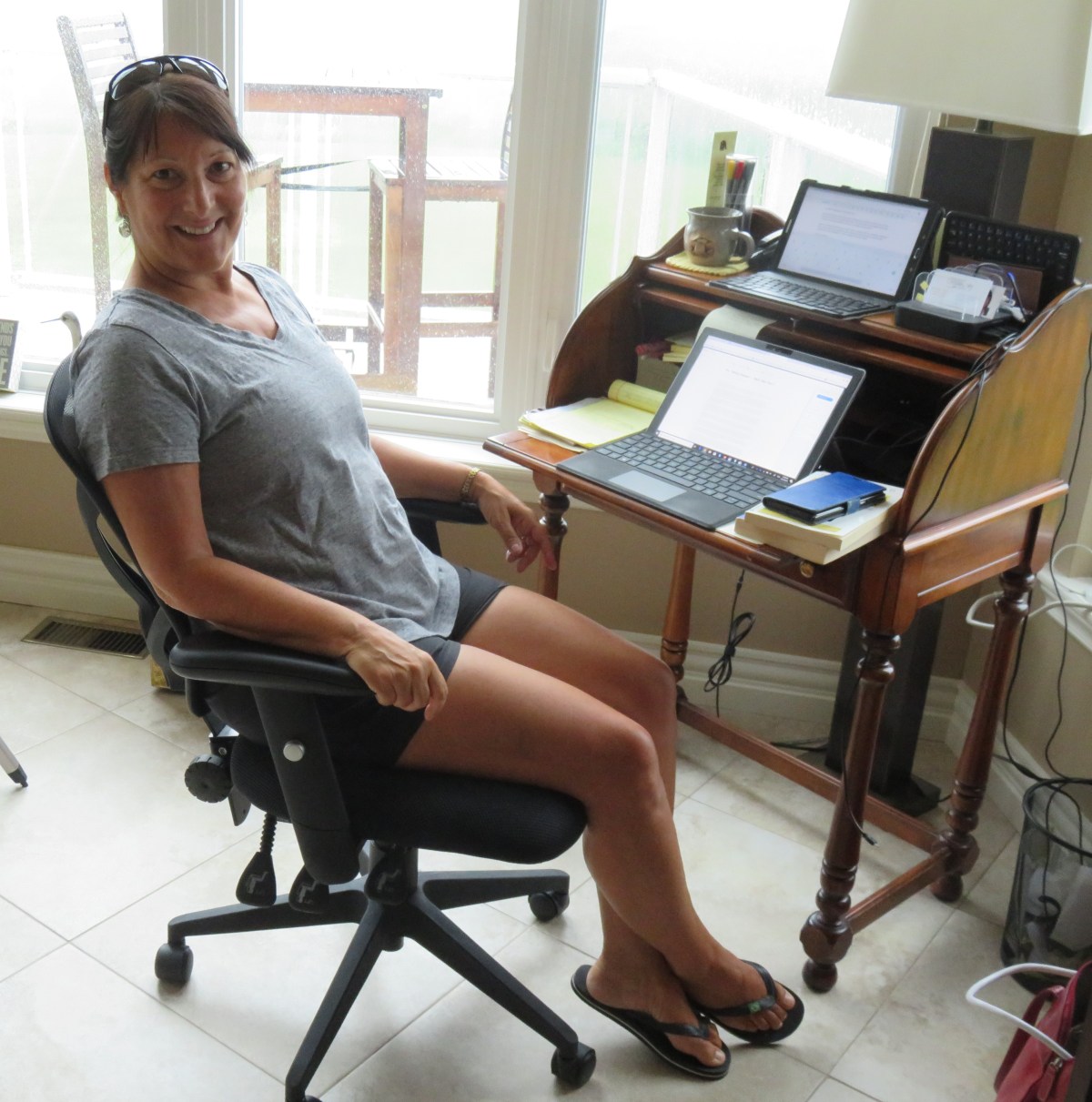
Taking a break from sitting regularly can help prevent back problems. Shifting position frequently while sitting can also help. And avoid sitting in a twisted, cross-legged position. Some researchers have suggested that the ideal chair should have a seat that slants forward, putting some weight onto the legs, and should allow you to wiggle and move around to vary your position, but I’ve never seen anything that looked like that in an office furniture store!

The conventional 90-degree office chair actually puts high pressure on the discs between the vertebrae of the back, researchers say, and can lead to tight hips and psoas (the muscles that run inside the hips and need to extend to stand up), weak gluteus (your “butt” muscle), poor circulation causing swollen ankles and varicose veins, and a strained neck. The ideal hip angle, they tell us, is about 135 degrees, halfway between sitting and lying down, which brings to mind anti-gravity patio chairs! If your chair has an adjustable back, you might be able to tilt it back for part of the day, depending on the type of work you are doing, to create the ideal hip angle for at least a little while.

Until they invent the perfect workstation, the best suggestion is to take a break and move around every hour, and to change your sitting position frequently while you’re sitting. As one expert says, “The best posture is always the next one”. (Rethinking Sitting by Peter Opsvik)

As you see in the photo above, I’m trying out a new desk configuration… with my chair back slanted close to the ideal 135 degrees and using a second elevated screen, at least for some of my work… but taking a break now will help! I may even try doing some writing on the couch where I can elevate my feet and relax in another position for variety, and using dictation to give my arms, shoulders and hands a rest is definitely on my list.

So, pay attention to what you do while reading emails or watching TV — it might make a difference in how your back feels in the future.

Next week, I’ll share what I’ve learned about how experts treat these problems if you already have them… Sign up by clicking the “Subscribe” button if you want to be sure to get Part 3 of my Back Pain series!

Suggested reading:

Healing Back Pain by John Sarno

Categories
Health

Back pain – Part 1

Problems with a sore back or neck? You’re not alone. It’s estimated that over 80% of people experience this pain some time in their lives. But how these problems are treated and what medications are used is changing…

Why?

First, many treatments in the past have resulted in high failure rates. Complete bed rest, disk replacements, steroid injections and spinal fusions have not delivered the success rates that were claimed and sometimes had nasty side effects. Some patients actually became worse instead of better…

Secondly, too many people are dying from overdoses of narcotics prescribed for pain – nearly 4,000 in Canada last year – and it’s not just drug-abusers living in the streets. In spite of having told us years ago that these drugs were safe when used for pain with less than 1% becoming addicted, 4 out of 5 heroin users in one government study reported having started opioid use with a prescription. And many of these started with pain relief for muscle or joint pain that just didn’t get better. Canadians are the highest users of opioids in the world.

The Centers for Disease Control (CDC) in US stated that overall one out of every 550 patients started on opioid therapy died of opioid-related causes, an average of 2.6 years after their first prescription. This statistic increased to 1 in 32 patients who were taking the equivalent of 200mg a day of morphine or more. These same statistics were observed in Ontario residents on Social Assistance. The CDC stated “We know of no other medication routinely used for a non-fatal condition that kills patients so frequently.

So, how did all this happen?

One defining characteristic of opioids is “tolerance”, where your body adapts to the effects of narcotics. This means you require increasing doses over time to achieve the same pain relief. However, these drugs have another property that was not widely recognized initially and is rarely discussed with patients, called “central sensitization”. This is a condition where the brain becomes sensitized to pain and eventually even non-pain messages coming in. Levels of pain messaging chemicals (like NMDA) increase, sending even more pain messages whirling around the brain’s central nervous system (CNS). This results in the perception of pain from sensations that would normally not be painful, and the person is on his way to long-term chronic pain with seemingly no real cause.

Essentially, the brain, when exposed to opioid drugs, “learns” to experience chronic pain in response to sensations that are not normally painful. Unfortunately, with long-term use of opioids, these changes can be very difficult to reverse when the drug is stopped.

Treatment for muscle and joint pain is changing…

Governments are responding to these alarming statistics. In Canada a new guideline was created: The 2017 Guideline for Opioids for Chronic Non-Cancer Pain. In it, they strongly recommend optimizing treatment with non-opioid drugs (anti-inflammatory medications like naproxen and ibuprofen, and in some cases muscle relaxants) and non-drug therapies (like heat and exercise), rather than giving a trial of opioid drugs.

The American College of Physicians (ACP) responded by creating similar pain medication guidelines in 2018. Both guidelines recommend using opioids as a last resort and then only in people with no history of drug abuse or mental health problems. The Canadian guideline strongly recommends that not more than the equivalent of 90mg of morphine be given daily and that current patients taking more than this for chronic non-cancer pain should be gradually reduced to 90mg daily for safety reasons.

A new study this year, the SPACE study, found that the ability to function and relief from chronic pain was not significantly different in patients who took only anti-inflammatories compared to those who took opioids for their pain. And those who took the narcotics had more side effects.

So, even if you had success taking Tylenol #3 or Dilaudid the last time your back “went out”, don’t be surprised if your doctor gives you Naproxen 500mg instead if it happens again. He’ll be following pain management guidelines that have your best interests in mind!

Next week I’ll talk about non-drug strategies for back and neck pain…

Further reading:

Crooked by Cathryn Jakobson Ramin

Back pain: How to live with one of the world’s biggest health problems – The Guardian