Categories
Health

The Curve of Forgetting

The University of Waterloo has done some interesting research about how we can help ourselves remember better. Of course, they did this to help their students be more successful. But we can use this information to remember better too.

An example:

Here is the problem, using the example of a student attending a 1-hour lecture:

  • At the end of the hour: you know 100% of whatever you learned in that hour

  • Day 2: you will have lost 50 to 80% of what you learned (that is, if you don’t think about it, use it or re-read it)

  • Day 7: you will have forgotten up to 90% of what you learned

  • Day 30: you likely remember only 2 to 3% of the original material

If information is not used or retrieved from our memory in some way, the brain decides it is not important and dumps it to make “room” for other more necessary or useful information.

We can change this! Reprocessing the information reinforces its importance to our subconscious mind. Essentially, doing something (anything!) with the information we are trying to learn strengthens brain cell connections that store and retrieve this information. Information can also be retrieved (or remembered) more quickly with repeated reinforcement.

Here is a formula University of Waterloo suggests:

Spending 10 minutes within 24 hours of first learning an hour of information restores memory to almost 100%; 5 minutes seven days later reactivates the same information; and 2 to 4 minutes 30 days later is all your brain needs to say “yes, I remember”. Without any review of the material, though, you would need 40 to 50 minutes to read and re-learn everything after 30 days.

This is why the University of Waterloo recommends that their students spend 30 minutes each day reviewing the previous day’s lessons and 1.5 to 2 hours each weekend and reviewing material that was learned 7 days before and 30 days before.

This works well for the student example, where most students take notes or study from textbooks and these provide a source for review. But what about us “post grads” who just want to remember what we read or learn?

Helping our “mid-life” brain to remember…

The answer is to find a way to reinforce the knowledge you think is important to remember and not just let your brain decide subconsciously. This could be done by making a note to re-read an article or book with the information you want to remember, by discussing it afterward with someone, or by writing notes so you can re-read it later (as I do when I blog).

Another way is to reinforce memory is to use the information in some way. Even playing a game with the information can work to strengthen the memory. I use this technique daily to help remember Spanish vocabulary, using the free online game Duolingo. It’s amazing how 15 minutes a day is helping me to learn and remember words in another language!

Teaching someone else is also an excellent way to learn and retain information. Explaining it helps you really understand the subject plus you need to retrieve a high a percentage of the information in order to teach it well. I often do this with my hubby…explaining what I’ve read helps me to organize my thoughts around a subject. I think it drives him crazy sometimes though – he isn’t always interested in the same topics I am. He sometimes says, “Just pretend I’m listening…” But that works too. Just saying it out loud helps to organize and store the information in your brain.

More information is retained in your memory when you use more senses so reading, seeing images or video, hearing, and using the information all help, as opposed to simply reading. Handwriting notes rather than typing has also been shown to help memory for this same reason: using more senses. Using a pen or pencil, rather than a keyboard, also makes you slow down a bit and think about what you’re writing, since you don’t have a back-space key!

And when you want to forget?

On the other hand, if you want to forget something the worst thing you can do is focus on it. Deal with a negative or unpleasant event as best you can then put it out of your thoughts and focus on something positive and pleasant. You always remember what you focus on most.

Reference:

Campus Wellness–Waterloo University

Categories
Health and Beauty

Going Natural, the First Step…

So, here’s a photo of the first step of my transition from dyed to natural… going from long to short to lessen the time it will take to grow out. I enjoyed all the comments on last week’s blog with the “before” photo and I hope my story will help those of you who have been thinking of making the change too.

Getting help from a professional…

My hairdresser is helping me through the transition, making the change easier by using her styling skills. Since most of my grey is at the temples, she cut the sides very short, getting rid of much of the dyed hair. But she left the top longer to cover the newly shortened grey hair, so just a bit peeks through. This is called an “undercut” style and it’s quite popular right now. I expect the next cut will show more grey but, what the heck, I might just keep this undercut style for a while.

But not everyone has a greying pattern like mine with mostly the original colour on top. And, actually, that’s one of the reasons I decided to do it now—because I thought it would be easier if I didn’t have to worry so much about having a white stripe on top!

When you’re ready to go natural, a consultation with a hair stylist is an important part of the plan. For example, a friend with most of her colour change on the top had the colour stripped from her hair, leaving it lightened to the colour of her roots. This way she was able to keep the length of her hair while softening the line at the colour change.

Lots of options

Some women would look great by adding platinum streaks that would blend with the grey as it grows out. Others might look great by just going completely silver-grey or platinum (popular colours these days) and letting the dark grow in.

Fortunately, there are lots of options for us! The key is to be able to predict what your natural colour is and where it has changed. And after years of hair dye, the only way to know is to let it start to grow. Try covering the most obvious root areas with temporary colour—hopefully you’ll have better luck on this than I did—wash it out before your consultation and ask your hair stylist for some suggestions. I let my colour go for 2 months before getting my cut and wore my long hair down most of the time, rather than twisting it up as I often did, as this helped cover the roots at the sides.

Many chemicals pass through the skin

One thing I learned as a compounding pharmacist, is that the skin is not as much of a barrier to chemicals as we’d like to think. I often made medicines that were administered as a cream or gel and were intended to act on muscles and nerves under the skin or throughout the body. With some, nothing special was needed to help the active ingredient pass through the skin. It certainly bothers me when I read that cosmetics, including hair dyes, are not as well tested as medical products. Especially since we use these products regularly for years, some of them daily. Even though hair colours are noted for causing severe allergic reactions and can cause blindness if used near the eyes, companies are exempt from responsibility as long as they have a statement describing these reactions on the label and tell users they must do a skin patch test 24 to 48 hours before use every time.

We deserve to have safe cosmetic products. But how do you know what’s safe? Here are some things you can do:

  • Choose simpler products—those with fewer ingredients and with ingredient names you can pronounce. Avoid added fragrances, as these are additional chemicals that usually do not contribute to the action you want from the product.

  • Consider making your own—some products, like salt/sugar rubs or body oils are easy to make. Be sure to make small amounts that will be used in a reasonable time, as homemade products usually do not contain preservatives, allowing bacteria to grow in the product. Use a small clean spoon to scoop out the amount you need to help to prevent bacteria from getting into the product.

  • Learn about cosmetic ingredients. Read labels carefully. Research ingredients. Suggestion: try out the free Think Dirty app (featured on Dragon’s Den) which has an analysis of many North American cosmetics and rates safety of ingredients.

  • Join the campaign for safe cosmetics and beauty products, like shampoos and moisturizers. Demand safer products where you shop and better regulation from government. Check out this video: The Story of Cosmetics

PS: We Canadians spell “color” with an extra (rather useless!) “u” like the British… This article has lots of little red underlines throughout!

References:

Safe Cosmetics.org

The Story of Cosmetics

Red List of chemicals to avoid

Categories
Health

Dying to quit dyeing…

Me… (the “before” photo)

I’ve been wanting to stop dying my hair. I couldn’t think of a good reason why I was doing it, except, perhaps, for my vanity. And I was starting to feel sick after using dyes, especially after trying a “temporary” spray-on product for covering “roots” that I thought might help make the transition easier. Somehow, I thought that “temporary” meant it would be less harsh. But it was the product that made me most sick, likely since the chemicals weren’t washed off. Although I suppose I may just have been sensitive to something in it…

But there’s no question—hair dye is harsh stuff. It contains ingredients that are similar to those in coal tar. Two of the most suspect petroleum-based ingredients are p-phenylenediamine (PPD) and ethylenediamine. Check the ingredient list on the package or ask your hairdresser—likely one or both are listed. The instructions recommend doing a skin test 48 hours before you use the product, every time you use it, to make sure you aren’t going to react. However, I’d be surprised if very many women actually do this. I didn’t and I don’t imagine hairdressers ever do… There are only so many hours in a day, and only so much mess and inconvenience a person is willing to put up with. There is also a debate about testing—some have reported reactions after a non-reactive patch test, and it has been suggested the test may only serve to increase exposure to toxic dye ingredients.

Hair dyes are also banned for use on eyelashes and eyebrows, as they can cause severe eye irritation and blindness, even when used by professionals. Any colour product used near the eyes must be specially approved for this use.

According to a 2008 study done by Clairol, 75% of American women dye their hair. I was amazed when I read that. There are lots of men who do too—it’s estimated 11% between the ages of 50 and 64, although more are concerned about keeping their hair than the colour of what they have.

But why do we do it? Some want to have an exciting new look, find a more attractive colour or just have a little fun. But many do it to look younger by hiding the grey. I didn’t like the idea of having “salt” in my peppery hair and it seemed easy enough at first to just paint a little dye on the temples every few weeks. Societal pressure, I suppose…

Our society sends us many subtle hints that looking your age isn’t a good thing, especially after a certain age. It’s quite ridiculous, really. Does it matter what other people think of our hair colour? Or our age or how old we look? Do others even notice? Are we doing it for ourselves? Or has dyeing our hair simply become a routine in our society… part of the struggle to keep young that has nothing to do with being healthy.

In some cultures, older people are seen as a source of advice and wisdom. This makes so much sense. After all, there is no substitute for experience in many fields, and it takes time and age to acquire experience.

This holds true in our society certainly when considering men—picture the respected grey-haired judge or CEO of a large company. Hopefully now that we are seeing more women in positions of power, women with grey hair will command more respect than they have in the past. It’s a goal to work toward. Perhaps one day women and men will want to add a little grey as a physical sign of their knowledge and experience… Yeah, no… I’m just being funny…

But if you plan to dye your hair in spite of all this, here are some tips to increase safety:

  • Use a lighter colour (darker dyes contain more PPD)

  • Go for highlights or only cover the grey, if possible, to reduce scalp contact

  • Follow the directions. Don’t leave on longer than recommended (use a timer)

  • Look for no-PPD formulas

  • Go longer between colouring if possible: condition hair, wear a hat (sun fades colour) and avoid chlorine pools to protect colour from fading

  • Avoid during pregnancy, especially in the first trimester

  • Wash off product immediately and get medical assistance if any sign of an allergic reaction, especially dizziness, swelling or difficulty breathing

Meanwhile, increasing numbers of women I know are making a statement and going “natural”. And I will soon be joining them! Life will be easier without the hassle of messy hair dyes, and I’ll be exposed to one less toxic substance. I just hope it’s not too difficult to get through the transition!

So, here’s the plan. I have long hair that I am going to cut very short (always fun!) to decrease the time it takes to completely grow out. I’ve already gone 2 months without colouring my hair, so I have a head start—almost 2 centimeters (3/4 of an inch) already. Fortunately, most of my grey is at the temples, and this is part of the reason I’ve decided to do it now… while the top is mostly still my “younger” colour.

I considered using a temporary colour to start off, but they are difficult to find (as they probably don’t cover grey very well). And the spray I tried, as I described, didn’t work out at all for me. With my long hair, it’s been a while since I’ve gone to a hair salon. I’m hoping my new hairdresser will have some great ideas for a style that will look nice during the transition. And I’ve found a few ideas by looking on hair style websites—hopefully some that will look good with “salt and pepper” hair. I plan to post pics of how it goes… and I guess I’ll have to change my profile photo too!

Women I know have done this without too much trauma, so I guess I can do it too! Have you thought of “going natural” or have you done it already? And, guys, what’s your opinion on all this? Leave a comment on Facebook, LinkedIn or email a comment!

References:

To dye or not to dye—Emerita

US Food and Drug Administration—Hair dyes

Health Canada—Hair dyes

Eight Rules for Safer Hair Color—Goop.com

Categories
Health

Muffins vs. Doughnuts

I don’t know about you, but I’ve always thought that muffins are a healthier food than doughnuts or cupcakes. But maybe that because I usually make my own muffins. Apparently, store bought muffins present a different scenario…

My husband likes to call coffee shop muffins “cake” because most are so sweet. And, truly, many fruit-filled muffins do have the sweetness and texture of cake. I suppose the idea is to balance the tartness of the fruit with extra sugar in the base. But most fruits, with their natural sugar, have a wonderful tangy sweetness that gets lost in the process.

And muffins provide a wonderful opportunity for adding fibre to the diet in a tasty way. But of course, there needs to be an ingredient or two that provides fibre. The healthfulness of a muffin, or any baked food for that matter, is all in the ingredients. Choose muffins with ingredients like whole wheat flour, bran or oatmeal to increase both the fiber and flavour.

But according to an analysis featured in prevention magazine, an average coffee shop muffin contains 424 calories compared to a medium sized plain glazed doughnut which contains only 269 calories. On average, fiber and fat content are similar, but salt and carbohydrate content are usually lower in the doughnut. Store-bought muffins are generally much larger than home-baked ones, too, and that increases the calorie content compared to one you might make at home.

It’s all about choices, too. Many doughnuts come with fillings, flavoring and extra icing that increase the calorie content of the doughnut above what was quoted in the study while muffins can still be a very tasty with much less sugar and more fiber.

So, what’s the answer?

Make your own muffins! Muffins are one of the easiest baked goods to make and take very little time to put together. A simple recipe, like the one below, might take 10 minutes to mix up and 20 minutes to bake. They freeze well and make a great “on the go” snack.

Baking them yourself means you can control the calorie and fat content as well as the flavour of your snack. I bake mine, have one while still warm, then freeze the rest. I often take out a couple the night before to speed the reheating process, and pop them into the oven to warm while our coffee is brewing. Reheating in the oven instead of the microwave makes them slightly crispy around the edges, just like when they’re first made – so tasty! Add an extra 5 minutes or so if you forget to take them out of the freezer…

For lunches or snacks “on the go”, they’re still delicious at room temperature. For lunch boxes, you can bag them individually to save time in the morning.

Here is one of my favorite recipes:

Banana (or Blueberry) Oatmeal Muffins (makes 12)

Ingredients:

1 cup mashed ripe bananas (2 large or 3 small)

1 egg

3/4 cup milk

1/4 cup olive oil

1/2 teaspoon vanilla extract

1 tsp cinnamon (optional

Mix together then add:

1 cup rolled oats

2 cups whole wheat all-purpose flour

1/4 cup white sugar

2 teaspoons baking powder

1 teaspoon baking soda

1/2 teaspoon salt

Directions:

In a large bowl, mash the banana. Add the egg and beat lightly. Stir in the milk, oil, and vanilla and combine thoroughly.

Measure all other ingredients on top. Stir the baking powder and soda into the flour a bit to ensure there are no lumps of soda.

Then stir the flour mixture into the banana mixture until just combined. Line a 12-cup muffin tin with paper bake cups (I like the parchment ones) and divide the batter among them.

Bake at 400 degrees F (205 degrees C) for 18 to 20 minutes

(Gas or convection oven – 14-15 mins)

Tips:

Muffins are “done” when they are lightly browned and the top springs back when lightly pressed.

Variation:

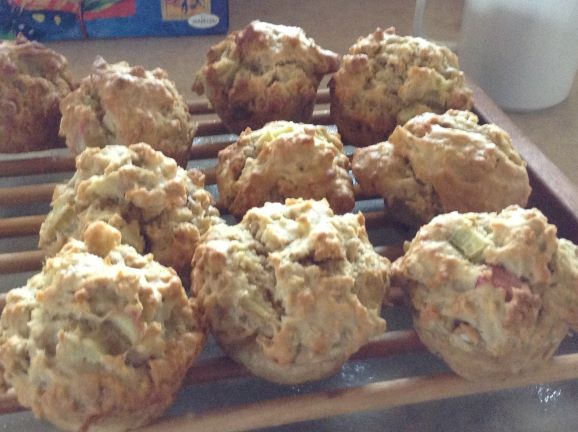
Instead of banana, try fresh or frozen blueberries or other fruit (I used rhubarb in the photo above) folded in at the end of mixing. If using frozen fruit, you will need to bake a couple of minutes longer.

This is my go-to recipe when my bananas are getting overripe. My sisters-in-law know they will get muffins shared when they pass along their blackening bananas! Let me know if you like them too…

Reference:

Doughnut vs. Muffin : Which is the lesser of two evils?

Categories
Health

The Red Meat Controversy

Diet studies are difficult to do properly. It is simply too difficult to control the many factors that influence our health while comparing different diets. Most diet studies, therefore, are poor quality and based on weak evidence. Even the ideal type of study, known as a randomized controlled trial (RCT), isn’t perfect as people can’t live in a bubble for the entire study time.

And animal studies, where it is easier to control all factors, don’t necessarily apply to humans. A famous one, where rabbits were fed high amounts of foods containing cholesterol and subsequently developed heart disease, didn’t take into account that rabbits never naturally eat cholesterol-containing foods and probably can’t digest them – they live on salad! Human studies have found that it’s not possible to lower blood cholesterol significantly by reducing cholesterol intake because the liver makes cholesterol when it is lacking in the diet. However, we continue to see “low cholesterol” foods promoted as being good for our heart health. Here is a referenced article about this. Essentially, all conclusions from dietary studies need to be “taken with a grain of salt”.

But a new study “McMaster university – New guidelines: No need to reduce red or processed meat consumption for good health” bases its conclusion on the lack of good evidence for us to change. This research was conducted by 14 researchers in seven different countries. They state: “Evidence of harm from moderate consumption of red or processed meat is poor and health benefits, if any, would be small.” The study also considered the desirability and enjoyment of a juicy steak and the “hardship” vs. benefits of a rather drastic change in diet. (Note that it excludes any ethical or to environmental concerns, focusing only on evidence that people need to change their meat consumption to be healthier.)

More than anything else, to me this study points out the trend to make dramatic announcements for radical diet changes based on poor quality information. This study doesn’t suggest red or processed meats are healthy or that people should eat more of them, but researchers don’t discount the possibility that there are millions of people who eat a lot of meat and who are in good health.

That being said, another article published in the journal, The Lancet, suggests that the “healthiness” of cutting out the red meat depends on what it is replaced with. Reducing meat consumption, according to this study, is only likely to benefit health if the meat is replaced with plant-based foods. Replacing it with “white foods” (white rice, white bread, potatoes and sugar) doesn’t result in improvement to health, according to this study.

An article in Healthline seems to sum it all up quite well. It suggests that red meat doesn’t affect health significantly but that processed meats, depending on the additives used and cooking processes, might change the health effects of eating meat. But, like all diet studies, the evidence isn’t strong. Here is the link if you’d like to read it.

Of course, these studies address only the effects of meat on human health. The environmental impact of raising animals and the ethical issue of using animals as a food source are issues that also should be considered in a complete discussion.

What I found so interesting in these studies, was that the evidence that red and processed meats harm our health is very weak and the benefits of such a dramatic diet change are small. The researchers found there is simply not strong enough evidence to insist that all humans need to make this radical diet change.

For myself, I enjoy eating meat but find these days that a small amount is enough. The photo above was part of a 7-course meal in a fancy restaurant, and was a small but very delicious and satisfying serving. We also enjoy seafood of all kinds in our house and the occasional vegetarian meal too – especially homemade pasta sauce with lots of veggies added. Mostly we are trying to increase our consumption of fruits and vegetables these days to improve our diet. Sweets and desserts have become the exception (not the rule!), too, to lower our sugar intake.

I still like Michael Pollan’s Food Rules the best: Eat real food (not processed), mostly plants, and not too much. Everything in moderation makes sense unless you have good reason to change.

So, have you many any changes to your diet recently? Did it help you to feel better or improve a chronic problem? I’d love to hear about it…

References:

This diet is better for the planet, but is it better for you too? – NPR

Health and Nutritional Aspects of Sustainable Diet Strategies – The Lancet

Why Dietary Cholesterol Does Not Matter for Most People – Healthline