

Categories
Uncategorized

Making connections…

Although it’s a common belief that older adults are more likely to be lonely, since many of them live alone, researchers found a spike in numbers of people reporting loneliness in their late 20’s and mid-50’s as well as in their late 80’s. Loneliness can occur at any age.

Loneliness is a deeply personal experience, unique to every individual—a problem with different causes and consequences for each affected person. A person can be socially isolated (having few social relationships and contacts) but not experience loneliness (the negative emotion of having fewer and lower quality relationships than we want and need to be happy).

Sometimes people can be lonelier in a busy community than in rural areas. A person can be alone and not feel lonely, but can be in a crowd and feel alone. A full three-quarters of participants in a California study of community dwellers reported moderate to high levels of loneliness. Since loneliness is known to affect people’s health, similar to smoking 15 cigarettes a day, the researchers wanted to learn more.

They found 3 factors were increased in people who reported they were lonely (listed in order of impact): having lower levels of emotional “wisdom”, living alone, and having a diagnosis of a mental or physical illness. Wisdom was defined as having several components: empathy (being able to feel the emotions of others), compassion/altruism (selfless concern for others), a sense of fairness, insight into the feelings of others, acceptance of others’ values and opinions, and decisiveness (the ability to make quick, effective decisions when necessary).

In the UK, health authorities recognize the toll loneliness is taking in older people, increasing risk of onset of disability and cognitive decline leading to dementia. They have started a campaign to end loneliness in the elderly, treating it as a public health issue. The challenge of any community is to reach lonely individuals, to understand the nature of the person’s loneliness, to develop a personalized response (since each individual has different needs) and to support them in their access to the services they need. While this has the greatest overall effect when done at the community level, it is also an effective way to help someone you suspect is lonely. You can read more about the UK approach to ending loneliness here.

I decided to write a Christmas letter this year. Although it’s a long-standing tradition of mine to communicate at least once a year to friends and family I don’t see often, I hadn’t written a Christmas letter for a few years. So, this week I sent it off, a few by snail mail but most of them simply by email. In true “blogging” fashion, I asked the recipients to do something (called a Call to Action in the blogging world…). At the end of my letter, I asked them to send a hello back to me if we hadn’t spoken in a while. And I have been delighted to hear back from quite a few. What a great way to reconnect and start a conversation again!

Now, I’m sure my little action wouldn’t cure anyone’s loneliness, but staying connected to friends and family is a first step in the right direction, both for you and for those you contact. It’s so easy to do now, too, with emails, videoconferencing (like Skype, Facetime) and texting or even with a good old-fashioned telephone.

So, this holiday season, my “Call to Action” to you is to reach out to friends and family, whether old or young, that you may not have contacted for a while. Find out what’s new in their lives and show you care about them. ‘Tis the season…

References:

Serious Loneliness Spans the Adult Lifespan but there is a Silver Lining
Campaign to End Loneliness

High prevalence and adverse health effects of loneliness in community-dwelling adults across the lifespan: role of wisdom as a protective factor

Categories
Uncategorized

Suddenly dizzy? Might be vertigo…

Know anyone who’s had vertigo? It’s more common than you might think, especially among the “over 60” crowd.

Vertigo is a sensation of spinning and loss of balance. While it can be associated with looking down from a great height, it can also be caused by disease or condition affecting the inner ear. The most common type of vertigo is called BPPV

  • Benign (not cancerous)

  • Paroxysmal (comes and goes, and doesn’t last long—usually less than a minute)

  • Positional (triggered by moving the head in a certain position or direction)

  • Vertigo (dizziness, sensation your surroundings or the inside of your head are spinning)

    • Often accompanied by nausea

    • Affects women twice as often as men

I just had a bout of it, and it’s not much fun…a bit scary, actually. But it stopped so quickly–in about 10 seconds–I didn’t think it could be a serious problem (and it isn’t for most people). Of course, dizziness can be a sign of other problems, some quite serious, so it’s a good idea to discuss your dizziness with your doctor if you start to experience this.

BPPV vertigo usually only lasts for a week or two. It’s diagnosed by first eliminating anything more serious, and by getting you to lay back with your head 45 degrees to one side. You may need to repeat the movement with your head to the other side. If it’s vertigo, your eyes will start to move back and forth, as they do after you’ve spun yourself around enough to feel dizzy, and this movement will trigger the feeling of dizziness. This eye movement is called nystagmus.

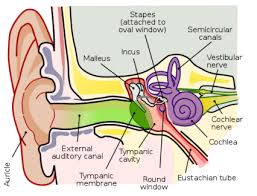
Vertigo originates in part of the inner ear called the semicircular canals (note the top loopy part of the purple structure in the diagram above). As the name suggests, these are 3 semicircular loops filled with liquid and, when we turn, tiny hairs that line the loops can sense the movement of the liquid inside the loops. Your brain uses this information to sense what direction your head is moving, even when your eyes are closed or you’re inside a plane or large ship.

There are tiny crystals, called otoliths, attached to the base of the semicircular canals. When one of these breaks off and enters a canal, its movement (controlled by gravity when you lay down or turn quickly) can confuse the tiny hairs that detect movement of liquid in the canals. This can make you feel like you’re moving when you are not, creating the dizziness in BPPV vertigo. It usually takes only a few seconds for the crystal to fall to the bottom of the canal, and that is why BPPV vertigo only lasts a short time. I posted a video below that explains it better…

Treatments

One of the treatments for BPPV vertigo uses this information. The patient is helped through a series of movements designed to move a loose crystal (otolith) out of the affected canal. It’s not difficult to do and can be repeated as needed, once you understand the movements. It is called the Epley manoeuvre. Here’s a link to a video that demonstrates this and the theory of the crystal movement.

A few medications are available to treat vertigo, although they are more commonly used with longer-lasting types like Meniere’s disease. One medication is Betahistine (brand name Serc), a type of antihistamine that some find helpful, although its effectiveness has been questioned. Another is a combination of Meclizine (antihistamine) and low-dose Niacin (vitamin B3), formerly available as Antivert tablets, but now discontinued. However, the individual ingredients, Meclizine and Niacin, are still available and can be bought without prescription in most countries. Meclizine is usually on the pharmacy shelf next to the Gravol or is sometimes kept behind the pharmacy counter. Niacin is found in the vitamin section, and you would take only 1/2 of a 100mg tablet. A compounding pharmacist could make this combination into capsules for you, and I often made these in my pharmacy. However, since episodes of BPPV vertigo are so short and usually last only 1 to 2 weeks, these medications are generally reserved for other types of dizziness, such as Meniere’s disease or labyrinthitis.

What causes otolith crystals to dislodge, causing BPPV?

BPPV can be caused by a minor injury to the head, but it can occur without an injury, as it did to me. Some drugs are reported to increase the chance of developing vertigo, and medication should always be considered if there is no obvious cause. The list includes some very common drugs, such as codeine, prednisone, omeprazole (Losec), furosemide (Lasix), melatonin and many others. Here is a link to a good reference about this.

I had just started using a new medication and, although it isn’t included on the list, I believe it caused my vertigo. Here are my reasons: the medication I started using is the corticosteroid, budesonide, and it is in the same drug family as prednisone (which is on the list). Although the product is designed to be inhaled as a treatment for asthma in children, my prescription was to mix it with saline and use it as a sinus rinse (neti pot). This is an “off label” use for this product, meaning that it has not been tested or approved for this use. It is similar to corticosteroid nasal sprays that are commercially available, however, but stronger and generally used this way only short-term for inflamed sinuses, when regular sprays have failed.

My vertigo started when I’d been using the new medication for about 3 weeks. It gradually improved over a couple of days when I stopped the medication and got worse again when I restarted it. When I stopped it a second time, the vertigo improved again over a few days and hasn’t returned. However, I have been left with tinnitus, ringing of the ears, that 3 weeks later is still a nuisance (especially at night, when it’s quiet). So, a bit of an experiment, but it convinced me that the medication is a problem for me.

But the experience has left me wondering whether others have developed vertigo after using budesonide as a nasal rinse. One problem with “off label” use of drugs is that adverse reactions are often not reported as they would have been while being tested for official approval. I will ask my doctor about this when I see him at my upcoming appointment.

So, have you ever had vertigo? Was the cause identified? Could it have been caused by a medication you were using? I’d love to hear about it…click the Questions/Comments button and send me an email!

References (click to link to article):

Epley manoeuvre

Medicine-induced Vertigo—Medsafe, New Zealand

Benign paroxysmal positional vertigo—Wikipedia

Categories
Health

Coffee…for diabetes, Parkinson’s, liver and more?

I love my morning coffee, so I “perk up” whenever I see a study that suggests this habit is a good thing! Are you a coffee lover too? Then read on…

Overall, coffee drinkers were found to have more health benefits than risks from their habit, compared to those who did not drink any coffee. The average daily intake in those who were studied was 3 to 4 cups per day compared to no coffee daily, although some studies looked at how health changed in the years after people increased or decreased their coffee intake by a cup or two.

5 Benefits of coffee

  1. Coffee and diabetes—a 2014 study followed over 123,000 people for 4 years. Those who increased their daily coffee intake by 1 cup per day had an 11% lower chance of developing Type 2 diabetes. Those who decreased their coffee consumption (by an average of 2 cups per day) had a 17% higher risk for Type 2 diabetes. Changes in tea drinking were not linked to diabetes risk.

  2. Coffee and Parkinson’s disease—Several studies suggest that caffeine, whether in coffee or other drinks, may help decrease risk of developing Parkinson’s. One analysis determined that men who drink 4 or more coffees per day may have 1/5 the risk of those who do not. Another study in 2012 suggests that the caffeine in coffee may help control movement in people with Parkinson’s. Another study in 2017, that found a link between coffee intake and Parkinson’s, also noted coffee drinkers may be less likely to develop depression and dementias like Alzheimer’s as well. However, there wasn’t evidence to show that drinking decaf coffee would help prevent Parkinson’s.

  3. Coffee and liver diseases—Researchers in Italy found that coffee decreases risk of liver cancer by about 40%. Their numbers suggest those who drink 3 cups a day may have 50% decreased risk of liver cancer. A different literature review in 2019 concluded that “coffee intake probably reduces the risk of liver cancer”. Another large analysis in 2017 found coffee also appeared to decrease risk of non-alcoholic fatty liver disease and cirrhosis, as well as liver cancer.

  4. Coffee and heart health—We often think negatively of coffee when it comes to heart health, since people are advised not to drink it just before measuring their blood pressure. But drinking coffee in moderation, two 8-ounce servings per day, may protect against heart failure (when the heart can’t pump enough blood to meet the body’s needs), according to a 2012 study. They found an 11% lower risk of heart failure in those who drank this moderate amount versus those who drank none. Another analysis in 2017 found that those who drank 4 to 6 cups of either caffeinated or decaf coffee daily appeared to have a lower risk of Metabolic Syndrome—in other words, they had lower blood pressure, lower blood cholesterol, and lower blood sugar—and this included a decreased occurrence of Type 2 diabetes.

  5. Overall health—An umbrella study in 2017, using combined data from 218 other analyses of studies, found coffee consumption seems generally safe within usual daily amounts. It showed the largest risk reduction in those who drank 3 to 4 cups daily and that coffee is more likely to benefit health than harm it. Mortality from any cause was reduced by 17% in these coffee drinkers.

An exception to the benefit of coffee is during pregnancy, when drinking more coffee could result in low birth weight of the baby (31% greater relative risk), increased risk of pregnancy loss (an increase of 46%) and increased chance of preterm birth (12-22%). Another exception is for women at risk of bone fractures (but not men for some reason…). Increased coffee was associated with an increased risk of breaking a bone only in women. Their recommendation was for women already at risk of a bone fracture to avoid coffee.

So, I guess I can happily continue my morning coffee—no risk of pregnancy for me and my risk of bone fracture is low! I usually enjoy 3 cups as I peruse the morning news and emails, and check Facebook for photos of what my wonderful granddaughters are up to! Hmmm…must be time for cup #3…

PLEASE NOTE: A little clarification on the numbers in this blog. The percentages in this article are “relative risk” numbers not overall risk. They compare risk with the factor to risk without it. For example, a relative risk increase of 50% could mean 10% without the risk factor have the condition compared to 15% with it…or 0.01 vs 0.015%. “Actual risk” numbers were not quoted in my references, only the percentage increase in risk.)

References:

Health benefits and risks of drinking coffee https://www.medicalnewstoday.com/articles/270202.php#benefits

Changes in coffee intake and subsequent risk of type 2 diabetes: three large cohorts of US men and women https://link.springer.com/article/10.1007%2Fs00125-014-3235-7

Coffee consumption and health: umbrella review of meta-analyses of multiple health outcomes https://www.ncbi.nlm.nih.gov/pmc/articles/PMC5696634/

Categories
Health

Coffee…for diabetes, Parkinson’s, liver and more?

I love my morning coffee, so I “perk up” whenever I see a study that suggests this habit is a good thing! Are you a coffee lover too? Then read on…

Overall, coffee drinkers were found to have more health benefits than risks from their habit, compared to those who did not drink any coffee. The average daily intake in those who were studied was 3 to 4 cups per day compared to no coffee daily, although some studies looked at how health changed in the years after people increased or decreased their coffee intake by a cup or two.

5 Benefits of coffee

  1. Coffee and diabetes—a 2014 study followed over 123,000 people for 4 years. Those who increased their daily coffee intake by 1 cup per day had an 11% lower chance of developing Type 2 diabetes. Those who decreased their coffee consumption (by an average of 2 cups per day) had a 17% higher risk for Type 2 diabetes. Changes in tea drinking were not linked to diabetes risk.
  2. Coffee and Parkinson’s disease—Several studies suggest that caffeine, whether in coffee or other drinks, may help decrease risk of developing Parkinson’s. One analysis determined that men who drink 4 or more coffees per day may have 1/5 the risk of those who do not. Another study in 2012 suggests that the caffeine in coffee may help control movement in people with Parkinson’s. Another study in 2017, that found a link between coffee intake and Parkinson’s, also noted coffee drinkers may be less likely to develop depression and dementias like Alzheimer’s as well. However, there wasn’t evidence to show that drinking decaf coffee would help prevent Parkinson’s.
  3. Coffee and liver diseases—Researchers in Italy found that coffee decreases risk of liver cancer by about 40%. Their numbers suggest those who drink 3 cups a day may have 50% decreased risk of liver cancer. A different literature review in 2019 concluded that “coffee intake probably reduces the risk of liver cancer”. Another large analysis in 2017 found coffee also appeared to decrease risk of non-alcoholic fatty liver disease and cirrhosis, as well as liver cancer.
  4. Coffee and heart health—We often think negatively of coffee when it comes to heart health, since people are advised not to drink it just before measuring their blood pressure. But drinking coffee in moderation, two 8-ounce servings per day, may protect against heart failure (when the heart can’t pump enough blood to meet the body’s needs), according to a 2012 study. They found an 11% lower risk of heart failure in those who drank this moderate amount versus those who drank none. Another analysis in 2017 found that those who drank 4 to 6 cups of either caffeinated or decaf coffee daily appeared to have a lower risk of Metabolic Syndrome—in other words, they had lower blood pressure, lower blood cholesterol, and lower blood sugar—and this included a decreased occurrence of Type 2 diabetes.
  5. Overall health—An umbrella study in 2017, using combined data from 218 other analyses of studies, found coffee consumption seems generally safe within usual daily amounts. It showed the largest risk reduction in those who drank 3 to 4 cups daily and that coffee is more likely to benefit health than harm it. Mortality from any cause was reduced by 17% in these coffee drinkers.

An exception to the benefit of coffee is during pregnancy, when drinking more coffee could result in low birth weight of the baby (31% greater relative risk), increased risk of pregnancy loss (an increase of 46%) and increased chance of preterm birth (12-22%). Another exception is for women at risk of bone fractures (but not men for some reason…). Increased coffee was associated with an increased risk of breaking a bone only in women. Their recommendation was for women already at risk of a bone fracture to avoid coffee.

So, I guess I can happily continue my morning coffee—no risk of pregnancy for me and my risk of bone fracture is low! I usually enjoy 3 cups as I peruse the morning news and emails, and check Facebook for photos of what my wonderful granddaughters are up to! Hmmm…must be time for cup #3…

PLEASE NOTE: A little clarification on the numbers in this blog. The percentages in this article are “relative risk” numbers not overall risk. They compare risk with the factor to risk without it. For example, a relative risk increase of 50% could mean 10% without the risk factor have the condition compared to 15% with it…or 0.01 vs 0.015%. “Actual risk” numbers were not quoted in my references, only the percentage increase in risk.)

References:

Health benefits and risks of drinking coffee https://www.medicalnewstoday.com/articles/270202.php#benefits

Changes in coffee intake and subsequent risk of type 2 diabetes: three large cohorts of US men and women https://link.springer.com/article/10.1007%2Fs00125-014-3235-7

Coffee consumption and health: umbrella review of meta-analyses of multiple health outcomes https://www.ncbi.nlm.nih.gov/pmc/articles/PMC5696634/

#Coffee #Diabetes #Parkinsons #Liverdisease