Categories
Uncategorized

Why didn’t we see this coming?

So many of us are surprised at what is happening these days with the rapid spread of the new coronavirus and so many deaths. But scientists have known for years that this was likely to happen…they said it wasn’t “if” a pandemic would occur but “when” that was in question. The Spanish Flu of 1918 was a good example of how a virus could spread when no one was watching.

If fact, we discussed the possibility of a pandemic at least 15 years ago when I was on the New Brunswick pharmacy regulatory board. We put in place a mechanism to enable quick licensing of retired pharmacists to continue providing basic pharmacy services to the public, should too many of those on the front lines become ill.

Again, when I was learning about viral infections as part of my training to give injections and to teach other pharmacists how to do immunizations, I learned that there are two basic types of viruses…those that spread easily and those that cause severe infections in the lungs. Fortunately, most viruses are one type or the other. But when a virus combines the ability to spread from person to person easily with the ability to cause severe illness, it becomes a candidate for causing a dangerous pandemic. And when it’s a completely new virus, no one has immunity. The new coronavirus that causes COVID-19 is one of these (fortunately) rare ones. And we are quickly seeing and feeling its effects.

Reading about science…

One problem is that too many of us don’t hear what our scientists are saying. Science is often hidden behind pay walls instead of being openly shared, charging subscription fees or $35 per article to read the evidence. And, too often, the results of studies are written in scientific lingo that the average person can’t understand.

Sometimes, science news is shared by non-scientists who don’t translate the information accurately, causing confusion and misunderstanding. An example is the current stockpiling of chloroquine and hydroxychloroquine, based on news reports that they might prevent or treat COVID-19. Experimenting with potent drugs based on rumour and hearsay can be dangerous. There have been reports of patients who have ended up in hospital after taking chloroquine based on sketchy news reports. As yet, no proof exists that chloroquine or hydroxychloroquine work, that either is safe to use against this virus, or what dose should be used. Scientists have organized methods to test drugs safely and thoroughly before they are used by sick patients. Perhaps our scientists, themselves, should write summaries of their research work that can be clearly understood by all and are accessible to the public and news media.

Believing the facts…

For some, being part of a social group with certain beliefs keeps minds closed to the facts. Humans are social beings and, when faced with a choice of being included in a group or standing up for the facts we have been shown, many need to stay with their social group, finding ways to “prove” the facts must be wrong. We’ve all seen videos of teenagers partying on beaches, who have convinced themselves the warnings don’t apply to them… people crowded in parks, convinced that only those over 80 need to worry…

It’s also harder to make choices that you know will cost you money. But governments, listening to the scientists, are making the tough decisions that will save lives. Doctors and scientists are telling us what is likely to happen if we don’t change our behaviours quickly to prevent the spread of the COVID-19 virus infection. We are starting to see the results of our slow early reactions.

But we are displaying a similar lack of attention to what scientists are saying is going to happen as a result of climate change. We certainly need to focus on following the advice of experts right now to avoid exposure to this virus but, hopefully, we are learning a good (if costly) lesson. We need to heed the advice of experts who warn us of potential world problems.

In spite of the difficulties in making changes when a problem isn’t yet affecting our daily lives, it is much less costly and “inconvenient” to prevent problems than it is to fix them after they occur. And prevention, wherever it can be applied, can save lives and prevent suffering. Forgive me for going off on a bit of a tangent, but one of my pet peeves is the “war on cancer” – while it would be wonderful to find a cure for all cancers, many could be prevented. We need more research into causes of diseases like cancer and better strategies to prevent them. This would extend lives, prevent suffering and save a lot of money that could be used to better everyone’s lives.

Occupying ourselves during isolation…

You know, it’s interesting how science fiction—the product of people’s imagination—can sometimes predict the future… I’m not talking about zombies, of course, but, just as they foresaw landing on the moon, sci-fi writers have imagined various scenarios where disease could disrupt society. Some of these imagined disaster movies and books, like Contagion and Andromeda Strain, have resurged in popularity, as movie fans compare the sci-fi version to the current crisis.

Spoiler alert… Andromeda Strain has a happy ending with quick action taken by government (I read it last year) but I haven’t seen Contagion yet. Maybe I’ll watch it this evening, just to see how the writer’s imagined crisis compares to what is happing now…

Or, to pass the time while self-isolating to reduce the magnitude of this crisis, maybe we can learn about the next potential one…climate change. I found a list of the best (and potentially most accurate) shows, as recommended by The Climate Reality Project (click here). Just like cancer and virus infections, it’s better and easier to prevent environmental damage than it is to try to fix it after it’s occurred… and costs less in money and lives to do it sooner rather than later.

But if watching a scary movie isn’t right for you right now… perhaps a phone call or video chat with family or friends (very easy with FaceTime, Messenger or other chat apps) and a feel-good novel (maybe a cozy mystery or romance?) might be just the things to pass the time and stay in touch with loved ones.

What are you doing to occupy yourself during this time of isolation? Or are you one of the many on the front lines we are so thankful for, working hard to help protect us? Post a comment below!

#COVID19 #climatechange

References/Further reading:

Why Facts Don’t Change Our Mind – James Clear

Must See Movies About Climate Change – The Climate Reality Project
Categories
Uncategorized

“Escape” from Europe

I’m so glad to be home in my quiet community of Cap-Pelé, NB! It was an interesting trip back from Spain. And I’ve changed several habits to reduce my chances of catching the virus while in Spain and while passing through 4 airports on the way home…

Wash hands

The first one was to wash my hands more often, and to wash them longer. When I wrote my Jan 31st blog about use of masks during the current COVID-19 pandemic, I realized I wasn’t washing my hands for a full 20 seconds. But at least I had already developed the habit of washing them first thing when I walk through the door. When out doing errands, I knew I was touching a lot of dirty surfaces: door handles, railings, money… and many others. I didn’t want to spread what I’d picked up around my home.

Avoid touching your face

The next habit to change was to stop touching my face with my hands. It’s amazing how many times I would scratch my nose, rub my eyes or touch my mouth unconsciously. And it’s a hard habit to break. I mean, what’s a girl to do when her nose is itchy? My solution is to use my sleeve to soothe the itch (not the one I use to sneeze or cough into, of course…) or, if I have a sleeveless outfit on, I use my forearm or the back of my wrist. Although I haven’t seen any “official” recommendations about this, it seems to make sense.

I cringed when I saw an employee in Charles de Gaulle, Paris airport, rubbing her mouth and chin as she worked on her computer at the check-in counter. I wondered how she missed the message, and how long it would be until she was sick…or whether she was already…

As for face masks, unless you need to be close to potentially sick people, the main benefit of a mask is to prevent you from touching your face. Even a scarf will do this, but you can train yourself to keep your hands away from your face, saving face masks (a scarce commodity these days!) for those in close contact with the ill.

Clean your phone

And, we know that bacteria and viruses live longer on hard smooth surfaces, like our cellphones (up to 2 to 3 days, for some organisms). I hadn’t thought about that until I saw a “question and answer” series on BBC. Someone asked how to clean a cellphone without ruining it. Here’s their answer: Some manufacturers recommend avoiding alcohol and harsh cleaners as they can damage the screen over time. They recommended, instead, using soap and water on a microfiber cloth, wrung out well, to wash all surfaces including the sides, being careful around openings. They even did a test to show how well this simple washing drastically decreased counts of organisms on the surface (impressive!). They also suggested checking cleaning recommendations from the manufacturer of your specific phone.

Other items that are handled when out, like keys, wallets, purse handles, etc. are items to think about too. Either wash them along with your phone or wash your hands (yet again!) after touching them when at home. Remember that viruses can live on hard surfaces for up to 2 to 3 days.

Cover coughs and keep your distance

I’m sure you’ve already been told to cough or sneeze into a tissue (and throw it away) or into your sleeve with bent elbow. And we’ve all been told to practice “social distancing” when around other people… staying at least 2 arm lengths (2meters/6feet) away from others. Alternatives to handshaking, hugs and kisses are springing up: touching elbows or toes, hand over the heart, Namaste or (my favourite!) the “virtual hug” with “air kisses”.

Of course, we’re staying at home or in our yard for 2 weeks, avoiding all contact with others, after being in Spain and (worse yet!) passing through all those airports. The line-ups were the same as always—large rooms filled with people close together, as we shuffled in multiple lines for 2 hours to pass through customs or to board planes. My husband suggested we stay close to those wearing masks…we were unable to find any for ourselves for the trip, although we checked several stores and pharmacies. Although they’re not recommended for general use in people who are not sick, they seemed like a good idea since we knew there would be close contact with many other travellers. It was notable that the only hand wash station I saw was in the last airport, in Moncton, NB!

Leave shoes at the door

At home, I also have the habit of removing my shoes at the door. This was reinforced in Spain by the state of the sidewalks there – so many dogs and birds, leaving their “calling cards” (as my grandfather used to call them) behind. It pays to walk with your head down, even when the scenery is amazing. Sometimes I took my sandals into the shower when I got back and sprayed them with hot water then washed the tub…

We were only due to return in mid-April and were extremely lucky to have been able to change our tickets to earlier flights. Some of our relatives and friends are still in Spain, trying to get earlier flights (which we hear can take 30 hours and can cost $3000 per person for a 1-way fare). When walking to the grocery store in Spain, my sister-in-law told us they were stopped by police, asking where they were going. On the return walk, they were stopped again and told that only 1 person was to go grocery shopping next time. We are hoping that planes will still be flying on the dates when their original flights are scheduled.

So, in summary, here’s a checklist:

1. Wash hands often for at least 20 seconds

2. Avoid touching your face

3. Clean frequently touched surfaces with soap and water, including your phone

4. Cough or sneeze into your bent elbow

5. Keep a “social distance” of at least 2 arms length from others until the situation improves

6. Remove your shoes at the door

The situation is changing quickly and recommendations for behaviours to slow the spread of COVID-19 and protect yourself and others are becoming more stringent every day. Pay attention to what is recommended in your area—and that may mean just staying at home—and follow it closely. Even if you are not at high risk, you could pass the virus on to someone who could die from it.

Some are comparing the current pandemic to the Spanish Flu of 1918 that spread unchecked throughout the world, killing an estimated 50 to 100 million people. Of course, they had no vaccines then, and communication was poor with the Great War in full swing. If you’re wondering why governments are taking such drastic actions right now, watch this 11-minute video about the horrors of 1918… the Spanish Influenza.

Meanwhile, I’m dousing my poor, dry (but so clean!) hands with moisturizer…they look like hands of a 90-year-old after so much cleaning with alcohol gel and wipes on my trip home! Missing the warm Spanish sun, but so happy (and lucky!) to be home…

Around the world, people are being encouraged to come together but stay physically apart. Help out your neighbours and those you love but do it from a safe distance! Stay well…

#COVID #preventingvirusinfections

Categories
Uncategorized

Bread, Beer and Coffee…

Can they be part of a healthy lifestyle?

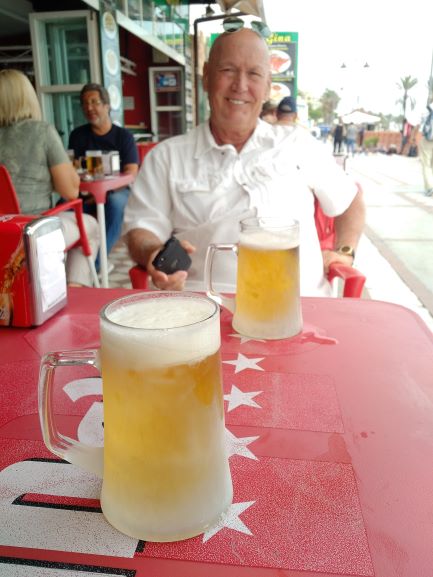
In spite of the warnings about carbs, alcohol and caffeine… bread, beer (or wine) and coffee can all have a place in a healthy lifestyle. These are things that many people enjoy and they are frequently consumed in a relaxing social setting…something that’s good for our health and enjoyment of life.

Although bread, beer and coffee each contain nutrients that our bodies need, certainly, part of the benefit of these foods is how we often consume them… often with friends or family, and usually in a relaxed atmosphere. How you eat can be as important as what you eat. Enjoyment and relaxation, freedom from worry, and spending time with pleasant company are all factors that contribute to a longer, healthier and more enjoyable life!

First there’s bread, with those “deadly” carbs…

While certain people, those with celiac disease or sensitive/allergic to wheat, need to avoid wheat bread, for the rest of us it’s a healthy food that has been part of humans’ diets for thousands of years. Bread is a source of vitamins B and E, and minerals such as iron, magnesium, selenium and more! Whole grain versions provide a rich source fiber as well, and increased fiber is known to be beneficial in preventing bowel problems and improving blood cholesterol.

I must confess, I love bread and I even enjoy making my own bread. Now, don’t be too impressed…bread is actually very easy to make and, other than the waiting time for it to rise, it really doesn’t take a lot of time. I find it’s a very rewarding activity and it’s always appreciated when you share a loaf! When making your own bread, you can even experiment with different ingredients and shapes. But you can also buy wonderful breads, especially if you have a bakery nearby.

I think the key, with bread, is to choose a high fiber version made with interesting grains and, at the same time, you will be choosing flavourful breads with a variety of textures. Make sure your carbs count so you’re getting a tasty nutritional food when you eat it. Leave the bland white bread that’s loaded with preservatives on the grocery shelf and choose a real bread. If you don’t eat it quickly enough, just put part of the loaf in the freezer. When you take it out it will be just as delicious as when fresh…

Studies suggest that eating moderate amounts of bread could reduce risk of dying from heart disease or any cause by 15-18%.

And the “evil” alcohol…

Everything in moderation is good advice when it comes to alcoholic beverages. There are over 100 studies that show moderate drinking is associated with a reduced risk of heart attack, stroke, peripheral vascular disease, sudden cardiac death and death from all cardiovascular causes… a 25 to 40% reduction in risk according to an analysis from the Harvard School of Public Health in 2017.

On the other hand, there is some evidence that alcohol can increase risk of some cancers and heavy drinking is known to cause liver damage and increased risk of accidents. The key is in the quantity consumed. The consensus seems to be that 1 or 2 drinks a day, with some alcohol-free days, is an acceptable balance. Of course, doctors are unlikely to advise anyone to start drinking alcoholic beverages to improve health, and some people should avoid alcohol if they have certain medical conditions or medications. It’s also not advisable to drink to get drunk or to consume any alcohol
when pregnant, before driving or before operating dangerous machinery.

The key is to limit consumption to a moderate amount and only to partake when it contributes significantly to enjoyment and relaxation in your life. Moderate drinking is part of many healthy lifestyles around the world.

And what about caffeine…

A series of studies in the 1970s and 1980s suggested that coffee was associated with higher rates of cancer and heart disease. But these studies didn’t adjust for smoking and other lifestyle choices (picture how many people used to have a cigarette and coffee together…). Modern studies report that 3 to 5 cups a day of coffee could improve cardiovascular health, lowering risk of stroke, Parkinson’s disease, Alzheimer’s and type 2 diabetes… and perhaps even reduce the chance of dying early from all causes!

Literature reviews, like the one published by the American Heart Association in 2014 that looked at data from over 1 million people, found that coffee drinkers were at the lowest risk for heart-related problems. Of course, this doesn’t mean you need to drink coffee to prevent a stroke or heart attack, but it does rule out the idea that it could cause these conditions.

With both coffee and a glass of beer or wine, perhaps an important factor in the benefit you may reap is that you take a break when you consume them. You relax while you sip them slowly savouring the flavour and, often, you are enjoying someone’s company while you drink that tasty beverage. Who knows… maybe that’s the source of the observed health benefits!

I liked this quote from The Good Vices by Harry and Erik Ofgang… “Enjoyment may be an important, and all too often forgotten, part of the healthy living equation.” The link between health and happiness is still unclear, but studies on those who have lived for over 100 years suggest that being happy is a factor in longevity, along with moderate exercise, a healthy plant-based diet, close relationships with family and friends, having a goal in life and feeling useful.

So, “everything in moderation” is my mantra. And seeking enjoyment in your daily activities may just be good for your health!

References:

Bread, Beer and Coffee Are Healthier Than You Know – Medium

The Good Vices — Dr. Harry Ofgang and Erik Ofgang

#healthyliving

#beerlovers

Categories
Uncategorized

Arthritis Alternatives

Many people turn to supplements to ease joint problems. But how effective are they? And are they really safer that standard medications?

Standard medications

Interest in supplements for osteoarthritis is increased because of problems with non-steroidal anti-inflammatory drugs (NSAIDs), drugs like ibuprofen, diclofenac and naproxen, that are often used to treat the pain and inflammation associated with arthritis. These drugs increase the risk of bleeding in the stomach, particularly if the person is also taking aspirin, blood thinners or steroids (such as prednisone). They also increase the risk of kidney and heart diseases. If it is necessary to take an NSAID, naproxen has been shown to cause less risk than other drugs in this class. There is also some evidence that NSAIDs may increase the rate of progression of osteoarthritis (the “wear and tear” arthritis).

All of this has resulted in several guidelines recommending acetaminophen (Tylenol) as a first-choice treatment for osteoarthritis, although it appears to be less effective and does not address the inflammation of arthritis. Side effects of standard anti-inflammatories have also resulted in increased interest in alternatives to standard drugs for arthritis.

How safe and effective are alternatives?

The quick answer is that alternatives commonly used for symptoms of arthritis are safe to use at recommended doses, and some studies have shown that some give similar pain relief to NSAIDs, although results vary.

Medical News Today published a good review of supplements for healthy joints recently. They discussed how much evidence there is for 6 supplements that are promoted for joint problems. Here are the supplements included in their list:

1. Glucosamine – Glucosamine appears to be the supplement with the most evidence for use in osteoarthritis. There are two types available: glucosamine sulfate and glucosamine hydrochloride. Studies with positive results most often used the sulfate version, although some studies did not indicate which type was used. It is important to realize that not all natural supplements are created equal, and even the price does not always indicate quality. Patients told me that they noticed good results with a glucosamine sulfate made by Swiss Herbal company, and it was the least expensive one I had in my store! So, be sure to buy from a reputable company. Ask your pharmacist for a recommendation! The effective dose is 500mg three times daily, usually taken with meals (1500mg daily).

2. Chondroitin – The evidence is less clear for chondroitin. It has a modest ability to control pain in the joints (average of 10% improvement over placebo or “sugar pill”) but it has a lower risk of side effects than NSAIDs. This makes it an option for those who cannot or do not wish to take standard anti-inflammatories. It is often combined with glucosamine as some believe they may work well together to support the cartilage in joints, although there isn’t good evidence for this. A common dosage is 400mg three times daily (1200mg daily)

NOTE that both glucosamine and chondroitin contain types of sugar molecules that, in theory, could affect blood sugar. People with diabetes are recommended to check their blood sugar more often when starting either of these supplements. However, it appears to be a rare side effect, not noted in studies. Ordinary sugar contains 4000mg per teaspoon, as a comparison, so the 1200-1500mg of sugars in these medications would not make a difference to most diabetics with good control of their blood sugar.

3. Methylsulfonylmethane (MSM) – MSM is less studied than glucosamine and chondroitin, but has been found to improve inflammation, and joint/muscle pain, and to increase antioxidant activity in the body. It is well-tolerated by most people at doses up to 4 grams daily, with few known side effects that are mild in nature (mostly digestive upset). Since it is a general anti-inflammatory throughout the body, it is also used for other inflammatory conditions, such as interstitial cystitis, colitis, and seasonal allergies. Animal studies suggest it may reduce cartilage destruction by lowering inflammatory molecules in the joint fluid. This supplement is sold alone and in combination with glucosamine and chondroitin. Doses of 1.5 to 6 grams daily have been safely used but it appears more research is needed to determine the ideal dose. It is usually used in combination with other supplements and taken with meals.

4. Turmeric – Turmeric contains a compound called curcumin that appears to have a strong anti-inflammatory effect. Studies suggest that 1000mg per day of curcumin gives similar relief to standard anti-inflammatories such as ibuprofen, in terms of pain, morning stiffness and movement. However, studies were only short term, resulting in a recommendation of up to 1200mg daily for up to 4 months as being proven as safe (the limitation of the longest study). Note that turmeric, which contains the active compound curcumin, is commonly used in food, for example, curries.

5. Boswellia – Boswellia, or frankincense, also has an anti-inflammatory effect in the body similar to turmeric. It is usually taken in combination with other supplements, such as curcumin to reduce inflammation that leads to joint pain and destruction of cartilage. However, studies with it have been small, so do not provide enough evidence to make definite claims about its safety or effectiveness.

6. Tamarind seed – Tamarind seed contains several antioxidants that have an anti-inflammatory effect and could be beneficial for arthritic joints. One study suggests that it may protect joint cartilage by increasing protective substances while reducing destructive inflammatory molecules in the joint fluid. However, researchers are calling for further study to confirm these results.

So, from all I’ve read, glucosamine sulfate appears to have the best research to back it, but the sulfate version has shown more consistent results than the hydrochloride. A combination of supplements with different actions may give the best results, for example: glucosamine sulfate, chondroitin and MSM that is readily available in pharmacies, but more research should be done. However, as these supplements appear to be safer than traditional anti-inflammatories with less risk of side effects, they are worth trying. As with all supplements, though, discuss use of these with your doctor and pharmacist!

References:

6 supplements for healthy joints – Medical News Today

Osteoarthritis treatment update: Are NSAIDs still in the picture? – Rheumatology Network

Chondroitin for osteoarthritis – US National Library of Medicine (scroll down for plain language summary)

Methylsulfonylmethane: Applications and safety of a novel dietary supplement – US Library of Medicine

Tamarind Seed Extract Ameliorates Adjuvant-Induced Arthritis via Regulating the Mediators of Cartilage/Bone Degeneration, Inflammation and Oxidative Stress – Scientific Reports (posted on NIH)

#arthritis #glucosamine