Categories
Uncategorized

A “non-blog” this week…

What a week I’m having! Seems there’s no room on my schedule (or in my head!) for thinking about a blog. But rather than ignore all of you (my faithful readers!) perhaps I’ll tell you what I’m up to…

A visit from “Teddy”…

First, it’s another hurricane week – Teddy, this time. With memories of the damage from Dorian this time last year still fresh, we spent time putting outdoor things away and battening down the hatches. My hubby even put fresh caulking on the front windows that face the ocean. The storm has subsided now, and it all seems to have worked, except for damage to our poor flag…should have remembered to take it down. Thankfully, this storm wasn’t nearly as strong as last year’s…

Family too…

Next, a couple of my sisters-in-law who live up north are here for their annual shopping trip to Moncton… never too early to start Christmas shopping, and best to do it before the snow flies (and things ice up much earlier in northern New Brunswick than they do here). Of course, having visitors means doing some extra house cleaning so the place will look its best…and lots of chatting and laughter while we catch up!

And a new project!

But my big news is my new project… I’ve started working on the audiobook version of my book “Can I Speak to the Hormone Lady?” Some of you may have noticed that I made an audio version of my blog for a few weeks…that was to practice and learn now to read, record and edit audio files!

My book is aimed at women in their 40s and early 50s…those who are seeing menopause looming in their future, and who may already be noticing some changes in their cycles and want to be prepared.

When I was 40, I bought my first book on menopause because I didn’t want to be caught off-guard. I find that knowing about a subject makes it much less frightening. And knowledge gives you control.

Unfortunately, the first book I bought didn’t give me all the information I needed. Over the following 10 years I read many books about menopause and hormone imbalances. I realized that many women needed information and options, especially in the early 2000s when studies were finding problems with standard menopause therapies.

Many women had questions, and I researched to find answers and options for them. Eventually, I realized that if I met with them to gather information and learn their preferences, I could do a better job at making recommendations. I also realized that, if I wrote a concise report that summarized the information I gathered, we could share what I’d learned with the woman’s doctor. Almost all the doctors I did this for, appreciated the insight. They could never make enough time during a regular appointment to ask about all of a woman’s symptoms to form a complete picture of what she needed and how she wanted to approach therapy to get in control.

I constantly read studies and books, did online courses and attended live conferences in Toronto and Houston, Texas. I wanted to learn all I could so I could solve women’s hormone imbalance problems throughout her reproductive life. It was very gratifying to be able to make a difference in many women’s lives.

When I retired, I wanted to capture all I’d learned so I could continue to help women, so I wrote it all down in book form. I wanted it to have all the information women needed… I wanted it to be the book I was looking for when I turned 40.

Recently, I realized that younger women, the ones who could really benefit from my book, often prefer to listen to books while they’re doing other activities, like working out, driving to work or walking the dog. Being an avid reader since I was a child, I’d never really listened to audiobooks or podcasts and preferred books and blogs, written words.

But, since I want to be able to help as many women as possible, I decided to learn how to create an audio form of my book. I love learning new skills! I took an online course on how to create and edit an audiobook, tested out my skill by recording a few of my blogs, and got to work.

Meanwhile, I’ve been learning about how to market books… how to let people know that the information they’ve been looking for is available in a book I’ve written. The world of book marketing, whether a writer has published traditionally or self-published, is complex and constantly changing. So much to learn! But I keep studying ways to let people know about information I have to share, without being annoying or “salesy”.

Building a “Launch Team”

I realize that many or you who receive my emails are not interested in learning about the world of hormones. But I’d like to invite those who are, to join a separate group that will help me develop and launch my audiobook of hormone information. If you know any women in their 40s or early 50s that you think might also be interested, please pass my request on. I’m especially looking for volunteers who are keen to learn more about hormones, like to listen to audio, and will tell me what works and what doesn’t. It’s turning out to be a challenge to read the chapters that contain charts and summaries…and I could really use some feedback! Here is the link to sign up for the Launch Team list: https://mailchi.mp/a79fd38aac73/launch-team

I’m a little over half finished the recording now, and will have editing to do afterward, so it will be a few weeks until I have it ready to go. I’m planning to do a relaunch of my book at the same time and, hopefully, do a better job of it this time around!

Then I’ll be moving on to my next book – about another of my passions, the environment. No title yet!… I’m working on the outline currently…

#audiobooks #hormoneinformation

Categories
Uncategorized

Why facts don’t always change our minds…

Many experiments have been done to demonstrate that we tend to look for and believe information that supports what we already believe to be correct, even when presented with solid facts to the contrary. In science this is called Confirmation Bias, and research methods are designed to prevent this from happening. In everyday life, some refer to this tendency as “myside” bias… we believe information from those who have the same opinion as we do.

And, when presented with contrary information, too often it is more important to win the argument or discussion than is it to listen to facts different from what we believe, to see if we can learn something new. Economist, J.K. Galbraith expressed it as: “Faced with a choice between changing one’s mind and proving there is no need to do so, almost everyone gets busy with the proof.”

Evolution

So, why do we cling to our beliefs, even when overwhelming evidence suggests we are not right? Psychologists explain it’s at least partly due to evolution. In the distant past, being part of a group or community meant a better chance of survival. It was better to be included in the tribe, even if they weren’t making the best choices, because it was almost impossible to survive alone. Agreeing with the other members of the tribe meant you would be accepted and kept safe.

But even today, socializing is still important to humans. We know that people live longer when they have community support. Accepting the ideas and beliefs of your group is often necessary to remain in the group. Being rejected and trying to create or join another social group is difficult.

We see this clearly in teenagers, where some will commit acts they know are wrong (like stealing, for example) or submit to dangerous hazing rites to be part of a group. As adults, peer influence is more subtle but still there. Researchers say we are more likely to change an opinion based on the influence of a less knowledgeable friend, with whom we agree on other topics, than we are based on solid information from an established expert.

Politics and social media

This is prevalent in politics and in any controversy that becomes politicized. Backing down or changing one’s mind when presented with facts can be seen as a weakness, a “flip-flop”, rather than as having the courage to admit when one is wrong and improve when presented with facts. In public discussions, such as on social media, a typical “troll” response, when presented with irrefutable evidence that they are wrong, is to switch to a personal attack rather than back down.

I had that happen to me once on social media… Although the comment was a bit rude, I just kept being nice and politely pointed out the links to studies that supported each statement. My blogs are based on science and rarely on anecdotes (and I tell you when anything is just my “opinion”). It turned out that we did similar work reviewing scientific articles but eventually he resorted to pointing out a typo on my website. I thanked him for his sharp eye and suggested he would make a great editor!

Personal experience

We can also tend to place more weight on personal experiences than on facts from experts we don’t know personally. An example is with vaccines. It’s easy to understand parents being suspicious about the safety of all vaccines if their child has had a reaction to one, even though science and experts overwhelmingly agree that vaccines save many, many lives overall. Of course, once a person has had a reaction to any vaccine extra caution needs to be exercised for future injections, but one rare case doesn’t negate years of evidence of the overall benefit of vaccines for the vast majority. Unfortunately, reports of these statistically rare cases are sometimes used to influence others who are not at risk to be skeptical about all vaccines too.

Communicating with your adversaries

Winston Churchill quite famously would sometimes preface a statement with “I may be wrong but…”, allowing the others more freedom to state their opinion, and himself greater freedom to change his mind. Since none of us can know everything, we all can have wrong opinions from time to time due to lack of information. To help you to learn the truth and make the best decisions, keep an open mind and try, always, to look at the facts and the sources of those facts. Always keep the potential for bias in mind, both yours and that of your information source.

But, since people tend to agree more often with friends, one way to influence the opinions of others is to get to know them. Even the simple act of sharing a meal can help you get to know each other enough to be more understanding and accepting of the others’ opinions.

Effect on the pandemic

Lastly, when it comes to COVID-19, we all need to realize that we still have a lot to learn about this disease and the virus that causes it. While some people feel confused and don’t know what to believe, we all need to realize that statements and decisions are being made with limited knowledge. As our knowledge evolves, decisions change and will continue to change. That should be expected. It’s too bad the experts didn’t preface early statements with “This may change in the future after more research but, for now, we recommend…”

Fortunately, the scientific method, which continually questions and re-evaluates previously held “facts” makes it easier to admit wrongness, based on newly-discovered evidence. But changes in policies and recommendations have created confusion for many who don’t understand the process. Unfortunately, refusing to accept the facts these days as our knowledge evolves can be risky to your health or that of others around you, including your “tribe”!

We are just starting to learn about the long-term consequences of COVID-19 because it’s only been around for a few months. New reports are surfacing about “long COVID”, those who continue to have disease symptoms for months after recovery, and about possible organ damage. Many experts predict a second wave of illness but it’s easy to think it will happen somewhere else or to someone else. The best strategy right now, is to be as careful as possible to avoid exposure to the novel coronavirus and find safe ways to satisfy our “tribal” social needs. Video chat, anyone?

P.S. …

We’ve been using a great video chat program called Whereby, noted for its security. Once you create a “chat room” (simple to do…) you can just send a link to your “room” to those you want to chat with – no need for others to download the program to chat with you. It works on a computer, phone or tablet and is free for up to 4 people/devices at a time. The link is just whereby.com/whatever-you-named-your-room then you “knock” for permission to be let in (prevents hackers from butting in to your call!). Seems like a great way to stay in touch with those you can’t safely visit…

References:

Why Facts Don’t Change Our Minds – James Clear

Why Facts Don’t Change Our Minds – The New Yorker

Whereby.com

‘Ill, abandoned, unable to access help:’ Living with long COVID — Medical News Today

#covid19factsvsmyth #WhyFactsDontChangeOurMinds #COVID19

Categories
Uncategorized

Get into the state of Flow…

and live a happier, more productive life!

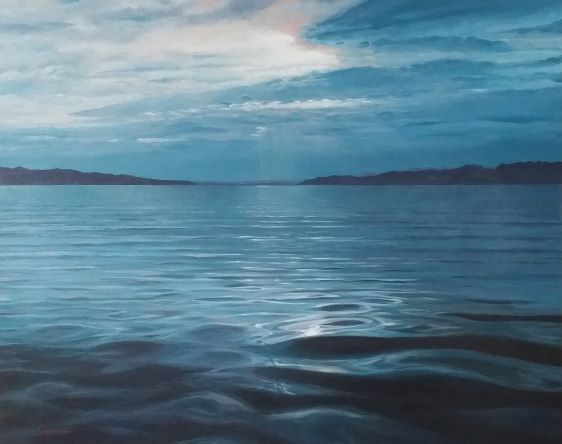
Wulastukw/Saint John River by Victoria Moon Joyce (Fredericton, NB)

What is Flow?

Flow is “a state in which people are so involved in an activity that nothing else seems to matter; the experience is so enjoyable that people will continue to do it even at great cost, for the sheer sake of doing it.” This is how researcher, Mihalyi Csikszentmihalyi describes this mental state. (His name is pronounced “Me hi Chick sent me hi” in case you’re wondering…) He also calls it a state of ecstasy, meaning stepping into an alternate reality or entering a mental state where you feel you are not doing your ordinary every day routines, and has spent much of his life studying artists, athletes, gamers and others who experience this regularly.

He was fascinated by people who could spend hours doing an activity they love, losing track of time and even bodily needs like hunger as they focus completely on what they are doing. He named this mental state “flow” because so many described the experience as effortlessly floating down a river, or as a sense of fluidity between the body and the mind.

Flow gives a general sense of well-being and a lasting sense of happiness and fulfillment, a pleasure that comes with being in the moment and doing something that you are passionate about. It’s a positive experience, known to produce intense feelings of enjoyment, lowered anxiety, raised self-esteem and improved mood. Getting into a state of flow regularly sounds like the ideal way to be happy and productive. It’s a state of optimal experience, and has been referred to as an active, moving form of meditation.

Here are 8 characteristics of flow:

  1. Complete concentration on the task
  2. Clear goals, value and reward of the task, and immediate feedback
  3. Transformation of time (speeding up or slowing down)
  4. A reward that is intrinsic (i.e. the reward is “inside” you)
  5. Effortlessness and ease in performing the task
  6. A balance between the challenge and your skills, with just enough challenge to keep you focused
  7. Actions and awareness are merged, a loss of self-consciousness
  8. A feeling of control over the task, and performance is improved

Anyone can get into a state of flow, but it is easier for some personality types. Those who are curious, persistent, have low levels of self-centeredness, and like to perform activities for intrinsic reasons only (for the personal satisfaction they get from it) tend to slip into flow more easily. Csikszentmihalyi describes such people as “autotelic” (from the Greek: autos=self, telos=goal or end), those who seek the experience itself as the goal rather than some future benefit.

How do you get into a “state of flow”?

You need to:

  • Know what to do and how to do it (i.e. have a goal and plan of action).
  • Care about the task at hand.
  • See or get feedback on how well you are doing, including when doing it well.
  • Have an activity that stretches your skills at a manageable level (so you don’t become distracted or bored) but not so difficult that you become anxious, stressed and frustrated. There needs to be a balance between the challenge and your skills.
  • Have freedom from distractions so you can focus totally on the activity, although once in flow, it becomes easier to resist distractions.
  • Focus on the process of the activity rather than on the outcome.

Humans can process about 110 bits of information per second. When what you’re doing totally consumes your focus, there’s no brain processing ability left to even be aware of your “self”. Conversation requires 60 bits of information per second so, in most cases (unless the conversation is part of the activity, for example in team sports), it’s impossible to get into flow while distracted by talking. Flow is possible in a team setting, however, and is reported to be even more enjoyable than being in a flow state by oneself, whether at work or in sports.

Getting into flow at work and school

Another characteristic of flow is improved performance and productivity. This makes flow a desirable state to achieve in the workplace. Matching challenges and skills, giving training regularly to increase these skills, and gradually increasing challenges to maintain focus and avoid boredom is a recipe for engaged and satisfied employees who produce the highest quality work in the shortest time. Workers need to also understand where and how their individual task fits into the overall purpose of the workplace, and to receive immediate feedback, both when they do a good job and when they need to improve.

Artists, musicians, writers, dancers, and gamers benefit from flow and this can make the activity even more pleasurable and rewarding. Spiritual practices like yoga can make it easier to learn how to get into flow as they include a meditation component. Some people even have a routine they do to clear their mind and set themselves up for flow.

In online education (and social media too, for that matter…), a goal is to keep the person’s attention as much as possible for as long as possible. An ideal goal for any learning environment is to match challenges and skills, always feeding just enough information to continually stretch current skills at a manageable level to maximize learning, without overloading and causing anxiety or frustration. The Montessori school system is noted for successfully using this individualized approach with young children.

My experience…

I think I’m fascinated by all this because I’ve experienced flow many times. When playing classical guitar, I find myself essentially listening to myself play rather than thinking about what I’m doing and, if my concentration wanders even a bit, I’m lost and have to start the song over. I’ve always felt this was just a little weird and could never understand quite what was happening until I read about flow.

A happier life

Experts tell us that, once basic needs are satisfied, material things like a bigger house or a new car bring only fleeting enjoyment and not long-term happiness. But learning how to get into flow and making the effort to get into this mental state regularly sounds like an ideal way to create a happier and more productive life.

How about you?

Have you ever been so absorbed in an activity that you lost track of time altogether? Do you have a routine that prepares you slip easily into flow when starting an activity?

End note:

The photo above is of a painting by New Brunswick artist, Victoria Moon Joyce, entitled “Wulastukw/Saint John River”. I enjoy the serenity of hints of sunlight on the flowing water of the Saint John River (near where we lived for several years) every day… I am so fortunate to have it hanging in my living room. Enjoy more of Moon Joyce’s art on the Gallery 78 website.

References:

3 Hours of Creative ‘Flow’ Every Day Is All You Need to Change Your Life – Medium.com

‘Flow’ Can Help You Achieve Goals – Very Well Mind

What is a flow state and what are its benefits? – Headspace

Flow, the secret to happiness – TED Talk

Flow – Wikipedia

Victoria Moon Joyce — Gallery 78

Categories
Uncategorized

Would you like a side of plastic with that?

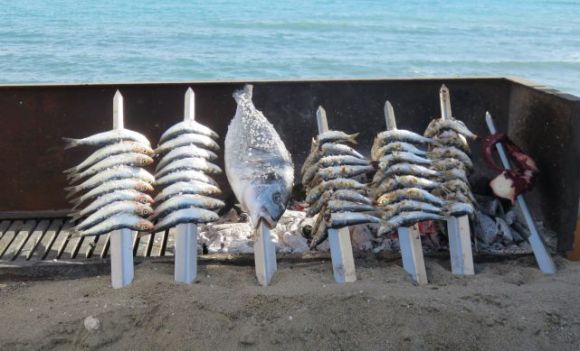
Two studies, one in Canada and another in Australia, have found plastic in supermarket seafood – not just in the stomachs of the fish, but in the flesh too. This means we are eating plastic when we enjoy a tasty nutritious seafood dish. But how much? And is it harmful?

For many years, the eye of environmentalists has been on plastics found floating in our oceans and lakes. We’ve all seen photos of sea life and birds being tangled in plastic rope or strangled by loops of plastic packaging. And that’s a concern.

But, at the same time, sun, wind and waves have been breaking down these plastics into smaller and smaller fragments that even the tiniest water creatures can consume. Research is just beginning to look at what effects this may be having on marine life.

However, there’s a good chance this plastic could be affecting us too when we eat seafood. Besides the content of plastic itself, which is composed of many chemicals, these microplastics are carriers of other chemicals, like PCBs, pesticides, flame retardants, and many kinds of hormone-disrupting compounds. And they’re all through the fish, not just in their digestive system, so gutting out the digestive organs doesn’t remove the plastic. How much does this affect our health? Scientists don’t know yet but, at least, they are staring to look at the problem.

My story…

I’m probably aware of the potential health effects more than most. Years ago, I thought using a Tupperware tumbler with a “sippy” lid (that my kids no longer needed) as a car coffee cup was a great idea. It fit in the car cup holder and didn’t spill all over the place in the car. And I had lots of them so they could just go into the dishwasher afterward.

I used these for months, enjoying my morning coffee daily on my way to work. But eventually, my coffee started to taste more and more like plastic. I remember stopping one day and dumping it, because it tasted just awful…

But through this time, I had started getting some health issues. A bad PAP test, breast lumps that, fortunately, were just benign fluid filled cysts (not considered dangerous), and even a little cervical cryosurgery. But a few months after I stopped using the sippy cups, the problems all went away.

I didn’t make the connection to the plastic cups until I went to a showing of a documentary film about the connections between the environment and breast cancer with a long-time friend who’s a cancer survivor. It was organized by the local breast cancer support group and open to the public. The documentary was called “Exposure: Environmental Links to Breast Cancer” and the producer and director were there to discuss the film and answer questions afterward. I have included a link to the full 53-minute documentary in the references below, if you’d like to watch it. It’s worth an hour of your time…

One of the environmental links discussed, was plastic or chemicals from plastic that make their way into our food through contact. They explained that simply microwaving food in plastic, especially fatty food, could leech hormone-disrupting chemicals into your meal. These chemicals can mimic the action of our own hormones, over-stimulating organs like the breast that respond to hormones. They can also block the beneficial actions of hormones, leaving us with a dangerous hormone imbalance.

I quickly made the connection between the coffee cups I had been using and my health problems. The coffee was leeching ingredients from the plastic, helped along by the heat and oils in the coffee, and I had been giving myself a daily dose.

A story about alligators

An additional problem is that these chemicals, those in pesticides and herbicides as well as plastics, are fat soluble and tend to be stored in fatty tissues in our bodies. Animal studies suggest that small exposures over a long period of time can add up and become equivalent to a large exposure. Studies on alligators in Florida lakes, comparing those in Lake Apopka (which was exposed to a chemical spill) to those in Lake Okeechobee (which had low levels of pollution over time) and Lake Woodruff (which was still pristine), demonstrate this.

The same health changes were found in alligators in the first two lakes, although more severe in the lake that received the large chemical spill. Animals in both lakes had disruptions in hormones: low testosterone and small penis size in males, malformed “burned out” ovaries in females; all had altered thyroid hormone levels. This showed that low level chemical exposure accumulated over time, resulting in health problems similar to those caused by a single large exposure.

Alligators are considered worth of study and comparison to humans because we are both at the top of the food chain and tend to concentrate the environmental chemicals consumed by the chain of organisms that create our food. Lowered testosterone levels have been reported in humans, fertility problems are on the rise and thyroid issues are rampant in humans. The thyroid replacement drug, Synthroid, is among the most prescribed medications.

Back to plastics…

I read an article this week about how campaigns to reduce single-use plastics have had to be put on hold during the pandemic. To protect cashiers in stores, they were told to begin using disposable plastic bags and this is understandable (although one should be asking, why not paper bags!). However, I never stopped using my reusable bags and simply asked to pack them myself. In Costco, we pack our bags as we put our goods into the car. We need to get back on track with reducing our use of plastics and find a way to do it safely.

There are so many ways for chemicals from plastics and other sources to be introduced into our food supply. Microbeads in toiletries were banned in Canada and elsewhere 2018 but much more microplastic makes its way into the environment through plastic bags, Styrofoam containers and plastic cutlery, according to Chelsea Rochman, University of Toronto ecologist. “It has infiltrated every level of the food chain in marine environments…and so now we’re seeing it come back to us on our dinner plates.”

Is it affecting our health?

Researchers say they don’t fully understand the risks to human health yet, but new methods of detecting microplastics in food will make it easier to find out. However, microplastics and the tinier bits called nanoplastics have been found in sea salt, beer, honey and bottled water. They can also be deposited on food as dust particles and during processing and packaging of the food, so there’s a good chance it’s in more than just fish. Even opening plastic packaging can result in shedding of microplastics in your home.

It’s very difficult to avoid all exposure to environmental chemicals now, but we do have some control on the level of exposure in our personal environment. I wrote about strategies to do this in my August 3, 2018 blog: Plastic? Think twice.

We can also demand that our governments find safe ways to continue the process of reducing and eventually eliminating sources of plastic that end up polluting our environment and our food. And we can change our personal use of plastic items, starting with avoiding single-use plastics and purchasing foods that are not wrapped in plastic. Stores respond to demands of consumers… Think of it as a sort of “voting with your wallet.”

So, what will you do differently, starting today, to reduce your exposure to plastics and other harmful chemicals? Comment below so we can all benefit from YOUR ideas…

#Environment #HormoneDisruptors #PlasticInSeafood #EnvironmentalConnectionsToBreastCancer

References:

Exposure: Environmental Links to Breast Cancer – Martha Butterfield, Francine Zuckerman, Dorothy Goldin Rosenberg

Research Finds Alligator Problems Also Evident In Less Polluted Lakes – Science Daily

Microplastics found in supermarket fish, shellfish – CBC News

Study found plastic in every seafood sample it analyzed – Medical News Today

Fight against single-use plastics sidelines by COVID-19, report finds – CBC News

Plastic bans, environmental monitoring get short shrift during pandemic – CTV News