Categories
Uncategorized

Why didn’t we see this coming?

So many of us are surprised at what is happening these days with the rapid spread of the new coronavirus and so many deaths. But scientists have known for years that this was likely to happen…they said it wasn’t “if” a pandemic would occur but “when” that was in question. The Spanish Flu of 1918 was a good example of how a virus could spread when no one was watching.

If fact, we discussed the possibility of a pandemic at least 15 years ago when I was on the New Brunswick pharmacy regulatory board. We put in place a mechanism to enable quick licensing of retired pharmacists to continue providing basic pharmacy services to the public, should too many of those on the front lines become ill.

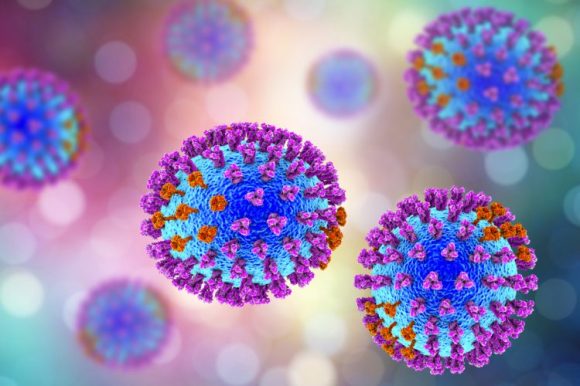
Again, when I was learning about viral infections as part of my training to give injections and to teach other pharmacists how to do immunizations, I learned that there are two basic types of viruses…those that spread easily and those that cause severe infections in the lungs. Fortunately, most viruses are one type or the other. But when a virus combines the ability to spread from person to person easily with the ability to cause severe illness, it becomes a candidate for causing a dangerous pandemic. And when it’s a completely new virus, no one has immunity. The new coronavirus that causes COVID-19 is one of these (fortunately) rare ones. And we are quickly seeing and feeling its effects.

Reading about science…

One problem is that too many of us don’t hear what our scientists are saying. Science is often hidden behind pay walls instead of being openly shared, charging subscription fees or $35 per article to read the evidence. And, too often, the results of studies are written in scientific lingo that the average person can’t understand.

Sometimes, science news is shared by non-scientists who don’t translate the information accurately, causing confusion and misunderstanding. An example is the current stockpiling of chloroquine and hydroxychloroquine, based on news reports that they might prevent or treat COVID-19. Experimenting with potent drugs based on rumour and hearsay can be dangerous. There have been reports of patients who have ended up in hospital after taking chloroquine based on sketchy news reports. As yet, no proof exists that chloroquine or hydroxychloroquine work, that either is safe to use against this virus, or what dose should be used. Scientists have organized methods to test drugs safely and thoroughly before they are used by sick patients. Perhaps our scientists, themselves, should write summaries of their research work that can be clearly understood by all and are accessible to the public and news media.

Believing the facts…

For some, being part of a social group with certain beliefs keeps minds closed to the facts. Humans are social beings and, when faced with a choice of being included in a group or standing up for the facts we have been shown, many need to stay with their social group, finding ways to “prove” the facts must be wrong. We’ve all seen videos of teenagers partying on beaches, who have convinced themselves the warnings don’t apply to them… people crowded in parks, convinced that only those over 80 need to worry…

It’s also harder to make choices that you know will cost you money. But governments, listening to the scientists, are making the tough decisions that will save lives. Doctors and scientists are telling us what is likely to happen if we don’t change our behaviours quickly to prevent the spread of the COVID-19 virus infection. We are starting to see the results of our slow early reactions.

But we are displaying a similar lack of attention to what scientists are saying is going to happen as a result of climate change. We certainly need to focus on following the advice of experts right now to avoid exposure to this virus but, hopefully, we are learning a good (if costly) lesson. We need to heed the advice of experts who warn us of potential world problems.

In spite of the difficulties in making changes when a problem isn’t yet affecting our daily lives, it is much less costly and “inconvenient” to prevent problems than it is to fix them after they occur. And prevention, wherever it can be applied, can save lives and prevent suffering. Forgive me for going off on a bit of a tangent, but one of my pet peeves is the “war on cancer” – while it would be wonderful to find a cure for all cancers, many could be prevented. We need more research into causes of diseases like cancer and better strategies to prevent them. This would extend lives, prevent suffering and save a lot of money that could be used to better everyone’s lives.

Occupying ourselves during isolation…

You know, it’s interesting how science fiction—the product of people’s imagination—can sometimes predict the future… I’m not talking about zombies, of course, but, just as they foresaw landing on the moon, sci-fi writers have imagined various scenarios where disease could disrupt society. Some of these imagined disaster movies and books, like Contagion and Andromeda Strain, have resurged in popularity, as movie fans compare the sci-fi version to the current crisis.

Spoiler alert… Andromeda Strain has a happy ending with quick action taken by government (I read it last year) but I haven’t seen Contagion yet. Maybe I’ll watch it this evening, just to see how the writer’s imagined crisis compares to what is happing now…

Or, to pass the time while self-isolating to reduce the magnitude of this crisis, maybe we can learn about the next potential one…climate change. I found a list of the best (and potentially most accurate) shows, as recommended by The Climate Reality Project (click here). Just like cancer and virus infections, it’s better and easier to prevent environmental damage than it is to try to fix it after it’s occurred… and costs less in money and lives to do it sooner rather than later.

But if watching a scary movie isn’t right for you right now… perhaps a phone call or video chat with family or friends (very easy with FaceTime, Messenger or other chat apps) and a feel-good novel (maybe a cozy mystery or romance?) might be just the things to pass the time and stay in touch with loved ones.

What are you doing to occupy yourself during this time of isolation? Or are you one of the many on the front lines we are so thankful for, working hard to help protect us? Post a comment below!

#COVID19 #climatechange

References/Further reading:

Why Facts Don’t Change Our Mind – James Clear

Must See Movies About Climate Change – The Climate Reality Project

Categories
Uncategorized

“Escape” from Europe

I’m so glad to be home in my quiet community of Cap-Pelé, NB! It was an interesting trip back from Spain. And I’ve changed several habits to reduce my chances of catching the virus while in Spain and while passing through 4 airports on the way home…

Wash hands

The first one was to wash my hands more often, and to wash them longer. When I wrote my Jan 31st blog about use of masks during the current COVID-19 pandemic, I realized I wasn’t washing my hands for a full 20 seconds. But at least I had already developed the habit of washing them first thing when I walk through the door. When out doing errands, I knew I was touching a lot of dirty surfaces: door handles, railings, money… and many others. I didn’t want to spread what I’d picked up around my home.

Avoid touching your face

The next habit to change was to stop touching my face with my hands. It’s amazing how many times I would scratch my nose, rub my eyes or touch my mouth unconsciously. And it’s a hard habit to break. I mean, what’s a girl to do when her nose is itchy? My solution is to use my sleeve to soothe the itch (not the one I use to sneeze or cough into, of course…) or, if I have a sleeveless outfit on, I use my forearm or the back of my wrist. Although I haven’t seen any “official” recommendations about this, it seems to make sense.

I cringed when I saw an employee in Charles de Gaulle, Paris airport, rubbing her mouth and chin as she worked on her computer at the check-in counter. I wondered how she missed the message, and how long it would be until she was sick…or whether she was already…

As for face masks, unless you need to be close to potentially sick people, the main benefit of a mask is to prevent you from touching your face. Even a scarf will do this, but you can train yourself to keep your hands away from your face, saving face masks (a scarce commodity these days!) for those in close contact with the ill.

Clean your phone

And, we know that bacteria and viruses live longer on hard smooth surfaces, like our cellphones (up to 2 to 3 days, for some organisms). I hadn’t thought about that until I saw a “question and answer” series on BBC. Someone asked how to clean a cellphone without ruining it. Here’s their answer: Some manufacturers recommend avoiding alcohol and harsh cleaners as they can damage the screen over time. They recommended, instead, using soap and water on a microfiber cloth, wrung out well, to wash all surfaces including the sides, being careful around openings. They even did a test to show how well this simple washing drastically decreased counts of organisms on the surface (impressive!). They also suggested checking cleaning recommendations from the manufacturer of your specific phone.

Other items that are handled when out, like keys, wallets, purse handles, etc. are items to think about too. Either wash them along with your phone or wash your hands (yet again!) after touching them when at home. Remember that viruses can live on hard surfaces for up to 2 to 3 days.

Cover coughs and keep your distance

I’m sure you’ve already been told to cough or sneeze into a tissue (and throw it away) or into your sleeve with bent elbow. And we’ve all been told to practice “social distancing” when around other people… staying at least 2 arm lengths (2meters/6feet) away from others. Alternatives to handshaking, hugs and kisses are springing up: touching elbows or toes, hand over the heart, Namaste or (my favourite!) the “virtual hug” with “air kisses”.

Of course, we’re staying at home or in our yard for 2 weeks, avoiding all contact with others, after being in Spain and (worse yet!) passing through all those airports. The line-ups were the same as always—large rooms filled with people close together, as we shuffled in multiple lines for 2 hours to pass through customs or to board planes. My husband suggested we stay close to those wearing masks…we were unable to find any for ourselves for the trip, although we checked several stores and pharmacies. Although they’re not recommended for general use in people who are not sick, they seemed like a good idea since we knew there would be close contact with many other travellers. It was notable that the only hand wash station I saw was in the last airport, in Moncton, NB!

Leave shoes at the door

At home, I also have the habit of removing my shoes at the door. This was reinforced in Spain by the state of the sidewalks there – so many dogs and birds, leaving their “calling cards” (as my grandfather used to call them) behind. It pays to walk with your head down, even when the scenery is amazing. Sometimes I took my sandals into the shower when I got back and sprayed them with hot water then washed the tub…

We were only due to return in mid-April and were extremely lucky to have been able to change our tickets to earlier flights. Some of our relatives and friends are still in Spain, trying to get earlier flights (which we hear can take 30 hours and can cost $3000 per person for a 1-way fare). When walking to the grocery store in Spain, my sister-in-law told us they were stopped by police, asking where they were going. On the return walk, they were stopped again and told that only 1 person was to go grocery shopping next time. We are hoping that planes will still be flying on the dates when their original flights are scheduled.

So, in summary, here’s a checklist:

1. Wash hands often for at least 20 seconds

2. Avoid touching your face

3. Clean frequently touched surfaces with soap and water, including your phone

4. Cough or sneeze into your bent elbow

5. Keep a “social distance” of at least 2 arms length from others until the situation improves

6. Remove your shoes at the door

The situation is changing quickly and recommendations for behaviours to slow the spread of COVID-19 and protect yourself and others are becoming more stringent every day. Pay attention to what is recommended in your area—and that may mean just staying at home—and follow it closely. Even if you are not at high risk, you could pass the virus on to someone who could die from it.

Some are comparing the current pandemic to the Spanish Flu of 1918 that spread unchecked throughout the world, killing an estimated 50 to 100 million people. Of course, they had no vaccines then, and communication was poor with the Great War in full swing. If you’re wondering why governments are taking such drastic actions right now, watch this 11-minute video about the horrors of 1918… the Spanish Influenza.

Meanwhile, I’m dousing my poor, dry (but so clean!) hands with moisturizer…they look like hands of a 90-year-old after so much cleaning with alcohol gel and wipes on my trip home! Missing the warm Spanish sun, but so happy (and lucky!) to be home…

Around the world, people are being encouraged to come together but stay physically apart. Help out your neighbours and those you love but do it from a safe distance! Stay well…

#COVID #preventingvirusinfections

Categories
Uncategorized

Bread, Beer and Coffee…

Can they be part of a healthy lifestyle?

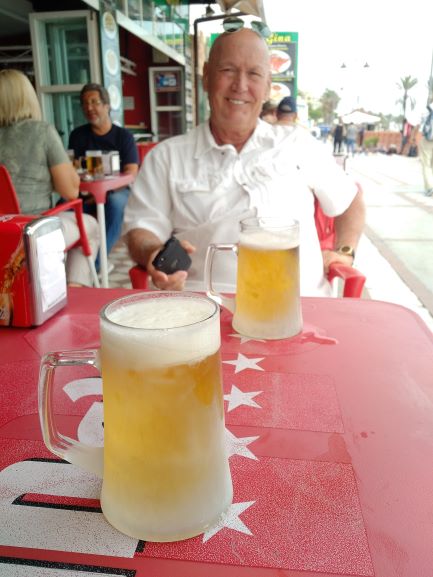
In spite of the warnings about carbs, alcohol and caffeine… bread, beer (or wine) and coffee can all have a place in a healthy lifestyle. These are things that many people enjoy and they are frequently consumed in a relaxing social setting…something that’s good for our health and enjoyment of life.

Although bread, beer and coffee each contain nutrients that our bodies need, certainly, part of the benefit of these foods is how we often consume them… often with friends or family, and usually in a relaxed atmosphere. How you eat can be as important as what you eat. Enjoyment and relaxation, freedom from worry, and spending time with pleasant company are all factors that contribute to a longer, healthier and more enjoyable life!

First there’s bread, with those “deadly” carbs…

While certain people, those with celiac disease or sensitive/allergic to wheat, need to avoid wheat bread, for the rest of us it’s a healthy food that has been part of humans’ diets for thousands of years. Bread is a source of vitamins B and E, and minerals such as iron, magnesium, selenium and more! Whole grain versions provide a rich source fiber as well, and increased fiber is known to be beneficial in preventing bowel problems and improving blood cholesterol.

I must confess, I love bread and I even enjoy making my own bread. Now, don’t be too impressed…bread is actually very easy to make and, other than the waiting time for it to rise, it really doesn’t take a lot of time. I find it’s a very rewarding activity and it’s always appreciated when you share a loaf! When making your own bread, you can even experiment with different ingredients and shapes. But you can also buy wonderful breads, especially if you have a bakery nearby.

I think the key, with bread, is to choose a high fiber version made with interesting grains and, at the same time, you will be choosing flavourful breads with a variety of textures. Make sure your carbs count so you’re getting a tasty nutritional food when you eat it. Leave the bland white bread that’s loaded with preservatives on the grocery shelf and choose a real bread. If you don’t eat it quickly enough, just put part of the loaf in the freezer. When you take it out it will be just as delicious as when fresh…

Studies suggest that eating moderate amounts of bread could reduce risk of dying from heart disease or any cause by 15-18%.

And the “evil” alcohol…

Everything in moderation is good advice when it comes to alcoholic beverages. There are over 100 studies that show moderate drinking is associated with a reduced risk of heart attack, stroke, peripheral vascular disease, sudden cardiac death and death from all cardiovascular causes… a 25 to 40% reduction in risk according to an analysis from the Harvard School of Public Health in 2017.

On the other hand, there is some evidence that alcohol can increase risk of some cancers and heavy drinking is known to cause liver damage and increased risk of accidents. The key is in the quantity consumed. The consensus seems to be that 1 or 2 drinks a day, with some alcohol-free days, is an acceptable balance. Of course, doctors are unlikely to advise anyone to start drinking alcoholic beverages to improve health, and some people should avoid alcohol if they have certain medical conditions or medications. It’s also not advisable to drink to get drunk or to consume any alcohol
when pregnant, before driving or before operating dangerous machinery.

The key is to limit consumption to a moderate amount and only to partake when it contributes significantly to enjoyment and relaxation in your life. Moderate drinking is part of many healthy lifestyles around the world.

And what about caffeine…

A series of studies in the 1970s and 1980s suggested that coffee was associated with higher rates of cancer and heart disease. But these studies didn’t adjust for smoking and other lifestyle choices (picture how many people used to have a cigarette and coffee together…). Modern studies report that 3 to 5 cups a day of coffee could improve cardiovascular health, lowering risk of stroke, Parkinson’s disease, Alzheimer’s and type 2 diabetes… and perhaps even reduce the chance of dying early from all causes!

Literature reviews, like the one published by the American Heart Association in 2014 that looked at data from over 1 million people, found that coffee drinkers were at the lowest risk for heart-related problems. Of course, this doesn’t mean you need to drink coffee to prevent a stroke or heart attack, but it does rule out the idea that it could cause these conditions.

With both coffee and a glass of beer or wine, perhaps an important factor in the benefit you may reap is that you take a break when you consume them. You relax while you sip them slowly savouring the flavour and, often, you are enjoying someone’s company while you drink that tasty beverage. Who knows… maybe that’s the source of the observed health benefits!

I liked this quote from The Good Vices by Harry and Erik Ofgang… “Enjoyment may be an important, and all too often forgotten, part of the healthy living equation.” The link between health and happiness is still unclear, but studies on those who have lived for over 100 years suggest that being happy is a factor in longevity, along with moderate exercise, a healthy plant-based diet, close relationships with family and friends, having a goal in life and feeling useful.

So, “everything in moderation” is my mantra. And seeking enjoyment in your daily activities may just be good for your health!

References:

Bread, Beer and Coffee Are Healthier Than You Know – Medium

The Good Vices — Dr. Harry Ofgang and Erik Ofgang

#healthyliving

#beerlovers

Categories
Uncategorized

Arthritis Alternatives

Many people turn to supplements to ease joint problems. But how effective are they? And are they really safer that standard medications?

Standard medications

Interest in supplements for osteoarthritis is increased because of problems with non-steroidal anti-inflammatory drugs (NSAIDs), drugs like ibuprofen, diclofenac and naproxen, that are often used to treat the pain and inflammation associated with arthritis. These drugs increase the risk of bleeding in the stomach, particularly if the person is also taking aspirin, blood thinners or steroids (such as prednisone). They also increase the risk of kidney and heart diseases. If it is necessary to take an NSAID, naproxen has been shown to cause less risk than other drugs in this class. There is also some evidence that NSAIDs may increase the rate of progression of osteoarthritis (the “wear and tear” arthritis).

All of this has resulted in several guidelines recommending acetaminophen (Tylenol) as a first-choice treatment for osteoarthritis, although it appears to be less effective and does not address the inflammation of arthritis. Side effects of standard anti-inflammatories have also resulted in increased interest in alternatives to standard drugs for arthritis.

How safe and effective are alternatives?

The quick answer is that alternatives commonly used for symptoms of arthritis are safe to use at recommended doses, and some studies have shown that some give similar pain relief to NSAIDs, although results vary.

Medical News Today published a good review of supplements for healthy joints recently. They discussed how much evidence there is for 6 supplements that are promoted for joint problems. Here are the supplements included in their list:

1. Glucosamine – Glucosamine appears to be the supplement with the most evidence for use in osteoarthritis. There are two types available: glucosamine sulfate and glucosamine hydrochloride. Studies with positive results most often used the sulfate version, although some studies did not indicate which type was used. It is important to realize that not all natural supplements are created equal, and even the price does not always indicate quality. Patients told me that they noticed good results with a glucosamine sulfate made by Swiss Herbal company, and it was the least expensive one I had in my store! So, be sure to buy from a reputable company. Ask your pharmacist for a recommendation! The effective dose is 500mg three times daily, usually taken with meals (1500mg daily).

2. Chondroitin – The evidence is less clear for chondroitin. It has a modest ability to control pain in the joints (average of 10% improvement over placebo or “sugar pill”) but it has a lower risk of side effects than NSAIDs. This makes it an option for those who cannot or do not wish to take standard anti-inflammatories. It is often combined with glucosamine as some believe they may work well together to support the cartilage in joints, although there isn’t good evidence for this. A common dosage is 400mg three times daily (1200mg daily)

NOTE that both glucosamine and chondroitin contain types of sugar molecules that, in theory, could affect blood sugar. People with diabetes are recommended to check their blood sugar more often when starting either of these supplements. However, it appears to be a rare side effect, not noted in studies. Ordinary sugar contains 4000mg per teaspoon, as a comparison, so the 1200-1500mg of sugars in these medications would not make a difference to most diabetics with good control of their blood sugar.

3. Methylsulfonylmethane (MSM) – MSM is less studied than glucosamine and chondroitin, but has been found to improve inflammation, and joint/muscle pain, and to increase antioxidant activity in the body. It is well-tolerated by most people at doses up to 4 grams daily, with few known side effects that are mild in nature (mostly digestive upset). Since it is a general anti-inflammatory throughout the body, it is also used for other inflammatory conditions, such as interstitial cystitis, colitis, and seasonal allergies. Animal studies suggest it may reduce cartilage destruction by lowering inflammatory molecules in the joint fluid. This supplement is sold alone and in combination with glucosamine and chondroitin. Doses of 1.5 to 6 grams daily have been safely used but it appears more research is needed to determine the ideal dose. It is usually used in combination with other supplements and taken with meals.

4. Turmeric – Turmeric contains a compound called curcumin that appears to have a strong anti-inflammatory effect. Studies suggest that 1000mg per day of curcumin gives similar relief to standard anti-inflammatories such as ibuprofen, in terms of pain, morning stiffness and movement. However, studies were only short term, resulting in a recommendation of up to 1200mg daily for up to 4 months as being proven as safe (the limitation of the longest study). Note that turmeric, which contains the active compound curcumin, is commonly used in food, for example, curries.

5. Boswellia – Boswellia, or frankincense, also has an anti-inflammatory effect in the body similar to turmeric. It is usually taken in combination with other supplements, such as curcumin to reduce inflammation that leads to joint pain and destruction of cartilage. However, studies with it have been small, so do not provide enough evidence to make definite claims about its safety or effectiveness.

6. Tamarind seed – Tamarind seed contains several antioxidants that have an anti-inflammatory effect and could be beneficial for arthritic joints. One study suggests that it may protect joint cartilage by increasing protective substances while reducing destructive inflammatory molecules in the joint fluid. However, researchers are calling for further study to confirm these results.

So, from all I’ve read, glucosamine sulfate appears to have the best research to back it, but the sulfate version has shown more consistent results than the hydrochloride. A combination of supplements with different actions may give the best results, for example: glucosamine sulfate, chondroitin and MSM that is readily available in pharmacies, but more research should be done. However, as these supplements appear to be safer than traditional anti-inflammatories with less risk of side effects, they are worth trying. As with all supplements, though, discuss use of these with your doctor and pharmacist!

References:

6 supplements for healthy joints – Medical News Today

Osteoarthritis treatment update: Are NSAIDs still in the picture? – Rheumatology Network

Chondroitin for osteoarthritis – US National Library of Medicine (scroll down for plain language summary)

Methylsulfonylmethane: Applications and safety of a novel dietary supplement – US Library of Medicine

Tamarind Seed Extract Ameliorates Adjuvant-Induced Arthritis via Regulating the Mediators of Cartilage/Bone Degeneration, Inflammation and Oxidative Stress – Scientific Reports (posted on NIH)

#arthritis #glucosamine

Categories
Uncategorized

How to stay healthier without trying…

How “walkable” is your neighbourhood? It could be influencing your physical and mental health without you realizing it…

Neighbourhood walkability measures how easy, interesting and functional it is to walk through the built-up parts of a neighbourhood. The more walkable a neighbourhood is, the healthier people who live there tend to be. And the relationship is strong. By making neighbourhoods more walkable, we can increase the health of the population of an entire area. Meanwhile, we can help improve our own health by living, visiting and vacationing in places where it’s easy and fun to walk.

I think that’s one of the attractions of wintering in Europe as a retiree. In some ways, Europeans seem to have figured out some things we are still learning in many parts of North America. If we can easily walk to do our errands (and decide to walk rather than drive when we need to do them!) we can incorporate our exercise into daily activities instead of trying to work it into our schedules as an “extra” activity we need to find time for.

For example, my hubby and I are staying in an apartment in southern Spain for 3 months to escape the winter snow in Canada. We decided to use public transit while here rather than rent a car as it’s inexpensive, reliable and convenient. I found a helpful app for my cellphone (called “Moovit”) to help us find bus routes and times, and the local tourist office has also been helpful to plan longer trips. We’ve found we really don’t want or need a car here.

The beautiful Mediterranean is just a block away, and it entices us to walk there every day to enjoy the scenery. When we need groceries, it’s a short walk (albeit uphill…) of about 15 minutes. While, I must confess, I thought I’d die the first time I climbed the steep road to the grocery store, we quickly adjusted and think nothing of going there every couple of days to pick up what we need.

We also walk regularly further up the hill to the next village to visit a nice restaurant or to go to the lovely market they have there every Friday for fresh fruits. vegetables and more! Here, we could walk for several hours, visiting shops, stopping for a bite to eat and enjoying the scenery and views, and think nothing of it at all! At home, we’d be proud to say that we had walked for a whole hour.

I have an activity tracker on my cellphone, and it’s interesting to look back at my monthly activity averages. Last fall, I averaged about 1 km of walking per day. In February, our first full month here, I have averaged over 6 km per day. I’ll be returning home in much better physical shape than when I arrived!

Effective public transportation is certainly part of it. If you use the bus, you are walking to the bus stop then doing errands on foot when you arrive at your destination. If the transit isn’t reliable or convenient enough, people won’t want to use it.

The density of the population in the area is also a factor. If you live in the country or suburbs, it would likely be a long time until the population would warrant good public transportation or local services close enough to walk to.

And, interestingly, even having sidewalk cafes and trees along the streets correlates with lower body mass index (a measure of body weight in proportion to height) of those who live in the area. These must make people want to walk more…

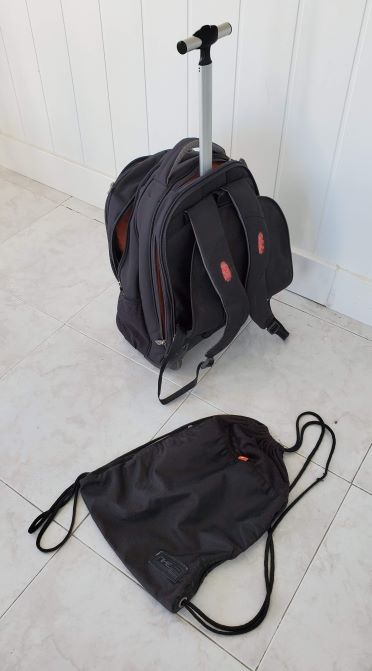
But you still have the option to drive to a beautiful, walkable neighbourhood, park your car and blend in with the locals…doing errands on foot, instead of driving from one stop to the next, or just enjoying the area as we do here. Two key factors are to find an area that has all the basic services you need on a regular basis and to have a convenient way to carry your parcels. Small, stringed backpacks, some of which can be folded and carried in your handbag when not in use, are popular here. Wheeled carts with fabric compartments designed to carry groceries are seen everywhere in this area. We have a nifty backpack that also has wheels and a retractable handle. It’s great as carry-on luggage that doubles for carrying our heavy items home from the grocery store. I also carry one of those stringed backpacks folded up in my purse—it’s great to stash parcels or a few groceries in or to pop my sweater into if the sun gets hot while out walking. (The photo below is of a couple of our bags…the backpack straps tuck into a zippered pocket when the wheels are used!)

So, next time you move, consider the walkability of the neighbourhood. If you’re vacationing, ask a travel agent or someone who’s been there about public transport in the area and locations of services like restaurants, grocery stores and pharmacies. At home, support local services within walking distance or look for an area where you can park and walk to do your errands. And encourage discussion with local politicians about making cities and neighbourhoods walking-friendly! Change happens most quickly when public policies encourage the changes we want to see. Making walking easy and fun where we live, work and vacation is good for everyone’s health…

#walkableneighborhoods #healthyliving #weightloss

References:

Neighborhood walkability associated with improved health outcomes — McMaster Optimal Aging Portal

Categories
Uncategorized

Preventing bowel cancer

Bowel cancer is also known as colorectal cancer as it includes cancers of the colon and the rectum. It’s one of the cancers that researchers have found ways to prevent and detect early, while it’s easier to treat. They can even catch it before it develops into cancer!

First, what factors put you at increased risk?

Some you can’t change:

  • Older age—most people diagnosed with bowel cancer are over age 50. However, increasing numbers of younger people are being diagnosed, although researchers aren’t sure why.
  • African-American race—African-Americans have a greater risk of colon cancer than those of other races. Again, the reasons are not clear.
  • History of bowel cancer or polyps (precancerous lumps of cells inside the colon)
  • Chronic inflammatory bowel disease
  • Family history of bowel cancer
  • Previous radiation therapy to the abdomen

Others are ones you can work on:

  • Low fiber/high fat diet—The typical Western diet is low in fiber and high in fat and calories, and is suspected of being associated with increased risk of bowel cancer
  • Diabetes—while it’s almost impossible to make diabetes go away once you have it, keeping your blood sugars under control can greatly lessen the negative effects of this disease
  • Obesity
  • Smoking
  • Alcohol—Heavy use of alcohol increases risk

Things you can do…

  1. Get screened regularly—Most bowel cancers develop slowly from precancerous growths called polyps that tend to bleed. Testing every 1 to 2 years for unseen or “occult” blood in the stool can lower risk of dying from bowel cancer by 1/3. It is also advised to see a doctor right away if you see blood in your stool or notice bleeding from the rectum to rule out cancer.
  2. Eat a healthy high fiber diet—Fiber reduces risk of constipation and inflammation of the bowel, both of which increase risk. Guidelines recommend 2 servings of fruit and 5 of vegetables daily plus wholegrain foods every day.
  3. Decrease red and processed meats—Researchers have noted a moderate effect of red meat on bowel cancer, especially when processed. They recommend avoiding charred meat.
  4. Be physically active—Get at least 30 minutes of moderate to vigorous exercise, 5 or more days a week to lower risk of cancer and polyps.
  5. Don’t smoke—There are so many reasons not to smoke and lowering risk of bowel cancer is another one.
  6. Maintain a healthy body weight—Obesity is linked to bowel cancer, especially abdominal obesity (belly fat) in men. Keeping a slimmer waistline reduces risk of several diseases in both men and women, including heart disease and diabetes.
  7. Drink alcohol in moderation—Heavy drinking may increase risk of bowel cancer. Guidelines recommend one drink per day for women and two for men, with 2 alcohol-free days per week, although some sources question the different levels for sexes.
  8. Know your family history and be screened more closely if you have relatives who have had polyps or bowel cancer.
  9. Those at high risk may benefit from taking a low dose of aspirin daily, but this has its side effects too. Talk to your doctor about this option if you have multiple risk factors for bowel cancer.

How might you know that you could have bowel cancer?

Symptoms of bowel cancer could include a change in bowel habits, such as diarrhea or constipation, or a change in the consistency of your stool. you might notice bleeding from the rectum or blood in your stool. You could have persistent stomach discomfort, like cramps, gas or pain, or a feeling that your bowel doesn’t empty completely. You might also feel weak or fatigued, or have unexplained weight loss. If any of these are a problem, see your doctor without delay. Early treatment often gives better results!

The screening test for occult (hidden) blood in the stool is done at home and is simple to do. Some governments, such as ours in the province of New Brunswick, Canada, even pay for this test since it is so effective in detecting these cancers at a very early stage. Ask your doctor about doing a screening test every 2 years.

References:

Colon cancer—Mayo Clinic

Let’s beat bowel cancer—A Cabrini initiative

Chronic constipation linked to increased risk of colorectal cancer—Science News

Categories
Uncategorized

Stretch Marks

Stretch marks are caused by tears in the outer layer of skin due to rapid stretching that can occur during pregnancy or periods of rapid growth. Can they be prevented? How can they be treated once you have them? Like so many others (up to 90% of women after pregnancy), I have a few of these so, when I stumbled across information on them, I thought I’d do some reading…

What are stretch marks? Why are some red and others white?

Skin contains tiny fibers called collagen and elastin that give it firmness and stretch. Stretch marks occur when skin is stretched so rapidly that these fibers break, exposing under-layers of the skin. The marks look red or purple initially as blood vessels show through the tear in the surface layer of skin. Eventually, as healing occurs, the blood vessels shrink, making the stretch mark scar look white.

Prevention of stretch marks

While an increased tendency to form stretch marks in the skin is partly inherited—if you developed stretch marks during pregnancy, your daughter may be more likely to do so also—any strategies that reduce rapid stretching of the skin, keep the skin healthy or help it to expand when necessary can help prevent them from forming.

Skin is stretched more than usual during pregnancy, in rapid growth periods (like puberty, starting body building or sudden weight gain), or with breast implants. These are times to pay extra attention to skin health and hydration.

Here are some suggestions to prevent stretch marks:

1. Keep body weight consistent and prevent rapid weight gain when possible.

2. Eat a healthy diet: like all parts of the body, skin requires nutrients to stay healthy and to stretch and repair itself when necessary. Vitamin C is needed to form the collagen fibers that keep skin firm, but there are many other nutrients needed for healthy skin, including vitamins A, D and E, omega-3 oils, and zinc. Fruits and vegetables contain plenty of these and other vitamins and minerals.

3. Stay hydrated and keep skin moisturized. Dehydrated cells shrink, and dry, thin skin can tend to tear more easily.

4. Massage can help by improving blood circulation in the skin.

5. Avoid steroids, both creams and anabolic steroids (used to build muscle in body building). Both weaken collagen in the skin and increase the risk for stretch marks. If steroid creams are necessary for a skin condition, ask your doctor about using the lowest strength possible and use only as long as necessary. Ask about non-steroid options and preventive strategies for these skin conditions.

6. Regular exercise helps control weight and increases blood flow to the skin, keeping it healthy.

7. Avoid excess sun exposure. While a little sun enables us to create the vitamin D we need, excess UV rays damage the skin’s collagen and elastin, increasing risk of stretch marks (and premature aging of the skin!).

8. Don’t smoke! Smoking reduces blood flow to the skin, depriving it of oxygen it needs for repairs, and depletes other nutrients skin needs to stay healthy. In addition to aging the skin more quickly, smoking also increases the risk of stretch marks.

Treatment

Stretch marks are most treatable in the early stage (while still red), but both home remedies and prescription treatments can improve the look of these scars, even older ones that have turned white. While some treatments require a doctor’s prescription or are performed by a professional, others can be done at home.

Professional treatments:

  • Laser removal therapy uses powerful light to trigger skin regeneration. While it may not completely remove stretch marks, it can make them smoother and less visible. However, treatment requires repeated sessions over several weeks, and it can be expensive. Since it is considered cosmetic, it is often not covered by medical insurances.
  • Microdermabrasion is a painless procedure that uses fine crystals to remove the top layer of skin. Several sessions are required to see results and outcomes are typically better with newer and less severe scars. Short-term swelling and redness, similar to sunburn, are common after-effects of the treatment.
  • Microneedling uses tiny needles to puncture the skin, prompting it to produce new collagen. It is also used for other minor scars, sun damage and skin wrinkles. Several treatments are needed to achieve results.
  • Surgery can be used to remove areas of excess abdominal skin that contain stretch marks. It can only be used in areas where there is loose, sagging skin. This procedure is called abdominoplasty or a “tummy tuck”.
  • Tretinoin cream, a “Retinoid” or vitamin A derivative, exfoliates the skin and stimulates production of collagen. These creams are also used for acne treatment and require a prescription. Retinoids generally are teratogenic (can cause birth defects) and are not to be used in pregnancy or when breastfeeding. They can also cause skin irritation.

Things you can do at home:

There are some things you can do at home to help improve the look of stretch marks. However, home remedies and non-prescription treatments are less tested than the prescription versions.

  • Exfoliation, a much milder version of the microdermabrasion described above, can help remove dead skin cells when done regularly. This can be done mechanically, by washing with a rough sponge or cloth, or by using a mild exfoliant, such as salicylic acid or glycolic acid in a cream or wash. These ingredients loosen the “glue” between dead skin cells, allowing them to shed more easily, leaving the skin surface smoother.
  • Non-prescription creams and oils aim to hydrate the skin, increase its elasticity, smooth its surface and stimulate the growth of collagen. The action of massaging these products into the skin also stimulates blood circulation.
  • Sunscreen, makeup and self-tanner can be used to even the colour of the skin temporarily. Stretch mark scars do not tan, so applying sunscreen to prevent tanning of healthy skin lessens the contrast of the white scar areas. Conversely, carefully applying makeup or self-tanner only to the white stretch mark lines can camouflage the lighter areas, decreasing contrast.

DIY (Do it yourself)

This is where my long history of compounding pharmacy surfaces. Years ago, I had read a book about cosmetic ingredients and even attended a conference on compounding cosmetics! Some of these preparations are quite easy to make (a little like baking!) but extra precautions are necessary for any product you intend to keep more than a couple of days. Cosmetic products grow bacteria, just like food does, and could potentially cause a skin or eye infection.

Bacterial contamination can be prevented in several ways:

  • Start with clean equipment and ingredients. Pour boiling water over your equipment and soak for at least 5 minutes or wipe with 70% isopropyl alcohol (ordinary rubbing alcohol from the pharmacy) and let air dry.
  • Add preservatives, like vitamin E or citric acid, both readily available in pharmacies or grocery stores. Usually 1% [or 1ml(gram) in 100ml(grams) of final product] is a good amount
  • Avoid putting fingers into the jar—scoop out the amount you want to use with a clean spoon
  • Consider storing the product in the fridge, especially if it contains water (organisms grow more readily in water and water-based creams/lotions).
  • Only make enough for 2 to 4 weeks
  • Throw out any cosmetic product (homemade or commercial) that has changed colour or odour.

One simple homemade preparation that (based on theory) could help stretch marks, is a salt scrub. This is made by mixing an oil (like olive oil) with table salt. This can easily be made when needed, so no worries about preservatives. Just stir salt to oil until you reach the desired consistency, and massage the mixture into the area. Since salt doesn’t dissolve quickly in oil, the crystals will provide exfoliating friction while the oil moisturizes the skin and the massage stimulates blood circulation. Adding water toward the end of the massage, will dissolve the salt crystals and dilute the thickness of the oil, making cleanup easier.

Some recipes call for sugar instead of salt in skin scrubs. However, putting sugar on the skin seems likely to increase glycation of collagen (the technical term for attachment of sugar molecules to collagen). Glycation causes stiffening of collagen fibers that we want to stay flexible and strong for healthy skin. In this type of preparation, it’s the crystal that is doing the exfoliating action, so salt would work as well as sugar without the risk of extra sugar being absorbed into the skin.

Final thoughts…

Remember that stretch marks are harmless and often fade over time. And, although treatments usually cannot completely eliminate the marks, they can improve their appearance. So, as they say in my part of Canada, “worry pas”… don’t worry too much about them!

References:

White stretch marks: Everything you need to know—Medical News Today

Ten tip to prevent stretch marks—Medical News Today

Stretch marks—Mayo Clinic

#stretchmarks

Categories
Uncategorized

Becoming a Super-Ager

This week I read about research that is examining how attitudes can improve the way we age. Several interesting studies are being conducted at University of California, San Francisco (UCSF) to identify what characteristics and activities promote healthy aging…how people become “super-agers”.

Researchers asked themselves:

· What allows some older people to thrive in spite of physical problems?

· What can we learn from the most resilient and functional elderly?

· How can we apply that knowledge to others to promote healthy aging?

Stress

One of the answers involves our attitudes to stress. Changes that occur with aging and changes caused by stress on a cellular level are similar and influence each other. The greater the feelings of chronic stress, the more the signs of aging in our cells.

Chronic stress can lead to a buildup of cytokines, factors that trigger the immune system to release inflammatory chemicals that can harm our body’s cells over time. It can also impair the function of mitochondria, the energy centers inside cells, and accelerate the aging of epigenetic (“around the genes”) factors that control which genes are turned on or off. In addition, chronic stress prematurely shortens telomeres, the protective caps on the ends of strands of DNA that protect against genetic damage, decreasing the life of individual cells.

Super-agers tend to have coping mechanisms to deal with stress and develop positive attitudes to replace stressful negative thoughts. These strategies can help to minimize the effects of stress-induced aging. Who knows? Perhaps we will see cognitive behaviour therapy (CBT, also known as “talk therapy”) as an anti-aging treatment in the future!

Turning on filters

“Biological aging is more under our control than we think,” says UCSF researcher Elissa Epel. “Our mental filter—how we see the world—determines our reality and how much we will suffer when we find ourselves in difficult situations in life.”

Our mental filter can be modified by consciously developing gratitude and a mindful response to stress. Social support and greater numbers of positive emotional connections also protect us from the effects of stress.

I can’t help thinking of “Jessica’s Daily Affirmation” as I talk about this, although it’s been years since I’ve seen it… Do you remember this viral video of a little girl who proclaims how much she loves her life (and everyone in it!) each morning? If not, here’s a link to it on YouTube.

But meditation, exercise and an anti-inflammatory diet can also reduce and possibly reverse some effects of aging. Researchers say that small changes maintained over the years can significantly improve the health and reduce aging of our cells, and maintain our overall resiliency and health.

Exercise

We know that exercise improves health, but many don’t realize it also improves mood and outlook on life. It’s even recommended as a useful treatment strategy for depression. Runners will describe a feeling of euphoria after exercise…the “runner’s high”. This is thought to be induced by release of endorphins, natural chemicals produced by the body to relieve stress and pain. Endorphins attach to the same receptors as opioids, relieving pain through a similar mechanism but without the risk of addiction and overdose.

But you don’t need to run a marathon to benefit from the positive mood exercise can generate. One strategy I’ve instinctively used to deal with stress is to go outside for a brisk walk, ideally in a beautiful place like the beach or a park. The combination of exercise, fresh air and the beauty of nature combines perfectly to pull me away from my deepest problems. I expect it’s a combination of distraction from negative thoughts and production of endorphins, working together.

Music

Music has long been known to induce relaxation and reduce stress, although there is less research into how and why it works than in other fields. Classical music with its relaxing sounds has been shown to improve mode and distract from negative thoughts.

But the rhythm and chords used in a song combine to create what is called “groove” (as in “groovy, man”…). This is the quality of music that catches our attention, gives us pleasure and makes us want to move.

The rhythm of a song can’t be too regular, or it becomes boring. Having notes between the beat, called syncopation, creates some unpredictability and draws us into the music. However, too much syncopation makes it difficult to follow the beat. Harmony—the chords used—is most engaging when chords are somewhat complex but not too complicated.

So, songs with the right combination of syncopation and harmony catch our attention and make us want to move to the music. They also create feelings of pleasure—groovy! Singing along to favourite songs is a great way to clear your mind of negative thoughts, improve your mood and reduce your reaction to stress.

So, listening to pleasure-inducing music instead of the latest news, for example in your car on the way home from work, may actually help you stay less stressed and healthier as you age!

Genetics

Although the genes we inherited from our parents affect how we age, aging is no longer seen as inevitable. Evidence is convincing that reducing levels of inflammation, getting some exercise and improving diet can all make a difference in maintaining good brain health well into old age…and studies are ongoing!

Four strategies for aging well:

1. Embrace aging—With age comes wisdom accumulated through a lifetime of experience. It’s time to help others by sharing our knowledge. Seek positive situations and cut out things you don’t like. Focus on experiences, things you’ve always wanted to do, and staying healthy. Take control of your environment.

2. Quit the negativity—Negativity and fear associated with aging can spoil the great side of getting older. The last third of life is a time to let go of our society’s pressure to look younger and take time to just enjoy life. My hubby loves to say, “we aren’t in any hurry…we’re retired”. We can spend time doing whatever we want. What is there to be negative about? Of course, this is a good attitude at any age…don’t wait until retirement to quit the negativity!

3. Move more—Physical activity improves brain function. It also increases production of brain cells, improves cardiovascular health and promotes a sense of well-being. Exercise is correlated with increased thought processing speed! And researchers even think it may protect brain function in those with a genetic risk of Alzheimer’s.

4. Meditate—A study of participants of a month-long meditation retreat showed reduced levels of anxiety and depression, and increased length of telomeres, the protective caps on the ends of strands of DNA (shortened telomeres are a sign of cell aging). To me, relaxing to music and gentle exercise (like yoga or walking the beach) are forms of meditation we can all enjoy.

References:

Decoding the Mystery of the Super-Ager—University of California San Francisco

Endorphins: Effects and how to increase levels—Medical News Today

Groovy findings: Researching how and why music moves you—The Conversation

The Power of Music to Reduce Stress–PsychCentral

Categories
Uncategorized

Do masks help prevent virus infections?

We are seeing images of masses of people in airports wearing masks to prevent the spread of the novel (new) Coronaviras infection that originated in China just a few weeks ago. But do they help?

The quick answer is, yes, masks do help reduce the spread of respiratory viral illnesses. But what type is best? Are there other things we should be doing too? Or do we really need to worry about all this yet in most parts of the world?

How dangerous is this new virus?

We know that thousands die every year from influenza, the regular yearly flu. Although many of us think of it as “just the flu”, 61,000 Americans died in the 2018-19 flu season among almost 43 million who were infected and 647,000 hospitalized. And that was just in the US. The Health Canada website states that 12,200 are hospitalized each year due to the flu and 3,500 die because of it.

So far, as I post this on the morning of January 31st, 2020, approximately 9,825 cases of the Wuhan Coronavirus have been identified worldwide and 213 have died. You can check current numbers here. While that’s far fewer than the number who died last year from regular influenza, the percentage dying is what’s startling… 2.2% for the Coronavirus, as compared to 0.14% for the flu…over 16 times the rate!

And, unlike the flu, we don’t yet have a vaccine to prevent its spread. With worldwide travel so common now, it’s understandable that authorities are worried and taking action to try to contain the infection.

After our experience with SARS, a similar coronavirus that caused 8,098 cases and 774 deaths, the international community has moved quickly to contain the Wuhan coronavirus. China has essentially quarantined millions of people at the center of the outbreak—a move that is unprecedented.

Because of this, your risk of catching the novel coronavirus is very low presently if you are outside China. But there are measures you can take to reduce your risk of catching either the influenza or coronavirus…

How to you catch coronavirus or flu?

Like the flu, the coronavirus can spread from person to person, generally through fairly close contact. When an infected person coughs or sneezes, tiny droplets containing viruses are sprayed into the air. Just like misty rain, these droplets settle onto nearby surfaces. Depending on how “virulent” or strong the virus is, it can remain infectious for 24-48 hours or even up to 7 days on hard surfaces (length of time varies with the virus and type of surface, although virus’s ability to cause infection generally decreases after 24 hours).

Infectious droplets can potentially be inhaled by another person if they are close enough when someone coughs, sneezes or even when they talk, causing an infection. Once the droplets settle onto nearby surfaces, viruses can also be transmitted by touching a virus-contaminated surface then touching the face with the contaminated hand.

Ways to prevent the spread…

So, the first piece of advice is to wash your hands frequently and to avoid touching your face when in public or anywhere an infected person might have been. Disinfecting surfaces that a sick person may have touched or left droplets on can also reduce the spread of the illness.

Secondly, if you are going to be in close proximity to someone who is infected, for example, caring for a family member who is sick with a respiratory virus, wearing a mask is likely to decrease your chance of becoming ill. If you are going on a long international flight, the need for a mask is more questionable, depending on where others on your flight may have been in the previous 1 to 2 weeks. Carrying a disposable mask and putting it on if someone seated near you is coughing or sneezing is one strategy some travellers are considering, due to the emergence of the new coronavirus. I have not seen studies to prove whether this is a beneficial strategy, as yet, but wearing one creates little discomfort for the wearer and the cost of a regular disposable surgical mask is very low.

If you have cold or flu symptoms, you can reduce the chance of passing it on to someone else by wearing a mask. And, of course, staying home when you’re sick is the most effective way of containing a viral infection.

Masks can serve two functions:

1.)They can prevent inhalation of contaminated droplets in the air and can prevent their release into the air when a sick person coughs or sneezes.

2.) They prevent the person from touching their face with potentially contaminated hands.

Which type of mask is best?

While some masks are more effective at blocking inhalation of tiny particles and droplets, such as the “N95” mask that blocks 95% of inhaled particles, all masks have been shown in studies to lower the risk of transmission of viruses from person to person when in close proximity. But it is always recommended to pair wearing a mask with frequent washing of hands.

Washing hands often for at least 20 seconds or using a sanitizing handwash has also been shown to reduce the risk of contracting a viral infection. Several studies of combining handwashing with wearing a mask, even a simple surgical mask, have shown that the risk of catching influenza from an infected person living in the same household was reduced by 70 to 80%!

Lastly, although perhaps this should be the first piece of advice, be sure to keep all vaccines up to date, especially if travelling. There are few good excuses for not getting the annual flu shot but, obviously with flu-related deaths in the thousands, many don’t think it’s important. But the flu generally peaks in February, so it’s not too late to get it. Reports suggest they may have a vaccine for the Wuhan coronavirus within 5 to 6 months.

Meanwhile, the risk of catching the coronavirus remains low in most countries where few cases have occurred, unless a person is in close direct contact with someone who is actually infected with the virus.

So, thus far, you’re more likely to catch the flu virus than the new coronavirus, unless you’re visiting China where most cases have occurred. But, remember that proper handwashing can help prevent the transmission of any respiratory virus.

How to wash your hands properly

1. Wet your hands with clean, running water (warm or cold).

2. Apply soap and lather hands by rubbing together with the soap.

a. Studies have not found added benefit to using antibacterial soaps, other than in healthcare settings.

3. Scrub hands for at least 20 seconds.

4. Rinse hands well with clean, running water.

a. If using a public washroom, it may be advisable to use a paper towel to turn off the tap, although it has been debated whether significant numbers of germs are transferred between hands and faucets.

5. Dry hands using a clean towel or air dry them.

6. Use a hand sanitizer with at least 60% alcohol when you can’t use soap and water.

a. Apply enough product to the palm of one hand to wet hands thoroughly.

b. Rub the gel over all surfaces of hands and fingers until hands are dry. This should take about 20 seconds.

c. Hand sanitizers may not be as effective when hands are visibly dirty and may not remove harmful chemicals, such as pesticides or heavy metals.

I’ve made it a habit to wash my hands and remove shoes as soon as I enter my home. Now, if I can just learn to keep my hands away from my face and use that hand sanitizer I carry around in my purse more often…

#coronavirus #influenzaprevention #surgicalmask

References and additional reading:

Mapping the Coronavirus Outbreak Across the World—Bloomberg.com

2019 Novel Coronavirus, Wuhan, China—Centers for Disease Control and Prevention (CDC)

Handwashing: Clean hands save lives—CDC

Does wearing a mask prevent the flu?—Healthline

Severe acute respiratory syndrome (SARS)—Wikipedia

How long to six common bacteria and viruses last outside the body? Idealresponse.uk

This is how long cold and flu germs can live on surfaces like doorknobs and subway poles–health.com

Categories
Uncategorized

How to Swallow Pills

Many people have trouble swallowing medication because pills feel different than food when we put them into our mouths. But swallowing is a natural function that we don’t think about most of the time. When we are born, we already know how to swallow! So, this blog is about ideas you can try to make swallowing medication easier.

Why worry?

Part of the problem with swallowing a pill is the worry that it will get “stuck” in your throat. But the average bite of food is much larger than most pills. So, relax. Look at how little that pill is compared to a fork loaded with food…

Use your normal swallowing process

First, it’s a common misunderstanding that “gravity” will help a pill go down, and some people tip their head back when they try to swallow their medication. But tipping the head back actually makes the throat narrower, making it harder to swallow.

Think about when you swallow food. You chew the food and as you swallow it, you are looking down at your plate, planning your next mouthful. In this position your throat is more open, making swallowing easier. Your tongue moves the food to the center of your mouth then pushes it back to where the muscles in the throat take over, pushing it down to your stomach. You certainly don’t need to tip your head back to make a mouthful of food go down easily!

So, with a pill, of course you don’t want to chew it (unless your prescription says to do so!). If your mouth is dry, take a drink of water first. Or, take a drink of water anyway, dry mouth or not, just to “practice” your normal swallowing movements. Place the pill on the front part of your tongue, not at the back where you may be more likely to stimulate the gag reflex. With your chin down, take another large sip of water and pretend the pill is a piece of meat you have already chewed up. Do the same swallowing movement you did with the drink of water you just took.

If the pill does seem to get “stuck”, continuing to drink water usually does the trick to move it along. And eating a bite of solid food afterward, such as a piece of bread, does an even better job of ensuring that pill makes it all the way down into the stomach.

Capsules and coated tablets may easier…

If it’s a powder-filled capsule you’re trying to swallow, it will float up to the back of your throat when your chin is lowered and be the first thing to go down when you swallow the water. Easy peasy! The capsule shell also becomes slippery when it gets wet, making it slide down easily. These are reasons that capsules are easier to swallow than tablets.

Many tablets have a coating that quickly becomes slippery, making them easier to swallow than uncoated ones. You may have noticed an “easy to swallow” version of Tylenol that has a red coating like this.

But uncoated tablets can easily be carried by the water as the tongue naturally pushes it toward the back of the throat. I just think “meat” when I’m swallowing. Meat is usually still a lump even after it’s been chewed.

For some people, taking a small spoonful of a food you don’t need to chew, like apple sauce or yoghurt, can work better than water, since the thickness decreases the feel of the tablet in the mouth. It’s a little inconvenient to carry apple sauce around if you take tablets several times a day, but could be a “stepping stone” to learn to swallow pills more easily. Like everything else, swallowing pills gets easier with practice.

And if none of that works?

If none of this works for you, you could consider crushing the medication. However, it’s very important that you make sure this won’t change how the pill works. Delayed-acting and time-release tablets cannot be crushed, as this will allow all the medication to be absorbed into your system right away. Be sure to ask your pharmacist if it’s ok to do before trying this.

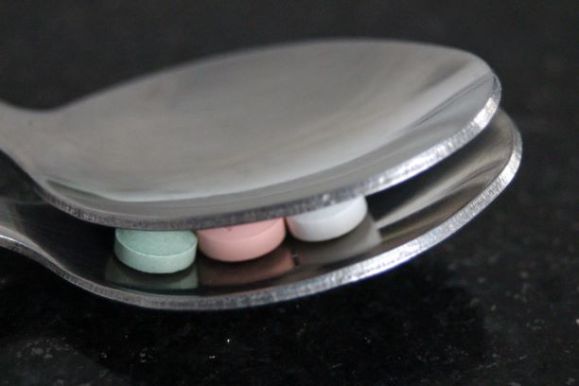
Most pharmacies carry pill crushers that can make this easier, and many of these devices leave the crushed bits in a little container to make it easy to mix with a soft food, like apple sauce, yoghurt or pudding. You also could try crushing the tablet between 2 spoons, as in the photo, if you don’t have a tablet crusher:

Another option for some medications, is to get it in liquid form. Again, this is not for controlled-release medications. If the medication is not commercially available as a liquid, sometimes your pharmacist can prepare a liquid for you from the tablets. I often did this as a compounding pharmacist.

So, if necessary, ask your pharmacist about this possibility. They will likely need to research whether the drug is stable in solution, as some medications can quickly degrade when dissolved in water, and they may want to discuss this change with your doctor. Occasionally, when a drug could not be dissolved in a watery base, I would mix it with an oil, such as canola oil, and flavour it with peppermint oil (for example, aspirin for a child).

So, if you have trouble swallowing pills there are many solutions. I hope something in this article will help you take your medication more easily! And, of course, like everything else, you will get better at taking pills with practice!

#swallowingpills #compounding