
Categories
Health

The Vaccine Debate

Vaccines are described as the single most effective medical intervention in history…more lives have been saved by vaccines than by any other treatment. In fact, vaccines have been so effective in preventing diseases that many people alive today do not realize how severe diseases like polio, measles, mumps, diphtheria, tetanus and pertussis can be.

I should confess that I am biased in favour of vaccinating – I was one of the first pharmacists to be certified to give vaccines in the province of New Brunswick and continued on to work with a team of nurses and pharmacists who taught and certified hundreds of pharmacists in several Canadian provinces. To do this, I studied large amounts of scientific information about many aspects of vaccines and their use.

Vaccines are overwhelmingly safe…most reactions are minor, such as a sore arm or mild fever. All reactions are carefully tracked and documented to detect any potential problems as soon as possible. Severe anaphylactic (allergic) reactions occur less than 2 times per million doses given, but every person administering vaccines is trained to detect and treat these severe reactions and must be equipped with medications needed to do so.

Concerns have been expressed about the possibility that giving several vaccines at once could overwhelm the immune system, but scientists confirm our immune systems have the capacity to handle several thousand vaccines at once. They point out that during a normal day, a child is exposed to several hundred different antigens that trigger the immune system into action, and this is what a vaccine does.

An article in 1998 suggested that the measles vaccine was causing autism, but this has been disproven long ago. In spite of this, some parents still refuse to vaccinate their children based on this and other misinformation.

The mercury-containing preservative, thimerosol, has also been of concern to some parents. Although it was never demonstrated to cause a mercury-related health problem, it has been removed from all child vaccines manufactured since 2001, except flu vaccine that comes in multi-dose vials, most likely due to the number of allergies to this ingredient. Note that single-dose influenza vaccine does not contain this ingredient.

Another common vaccine ingredient that has drawn concern from parents is formaldehyde, used to inactivate viruses and bacterial toxins in vaccine manufacturing. Although most is removed from the final product, a very small amount remains. The human body actually produces its own formaldehyde when proteins are processed, and a baby’s body at any given time will contain 10 times the amount that would be in a vaccine. This small amount has been shown to be completely safe and our bodies have mechanisms to eliminate it, along with the formaldehyde we regularly produce ourselves. Far more dangerous amounts are found in second-hand cigarette smoke and car exhaust, and most dangerous are the workplace exposures to formaldehyde, such as hairdressers exposed to some hair smoothing products that produce formaldehyde when used.

Although we rarely see many of the childhood diseases we vaccinate against now, they still exist and could quickly become commonplace again. We saw this with pertussis (whooping cough) in our province. Because of higher rates of reactions from a vaccine that contained whole inactivated viruses, immunization rates dropped and over a thousand cases were documented in one season. Pertussis is similar to a mild cold in a healthy adult, but can be fatal to a small baby. Government’s response was to inform the public and step up vaccine availability to bring the disease under control again. There is ongoing research to ensure that the resurgence is not due to decreased effectiveness of a newer improved vaccine with fewer reactions.

It is true that some vaccines are more effective than others. The shingles vaccine, for example, only reduces occurrence of the disease by about 50%, although it is pointed out that cases tend to be less severe in those who have been vaccinated, and “post herpetic neuralgia”, pain that can continue for weeks or months after a bout of shingles, was also reduced. Many feel that even this level of resistance to getting shingles makes it worthwhile taking the injection.

It’s flu season now, so let’s talk about the flu vaccine… The severity of influenza will vary from year to year, depending on the nature of the strains going around that particular year. Because the flu virus changes frequently, researchers track influenza cases around the world and choose 3 to 4 strains that they expect could cause the worst illness, creating a new combination each year.

The flu is not just a bad cold…it kills 300,000 to 500,000 people in an average year around the world, mostly the elderly. Young children are also at increased risk, as are pregnant women, and those already in poor health or with chronic conditions like asthma or heart disease. Vaccinating a pregnant woman also gives protection to her baby, a definite plus since the vaccine cannot be given to children under 6 months of age.

Some don’t bother getting the vaccine, stating they are healthy and not worried about catching the flu, but we all need to keep in mind that we could pass the illness on to someone who is more vulnerable than we are. If more people are vaccinated, it is less likely we will have a large epidemic – this is referred to as “herd immunity”…the whole community is protected because there are fewer people who can spread the virus to others.

I have had clients claim that they “caught the flu” from the flu vaccine, but this is not possible. The pieces of virus in the vaccine are dead and cannot start to grow causing an infection…it’s just not possible. It is possible, however, to catch the flu from someone else in the first 2 weeks after a flu shot because it takes 2 weeks for antibodies that protect us from the virus to develop in our bodies.

However, I did read about one incorrectly made batch of vaccine that reached the market in the ‘90s that actually did cause some severe illness. The manufacturing problems were detected and corrected to avoid recurrence of a similar problem. The manufacturing of vaccines is highly regulated to ensure “bad batches” do not occur today.

Vaccines containing an “adjuvant”, an extra ingredient designed to increase response to the vaccine in those with weaker immune systems, are also known to have somewhat increased reactions such as pain in the area of the injection and mild fever. The special vaccine produced to fight the H1N1 flu epidemic of 2009 contained an adjuvant to ensure the highest level of immunity possible would be produced. This H1N1 virus was similar to the one that caused the Spanish Flu of 1918. That epidemic killed 50 to 100 million people, about 3 to 5% of the world’s population at that time, many of them young healthy adults.

Again this year, experts are predicting a flu season that could be more severe than others. Getting a flu shot is free for many, and takes just a few minutes. And it’s available as close as your neighbourhood pharmacy or doctor’s office. So why not take a few minutes and protect yourself and others around you from a preventable illness!

If you have any questions about vaccines that I haven’t answered, click the “Comments or Questions” button, or ask your pharmacist or doctor!
Categories
Health

5 Questions you should ask about your medications…

Medication errors can happen for many different reasons, but you can work along with your health care providers to prevent these errors, both as a patient and as a person who helps a friend or relative with their medications. An important way to prevent errors is to have all the right information…

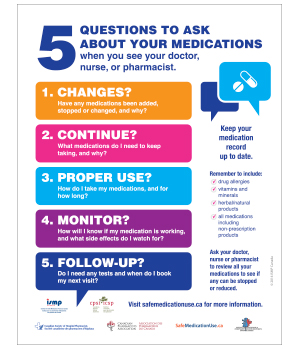
With that in mind, the Institute for Safe Medication Practices (ISMP) has developed a list of 5 questions you should ask whenever you are:

  • Being discharged from hospital

  • Having an appointment with your doctor or specialist

  • Talking to your pharmacist or

  • Having a visit with a home care nurse

These times are referred to as “transitions of care” and are the most likely times that your medications might be changed and mistakes could happen. Asking questions will help ensure you understand how your medications are supposed to be used. These occasions also give you an opportunity to learn more about your medications, such as what each does, how it is to be used, how long it should be taken, and what side effects you should watch for.

Here are the recommended questions you should ask:

  1. Changes? – Have any medications been added, stopped or changed and Why?

  2. Continue? – What medications do I need to keep taking and Why?

  3. Proper use? – How do I take my medications, and for how long?

  4. Monitor? – How will I know if my medication is working, and what side effects to I watch for?

  5. Follow-Up? – Do I need any tests, and when do I book my next visit?

To make this easier, ISMP has organized these questions onto a page you can download and fill in on your computer or tablet, or just print off and take to your doctor, pharmacist or nurse. You can download it here.

Be aware that most pharmacists can book an appointment with you to review your medications in detail. For some people, this may be a benefit of your prescription medication insurance coverage. But even if it is not covered, it can be a good investment in your health if you take several medications or have a complicated medical therapy. If you specifically ask the pharmacist to look for medications that can be stopped or “deprescribed”, a review may mean you have lower medication expenses and a simpler medication program in the future.

It is also important to keep an up-to-date medication record. You can find a free app for your computer or phone (Apple, Android or Blackberry) by clicking here or googling “my med rec”. Be sure to include a list of drug allergies, any vitamins or minerals, herbal or natural products, and any non-prescription products in your medication record. This list can be especially helpful when being admitted to hospital or when trying to determine if any medications can be discontinued.

More medication means greater chances for drug interactions. While drugs can be life saving, drug interactions and unwanted side effects can harm your health. Sometimes a drug is added solely to counter a side effect of another drug you are taking, when the problem could have been solved by changing the original medication.

So, learn as much as you can about your medications and how to benefit most from what you are taking. Communicate clearly with your doctor, pharmacist and nurse practitioner that you want to be taking the least number of medications possible for the shortest time necessary to keep you healthy. And, lastly, learn what lifestyle or diet changes can be tried to improve your health. Work hard to make these changes so you can minimize the medication you need to control chronic diseases like diabetes, heart disease and arthritis.

The CEO of the Canadian Patient Safety Institute (CPSI), Chris Power, advises:

“Be as informed as you can be and go into that relationship with your doctor, your nurse or your pharmacist or whomever is providing care, knowing that you’re a partner and you have a right and a responsibility to ask questions and to understand what’s happening with your health care.”

Categories
Health

Testosterone – Women need it too!

Testosterone has been described as the hormone of desire… Although it’s in the androgen hormone class, considered to be “male” hormone, both men and women produce testosterone. It’s the difference in amounts produced and the balance between estrogen and testosterone that determine male or female body characteristics.

Interestingly, many more articles have been written about overproduction of testosterone in women, as can occur in polycystic ovary syndrome, for example. Underproduction can also be a problem for women, but doctors rarely test for this.

With low testosterone, women can feel fatigued and notice less interest, not only in sex, but in doing things they normally like to do. The term “lack of a sense of wellbeing” has been used to describe how women with low testosterone can feel.

Physically, they may notice decreased muscle size and strength, and reduced hair growth on the body, particularly underarm, pubic and leg hair. These physical changes often carry more weight when speaking with your healthcare provider about the potential for this type of hormone imbalance.

Interestingly, taking hormones by mouth can lead to low testosterone effect. The liver filters virtually everything you swallow as soon as it is absorbed from your digestive system. This is referred to as the “first pass effect”, where the drug is changed or partially removed from the blood stream before it has a chance to reach the rest of the body. This is one reason that transdermal drugs (or drugs administered through the skin) are generally used in lower doses. With the transdermal route, the drug reaches the body before the liver has a chance to metabolize it. Hormone preparations are generally 1/10th the dose when given through the skin, as compared to dosing by mouth.

However, with oral hormones there is another known effect… In response to swallowed hormones, the liver produces a special protein, called sex hormone binding globulin (SHBG) that binds to hormones making them unavailable to act in the body and, essentially, inactive.

When estrogen is swallowed, such as with hormone replacement or birth control tablets, the liver is stimulated to produce SHBG, presumably a mechanism developed to protect us from accidentally ingested hormones in our food.

However, SHBG binds testosterone 10 times more strongly than estrogen. This means that taking estrogen by mouth will result in increased SHBG that will scoop up much of the testosterone your body is producing. Testosterone is still being produced but you may experience the symptoms of low testosterone. Regular blood tests for total testosterone would show a normal amount, but a test for “free testosterone” (testosterone not bound to proteins) would show the effective deficiency.

So, what can be done to correct testosterone deficiency? I always recommend treating the cause if one is identified so, for women with a secondary deficiency caused by taking estrogen by mouth, a simple solution is to change the estrogen to a patch, cream or gel formulation, eliminating the first pass effect on the liver and reducing production of SHBG.

If this is not the cause, and total serum testosterone is found to be low, testosterone replacement can be considered. Swallowed testosterone is known to be hard on the liver, with increased liver cancer reported with some oral forms. As well, available tablets and capsules currently on the market are dosed for men and contain far more hormone than women need. I’ve seen prescriptions for women to take one man-sized 40mg capsule once or twice a week, but even this is more than women would produce, and would result in swings in testosterone blood levels that would be far too high on the days immediately after taking a dose.

Women produce less than 1mg of testosterone daily. It is easy to understand that a 40mg capsule would come with the recommendation to stop taking it if she developed facial hair growth or acne. Even the cream formulas that are available come in 25 and 50mg pouches or pumps with no accurate way to measure a lower amount.

However, testosterone cream can be accurately compounded by a pharmacist and loaded into needle-free syringes for accurate measurement. I always prepared the cream as 1% testosterone (10mg/ml) making it easy to calculate the desired dose. A 1ml syringe would contain 10mg – generally enough for 10 days of testosterone replacement, although some women have reported results with doses as low as 0.15mg!

Because hormones are stored away in fatty tissues in the body, I generally recommended using 2mg daily for the first week or two (since some of this would be stored away) then reducing to 1mg or less daily to avoid any chance of overdosing. One of the first signs of too much testosterone is often an outbreak of acne. I encourage women to identify the lowest dose that is effective for them – the “normal” amount can vary from person to person, and we need to remember that we are adding to the amount being produced, which can also vary from person to person.

Men can also become deficient in testosterone. Some refer to this as “andropause”… others have jokingly called it “grumpy old man syndrome” since deficiency most commonly occurs later in life, the man may be stooped and thin due to decreased muscle and possibly the onset of osteoporosis, and his mood may have become less than cheery.

Testosterone replacement for men is readily available in capsules, injections and creams and, although somewhat less convenient, the creams or injections would be preferred to reduce the effect of hormone on the liver. However, as injections are generally given every 2 to 4 weeks, they have the disadvantage of producing a higher blood level of hormone immediately after the injection and a lower level before the next injection is scheduled. A simple blood test would confirm that testosterone is needed and that the dosing is correct.

So, if any of the symptoms of low testosterone sound familiar, talk to your doctor about it. If you are interested in more information, I would recommend “The Hormone of Desire” by Dr. Susan Rako as an excellent source of information on testosterone deficiency in women.

Categories
Health

How to handle food in a power outage

Just days after arriving in Florida, hurricane Matthew began its advance up the coast. A category-4 hurricane was a new experience for my husband and me…what should we do? Stay or go? This was a frequent topic of conversation with neighbours, even those we didn’t know…

We decided to take the safe route and flee, but what to do with a fridge full of food when we returned? I learned from others how to reduce health risks from spoiled food after you get back…unfortunately, most of it only after the storm, although ideally some preparation should have been done before leaving.

Many of these tips would apply to any power outage situation, so I thought I’d share these with you…

The best approach is to start preparing at the first warning of the approach of a storm. Turn down the settings of both fridge and freezer so you are starting with a lower temperature – a cooler refrigerator and deeper freeze will last longer when the power goes out.

Frozen jugs or ziplock bags of clean water will work as ice packs in the fridge and freezer, maintaining the coolness and, at the same time, eliminating air space. We know that heat rises and cold air falls, so filling up the dead space will reduce the air exchange that occurs each time the door is opened.

These frozen bottles and bags will also provide clean drinking water later if needed. Often tap water is deemed unsafe for several days after power is restored while the system is flushed, especially in warmer climates… This is not such a worry in Canada, where most power outages occur in the winter, but for those of us in rural areas with our own water supply, no power means no pump and no water!

Next, you want to pack your foods closely together to mimic how they would be packed in a cooler, rather than being nicely spread out on the shelves. Just as a block of ice takes longer to melt than smaller chunks, a block of tightly packed foods will stay frozen or cool longer, especially if surrounded tightly by ice packs, creating a “cooler” within your fridge.

It’s relatively easy to determine how long the power was out, especially if you are able to stay at home, but it can be more difficult to know how long the food in your refrigerator stayed cold or frozen.

The rule of thumb you will find on government websites is: food will stay cold in an unopened refrigerator without power for at least 4 hours, frozen food in a full freezer for up to 48 hours and in a half-filled freezer for about 24 hours. That being said, a lot depends on the quality of the refrigerator and how the food is packed into it.

The ideal way to monitor the fridge temperature is with a probe thermometer similar to those often used in cooking these days. An ordinary fridge thermometer inside the fridge will tell you the temperature but you need to open the fridge to see it, allowing cold air to escape each time you do this…definitely not recommended if the power is out! Checking the temperature after the power is back is helpful if it’s still below the recommended 5C (40F), but if the temperature is higher you have no way to know how long it’s been out of the safe zone.

A “min/max” thermometer, used for storage of critical items such as vaccines, has a probe (sometimes wireless) that is placed inside the fridge, while the thermometer itself remains outside where it can be read without opening the fridge door. It records the minimum and maximum temperatures and the times that these occurred. It can also be set with the desired temperature range sounding an alarm and noting the time that the temperature left this range…valuable information if you have to leave home during the storm. Like many electronics these days, prices of these units are dropping and can be found for under $100 (I found one for $35CDN for my vaccine storage!). It might be worth the investment if you lose power often and end up discarding food because you don’t know if it is safe.

A simple tip, however, which I learned from a hurricane-savvy friend, is to freeze a glass of water and place a coin on top. If the water thaws then refreezes before you return, the coin will no longer be sitting on top of the ice. If it is halfway down, your ice was partially thawed then refrozen; if it is at the bottom, then it is likely that your food, like the ice in the glass, completely thawed before the power came back on. Nice trick!

Some foods are more likely to spoil than others. These include meats, dairy, eggs and leftovers. It is suggested to remove these from the refrigerator and store them in a cooler packed with ice. This system is easier to monitor and the ice can be replaced as it melts, extending the life of the food. If you’re in a cold climate, it is recommended to freeze water outdoors to restock your cooler, rather than actually putting the cooler outside – sunshine can warm the food even if it is below freezing outside, and animals can also be attracted to the food.

Be aware that juices from meat can contaminate other foods – store separately or in leak-proof packaging. As a general rule, store foods that will not be cooked before eating above meats and fish in the refrigerator so juices cannot drip onto them, potentially causing contamination.

Government sites suggest that food poisoning occurs in 1 person in 8 each year… Never taste food to determine if it is spoiled. When in doubt, throw it out!

If you are interested in more detail, including a list of stability of various foods, check out this site: http://www.fsis.usda.gov

We survived the experience with no damage to our condo and only minor damage to our boat. But it is so sad to see many others who did not fare so well, and it was stressful just worrying about what might happen. I think I’d take a good old Canadian snowstorm over a hurricane any time!

Categories
Book review Health

A Healthy Diet Should Be Easy and Fun…

What makes a diet healthy? Does it have to be complicated? Do we really need to learn about saturated fat, omega-3’s, carbohydrates, and antioxidants? Maybe it’s time to simplify what and how we eat…

A recent news report described how the scientists, who first claimed that saturated fat was bad for us years ago, had received payments from the sugar industry. Newer reports are saying that it is really sugar, and not fat, we should avoid to prevent chronic conditions like diabetes and heart disease. Other reports say that refined white flour acts very similar to sugar once it is absorbed into the body.

Even the basic Food Pyramid – remember this? Its emphasis on grains and drastically reduced fat intake is being questioned after so many years of use. Current thought is that it is too vague, with no indication of serving sizes, and places too much emphasis on carbohydrates.

It seems that eating healthy has become a complicated matter, with conflicting recommendations. Scientists seem to be searching for which nutrient is causing increased rates of chronic disease in North America. The fact that they seem to change their minds about what is good or bad for us every few years suggests that we need to look at the bigger picture rather than single nutrients in food.

Nutritional science is a relatively new field, in existence for about 200 years. Some have compared this “science” to the surgery in the 1600s… not yet very advanced! Well-meaning scientists’ attempts to identify individual nutrients that are causing the problems have led to a great deal of confusion for consumers. The reason behind all this research is that our Western diet has been linked to obesity, type-2 diabetes, about 80% of cardiovascular disease, and over one third of all cancers. The good news is that changing from a Western diet to a healthier one results in rapid improvements in health.

Many very different traditional diets exist that are not associated with chronic diseases. These include the high fat diet of the French, the high animal protein diet of the Masai tribes in Africa, and the high carbohydrate diet of Central American Indians. None of these traditional diets have been linked to the chronic diseases that we see associated with the typical Western diet, although they are very different from each other. Our Western diet is unique in containing large amounts of processed food and meat, lots of added fat and sugar, and lots of refined grains, but very little vegetables fruit and whole-grains.

So, after so much talk about what to avoid, what should we eat?

I think I’ve found a good answer in a little book I stumbled across called “Food Rules, An Eaters Manual” by Michael Pollan. He proposes 3 simple rules that make a lot of sense:

  1. Eat food

  2. Mostly plants

  3. Not too much

Sounds easy, right? I certainly thought so. Let me explain the rules a little and you will see why they make sense to me…

1. Eat food

This means, eat real food, with ingredients that you would find in your Mom’s cupboard, food that has not been highly processed. Food processing is designed to make food last longer on store shelves, not to make it taste better or to be healthier for us. The amount of processing of food is a major difference between the harmful Western diet and healthier traditional diets.

2. Mostly plants

Vegetarians generally tend to be healthier than those who eat meat. It is suggested, however, that using meat as a flavoring or in small amounts can result in a diet that is just as healthy as a vegetarian one. Whether it is some component of meat or the fact that larger amounts leave less room on the plate for vegetables has not been determined, but simply reducing the amount of meat in your diet and eating more plant foods is a simple rule to follow to improve your diet.

3. Not too much

How much you eat and how you eat it may be as important as what you eat. When you are distracted while eating, you tend to eat more so eating in front of the TV or while driving or working means you will likely eat more. When you eat quickly, you also often eat more, since it takes about 20 minutes for your brain to register that you are full. You should eat only until no longer hungry, rather than eating until you are full or have finished everything on your plate (in spite of what your mother may have told you!). Eating more slowly will allow you to more readily detect when you are no longer hungry before you have actually overeaten.

Here are some other suggestions for healthy eating:

  • Shop mostly on the outer areas of the grocery store; avoid the centre aisles that are mostly processed packaged foods. Buy at a farmers’ market as often as you can – they sell locally grown, whole foods that don’t need to be preserved to reach their market. If you worry about food spoiling, freezing is often the best way to preserve food without losing the nutritional value.

  • Avoid “lite”, “low-fat” and “nonfat” foods – generally these tend to be more highly processed and often sugar is added to boost flavour that is lost when fat is removed.

  • Eat only food that will eventually rot – if bacteria and fungi don’t go for the food, we probably shouldn’t either!

  • An old Chinese proverb says “Eating what stands on 1 leg (plants, mushrooms) is better than eating what stands on 2 legs (fowl), which is better than eating what stands on 4 legs (cows, pigs, etc).” Of course, this ignores healthy legless fish, but it’s an easy rule to remember!

  • Eat your colours – a variety of colours indicates a variety of nutrients and it helps your meal look more appetizing too!

  • Eat food that is grown in healthy soil (this often means organic) or is fed healthy food (usually this means pasture raised rather than grain fed). Just like us, plants and animals need healthy food to be healthy themselves! More nutritious food generally has better flavour and is more satisfying…

  • Alcohol of any kind has health benefits. It is best taken in moderate amounts with food and on a daily basis rather than binge drinking. How alcohol improves health is not well understood but it is part of several healthy traditional diets, notably the French diet.

  • “The whiter the bread, the sooner you’ll be dead” is an old saying that has merit…white flour is not much different from sugar once it’s ingested. The substances that are removed from whole grains to make them white are the most nutritious part of the grain – it just makes sense to eat the whole grain.

  • Eat when you are hungry, not when bored, as a reward, or for entertainment. Be aware of why you are eating.

  • Use a smaller plate and smaller serving containers. We eat more when a larger portion is served, and we serve ourselves more when using a larger plate or serving from a larger container.

  • Make eating an enjoyable experience – share meals with others whenever possible, take your time and enjoy the taste of the food and the company you are sharing it with. Treat the preparation and eating of meals as a family or social ritual to be enjoyed, to elevate it from a biological necessity to the enjoyable part of life that food should be!

Lastly, what matters is what we do routinely – breaking the rules for special occasions can be good for our happiness and probably also for our health. So all we really need to do to be healthy, is to keep “Everything in moderation” along with the basic 3 rules: “eat food, mostly plants, and not too much”!

To learn more, read Michael Pollan’s short, well-researched book, Food Rules: An Eater’s Manual or his more detailed In Defense of Food: An Ester’s Manifesto.

Categories
Health

Hormones and chemicals in plastic

I used to think that “microwave-safe” simply meant that the container would not melt or warp when used in the microwave. However, many plastics contain harmful ingredients that can leach into food, especially when heat or oils are present, and should never be used in a microwave. So, in addition to being structurally intolerant to heat, some plastics actually become harmful to our health when used in the microwave.

I learned this the hard way. When my kids outgrew their Tupperware “sip ‘n’ seal” cups and lids I thought they would work well for coffee in the car. Eventually, the plastic taste in my coffee became so strong I discarded the cups, never realizing I had been endangering my health.

During this time I had a series of health problems with mammogram and Pap test recalls… but I didn’t connect the two until I attended a lecture on environmental connections to breast cancer, sponsored by our local breast cancer support group.

We watched a film entitled “Exposure: Environmental Links to Breast Cancer” then participated in a discussion with the producer and director of the film. They described many different types of environmental chemicals that have been connected to increased rates of cancer, including ingredients in plastic that contacts our food, some of which can disrupt the action of hormones in the body. I believe this film may still be available – I found a source online (www.womenshealthyenviroments.ca) or you could check with your local library if you are interested in seeing this film.

So, when it comes to plastics, some are safer than others. A numbering system, 1 to 7, has been developed to help sorting plastics for recycling, but the numbers also help us know which plastics are considered safer. You’ve probably noticed these numbers surrounded by a triangle, embossed or printed on the plastic container, usually on the bottom.

Basically, types 2, 4 and 5 are considered safest, with types 1 and some 7’s considered safe with some precautions. Here are the details:

  1. PET (or PETE) – Polyethylene Terephthalate

    • Thin, clear plastic

    • Used in water bottles, cooking oil, peanut butter jars, soda pop bottles

    • Safe for one use only

    • Do not heat or reuse (or leave in a hot environment, such as in a car)

    • Can be recycled once into other products

  2. HDPE (High density polyethylene)

    • Thick, opaque plastic

    • Used in milk/water jugs, juice bottles, containers for detergent, shampoo, motor oil, toys

    • Limit how often they are refilled

    • Can be recycled as with type 1 plastic

  3. PVC (Polyvinyl chloride)

    • Can be rigid or flexible

    • Used for bibs, mattress covers, commercial plastic wrap, some food and detergent containers

    • Recommended to avoid. Manufacture of PVC creates dioxin, a potent carcinogen

    • PVC may also contain phthalates to soften it. These are hormone-disrupting chemicals linked to reproductive problems and birth defects. (It seems likely that I mistakenly exposed myself to this type of chemical)

    • Difficult to recycle

  4. LDPE (Low density polyethylene)

    • Soft flexible plastic

    • Used for grocery bags, household plastic wrap, garbage bags

    • One of the safer plastics but best to recycle and reuse when possible to reduce impact on the environment

  5. PP (Polypropylene)

    • Hard but flexible

    • Used to make ice cream and yogurt containers, drinking straws, syrup bottles, salad bar containers, some dishware, diapers

    • One of the safer plastic, but recycle when possible as with type 4 plastic.

  6. PS (Polystyrene)

    • Rigid

    • Used for styrofoam coffee cups, meat trays, opaque plastic spoons and forks

    • Avoid. Can leach styrene, a known neurotoxin with other harmful effects

  7. Other (includes polycarbonate, bioplastic and acrylic)

    • Polycarbonate – used for 5-gallon water bottles, sports bottes, clear plastic cutlery, linings of food cans

    • Bioplastics – uused for biodegradable garbage bags

    • Safety grab bag:

      • Polycarbonate is made from BPA (bisphenol-A), a harmful synthetic estrogen (hormone disruptor). Usually labeled “Not for microwave use”. Best to avoid.

      • Bioplastics are considered safe for their stated use. Must not be recycled with other plastics (due to programmed degradation)

      • Acrylic (Plexiglass) – non-BPA, usually labeled “hand-wash”, “BPA-free”, safe to use but microwavable

      • Tritan (SAN) – BPA-free clear plastic. Looks similar to polycarbonate but does not contain BPA.

      • Melamine – considered less safe, not microwavable. Melamine is toxic if ingested with food.

    • Often type 7 plastics are not labeled. Check if BPA-free labeling.

So, to uncomplicated things a bit, here are some basic recommendations to follow to reduce potential exposure to harmful ingredients in plastic and protect the environment at the same time…

  • Choose glass, metal or food-safe ceramic to heat and store food whenever possible

  • Plastics labeled as recycle types 2, 4 and 5 are safest, with type 1 acceptable for single use only. Type 7 plastics need further investigation. Avoid food contact with other types of plastic.

  • Avoid exposing any plastic to high temperatures as much as possible (do not microwave or put in dishwasher)

  • Even with safer plastics (2, 4 and 5) acidic food, fat/oils and heat will promote breakdown of plastic and leaching of plastic ingredients into food

  • Recycle or discard cracked or worn plastic items as these are more likely to leach chemicals

  • Always recycle plastic except for biobased plastics

  • Avoid buying processed and packaged foods if possible. Buy from bulk and use reusable containers from home as much as possible

  • Use reusable shopping bags and lunch containers (stainless steel, glass, ceramic or wax paper) whenever possible

If you are interested in a chart of plastic types to download or print, a good one is available here.

References: healthychild.com, babygreenthumb.com, davidsuzuki.org

Categories
Health

Drug-induced nutrient depletion

Did you know that some drugs can cause you to lose nutrients from your body? Some side effects of prescription drugs may not be directly due to the drug itself, but may instead be caused by a nutritional deficiency caused by the drug over time.

While much research has been done in this area over the past 50 years, the results of many of these studies are not widely known… If you are aware of these potential deficiencies, you can then adjust your diet or take a supplement to replace what is being lost, and this may improve your tolerance of the medication and avoid some negative health effects.

Here are some examples:

  • Antibiotics – Broad spectrum antibiotics, those that kill a wide range of bacteria, also kill the good bacteria in your digestive system that help digest food, and protect us from harmful infections. These good bacteria, lactobacillus and bifidus, also produce a range of B vitamins and vitamin K. This interaction is of particular concern in those taking the blood thinner, warfarin, which works by blocking vitamin K’s action to promote blood clotting. Less good bacteria, means less vitamin K, which increases the effect of warfarin, leading to an increased tendency to bleed. B vitamins have many functions in the body, so a lack of these may have many effects.

  • Acid suppressing drugs – Stomach acid is necessary to absorb many nutrients, so suppressing or neutralizing acid long-term can cause depletion of various vitamins and minerals. Simple antacids can reduce absorption of calcium and phosphorus; histamine-2 receptor inhibitor drugs like ranitidine (Zantac) can deplete calcium, folic acid, iron, vitamin B12 and zinc; proton pump inhibitor drugs, such as omeprazole (Losec), pantoprazole (Tecta) and esomeprazole (Nexium) can reduce absorption of vitamins C, B6, B12, folic acid, magnesium and zinc.

  • Diuretic blood pressure medications – Hydrochlorothiazide, the most widely prescribed “fluid pill”, can deplete potassium, magnesium, Vitamin B6, coenzyme Q10, and zinc. Pharmacists will often advise to drink orange juice or eat a banana a day when taking these to replace lost potassium but potatoes actually contain more potassium than bananas… In extreme cases, potassium supplements are necessary, but changing to a different fluid blood pressure medication is a simpler approach to correcting the problem.

  • Birth control pills – Hormonal birth control medications deplete vitamins B2, B6, B12 and C, folic acid, magnesium and zinc. Low folic acid is associated with the birth defect, spina bifida, and this is one reason it is advised to stop birth control pills a few months before trying to become pregnant.

  • Beta-blockers and “statin” cholesterol drugs – Both of these classes of medications, often used together in heart patients, can reduce production of coenzyme Q10. CoQ10 is used in the mitochondria, the energy factories inside our cells, to produce the energy that is needed for all body functions, and it is an important antioxidant as well. Low coQ10 can affect many functions, in particular heart function. It is widely used in Japan as a treatment for various cardiovascular problems. Although coQ10 is present in small amounts in many foods, it would be difficult to get an amount comparable to what is normally produced by the body, making supplementation the best way to prevent coQ10 depletion.

  • Metformin – This drug, used to treat type-2 diabetes, depletes vitamin B12, a vitamin that is necessary for producing red blood cells and nerve growth and repair. One of the long-term consequences of diabetes is numbness of the extremities, due to nerve damage, known as peripheral neuropathy. In one study, nursing home residents with peripheral neuropathy who were taking metformin were given vitamin B12 supplements – 30% reported that their neuropathies improved, suggesting that lack of B12 was the cause. Deficiencies of B12 in the elderly can also cause moodiness, confusion, abnormal gait, memory loss, agitation, delusions, dizziness, dementia and hallucinations. Vitamin B12 is also depleted by numerous other drugs, as noted above. A simple blood test can readily identify low B12.

  • Mineral oil and stool softeners – Used for treating constipation, mineral oil is poorly absorbed from the digestive system and it works by creating a lubricant effect in the bowel. Stool softeners also stay in the bowel where they mix with stool, preventing it from hardening and causing constipation. However, vitamins A, D, E and K as well as the vitamin A precursor, betacarotene, tend to dissolve in these laxatives, reducing their absorption into the system and, instead, being excreted in the stool. Laxatives containing mineral oil or stool softeners can deplete these fat-soluble vitamins, especially if taken multiple times daily with meals. For this reason, they are best taken at bedtime, away from meals.

These are just a few examples of nutrients that can be depleted by medication. So, if you are taking medications regularly, ask your pharmacist to research whether you may need to replace any particular nutrients. To ensure they have sufficient time to research your question properly, I would suggest leaving your request and checking back in a day or two, rather than expecting them to give a quick answer from memory.

Not all nutrient depletions will occur in all individuals, however; ask your doctor to include tests for nutrients that may become depleted due to medication you are taking, along with your regular annual blood tests, to avoid taking unnecessary supplements. Also ask whether simply adjusting your diet would be adequate, given the degree of nutrient depletion found in testing.

Reference: Drug-Induced Nutrient Depletion Handbook; R Pelton, JB LaValle

Categories
Uncategorized

Erectile dysfunction

It has been suggested that approximately 40% of men experience erectile dysfunction (ED) at least occasionally. The cause can be functional or psychological, and these two types are treated differently.

Proper erectile function involves the brain, hormones, muscles, nerves and blood vessels. It is easy to see that problems could originate at many different levels.

Fatigue, stress, relationship issues, performance anxiety, or alcohol consumption can contribute to erectile problems., especially those of a temporary nature. A diagnosis of erectile dysfunction is only made if the problem lasts more than a few weeks or months. Common underlying causes include: heart disease, diabetes, poor physical health, obesity, multiple sclerosis, smoking Parkinson’s disease, enlarged prostate for prostate surgery. Basically, any disease that damages the nerves or blood vessels can affect erectile function. Treating the underlying cause, when one is identified, can often correct the problem. Dysfunction can also be associated with bicycling, and this is believed to be due to compression of nerves and blood vessels in the groin area.

If normal nighttime or early morning erections occur, this supports a diagnosis of a psychological cause, although there still may be a physiological (or physical) cause. Patients with psychological dysfunction often have a high response to a placebo (or sham medication) – nice to think that the problem might be fixed by simply taking a sugar pill, if you believe it will work!

Standard Treatments

The first line medical therapy is the”PDE5 inhibitor” class of drugs (Viagra, Cialis and others). These drugs block the breakdown of nitric oxide, a substance that dilates blood vessels, resulting in increased blood flow to the penis. Penile injection of vasodilators plus prostaglandin can be highly effective when these drugs fail, or in situations where nerve supply to the area has been damaged (such as in paraplegia).

Penile vacuum pumps (think of the first Austin Myers movie, where he claims “That’s not mine!”) can also be effective when used just before sexual activity. The specially designed pump draws blood into the penis creating an erection, and a special rubber band maintains it for a period of time. These pumps can be obtained through your urologist or can be ordered for you by a pharmacist.

Penile implants or blood vessel surgery are also available and may help in some cases but are more invasive and higher risk.

Natural treatments

  • Panic ginseng (also known as red ginseng) 600 to 1000 mg three times a day appears to show the most benefit in studies. Ginseng has been noted to raise blood pressure, however, so caution is advised in patients whose blood pressure is elevated.

  • Rhodiola 150 to 200 mg daily showed evidence in one study and has a long history of use in Russia.

  • DHEA, a hormone in the androgen class, is more likely to be helpful if the patient is low in hormone production. Although it is non-RX in US, it requires a prescription in Canada, and would need to be obtained from a compounding pharmacy.

  • L-arginine 3500 to 5000mg (or 3.5 – 5g) taken one hour before needed or in a lower dose taken daily, helps increase production of nitric oxide which relaxes blood vessels (note: Viagra-type drugs reduce breakdown of nitric oxide). L-arginine is reported to work better when combined with pycnogenol, a proprietary extract of pine bark. Tea, grapes,wine, juice and berries contain small amounts of proanthocyanidins similar to those in pycnogenol. L-arginine is an amino acid found in high protein foods, such as turkey (especially the breast meat [16g per breast], pork [14g per rib] and chicken [9g per breast]. So, it sounds like a glass of wine with a nice meal of turkey, chicken or pork just might be helpful for ED!

  • Acupuncture was found to benefit 20 to 40% of patients in one study. A series of regular treatments would be required to see benefit.

  • Zinc supplements are reported to help but only if low in zinc.

  • Yohimbe supplements have shown improvement especially in cases where erectile dysfunction is a side effect of medications (such as SSRI antidepressants, like paroxetine or sertraline). Note that yohimbe can increase blood pressure, heart rate and anxiety. Check with your doctor before taking.

  • L-citrulline supplements help the body make more l-arginine that, in turn, is metabolized into the vasodilator, nitric oxide. Note that L-citrulline can decrease blood pressure.

A number of “herbal Viagra” treatments marketed in North America have been found to contain unlabeled Viagra-like ingredients. US FDA warns that these contaminants are particularly common in products claiming to be ”as effective as Viagra”. Because of their range of side effects, this class of drug requires prescription and should only be used under a doctor’s supervision. In particular, heart patients who take nitrates are not recommended to use these, as the combination can cause dangerously low blood pressure. One way to detect these products would be to look where it was manufactured. Products made in North America are highly regulated and would be unlikely to contain dangerous contaminants.

And, a fun fact to finish off – In 16th and 17th century France, impotence was actually considered a crime and legal grounds for a divorce. Isn’t it fortunate that we have advanced since then!

References: Healthline.com; Wikipedia; WebMD.com

Categories
Uncategorized

SPICE UP YOUR HEALTH

Hippocrates said “Let food be thy medicine” in 431 BC. Although we have much more potent medicines these days, there is still some truth to this. You are what you eat… and what you eat can have an influence on your health.

Volumes have been written about food and health – I’d like to take a quick look at reported medicinal uses of spices and flavourings that are probably already in your cupboard. Although these uses are interesting, keep in mind they may not always be the best choice, especially if your condition is looking serious.

Cinnamon – Cinnamon has been used historically as a digestive aid: for indigestion, gas, nausea and even diarrhea and it is possibly effective, at least for gas and spasms of the digestive system. It has also been shown to lower blood sugar by 18-29% but the dose to achieve this is 1-6 g daily, quite a bit! Perhaps this is a good reason to add cinnamon to sticky buns… although it would make more sense to stir cinnamon instead of sugar into your morning oatmeal if you wanted to lower blood sugar.

Cinnamon is considered safe when consumed in the amounts commonly found in food. In theory, it might interfere with antacids and other acid lowering therapy, since it may increase stomach acid.

Garlic – Garlic is known to have mild antibacterial, antiviral and anti-inflammatory action; hence, it has a historic use for colds, coughs, diarrhea and arthritis pain. It has some evidence of effectiveness for lowering high blood pressure and cholesterol modestly, but the dose to achieve this is quite high: 4 grams daily (up to 7 cloves of fresh garlic, depending on size), or 600-900 milligrams of powder.

Garlic decreases the “stickiness” of platelets, the first step of blood clotting, so it has a “blood thinning” effect that can reduce blood clots and heart disease risk. Although it is considered safe in amounts usually used in food, the 4 gram dose would likely add to the effect of other medications that reduce blood clotting, and could also cause increased bleeding risk after surgery. Definitely ask your doctor before taking these high amounts if you are taking warfarin or other potent prevention for blood clots.

Garlic has been shown to lower blood pressure a modest 2-7% and a dose of 900mg of powder appeared to slow development of atherosclerosis in one 4 year study. An observational study suggested increased amounts of garlic in the diet were associated with decreased risk of colorectal, stomach and prostate cancers but, of course, as we discussed last week, association doesn’t prove cause!

On the skin, garlic oil has been used in small amounts for fungal skin infections. However, in my opinion, it might be preferable to use a standard anti-fungal cream rather than impose the odor of garlic on your family and co-workers! It was not found effective for Helicobacter Pylori, the stomach bacteria infection that causes ulcers.

Taken in high treatment doses, garlic can cause breath and body odor; stomach upset, burning or irritation; as well as reducing clotting of the blood as discussed above. Asthma and allergic reactions have also been reported, as has dermatitis (skin reactions).

There is some concern that high amounts of garlic might interfere with anti-rejection drugs, birth control pills (by increasing hormone clearance), oral anti-fungal drugs, some chemotherapy and the calcium channel blocker class of heart/blood pressure medications (diltiazem, verapamil). Ask your pharmacist to check a herbal reference if you take prescription medications before taking large amounts of garlic.

Ginger – Ginger is known to prevent nausea and is even marketed as “Natural Source Gravol” in pharmacies. It has been shown to be effective and safe, but there is a controversy over its safety in pregnancy – it has never been demonstrated to cause harm to the fetus, in spite of widespread use for many years, but proper safety studies in pregnancy have not been done. Best to consult your doctor if pregnant and follow his/her advice.

Ginger has also been used for its anti-inflammatory properties, and was found to relieve arthritis pain as well as ibuprofen on one study. However, more studies of this use should be conducted.

Oregano – Oregano is active against a number of bacteria and yeast, including E. coli, Staph. aureus, Salmonella and Candida, among others. Oregano oil also inhibits the growth of intestinal parasites and can be effective in eradicating Blastocystis, Entamoeba and Endolimax infections when taken as 200mg of emulsified oil 3 times daily for 6 weeks.

A word of caution – when taken by mouth, oregano oil can cause stomach upset and irritation, or allergic reactions.

Sage – Sage is possibly effective for reducing gas, bloating, stomach upset, excessive perspiration and for inflammation of the mouth and throat. It is safe when used in amount normally added to food, but can be toxic if used long-term in high amounts.

For treatment, sage is often used by making a tea with 1-2 grams of leaves in 150ml boiling water for 5-10 minutes and consuming or gargling 3 times daily. Although up to 4-6 grams have been used to make tea, these amounts are considered unsafe to ingest long-term. Sage essential oil can also be diluted 2-3 drops in 100ml water, and used as a gargle or mouth rinse for inflamed membranes.

Treatment amounts of sage may interfere with blood sugar control if swallowed and should be avoided in seizure disorders, due to the potential for causing seizures.

Turmeric – Turmeric root contains curcumin, the substance that gives curry its yellow colour. Curcumin has anti-oxidant and anti-inflammatory effects, as well as bile-stimulating and liver-protecting actions. A small British study found 2 grams of turmeric compared with 800 mg of ibuprofen for arthritis pain and ability to climb stairs.

Like ginger and garlic, turmeric can also reduce blood clotting (although possibly less), and should be used with caution at treatment doses if taking other blood thinners. However, it is considered safe when used in amounts normally in food.

Any time you plan to use a natural medicine, it is advisable to speak to your doctor or pharmacist to make sure it is safe for you to use and that your condition is not more serious than you think. Essentially all pharmacists have quality references for herbal medicines (and spices that can be used as medicines!) and can help you sort out fact from medical fiction and hearsay uses that might cause harm. Always ask your pharmacist about natural medicines you use, especially if you are taking prescription medications.

Reference: Natural Medicines Comprehensive Database

Categories
Health

How to Be a Skeptic…

We’ve all seen the reports and advertisements… alcohol and sunshine are completely bad for us, calcium makes strong bones, Nutella is part of a healthy breakfast…

Research isn’t black and white – there is a lot of grey that is subject to interpretation. Even numbers can be manipulated to make the results of a study sound more dramatic. And sometimes, some numbers and facts (and even entire studies) are ignored when they don’t support the idea a researcher wants to prove. Of course, this isn’t good science but, unfortunately, we are starting to see this more and more…

Some years ago, I presented several lectures at an event sponsored by Dalhousie University. One presentation was provided to me by a pharmaceutical company co-sponsoring the event. A Dal professor was in the audience and, afterward, politely pointed out the bias that was in the data, with a graph stretched out to make the curved lines look more separated – making the drug’s effect look greater than it actually was. I was quite embarrassed but, in the end, thanked him for educating us in what to look for.

So, here are some “red flags” you can watch for when you are reading about a study in the media:

  1. Observational study (versus an Interventional study) – An observational study looks at what factors or events tend to occur together but provides no conclusion about a cause. An interventional study, in contrast, uses two groups that are well matched, changes the one factor they want to test, and then measures whether this made a difference at the end of the study. An observational study can give us an idea what could be tested, but an interventional study is needed to prove a cause.

  2. The words “is associated with” – This simply indicates that the factor they are talking about occurred along with a particular disease or condition in an observational study. An association does not demonstrate a cause. For example, yellow fingers (from smoking) could be said to be associated with heart disease; however, we know it is smoking that causes heart disease, not yellow coloured fingers. Scrubbing the colour off the fingers would do nothing to prevent heart disease. So, humour me while I say this again… if something is associated with a disease, it doesn’t necessarily mean it causes the disease.

  3. Relative Risk Reduction (RRR or RR)” – This method of presenting results, compares the outcomes from 2 groups by using a percentage difference rather than subtracting the actual numbers, and can make differences appear much larger than they actually are. An example explains it more clearly: If you had 2 groups of 100,000 people and the results were 2 cases in the untreated group but only 1 in the treated group, this would be a 50% relative risk reduction. However, in actual numbers, called the “Absolute Risk Reduction”, where the results are simply subtracted, the difference is only 0.001%, a much less impressive figure. RRR is often used to make results appear more significant than they actually are, especially when the difference is very small. All too often, it is not specified that the results are RRR, creating misunderstanding of the study conclusion, even with doctors.

  4. The time over which the results were gathered is not specified – Was the effect observed after a short period of treatment or did they study participants take the drug for years in order for it to make any difference? We see this often when “Number Needed to Treat (NNT)” presentation of data is used. This number tells you how many people they needed to treat to make a difference for 1 person, so the lower the number, the fewer they needed to treat to see an effect. However, did you need to treat these people for 10 years to make a difference for one, or only for a month? The time frame makes a big difference, and needs to be specified.

  5. The study only uses deaths from one disease, not total mortality – The factor being studied could improve one disease state while worsening another. If total mortality is not mentioned, it is likely that the drug did not increase the overall lifespan of the study participants. Overall health and quality of life are what is important… we want to live longer healthier lives, not just change our cause of death. An example would be looking only at decreasing heart disease, while ignoring a drug’s effect on increasing death from other causes. New, less publicized reports of the well-known JUPITER study have pointed out that the cholesterol drug being tested did not change overall survival, yet the study results touted a significant reduction in deaths from heart disease.

  6. Who paid for the study – Any study that has been sponsored by a party with an agenda runs the risk of being biased. Negative results are more likely to be ignored or never published, if money is on the line! Unfortunately, much of our drug research is done by manufacturers of medicines, and has lead to incorrect results, whether intentional or not. Examples are Provera used in hormone replacement therapy, and the arthritis drugs Vioxx and Bextra. Although these drugs were tested thoroughly and used for years by millions of people, they were eventually found in balanced independent studies to cause more harm than benefit.

  7. Small numbers of participants – It is easier for a false result to be drawn when there are fewer people in a study. Using larger groups and ensuring that these groups are as similar as possible before changing one factor for testing, is more likely to give an accurate result. Of course, a very large study done over several years that quotes only relative risk reduction for one condition should send a red flag alert even though it is a large study.

  8. Multifactorial testing or making several changes at once – No conclusion can be drawn regarding one particular drug if several changes were made for the test. This was done with calcium supplement testing, where participants were given Calcium and vitamin D and were told to exercise more, and it was concluded that calcium supplements strengthened bone. It has since been demonstrated that dramatically increasing calcium intake by using supplements does not reduce bone fractures.

  9. Using a “surrogate end point” or measuring something other than the actual beneficial outcome you are trying to achieve. For example, simply measuring bone density does not give a true picture of how strong bone is… many years ago, fluoride was given to create more dense bone, and it certainly did this well. However, the bone created was brittle and broke easily, somewhat like a piece of chalk. The goal of treating osteoporosis is to prevent bone fractures, not simply make more dense bone. Unfortunately, it is difficult to measure actual bone strength so our medical system continues to measure bone density as a gauge of bone health. However, studies for osteoporosis prevention now must demonstrate fewer bone fractures, not just more dense bone.

This week I received a pharmacy flyer, with a 2-page article on the dangers of alcohol consumption. While it is factually correct, I’m sure, and offers some good advice about avoidance of drinking in excess, there is no discussion of study results showing benefits of light to moderate drinking over total abstinence. Only on a side bar, is there mention that “you may have heard that drinking a glass of red wine is good for your heart” and that this “may be true”. In actual fact, there is no study that found red wine reduced heart disease more than any other type of alcohol; this has simply been proposed as a possible reason why the French (in France) have low rates of heart disease in spite of their high-fat diet.

As for the dangers of sunshine, we know that we need some sun exposure in order to make the vitamin D we need, but no studies have been done to determine how much is too much, and the safe amount likely varies widely, depending on the angle of the sun, skin characteristics and other factors. The “5 servings a day” recommendation for vegetables and fruit consumption came out of thin air, and alcohol “limits” vary widely, since there is no real science to support the limits. The benefit versus risk of statin cholesterol medications is being questioned in many areas of the world (as discussed in last week’s blog) and, well, Nutella really doesn’t add a lot of nutrition to a breakfast even if it does contain ground hazelnuts along with the sugar and yummy chocolate! But, that last one was just an advertisement, not a “study”, so not many of us were likely taken in by that…

I still remember how dejected a friend was years ago, telling us he couldn’t have gravy on his Thanksgiving turkey because his triglycerides were elevated… and now we realize how inaccurate these measurements really were and how little effect triglycerides have on heart health. I think we all, especially health professionals, need to question how good the evidence is behind scientific “facts” that are presented to us. “Everything in moderation” may just be the best approach to life, especially when it comes to depriving yourself of what you enjoy most based on questionable reports.

If you are interested in reading further on this issue, I can suggest “Doctoring Data” by Scottish physician, Dr. Malcolm Kendrick.