Categories
Uncategorized

Where’s Your Focus? …Eye health

We have a running joke in my household. My husband and I make a good pair because he can see well at a distance, but not close, while I’m the opposite—I can still read without glasses, but everything distant is quite fuzzy. We could still function even if we both lost our glasses as long as we’re together! But it may not be an accident that we ended up like this.

Use it or lose it?

I always presumed this had something to do with the “use it or lose it” theory. My husband’s job as a teacher involved keeping a close eye on a lot of squirmy middle-graders, both at the front and (especially!) at the back of the class. He was constantly refocusing on different distances but didn’t spend as much time examining things up close.

In contrast, my job as a pharmacist required me to spend a lot of time working on a computer, entering and checking prescriptions, and looking at bottles of pills up close to make sure they were the right ones. As it happens, my favourite hobbies are knitting and reading, both of which require close-up focus, so I’ve spent a lot of my life focussing close rather than far.

New results from an ongoing study of young students in China support my observation, especially in children aged 6 to 8. In 2019, 5.7% of six-year-olds were near-sighted, requiring glasses to see clearly distance clearly, but in 2020, after an extended period of lockdown, that number had jumped to 20%… 1 in 5 now needed glasses for distance. The difference for 7-year-olds was 16.2% vs 26.2%, and for 8-year-olds it was 27.7% vs 37.2%.

They note that, during their lockdown, children were not allowed outside often. They also spent time looking at computers for home schooling rather than looking around a classroom as they normally would in school.

Here’s the science…

Dr. Caroline Klaver, ophthalmologist and researcher at Erasmus Medical Canter in Rotterdam, explains a likely mechanism for the development of myopia (near-sightedness). It takes energy to focus the eye on something close. When we require the eye to do this for long periods of time without breaks, the physical shape of the eye can change, becoming elongated (front to back) to make the task of focussing easier. Having a genetic predisposition for this also makes it more likely that a permanent change will occur. If you are near-sighted, your children are more likely to be too.

So, developing near-sightedness is believed to be a combination of genetics and environment… “nature plus nurture”. The researchers believed the unusual increase in myopia in 2020 was a combination of more screen time for schooling and less time being outdoors, another well-known risk factor for developing near-sightedness, as you usually focus on more distant objects when outside.

She also explains that, although we tend to blame screen time, your eyes don’t know what you’re looking at. Looking at anything closely for long periods of time (like me with my knitting and books) has the same effect.

However, the effect appears to be greatest in children when the eye is growing and developing. According to this recent study, 6 to 8-year-olds were most affected, with a gradually decreasing impact in older children even though they spent more time home-schooling on a computer than the younger children did.

Better to prevent…

Although many of us think of myopia as a relatively minor inconvenience, requiring glasses or contacts to correct vision, it also increases risk of eye problems in later life, Klaver explains. The physical lengthening of the eye front to back that happens in myopia means there is more area at the back of they eye for the retina (the light sensing structure at the back of the eye) to cover. This can lead to increased risk of glaucoma or retinal detachment and vision loss. Developing myopia at a younger age can further increase risk.

To reduce risk, it is recommended to give the eyes a break every 20 minutes when doing close work by looking off into the distance (for example, out the window) for at least 20 seconds. Playing outside for 2 hours a day is also recognized as reducing risk of becoming near-sighted.

What about presbyopia (far-sightedness)?

Almost everyone loses their ability to see up close as they age but some lose it sooner and more severely than others. Most sources say there is no way to prevent presbyopia, the inability to focus on close objects that makes us need reading glasses as we age.

However, there doesn’t appear to be much actual research into whether this loss of close vision can be prevented. A close focus close requires tiny muscles in the eye to change the shape of the eye’s lens, focussing your vision on what you’re looking at. Eye specialists tell us that the lens becomes stiffer with age and eventually can no longer change shape enough to focus closely, and that’s when we start needing reading glasses. Another theory says that loss of function of the tiny ciliary muscles or changes in the structures in front or back of the lens may also contribute to the problem. However, exactly why this happens with age is not understood.

Can everyday activities help?

I can’t help wondering if what you do every day makes a difference. I lost the ability to overpower my distance contact lenses enough to read easily some years ago, but I can still read without any lens. My adjustment for this was to switch to wearing one contact lens—one eye to see distance and the other to read. My optometrist told me not everyone can do this, but my brain only took a couple of days to adjust. I had previously tried the “bifocal” contacts but couldn’t see clearly close or far with them… my brain just couldn’t sort out the near and far mixed focus the lenses provided, although many people can. Aren’t our brains interesting!

So, I’ve been wondering if there’s a logical reason why I can still manage without reading glasses while my hubby is constantly looking for his (who knows where they all disappear to…). On average, people first report presbyopia symptoms between age 42 and 44 and develop complete lack of accommodation (the ability to change the eye’s focus) by age 50 to 55. Experts universally agree there’s nothing you can do to reverse presbyopia once you have it, however there is some anecdotal suggestion that a prevention program promoting general eye health with the addition of eye exercises, alternating focus near and far, might help prevent it. We know that exercise helps to maintain function in essentially every other part of the body… it would make sense that it could help the eye’s lens too.

Unfortunately, there isn’t good science to say this works, but it certainly wouldn’t do any harm to make a habit of changing your focus periodically when doing close work. Those with occupations requiring extensive use of near vision are reported to notice symptoms earlier more often than others the same age. So, this doesn’t fit with my theory of using my close vision more than my hubby. But perhaps I was changing my focus at work more than I realized as I checked for customers at the counter between prescriptions. My habit of knitting while watching TV over the years may have worked in my favour too, causing me to change my focus often as I checked for dropped stitches.

So, while it may be too late for many of us, we can encourage our children and grandchildren to spend time outdoors and to take breaks from close work to change focus.

References:

‘Quarantine myopia’: Study examines near-sightedness among children | CTV News

Progression of Myopia in School-Aged Children After COVID-19 Home Confinement | Global Health | JAMA Ophthalmology | JAMA Network

Presbyopia—Eyewiki

#nearsightedness #myopia

Categories
Uncategorized

Breast cancer in men… plus new theories on how cancer begins

I’ll bet you didn’t know men can get breast cancer too. The risk is lower, about 1 in 1000 (compared to 1 in 8 women), but the outcome is often worse. In the US last year, there were 2,600 reported cases of breast cancer in men and about 500 did not survive. Surgeons and oncologists report an increase in the number of men being diagnosed with this disease.

Outcomes are worse in men

There is little awareness of male breast cancer as there is no regular screening program and not much education about this cancer. In fact, many men do not realize they can get breast cancer. Men have little breast tissue to contain the cancer, making it easier to see and more likely for the tumour to reach the nipple or the skin, making it visible at an earlier stage. However, less breast tissue also means that a cancer can spread beyond the breast more quickly in men.

Symptoms of male breast cancer are similar to women’s:

-a hard lump or thickening of tissue that may not be visible on the surface but feels different from surrounding tissue

-discharge of clear fluid or blood from the nipple.

-reddening of the skin or a rash

-dimpling of the skin

-a nipple that pulls inward (becomes inverted)

-increase in size of one breast

A tumour can be hard or soft and may or may not be attached to the skin or muscle. It is usually painless, but not always. Sometimes breast cancer can spread to lymph nodes under the arm or near the collarbone and be detected there before the original tumour in the breast is found.

Less support for men

When men are diagnosed with breast cancer, their support system is not as robust as the systems that have been developed for women with the same disease. Men can be embarrassed to share that they have what can be perceived as a “woman’s” disease.

It is as important for men to know and watch for symptoms as it is for women. Awareness can help them monitor both themselves and their intimate partners. Of course, these changes are not always caused by cancer—many tumours are “benign” or non-cancerous. However, as treatments are more successful when a cancer is caught early, any changes should be checked out by a healthcare professional as soon as possible.

Why write about breast cancer?

It’s not breast cancer month or even men’s health month (“Movember”) but World Cancer Day was this week, on February 4th. However, any time is a good time to talk about prevention and early detection of cancer. Like most of you, I know too many women affected by this disease and I was surprised at first to realize that men are affected too, although many fewer, fortunately. One reference I came across years ago suggested that breast and prostate cancer may have similar causes in the environment, diet, and our life styles.

I’ve always believed it’s better to find the cause of a disease rather than just treat the symptoms and, if you read my writing regularly, you know I like to read about new ideas and question the status quo when therapies are not as effective as they should be. Unfortunately, the cause of breast cancer is not well understood, and treatments overall are not as successful as we’d like them to be, although there are success stories.

New research…

For many years, cancer has been believed to be a genetic disease—you have a damaged gene, either inherited or randomly damaged in the process of cell division, and control of cell growth is lost, leading to uncontrolled cell growth and eventually a cancerous tumour if your immune system doesn’t correct it. But this week, I watched a lecture by a researcher suggesting a different mechanism for how cancer begins. Dr. Thomas Seyfried, a professor and researcher at Boston College, lectures and writes about a potential metabolic cause for cancer that results in the downstream genetic damage and uncontrolled cell growth of cells that become cancerous. He believes the problem begins with our metabolism, not our genes.

Here is how he describes it: every cell has tiny “energy factories” called mitochondria. Cells need energy to grow and divide, and mitochondria provide this energy. When the mitochondria become damaged, a cell can have too little energy, leading to diseases associated with reduced cell growth and fatigue or simply the death of that one cell. However, if the mitochondria become damaged in a way that causes them to begin overproducing energy, this researcher suggests, the cell can begin uncontrolled growth leading to cancer.

He and his colleagues have conducted lab studies that support his theory. For example, transplanting genetic material from the nucleus of a cancer cell into a normal one does not cause it to become cancerous, even though the cancer gene has been transplanted. But transplanting cell fluid that contains the mitochondria into a normal cell does cause the receiving cell to become a cancer cell. Interesting.

Although these are early studies, they caught my attention as this presents a new way of thinking about cancer and treating it. And there appears to be growing data from researchers around the world who are testing his theory in animals and even in humans when other therapies have failed.

Dr. Seyfried explains how glucose and an amino acid called glutamine are preferred “foods” for cancer cells, resulting in fermentation to produce energy for the cell instead of oxidation (the Krebs cycle and oxidative phosphorylation, for those who studied microbiology), as occurs in normal cells. It has been noted that all cancer cells are different in this way—known as the Warburg Effect, documented by Otto Warburg in the 1950s. Using fermentation to create energy is a property of all cancer cells, something they all have in common and that is different from our normal cells.

However, Seyfried explains, normal human cells can also run on another form of fuel—ketones, produced by burning fat. He suggests that more research should be done to find out whether a ketogenic diet (aka the Keto diet) might prevent cancer cells from reproducing. Preliminary studies suggest shrinking of tumours, regardless of type, when the ratio of glucose to ketones is close to or less than 1 (meaning we have about equal amounts of glucose and ketones, or more ketones than glucose) and when the amino acid, glutamine (which also supports production of energy by fermentation), is also suppressed. Could it be possible that we could control or even block cancer by changing our diet to favour production of ketones and reduce glucose? Worth researching, I’d say.

While anyone with cancer must work with their doctor and follow recommended advice, nailing down the cause and investigating non-toxic forms of potential treatment needs to be an important goal of cancer research. There have been breakthroughs with standard therapies of chemotherapy, radiation and surgery, but the “War on Cancer” has definitely not been won yet. We need to welcome and investigate new ideas like the metabolic theory of cancer that appear to offer potential non-toxic improvements in therapy.

Interested in learning more about this? I have added links to Dr. Seyfried’s video and one of his papers in the references below…

References:

Can Breast Cancer in Men Be Found Early?—American Cancer Society

Symptoms of breast cancer—Canadian Cancer Society

We Get It Too—We Get It, Too | Male Breast Cancer

Video: Dr. Thomas Seyfried: Cancer as a mitochondrial metabolic disease—YouTube

Paper: Cancer as a Mitochondrial Metabolic Disease, Thomas N. Seyfried—US National Library of Medicine

#CancerResearch #CauseOfCancer #CancerAsAMitochondrialMetabolicDisease

Categories
Uncategorized

Placebos-are they a real thing?

A placebo is a medication that looks real but doesn’t contain any active ingredients—sometimes referred to as a “sugar pill”. It’s hard to believe, but often a placebo can make a difference in how we feel. But how could they work if there’s no active drug?

A well-studied effect

When we believe we have been given a medicine, our bodies often respond by trying to heal. Placebos are understood to work by turning something on in our immune system or by activating processes in the brain. They come in many forms, just like standard treatments—as pills, capsules, injections, sham surgery or other treatments.

Many studies have been done to measure the placebo effect. Researchers found that the colour of the medicine and the care with which it is given can affect and increase the results. Red, yellow, and orange are associated with stimulating effects, while blue and green tend to have a relaxing effect. Larger pills can have a stronger effect than smaller ones, and 2 pills work better than one. Capsules work better than tablets, and injections can have a stronger effect than both. Sometimes the phenomenon will occur even when the person knows they were given a placebo. However, the effect is more common and usually stronger when the patient believes they are taking an active medicine.

In some conditions, the placebo effect can be quite remarkable. For example, 90% of tension headaches are reported to improve with a placebo. Because of this, placebos are usually required in most scientific studies to show that a medication works and that any changes did not happen because of the patient’s own reaction to being given a medication. In high-quality studies, neither the patient, the health professional treating the patient, nor the person collecting information knows who received the active medication and who was taking a placebo. This is done to eliminate the chance of bias in reporting.

When measuring the effectiveness of a medicine in a study, researchers and clinicians must look at the difference between the drug effect and the effect of a placebo. Sometimes the placebo can be almost as effective as the drug, with both creating an impressive difference in the patient’s outcome. This has been noted with some sleeping medications, antidepressants, anti-anxiety medications, irritable bowel syndrome, Parkinson’s Disease, pain medications, and others where the placebo effect can be remarkable.

Side effects and physical effects are possible too

We can also respond by developing “side effects”—effects from the treatment. Researchers refer to this as the “nocebo” effect and can include side effects such as headache, stomach upset, dizziness and others. The side effects of a drug being tested are compared to the “side effects” reported with the placebo used in the study.

Placebos are often thought to only work on conditions that have a psychological cause, but they can cause physical changes that can be measured. For example, a placebo can change heart rate or blood pressure or trigger the body to release its own pain relievers or dopamine, a feel-good neurochemical.

Techniques to use with standard meds

We can learn a lot from the action of placebos that clinicians could use when treating a person with standard medication. Any positive response that originates in the body would add to the action of the drug they are taking.

For example, pain medications have been found to be more effective if the person knows they are being given the drug. Medications that are prescribed and administered with caring and concern tend to work better. The placebo effect is also believed to play a large role in the effectiveness of treatments for depression and anxiety—this makes sense to me as, once you’ve taken a medication to help your problem, you are more likely to relax, worry less, and plan positive activities. Essentially, your brain and your medication are working together to achieve positive change.

So, how do placebos work?

There are several factors thought to be involved:

  1. Expectation and conditioning—Expecting to get better after taking a medication can help people to relax with a resulting drop in stress hormones. These hormones have many effects throughout the body that include increased heart rate and blood pressure, heightened senses, and alertness so lowering these hormones can result in positive health effects. A placebo can also trigger a release of our own opioid-like pain-relieving chemicals. People are used to feeling better after they take medication, so this conditioning may help people experience a positive effect from a placebo.
  2. Effects in the brain—Studies have shown measurable changes in activity in the brain stem, spinal cord, and other areas of the brain.
  3. Psychoneuroimmunology (psycho = mind, neuro = nerves, immunology = study of the immune system)—This is a fairly new area of scientific study that looks at how thoughts in the brain can change body function, through the nerves and immune system. It studies the connection between the mind and the body, through the nerves and immune system. We know that simply maintaining a positive attitude can prevent or improve illness, and this is the study of how that is achieved. There is still a lot to learn in this field.
  4. Evolution—Humans are constantly evolving, developing helpful responses to diseases. Some researchers have theorized that our health regulation has developed to allow the brain to decide when it will carry out a certain response. For example, fever helps slow growth of bacteria and viruses; if the patient is starving or pregnant, however, the body does not as readily develop a fever since this could use needed energy or harm the baby.

Placebos as treatment

Placebos are now being studied for use as a treatment in their own right. Of course, they can only be expected to work in conditions where the body can heal itself. However, by triggering the body’s healing response, a placebo would be expected to speed up this process. The plus is that this treatment would be free of negative side-effects (except any created by the mind, of course).

Some doctors prescribe placebos fairly often. One study in Denmark found that about half of doctors had prescribed a placebo at least 10 times in the previous year. Unfortunately, they often used an active medication as a placebo. For example, they would prescribe antibiotics for a viral infection—antibiotics only work on bacteria infections, not on viral ones. However, active drugs like antibiotics often have side effects, for example upsetting the stomach or killing off good bacteria in the gut that help our immune system to function properly. Another example was prescribing vitamins for fatigue—a better choice for a placebo, as these would be less likely to cause harm.

Homeopathy is an interesting medication system that has been used for over 200 years. It uses tiny doses of active ingredients—sometimes diluted so low that it is unlikely that a single molecule of the original substance remains. It seems likely that any results must be because of the body’s reaction to the medication, not the action of medicine itself. There is a debate over whether the response is a pure placebo effect or if the medication can still direct the actions taken by the body that result in the effect. Either way, homeopathic medications are thought to have a mechanism very similar to the placebo effect. From a medical standpoint, once a doctor diagnoses a patient, homeopathy would offer a convenient form of placebo that they could easily and safely recommend or prescribe in self-limiting conditions, rather than using an active drug that may have unwanted side effects.

A final thought

Since placebos work best when the patient believes they have received an active medication, it raises ethical questions. The prescriber is essentially misleading the patient but, if it works, we should consider it effective treatment. It would also be unethical to withhold an active treatment that a patient needs—an accurate diagnosis must be made before considering use of a placebo, and the patient would need to be monitored closely to ensure the placebo treatment is appropriate.

#placebo

References:

What is the Placebo Effect?—WebMD

What Is the Placebo Effect and Is It Real?—healthline

Is the placebo effect real?—Medical News Today

Categories
Uncategorized

Nosey News – All about the nose!

Did you know your nose has a “cycle” in which your breathing alternates between nostrils? Your brain signals one side of the nose to become congested for a while, slowing down the flow of air on that side, then it clears, and the other side does the same. Most of us are completely unaware of this phenomenon, but it happens in up to 80% of adults.

The nasal cycle is controlled by the autonomic nervous system (ANS), the unconscious controlling system of the brain. And here’s the really fascinating part – it accomplishes this feat by dilating or constricting blood flow to structures inside the nose similar to the tissues found in the penis and clitoris (called venous cavernous tissue)! This is the tissue that swells during sexual arousal without us thinking about it.

The length of the nasal cycle, on average, is 2 ½ hours on each side but can be anywhere from 30 minutes to 6 hours. While most people have a nasal cycle, about 20% do not and they breathe through both sides equally all the time. The length of the cycle varies in different people and in the same person over time, and the length of the cycle changes over our lifetime, too. Most newborns have no nasal cycles at all, they increase with age until adulthood, then decrease again in the elderly.

The nasal cycle has several benefits:

  • It helps keep the nose moist. When one side becomes somewhat congested, the flow of air through that side slows down, reducing the drying action of the air passing through and allowing it to rehydrate. Essentially, this gives that side of the nose a rest while the other side takes over for a while.
  • The nasal cycle tends to be longer at night, lining up with our REM (dream sleep) cycle and with sleeping position. Some researchers have suggested this may be a mechanism to encourage us to turn over in our sleep to prevent bed sores.
  • The nasal cycle also helps our sense of smell. To experience a scent, tiny molecules need to connect with the olfactory organ in the nose. Some molecules attach easily and benefit from faster moving air to reach the organ of smell before sticking elsewhere in the nose. Others are less sticky and benefit from slower air movement that allows them time to attach to the olfactory organ as they pass it. So, having a fast and a slow side to your nose allows more scent molecules to reach and attach to the smell mechanism in the nose, improving your sense of smell. As I learned this, I couldn’t help thinking that smelling something awful means tiny molecules of the substance must have entered the nose in order to detect the smell… but ignore that thought and let’s move on!
  • The rate of mucous clearance is also affected by the nasal cycle, although it’s debated which part of the cycle helps more. Drainage of mucous is thought to help sweep out particles and bacteria that our noses filter from the air we breathe so they don’t accumulate, causing problems in the nose.

Of course, the nasal cycle has nothing to do with infection or nasal disease. It’s a normal function of the body that operates without our knowledge or awareness. However, it is noticed more often in people with underlying conditions such as a deviated septum, where the internal dividing structure of the nose is off-center. It’s important to be aware of the nasal cycle, however, when diagnosing a potential problem in the nose.

Why does your nose run when you’re outside in cold weather?

“Cold-induced rhinitis” or “skier nose” is probably caused by a combination of factors:

  • Cold air irritates and dries the nasal membranes. In response, the mucosal lining of the nose produces more mucous to protect the lining and keep it moist. Cold air also needs to be warmed to protect the lungs from damage and the nose itself needs to be protected too. So, your brain increases blood flow to the nose and dilates the blood vessels there to maintain the warmth and warming action of the nose as the cold air passes through. This blood vessel dilation causes loss of fluid into the nose – up to 300-400 ml daily!
  • Condensation is also thought to be a factor, although likely minor in comparison. Cold air holds less moisture than warm so, when the warm air you exhale contacts the cold air outside, small droplets of condensation can form when the warm air from your lungs meets the cold air outside, mixing with the mucous from your nose. You sometimes see this as frost on moustaches and scarves in chilly weather.

Pre-warming the air that reaches the nose can help prevent cold-induced rhinitis. This can be done by wearing a scarf over the nose and mouth when you go outside in winter and breathing through the scarf. It keeps the end of your nose warm too! Of course, if you wear glasses, this could create problems with fogging. Taking a tip from COVID mask suggestions, however, you could try placing a folded tissue under the top edge of the scarf to block your breath from escaping upward toward your glasses. Another idea would be to fold the scarf over 2 or 3 twist ties that can then be bent to help seal the upper edge. And, of course, you could try wearing your COVID mask as a face/breath warmer, perhaps with an extra scarf over top to increase the insulation. I’ve noticed that a mask alone worn outside in cold weather quickly results in the mask becoming damp because of condensation. I’ll experiment this afternoon when I take my daily walk to the mailbox…

Meanwhile, my hubby jokes, “Up your nose with a rubber hose might be an alternative!”

#nasalcycle #WhyDoesYourNoseRunWhenItsCold

References:

The nasal cycle: a comprehensive review – Rhinology Online

Why does your nose run when it’s cold? – The University of Queensland, Australia, Faculty of Medicine

Cold Weather and Runny Noses – Verywell Health

Categories
Uncategorized

Do you talk to yourself?

One of the first pharmacists I trained with often used to quietly mutter things I couldn’t understand. I would ask “Excuse me… what did you say?” thinking he was talking to me. But he was just talking to himself. “All pharmacists do… it keeps us sane!” he joked!

And before long, I noticed I was doing it too. I found it helped me to organize and focus on what I was doing. Pharmacies are busy places with many distractions and stresses. I think most of us talk to ourselves at times but perhaps not always out loud so others can hear. This “self-talk” can be useful, or it can be detrimental. It all depends on what we say to ourselves…

There are 3 basic types of self-talk:

Positive self-talk – words or thoughts that help motivate us, help us to focus on the task at hand, or reinforce positive thoughts and emotions. “Good job, Jeannie… keep it up!”

Negative self-talk – criticizing or doubting ourselves, dwelling on negative emotions or events. “Why work so hard on that blog… you don’t know whether anyone actually reads it!”

Neutral self-talk – neither positive or negative, usually giving oneself instructions. “OK that’s done… what’s next?”

Self-talk can also be referred to as either “overt talk” (when you say these thoughts to yourself out loud so others can overhear) or “covert talk” (when you say the words silently inside your head or by just mouthing the words with no sound). Either way, the benefits or self-harm are in the thoughts you are telling yourself and the resulting emotions you generate.

Benefits of talking to yourself

Self-talk can be a way of processing and controlling emotions, for example anger or anxiety. Of course, depending on what you tell yourself, self-talk can increase these emotions too. The key is to be aware of what you’re saying to yourself and use it to reach the result you want.

Self-talk is also useful for weighing the pros and cons of a decision when you don’t have someone to discuss it with. I often do this out loud, presumably speaking to my husband (who has learned to mostly ignore these “conversations”). By the time I’ve explained the details of my options ( often concerned with writing or publishing that he’s generally not involved in), I usually have reached a decision anyway.

Just saying the pros and cons out loud helps me weigh it all out. Interesting, isn’t it? I suppose I could write it all down and get the same result, but my one-sided conversation seems easier and works just as well. Fortunately I have a patient hubby!

Researchers have also discovered that referring to yourself in the third person can help even better when it comes to calming anxiety. They believe it may be because it tends to distance you from the emotion rather than being consumed by it, allowing you to analyze, process and regulate an emotion that can be harmful. Using 3rd person self-talk to control other emotions like anger or prolonged grief could be expected to work in a similar way.

Alternatives to self-talk

If talking to yourself is something you’d rather avoid (for fear of sounding silly!) there are alternatives. Writing these thoughts in a journal or a phone journaling app can work similarly for some people. Just getting the thoughts down on paper or a screen can help to clear your mind, organize thoughts or manage emotions.

Or you could train yourself to say the words internally rather than out loud. I think we all have a certain level of filter that stops us from saying things that we know would be inappropriate in a particular setting or in the presence of certain people.

And it may be helpful to actually talk to someone you trust who is a good listener. For some, verbalizing thoughts is more linear while internal thoughts can easily run in repetitive circles in your mind.

Of course, speaking with a mental health professional would be advised if negative self-talk is affecting a person’s quality of life. They would have additional suggestions and advice to help adjust self-talk to a more positive and encouraging focus as well as other useful strategies and treatments.

However, if talking to yourself is accompanied by hallucinations, this could be a sign of a serious condition such as schizophrenia. Hallucinations are when a person senses things that are not really there through their vision, hearing, smell, taste or touch. Hearing voices and answering them, for example, is a common hallucination in schizophrenia.

Bottom line?

Talking to yourself is a normal behaviour and is usually not part of a mental health condition. It can be a useful tool to help organize your thoughts, boost your mood or get yourself motivated… whether you say the words out loud, in your mind or write them down.

Lastly, just a comment about my example of negative self-talk above – we writers do sometimes wonder whether anyone actually reads our work! The only way we really know we’re doing something useful is when you comment or “like” an article. Fortunately, I do get comments and questions fairly often and sometimes they turn into a conversation.

Feedback keeps us going! So, let me know what you’re thinking after you read my blog… I’d love to hear from you! And please share and/or like any articles that you find interesting or helpful so others can find them more easily too.

Reference:

Is it normal to talk to yourself? – Medical News Today

Categories
Uncategorized

Resolutions? or Word of the Year?

Have you made New Year’s resolutions in past years that you’ve never achieved? Most of us have. The beginning of a new calendar year is a good time to take stock of the past and look forward to what we can change and improve. But making a resolution for change with no focus and no plan to get there rarely works.

This year I’ve noticed several articles and blogs about choosing a Word of the Year (WotY) instead of making resolutions. The word can be a noun, verb or descriptive word or even a word for an emotion or attitude. The important part is that it provides a focus for the changes you want to make in your life.

Here are a few examples:

  • Next (as in “2020 done, 2021 next”) – This word creates a focus on looking forward. Many of us had a rough year in 2020. This is for a person who wants to focus on planning for the future and avoid dwelling on the past.
  • Discipline – This can mean concentrating on spending more time exercising, controlling spending, being more productive at work, and much more.
  • Joy – This word would inspire a person to look for happiness wherever it can be found and could be used to maintain a more positive outlook on life.
  • Uncomfortable – A focus on this term might inspire a person to get out of their comfort zone and try new things they haven’t done before. Change makes many of us uncomfortable, but we need to face this discomfort to grow and improve.
  • Flow – This is a word that can have more than one meaning or use as a Word of the Year… “go with the flow”, flow with whatever life throws your way, and “flow”, the state of mind where you’re completely focused on the present, sometimes called mindfulness, common in high level athletes, musicians and artists who are totally immersed in an activity, concentrating only on the present.
  • Hope – After such a difficult year in 2020, a focus on hope for the coming year can help to look forward to a better future. Having hope helps us to take actions that will create improvements in our lives.

What’s the difference between resolutions and a WotY?

In the end, you still need to make stepwise changes to achieve your goals. But rather than looking at a long list, you are focusing on a single word that represents a change in attitude. Many successful improvements begin with a change in attitude and focus.

Of course, changes don’t happen without a plan of some sort. You have to DO something to create the positive changes you want in your life. But focusing on a single word that represents the attitude you need to make changes is a place to start.

So, choose a Word of the Year that encompasses the state of mind you will need to achieve your goals for the future. Post it where you will see it often – one suggestion is to write it on your bathroom mirror in dry-erase marker! – and take time each day to think about how it applies to your life. Then use the change in attitude to plan the steps you need to take to achieve the changes you desire.

So, what word will I choose?

I want to have a focus on my health this year, but I also have an urge to do more art and writing. So, now that I’ve thought about this for a while, I think I will choose Create as my “WotY” to focus on for 2021. I can create a healthier lifestyle, create closer ties with my children and create artistically too. A single word can be interpreted in several ways, creating inspiration to achieve several goals or become the person you want to be.

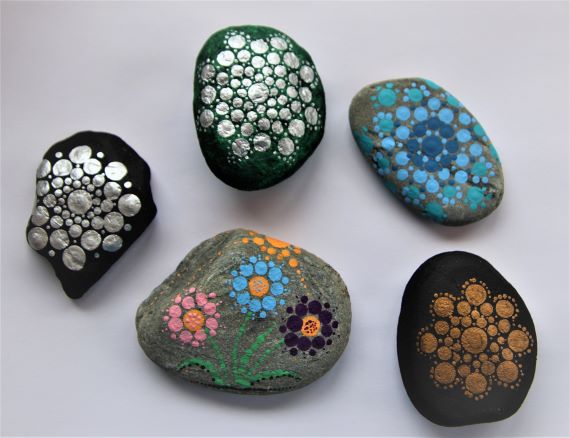
The photo above is of my first attempts at creating “Mandela Stones”. Still some learning to do, but they’re starting to look pretty…

Have you chosen a Word of the Year? Or, if you’ve decided on New Year’s resolutions, what single word could you choose to keep your focus over the coming year? Leave a comment below or send me an email… Perhaps your word can become an inspiration for others!

Wishing you all a happy, healthy and inspired 2021…

#WordoftheYear #NewYearsResolution

Categories
Uncategorized

Thoughts for the Holidays

As we head into a Christmas that is quite a change from usual, my thoughts turn to how different this entire year has been. I know I’m one of the lucky ones – being retired has meant dealing with fewer challenges than those who are still working. My fellow pharmacists, like so many health care workers, have had extra work and worries, trying to continue full health services while keeping themselves and their clients safe.

It seems like a good time to express thanks for the hard work of so many who are trying to keep the virus under control and minimize its impact as it continues to spread. I’d like to chime in with them to encourage everyone to help and to show their appreciation by doing everything they can to prevent virus transmission. Especially for front line health care workers in hospitals, fewer cases of COVID will mean their jobs will be safer and more manageable. So many hospital workers are exhausted and stressed way beyond normal.

Postponed plans…

I was really looking forward to going to Halifax to see our daughter’s beautiful new home and spend time with our family there. But, despite somewhat reduced cases (only 7 new cases yesterday, as I write this), central Nova Scotia is still under travel restrictions. Visiting there is not recommended, and 2 weeks of self-isolation would be required after our return.

So, unless conditions magically change, our visit will be postponed. As my husband says, we can go any time – it doesn’t have to be now. And our daughter has already given us several delightful video tours… with wonderful commentary!

But we are able to get together with my in-laws who live nearby. They’re a retired couple like us who mostly stay at home as the health experts advise. We also get together occasionally with a few of our (also retired or working-from-home) neighbours, keeping our “bubble” to about 10 people, as recommended now that we have only a few travel-related cases here in New Brunswick.

New Year’s resolutions?

So, I expect we’ll have extra time this holiday season that we can use wisely or waste away with worries. I read an Australian “midlife blogger”, Leanne, who writes the weekly blog, “Cresting the Hill”. She describes an alternative to New Year’s resolutions that I hadn’t heard of before: instead of traditional resolutions, at the beginning of each year, she chooses a Word of the Year… a word that will focus and inspire her throughout the year to move forward with her goals, new and old. It sounds like an interesting way to plan for a new year. I might just try it!

For 2021, I think I might choose “Health” as my word of the year – both mental and physical health (as you can’t have one without the other). I want to focus on Health for the environment, too, as we can’t be healthy without a healthy planet. Environmental health is a topic I’ve been wanting to write about, so perhaps you’ll be seeing more blogs from me about this topic in the coming year.

Holiday recommendations:

Meanwhile, here are a few holiday recommendations I came across that might help to keep your mind in a good place even if you can’t be where you want to be…

1. Sleep – When we don’t sleep enough, we are more likely to feel negative when things aren’t ideal, and just can’t feel our best when we’re overtired. A short nap (15 to 30 minutes) can help us increase energy and improve our outlook on the day, too.

2. Stay active – Although you may need to psyche yourself up a little to get outside when it’s cold and windy, fresh air and exercise can improve mood and contribute to good health, both mental and physical.

3. Address loneliness – When you contact friends and family, you’re not just helping to prevent yourself from being lonely… you’re helping someone else too. Whether you prearrange a time for a call, send a text or just ring and see if they have time to chat, the holidays are a time to reach out to others. Just a 5-minute call to say hello can bring happiness and connection. I’ve even gotten back to traditional snail mail a little – getting a card or letter can lift someone’s spirits for several days, as it can be re-read and enjoyed again and again. I think I’ll start writing more letters, even if I end up sending them electronically, but I like the idea of surprising others with a note or letter on real paper.

4. Eat well – Holidays and overindulgence go together. And there’s growing evidence that what we eat can influence our moods. Here’s a fun fact: did you know that turkey contains lots of tryptophan, an amino acid that is a precursor to serotonin (the substance increased by some antidepressants)? Some suggest that the tryptophan content of turkey may be part of the reason why we feel sleepy and contented after a big turkey dinner…

5. Align expectations – Some of us are at greater risk than others, should we become infected with the coronavirus, and need to take greater precautions. Others are returning to normal prematurely, due to “COVID fatigue” even though numbers of infections are peaking in many areas. Don’t hesitate to have a conversation about your comfort level regarding risk of exposure to the virus and respect the choices of others who decide to stay home. Although the holidays are important to many of us, as my husband says, it’s only a day, and we can celebrate later or enjoy the holiday in different ways. Keeping a small “bubble” this year can mean much less suffering later.

6. Limit “doomscrolling” – This is a new term being used for scrolling endlessly through bad news on the internet. While we want to keep up on current virus trends and recommendations, some are advising we should set a time limit for this somewhat depressing activity, then move on to more positive activities. I find it’s helpful to read about things we can do to make a difference… hence, this little list! But, especially before bedtime, read something happy or uplifting to help set you up for a good night’s sleep.

Although this will be a very different Christmas for many of us, making an effort to eat well, stay rested, and keep moving can help keep us healthy, mentally and physically. Even though we can’t gather together as we usually do this year, by reaching out in different ways, we can help others and ourselves enjoy the warm feelings of the holiday season.

So, this will be my last blog for 2020. Like many bloggers, I’ll take a bit of a break over the holidays when most people are too busy to read anyway! I’d like to wish you all happy holidays and a healthy and joyous new year in 2021, as we all recover gradually from the events of this unusual year. I can’t help thinking it will all make for interesting stories to tell our grandchildren who are not yet born… how everyone wore masks, washed their hands many times a day, and didn’t travel or visit hardly at all for a whole year to prevent spreading a nasty virus. And how almost everyone in the world lined up to get a vaccination that would protect us from the virus.

Hopefully we can also tell stories about how scientists learned what we needed to do to prevent another virus from jumping from animals to humans and wreaking havoc across the world again…

Stay safe, stay home and stay well until we have it all under control, and I wish you a happy and healthy 2021! Jeannie

Articles:

Christmas 2020: How to protect mental health – Medical News Today

Cresting the Hill – Leanne in Australia

The role of diet and nutrition on mental health and wellbeing – Cambridge University Press

#mentalhealth #COVID19

Categories
Uncategorized

Winter Holidays… COVID-style

I’ve mostly been fine with pandemic restrictions so far. I know that restrictions are for our safety and to protect those who are vulnerable. The more the virus spreads, the greater the chance it will reach into nursing homes and plug up our hospitals. But to get through the holidays in good cheer, I’m going to have to work at it. Here are some ideas to help enjoy the holidays…

Staying in touch

My husband’s family have been doing video calls twice a week since spring, every Wednesday and Saturday. It’s really helping to keep the family in touch with each other and gives us something to look forward to. I started a similar “coffee hour” with my two sisters on Sunday mornings. I have been video chatting with my children fairly often, but sometimes we get busy and a couple of weeks go by. I want to get into a schedule with them too, so we talk regularly.

Of course, a low-tech phone call works too and is often simpler for those who might be find technology confusing, but there is something special about seeing each other, even on a screen. There are many programs that include video calling now, making it easier than ever. We’ve used Skype for years, but now also use Messenger often, as you can hop from texting onto a phone or video call in the same program. All you need is to load the app on a phone or tablet. Google’s Meet program, Zoom and What’s App are others that allow free video chatting through your internet connection.

With my husband’s family, we use a program called Whereby that allows up to 4 devices to securely connect for free, great for those who worry about security on the internet. They have a special on right now – unlimited free calls for up to 50 people over the holidays, until January 8th, if you were interested in trying it out. I find it’s easiest to really have a conversation with just 2 parties, though, as it’s harder to follow cues of whose turn it is to talk with 3 or more. My hubby’s family, who often have 5 or 6 on a call, raise their hand when they want to say something and that works well. Might be because several of them are retired teachers…

I also set up a group text in Messenger with our children and their spouses last spring, and they post there every day. It’s keeping us all in touch with each other and fits into their busy lifestyles. My son and daughter-in-law post videos of our two granddaughters regularly on it too, and we really enjoy those (watch them over and over and over…). It’s hard to get little ones to sit still on a video call for very long and videos let us see them at some exciting moments! These days, it’s the daily discovery of what their “elf on a shelf” is up to…

I also started sending snail mail to our Grandgirls. Nothing more fun than getting something in the mail! Sometimes it’s a small parcel, other times just a letter or drawing. I’ve even gotten some return mail and that’s so special! My fridge is getting nicely decorated…

Home alone…

I’ve been hoping that somehow, COVID cases would get under control enough that we could get together with our children. But outbreaks continue to occur, and travel is still not recommended. In fact, health authorities are begging us all to just stay home, as hospitals in many areas are filling up with COVID patients. Regular surgeries are being delayed, even those to remove cancer. I just can’t imagine being in that boat…

So, it’s looking like our Christmas will be a get-together with my husband’s brother and his wife who live nearby and have been spending their time home alone like us. Hopefully, we can have a delayed holiday celebration in January or February with our children when quarantining afterward won’t be needed or at least won’t be as difficult.

When we isolated last March, on our arrival back from our winter holiday in Spain, we ordered home meal delivery (Hello Fresh!) to make it more fun. We had a great time cooking new dishes without having to worry about whether we had the ingredients on hand (everything you need is included except very basics like butter and eggs). Might just do that again for a while this winter for entertainment. It’s fun trying new recipes and feels like you’re eating at a restaurant since you’re not having your usual fare!

Holiday entertainment

Of course, this year I’m not just bemoaning the time I won’t have just hanging out with my kids and grandkids – we also won’t be travelling as we usually do in the winter. I bought some nice new “base layer” pieces (aka long johns…) so I can get outdoors more and not freeze to death. And we do have snowshoes that we had a little fun with last March when we came back early from Spain with snow still on the ground. There’s not much snow here yet but we try to walk to our mailbox at the top of our road almost every day (about a 30 minute walk, there and back) or head to the beach to see what’s new (it changes daily!).

I enjoy browsing through photos of previous trips and reliving the memories of warm vacations. But I came across an article this week with another suggestion for us Snowbirds who’ve had our wings clipped this year – sightseeing by internet! Sounds like it would be a fun way to spend some evenings “travelling virtually” on a big screen. I have a nice long HDMI cable that will put whatever is on my computer screen onto the TV for better viewing.

I’ll post a link to the article below, so you can check it out yourself, but one site they suggested is Google Maps Treks, that offers virtual tours of stunning regions around the world like the Great Barrier Reef, Venice, Mount Everest and the Canadian North. There are also virtual tours of museums, art galleries and even the International Space Station.

And, if you don’t have a fireplace to curl up in front of with a good book, there are plenty available for free on the internet, some with holiday music if you’d like that too. You just need a cable to connect your computer to your TV or a Bluetooth connection device like Chromecast, Roku, or Apple TV. You can buy these devices at electronics stores, Walmart or online.

If you don’t have a good book on hand, the “Libby” app takes you into the online section of your local library through the electronic library program, Overdrive. If you don’t have a library card, you can apply online. There’s also another online library called Hoopla that operates through provincial/state libraries that even carries my book!! 😊 I’m working on learning how to get books into the regular library system too… another project for this winter!

Staying cheery

Lastly, I want to share a nice article written by a pharmacist/blogger in Toronto that I chat with from time to time. She gives some ideas for how you can keep your mind in a good place even though you might be missing out on some of your usual traditions this year (the link to the article is below).

Here’s what she suggests:

  • Practice gratitude – Being thankful for what you have and focusing on the good things in your life, rather than what might be missing, helps keep a positive mindset. Start and end each day, thinking of the things that are good in your life right now and how grateful you feel for all of these.
  • Become aware of your thoughts – We humans tend to have a negativity bias, letting negative thoughts circle in our brains. If you’re starting to feel a little down, take a few deep breaths and examine what you are focused on. Realize the negative aspect is at least partly due to how you interpret the information or situation, and consciously try to change your point of view, focusing instead on something (anything!) that’s positive about the situation or on something else altogether that makes you feel good.
  • Let go of expectations – This is a year to just accept what comes and not to expect things to be the same as always. There is still a lot we can enjoy in the holiday season, even if it’s not part of our usual activities and socializing. We can create new traditions or plan to do things we’ve always wanted to do, but don’t normally have time for, that can be done at home. As my hubby reminds me: a holiday is just a day and there will be plenty more holidays to enjoy in the future.

Sharing creates joy

Our neighbour realized this week that a special needs child who lives on our road is disappointed that he can’t go to see Santa as he always loves to do each year. So, she borrowed a Santa suit and her husband is playing Santa this year! A bunch of us chipped together to buy gifts for him to deliver to our special neighbour, and I’m organizing a few songs (plus words and karaoke music!) for us to join in the fun with some caroling. It feels good to do something kind for someone else and will take our minds off things we’re missing this year!

What are you doing differently this year? Sharing ideas can be inspiring and heart-warming… Tell us how you plan to have some fun for your winter holidays this year in the comments below!

Read the full articles:

Your guide to enjoying a classic Canadian winter, virtually – CTV News Six ways you can have a classic Canadian winter without leaving your home | CTV News

How to create a more peaceful mindset during this holiday season – King City Guardian Pharmacy HOW TO CREATE A MORE PEACEFUL MINDSET DURING THIS HOLIDAY SEASON – King City Pharmacy

#COVIDwinter #snowbirds

Categories
Uncategorized

Is smog a risk factor for COVID?

We know now that viruses like SARS CoV-1 and SARS CoV-2 can survive in the air as an aerosol for several hours and can travel longer distances than previously thought. But can weather changes like increased smog or dust in the air increase the risk of catching the virus?

New evidence, although still debated, suggests that it can. Spikes in viral respiratory infections, both SARS CoV and influenza, have been observed in various locations after an event of increased fine particulate matter in the air. This includes both smog and dust storms.

The word “smog” is a combination of the words smoke and fog, and describes an environmental condition where fog is mixed with smoke, car exhaust and/or other chemical pollutants, creating a brown, grey, greenish or yellowish haze. In London, England, where this was common in the past due to burning of soft coal for home heating, they would refer to this as a “pea souper”. Coal is still used for heat in many parts of the world, in spite of the pollution it creates. Higher quality, harder “anthracite” coal is preferred, as it produces less smoke and less pollution. Wood and coal are considered approximately equally in polluting effects.

How does smog increase risk?

Researchers hypothesize that 2 things could be happening to increase risk of viral spread during smog conditions:

  • Increased numbers of fine particles floating in the air make it easier for virus aerosols to form, stay suspended in the air, and travel farther, causing increased risk of infection spreading.
  • Particles, when inhaled, irritate the lining of the lungs, creating inflammation and irritation, worsening existing chronic conditions like asthma, and making it easier for a virus to take hold.

Another weather factor that appears to contribute to increased infections, is what is called a “temperature inversion”. Normally air temperatures decrease with increased altitude – as you move farther from the surface of the earth, the temperature drops. With a temperature inversion, cooler air is trapped close to the earth’s surface with a warmer layer above it. This inversion of temperatures appears to trap not only cool air, but particles as well, creating conditions of increased smog and pollution – visible clouds of particles in the air we are breathing.

Fine particulate matter

This fine particulate matter is also referred to as “PM2.5” and some areas with frequent pollution problems track its measurements daily. Health authorities are also closely tracking cases of COVID-19, so scientists have been able to compare spikes in both in various areas around the world. Data from Tenerife (Canary Islands), London, the Swiss Canton of Ticino, and Paris supported the researchers’ hypothesis that increased particulate matter in the atmosphere and temperature inversions were followed by a spike in cases and deaths from COVID-19. Comparison charts are available in the references below.

While spread of viruses like SARS CoV-2 can occur without the environmental conditions described, it has been known for decades that peaks in fine particulate matter and smog can play a critical rose in the spreading and severity of viruses. While early cases have been identified weeks and months before the pandemic struck in several areas, it may be that smog and haze conditions were needed to enhance virus spread to dangerous levels.

This supports the idea that it may be a good idea to wear masks to protect against inhaling fine particles on days with increased smog or pollution to reduce risk of respiratory infection even when not near others and after the pandemic is controlled. Will we continue to use this tool to prevent infection in the future, at least during flu season?

I’m thinking I’ll likely be taking a few masks with me any time I travel by air, even after I’ve been vaccinated against COVID-19. I’m remembering a miserable visit my son and family had with us in Florida, where they all took turns with symptoms of an obvious viral infection, no doubt caught on the plane on their way to visit us as they were all fine before they left home.

My son said he couldn’t think of a better place to be sick, but it really spoiled what should have been a wonderful break from winter. Maybe masking on the plane (and washing hands more too!) could have prevented it all. If nothing else, we’re all learning how to reduce virus transmission through all this…

Advice for the future?

Meanwhile, if scientists continue to find more evidence to support this theory, perhaps weather advisories will help to predict worsening of risk of viral infections and provide reason for us to increase personal protections on those days, like wearing a mask as they do in Asian countries on smoggy days. But at the very least, it will provide yet another reason to reduce air pollution and work improve our environment.

I like to hear about new research into the Coronovirus – I figure, the more we learn, the better we will know how to control this terrible virus. On the news last night, the announcer said deaths from COVID-19 for the previous day were greater than the number of people who died in 911. We’re seeing 911 every day and COVID-19 has become the #1 cause of death in the US.

So, stay safe and keep others safe too, whether you know them or not. It’s going to take several months to get everyone vaccinated so we can get back to normal lives again, but we know how to protect ourselves and others until then. I know you’ve heard this many times (but I just have to say it again…): Keep your distance from others when out, wear a mask, wash your hands, stay home as much as possible. If we celebrate our holidays quietly this year, more of us will still be here for next year’s celebrations.

References:

Link between air pollution and COVID-19 spikes identified – Medical News Today

Peaks of Fine Particulate Matter May Modulate the Spreading and Virulence of COVID-19 – Springer Link

#COVID #airpollution

Categories
Uncategorized

Do you like Audiobooks?

I’m curious about how many of you enjoy audiobooks. Or whether you’ve even listened to one yet… Many (like me!) love words on a printed page, but I have started using e-books for convenience when travelling or to entertain myself when I have an unexpected wait. Since I can read on my phone, I always have a book with me.

But audiobooks involve listening instead of reading… more like a television show without the picture. Like a book, you get to imagine the characters and envision what they’re doing in your mind.

My younger daughter loves audiobooks because she can listen while walking the dog, driving the car or doing chores. I used to set my Mom up with an audiobook on occasion and she really enjoyed just relaxing with a story. My brother-in-law would listen to audiobooks when taking his daily walk on the beach when we were all in Florida. He found them more entertaining than just listening to music while walking. Seems audiobooks can appeal to all ages.

So, as I mentioned in a previous blog, I decided to make an audiobook myself from my first book Can I Speak to the Hormone Lady? Managing Menopause and Hormone Imbalances. I stumbled across a mini-course online, teaching how to do it, and thought “I can do this!” I used to read to my children when they were small, and that included the first 4 Harry Potter books, so I’ve had lots of practice reading out loud! The only other part was getting the right equipment and recording conditions, and learning to edit afterward. I didn’t want a single breath sound left in! I also re-did anything that didn’t sound quite right and, since my reading improved as I progressed through the book, I ended up re-doing the first few sections to make them better quality. I’m sure I’ll continue to improve as I do more of this work.

Of course, it’s not perfect, but I decided it was time to submit it to Amazon/Audible/iTunes for distribution. I was surprised that it will take at least a month for it to be approved and processed. They must listen to every recording to ensure quality!

But, meanwhile, I’d like to share the “5 minute sample” (which is now closer to 6 minutes, as I added the title and a closing to the recording…) If you’re curious, you can listen to it here: https://jeanniebeaudin.wixsite.com/author/audio-books The sample is from the introduction, explaining what the book contains and why I wrote it.

I’d love to hear what you think of my sample if you have 6 minutes to spare… and, of course, you can do something else at the same time if you listen on your phone! I hope to have the full book available for women in their 40s to mid 50s in the new year – in time for New Year’s Resolutions to prevent or fix hormone imbalance symptoms.

And email or comment below to let me know if you love audiobooks or if you’ve never listened to one. I’m curious how many of my readers are also potential “listeners”…

#audiobooks #hormoneimbalances #menopause