Categories
Uncategorized

Resolutions? or Word of the Year?

Have you made New Year’s resolutions in past years that you’ve never achieved? Most of us have. The beginning of a new calendar year is a good time to take stock of the past and look forward to what we can change and improve. But making a resolution for change with no focus and no plan to get there rarely works.

This year I’ve noticed several articles and blogs about choosing a Word of the Year (WotY) instead of making resolutions. The word can be a noun, verb or descriptive word or even a word for an emotion or attitude. The important part is that it provides a focus for the changes you want to make in your life.

Here are a few examples:

  • Next (as in “2020 done, 2021 next”) – This word creates a focus on looking forward. Many of us had a rough year in 2020. This is for a person who wants to focus on planning for the future and avoid dwelling on the past.
  • Discipline – This can mean concentrating on spending more time exercising, controlling spending, being more productive at work, and much more.
  • Joy – This word would inspire a person to look for happiness wherever it can be found and could be used to maintain a more positive outlook on life.
  • Uncomfortable – A focus on this term might inspire a person to get out of their comfort zone and try new things they haven’t done before. Change makes many of us uncomfortable, but we need to face this discomfort to grow and improve.
  • Flow – This is a word that can have more than one meaning or use as a Word of the Year… “go with the flow”, flow with whatever life throws your way, and “flow”, the state of mind where you’re completely focused on the present, sometimes called mindfulness, common in high level athletes, musicians and artists who are totally immersed in an activity, concentrating only on the present.
  • Hope – After such a difficult year in 2020, a focus on hope for the coming year can help to look forward to a better future. Having hope helps us to take actions that will create improvements in our lives.

What’s the difference between resolutions and a WotY?

In the end, you still need to make stepwise changes to achieve your goals. But rather than looking at a long list, you are focusing on a single word that represents a change in attitude. Many successful improvements begin with a change in attitude and focus.

Of course, changes don’t happen without a plan of some sort. You have to DO something to create the positive changes you want in your life. But focusing on a single word that represents the attitude you need to make changes is a place to start.

So, choose a Word of the Year that encompasses the state of mind you will need to achieve your goals for the future. Post it where you will see it often – one suggestion is to write it on your bathroom mirror in dry-erase marker! – and take time each day to think about how it applies to your life. Then use the change in attitude to plan the steps you need to take to achieve the changes you desire.

So, what word will I choose?

I want to have a focus on my health this year, but I also have an urge to do more art and writing. So, now that I’ve thought about this for a while, I think I will choose Create as my “WotY” to focus on for 2021. I can create a healthier lifestyle, create closer ties with my children and create artistically too. A single word can be interpreted in several ways, creating inspiration to achieve several goals or become the person you want to be.

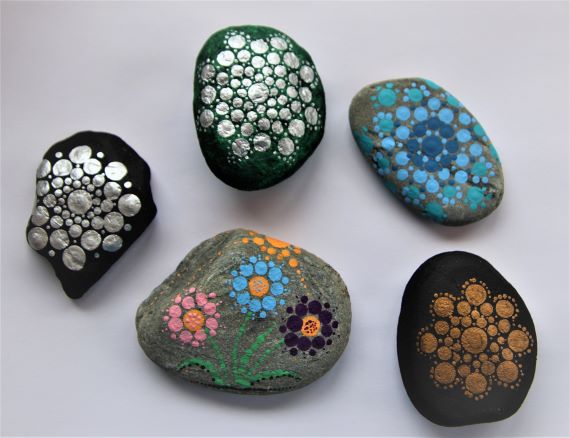
The photo above is of my first attempts at creating “Mandela Stones”. Still some learning to do, but they’re starting to look pretty…

Have you chosen a Word of the Year? Or, if you’ve decided on New Year’s resolutions, what single word could you choose to keep your focus over the coming year? Leave a comment below or send me an email… Perhaps your word can become an inspiration for others!

Wishing you all a happy, healthy and inspired 2021…

#WordoftheYear #NewYearsResolution

Categories
Uncategorized

Thoughts for the Holidays

As we head into a Christmas that is quite a change from usual, my thoughts turn to how different this entire year has been. I know I’m one of the lucky ones – being retired has meant dealing with fewer challenges than those who are still working. My fellow pharmacists, like so many health care workers, have had extra work and worries, trying to continue full health services while keeping themselves and their clients safe.

It seems like a good time to express thanks for the hard work of so many who are trying to keep the virus under control and minimize its impact as it continues to spread. I’d like to chime in with them to encourage everyone to help and to show their appreciation by doing everything they can to prevent virus transmission. Especially for front line health care workers in hospitals, fewer cases of COVID will mean their jobs will be safer and more manageable. So many hospital workers are exhausted and stressed way beyond normal.

Postponed plans…

I was really looking forward to going to Halifax to see our daughter’s beautiful new home and spend time with our family there. But, despite somewhat reduced cases (only 7 new cases yesterday, as I write this), central Nova Scotia is still under travel restrictions. Visiting there is not recommended, and 2 weeks of self-isolation would be required after our return.

So, unless conditions magically change, our visit will be postponed. As my husband says, we can go any time – it doesn’t have to be now. And our daughter has already given us several delightful video tours… with wonderful commentary!

But we are able to get together with my in-laws who live nearby. They’re a retired couple like us who mostly stay at home as the health experts advise. We also get together occasionally with a few of our (also retired or working-from-home) neighbours, keeping our “bubble” to about 10 people, as recommended now that we have only a few travel-related cases here in New Brunswick.

New Year’s resolutions?

So, I expect we’ll have extra time this holiday season that we can use wisely or waste away with worries. I read an Australian “midlife blogger”, Leanne, who writes the weekly blog, “Cresting the Hill”. She describes an alternative to New Year’s resolutions that I hadn’t heard of before: instead of traditional resolutions, at the beginning of each year, she chooses a Word of the Year… a word that will focus and inspire her throughout the year to move forward with her goals, new and old. It sounds like an interesting way to plan for a new year. I might just try it!

For 2021, I think I might choose “Health” as my word of the year – both mental and physical health (as you can’t have one without the other). I want to focus on Health for the environment, too, as we can’t be healthy without a healthy planet. Environmental health is a topic I’ve been wanting to write about, so perhaps you’ll be seeing more blogs from me about this topic in the coming year.

Holiday recommendations:

Meanwhile, here are a few holiday recommendations I came across that might help to keep your mind in a good place even if you can’t be where you want to be…

1. Sleep – When we don’t sleep enough, we are more likely to feel negative when things aren’t ideal, and just can’t feel our best when we’re overtired. A short nap (15 to 30 minutes) can help us increase energy and improve our outlook on the day, too.

2. Stay active – Although you may need to psyche yourself up a little to get outside when it’s cold and windy, fresh air and exercise can improve mood and contribute to good health, both mental and physical.

3. Address loneliness – When you contact friends and family, you’re not just helping to prevent yourself from being lonely… you’re helping someone else too. Whether you prearrange a time for a call, send a text or just ring and see if they have time to chat, the holidays are a time to reach out to others. Just a 5-minute call to say hello can bring happiness and connection. I’ve even gotten back to traditional snail mail a little – getting a card or letter can lift someone’s spirits for several days, as it can be re-read and enjoyed again and again. I think I’ll start writing more letters, even if I end up sending them electronically, but I like the idea of surprising others with a note or letter on real paper.

4. Eat well – Holidays and overindulgence go together. And there’s growing evidence that what we eat can influence our moods. Here’s a fun fact: did you know that turkey contains lots of tryptophan, an amino acid that is a precursor to serotonin (the substance increased by some antidepressants)? Some suggest that the tryptophan content of turkey may be part of the reason why we feel sleepy and contented after a big turkey dinner…

5. Align expectations – Some of us are at greater risk than others, should we become infected with the coronavirus, and need to take greater precautions. Others are returning to normal prematurely, due to “COVID fatigue” even though numbers of infections are peaking in many areas. Don’t hesitate to have a conversation about your comfort level regarding risk of exposure to the virus and respect the choices of others who decide to stay home. Although the holidays are important to many of us, as my husband says, it’s only a day, and we can celebrate later or enjoy the holiday in different ways. Keeping a small “bubble” this year can mean much less suffering later.

6. Limit “doomscrolling” – This is a new term being used for scrolling endlessly through bad news on the internet. While we want to keep up on current virus trends and recommendations, some are advising we should set a time limit for this somewhat depressing activity, then move on to more positive activities. I find it’s helpful to read about things we can do to make a difference… hence, this little list! But, especially before bedtime, read something happy or uplifting to help set you up for a good night’s sleep.

Although this will be a very different Christmas for many of us, making an effort to eat well, stay rested, and keep moving can help keep us healthy, mentally and physically. Even though we can’t gather together as we usually do this year, by reaching out in different ways, we can help others and ourselves enjoy the warm feelings of the holiday season.

So, this will be my last blog for 2020. Like many bloggers, I’ll take a bit of a break over the holidays when most people are too busy to read anyway! I’d like to wish you all happy holidays and a healthy and joyous new year in 2021, as we all recover gradually from the events of this unusual year. I can’t help thinking it will all make for interesting stories to tell our grandchildren who are not yet born… how everyone wore masks, washed their hands many times a day, and didn’t travel or visit hardly at all for a whole year to prevent spreading a nasty virus. And how almost everyone in the world lined up to get a vaccination that would protect us from the virus.

Hopefully we can also tell stories about how scientists learned what we needed to do to prevent another virus from jumping from animals to humans and wreaking havoc across the world again…

Stay safe, stay home and stay well until we have it all under control, and I wish you a happy and healthy 2021! Jeannie

Articles:

Christmas 2020: How to protect mental health – Medical News Today

Cresting the Hill – Leanne in Australia

The role of diet and nutrition on mental health and wellbeing – Cambridge University Press

#mentalhealth #COVID19

Categories
Uncategorized

Winter Holidays… COVID-style

I’ve mostly been fine with pandemic restrictions so far. I know that restrictions are for our safety and to protect those who are vulnerable. The more the virus spreads, the greater the chance it will reach into nursing homes and plug up our hospitals. But to get through the holidays in good cheer, I’m going to have to work at it. Here are some ideas to help enjoy the holidays…

Staying in touch

My husband’s family have been doing video calls twice a week since spring, every Wednesday and Saturday. It’s really helping to keep the family in touch with each other and gives us something to look forward to. I started a similar “coffee hour” with my two sisters on Sunday mornings. I have been video chatting with my children fairly often, but sometimes we get busy and a couple of weeks go by. I want to get into a schedule with them too, so we talk regularly.

Of course, a low-tech phone call works too and is often simpler for those who might be find technology confusing, but there is something special about seeing each other, even on a screen. There are many programs that include video calling now, making it easier than ever. We’ve used Skype for years, but now also use Messenger often, as you can hop from texting onto a phone or video call in the same program. All you need is to load the app on a phone or tablet. Google’s Meet program, Zoom and What’s App are others that allow free video chatting through your internet connection.

With my husband’s family, we use a program called Whereby that allows up to 4 devices to securely connect for free, great for those who worry about security on the internet. They have a special on right now – unlimited free calls for up to 50 people over the holidays, until January 8th, if you were interested in trying it out. I find it’s easiest to really have a conversation with just 2 parties, though, as it’s harder to follow cues of whose turn it is to talk with 3 or more. My hubby’s family, who often have 5 or 6 on a call, raise their hand when they want to say something and that works well. Might be because several of them are retired teachers…

I also set up a group text in Messenger with our children and their spouses last spring, and they post there every day. It’s keeping us all in touch with each other and fits into their busy lifestyles. My son and daughter-in-law post videos of our two granddaughters regularly on it too, and we really enjoy those (watch them over and over and over…). It’s hard to get little ones to sit still on a video call for very long and videos let us see them at some exciting moments! These days, it’s the daily discovery of what their “elf on a shelf” is up to…

I also started sending snail mail to our Grandgirls. Nothing more fun than getting something in the mail! Sometimes it’s a small parcel, other times just a letter or drawing. I’ve even gotten some return mail and that’s so special! My fridge is getting nicely decorated…

Home alone…

I’ve been hoping that somehow, COVID cases would get under control enough that we could get together with our children. But outbreaks continue to occur, and travel is still not recommended. In fact, health authorities are begging us all to just stay home, as hospitals in many areas are filling up with COVID patients. Regular surgeries are being delayed, even those to remove cancer. I just can’t imagine being in that boat…

So, it’s looking like our Christmas will be a get-together with my husband’s brother and his wife who live nearby and have been spending their time home alone like us. Hopefully, we can have a delayed holiday celebration in January or February with our children when quarantining afterward won’t be needed or at least won’t be as difficult.

When we isolated last March, on our arrival back from our winter holiday in Spain, we ordered home meal delivery (Hello Fresh!) to make it more fun. We had a great time cooking new dishes without having to worry about whether we had the ingredients on hand (everything you need is included except very basics like butter and eggs). Might just do that again for a while this winter for entertainment. It’s fun trying new recipes and feels like you’re eating at a restaurant since you’re not having your usual fare!

Holiday entertainment

Of course, this year I’m not just bemoaning the time I won’t have just hanging out with my kids and grandkids – we also won’t be travelling as we usually do in the winter. I bought some nice new “base layer” pieces (aka long johns…) so I can get outdoors more and not freeze to death. And we do have snowshoes that we had a little fun with last March when we came back early from Spain with snow still on the ground. There’s not much snow here yet but we try to walk to our mailbox at the top of our road almost every day (about a 30 minute walk, there and back) or head to the beach to see what’s new (it changes daily!).

I enjoy browsing through photos of previous trips and reliving the memories of warm vacations. But I came across an article this week with another suggestion for us Snowbirds who’ve had our wings clipped this year – sightseeing by internet! Sounds like it would be a fun way to spend some evenings “travelling virtually” on a big screen. I have a nice long HDMI cable that will put whatever is on my computer screen onto the TV for better viewing.

I’ll post a link to the article below, so you can check it out yourself, but one site they suggested is Google Maps Treks, that offers virtual tours of stunning regions around the world like the Great Barrier Reef, Venice, Mount Everest and the Canadian North. There are also virtual tours of museums, art galleries and even the International Space Station.

And, if you don’t have a fireplace to curl up in front of with a good book, there are plenty available for free on the internet, some with holiday music if you’d like that too. You just need a cable to connect your computer to your TV or a Bluetooth connection device like Chromecast, Roku, or Apple TV. You can buy these devices at electronics stores, Walmart or online.

If you don’t have a good book on hand, the “Libby” app takes you into the online section of your local library through the electronic library program, Overdrive. If you don’t have a library card, you can apply online. There’s also another online library called Hoopla that operates through provincial/state libraries that even carries my book!! 😊 I’m working on learning how to get books into the regular library system too… another project for this winter!

Staying cheery

Lastly, I want to share a nice article written by a pharmacist/blogger in Toronto that I chat with from time to time. She gives some ideas for how you can keep your mind in a good place even though you might be missing out on some of your usual traditions this year (the link to the article is below).

Here’s what she suggests:

  • Practice gratitude – Being thankful for what you have and focusing on the good things in your life, rather than what might be missing, helps keep a positive mindset. Start and end each day, thinking of the things that are good in your life right now and how grateful you feel for all of these.
  • Become aware of your thoughts – We humans tend to have a negativity bias, letting negative thoughts circle in our brains. If you’re starting to feel a little down, take a few deep breaths and examine what you are focused on. Realize the negative aspect is at least partly due to how you interpret the information or situation, and consciously try to change your point of view, focusing instead on something (anything!) that’s positive about the situation or on something else altogether that makes you feel good.
  • Let go of expectations – This is a year to just accept what comes and not to expect things to be the same as always. There is still a lot we can enjoy in the holiday season, even if it’s not part of our usual activities and socializing. We can create new traditions or plan to do things we’ve always wanted to do, but don’t normally have time for, that can be done at home. As my hubby reminds me: a holiday is just a day and there will be plenty more holidays to enjoy in the future.

Sharing creates joy

Our neighbour realized this week that a special needs child who lives on our road is disappointed that he can’t go to see Santa as he always loves to do each year. So, she borrowed a Santa suit and her husband is playing Santa this year! A bunch of us chipped together to buy gifts for him to deliver to our special neighbour, and I’m organizing a few songs (plus words and karaoke music!) for us to join in the fun with some caroling. It feels good to do something kind for someone else and will take our minds off things we’re missing this year!

What are you doing differently this year? Sharing ideas can be inspiring and heart-warming… Tell us how you plan to have some fun for your winter holidays this year in the comments below!

Read the full articles:

Your guide to enjoying a classic Canadian winter, virtually – CTV News Six ways you can have a classic Canadian winter without leaving your home | CTV News

How to create a more peaceful mindset during this holiday season – King City Guardian Pharmacy HOW TO CREATE A MORE PEACEFUL MINDSET DURING THIS HOLIDAY SEASON – King City Pharmacy

#COVIDwinter #snowbirds

Categories
Uncategorized

Is smog a risk factor for COVID?

We know now that viruses like SARS CoV-1 and SARS CoV-2 can survive in the air as an aerosol for several hours and can travel longer distances than previously thought. But can weather changes like increased smog or dust in the air increase the risk of catching the virus?

New evidence, although still debated, suggests that it can. Spikes in viral respiratory infections, both SARS CoV and influenza, have been observed in various locations after an event of increased fine particulate matter in the air. This includes both smog and dust storms.

The word “smog” is a combination of the words smoke and fog, and describes an environmental condition where fog is mixed with smoke, car exhaust and/or other chemical pollutants, creating a brown, grey, greenish or yellowish haze. In London, England, where this was common in the past due to burning of soft coal for home heating, they would refer to this as a “pea souper”. Coal is still used for heat in many parts of the world, in spite of the pollution it creates. Higher quality, harder “anthracite” coal is preferred, as it produces less smoke and less pollution. Wood and coal are considered approximately equally in polluting effects.

How does smog increase risk?

Researchers hypothesize that 2 things could be happening to increase risk of viral spread during smog conditions:

  • Increased numbers of fine particles floating in the air make it easier for virus aerosols to form, stay suspended in the air, and travel farther, causing increased risk of infection spreading.
  • Particles, when inhaled, irritate the lining of the lungs, creating inflammation and irritation, worsening existing chronic conditions like asthma, and making it easier for a virus to take hold.

Another weather factor that appears to contribute to increased infections, is what is called a “temperature inversion”. Normally air temperatures decrease with increased altitude – as you move farther from the surface of the earth, the temperature drops. With a temperature inversion, cooler air is trapped close to the earth’s surface with a warmer layer above it. This inversion of temperatures appears to trap not only cool air, but particles as well, creating conditions of increased smog and pollution – visible clouds of particles in the air we are breathing.

Fine particulate matter

This fine particulate matter is also referred to as “PM2.5” and some areas with frequent pollution problems track its measurements daily. Health authorities are also closely tracking cases of COVID-19, so scientists have been able to compare spikes in both in various areas around the world. Data from Tenerife (Canary Islands), London, the Swiss Canton of Ticino, and Paris supported the researchers’ hypothesis that increased particulate matter in the atmosphere and temperature inversions were followed by a spike in cases and deaths from COVID-19. Comparison charts are available in the references below.

While spread of viruses like SARS CoV-2 can occur without the environmental conditions described, it has been known for decades that peaks in fine particulate matter and smog can play a critical rose in the spreading and severity of viruses. While early cases have been identified weeks and months before the pandemic struck in several areas, it may be that smog and haze conditions were needed to enhance virus spread to dangerous levels.

This supports the idea that it may be a good idea to wear masks to protect against inhaling fine particles on days with increased smog or pollution to reduce risk of respiratory infection even when not near others and after the pandemic is controlled. Will we continue to use this tool to prevent infection in the future, at least during flu season?

I’m thinking I’ll likely be taking a few masks with me any time I travel by air, even after I’ve been vaccinated against COVID-19. I’m remembering a miserable visit my son and family had with us in Florida, where they all took turns with symptoms of an obvious viral infection, no doubt caught on the plane on their way to visit us as they were all fine before they left home.

My son said he couldn’t think of a better place to be sick, but it really spoiled what should have been a wonderful break from winter. Maybe masking on the plane (and washing hands more too!) could have prevented it all. If nothing else, we’re all learning how to reduce virus transmission through all this…

Advice for the future?

Meanwhile, if scientists continue to find more evidence to support this theory, perhaps weather advisories will help to predict worsening of risk of viral infections and provide reason for us to increase personal protections on those days, like wearing a mask as they do in Asian countries on smoggy days. But at the very least, it will provide yet another reason to reduce air pollution and work improve our environment.

I like to hear about new research into the Coronovirus – I figure, the more we learn, the better we will know how to control this terrible virus. On the news last night, the announcer said deaths from COVID-19 for the previous day were greater than the number of people who died in 911. We’re seeing 911 every day and COVID-19 has become the #1 cause of death in the US.

So, stay safe and keep others safe too, whether you know them or not. It’s going to take several months to get everyone vaccinated so we can get back to normal lives again, but we know how to protect ourselves and others until then. I know you’ve heard this many times (but I just have to say it again…): Keep your distance from others when out, wear a mask, wash your hands, stay home as much as possible. If we celebrate our holidays quietly this year, more of us will still be here for next year’s celebrations.

References:

Link between air pollution and COVID-19 spikes identified – Medical News Today

Peaks of Fine Particulate Matter May Modulate the Spreading and Virulence of COVID-19 – Springer Link

#COVID #airpollution

Categories
Uncategorized

Do you like Audiobooks?

I’m curious about how many of you enjoy audiobooks. Or whether you’ve even listened to one yet… Many (like me!) love words on a printed page, but I have started using e-books for convenience when travelling or to entertain myself when I have an unexpected wait. Since I can read on my phone, I always have a book with me.

But audiobooks involve listening instead of reading… more like a television show without the picture. Like a book, you get to imagine the characters and envision what they’re doing in your mind.

My younger daughter loves audiobooks because she can listen while walking the dog, driving the car or doing chores. I used to set my Mom up with an audiobook on occasion and she really enjoyed just relaxing with a story. My brother-in-law would listen to audiobooks when taking his daily walk on the beach when we were all in Florida. He found them more entertaining than just listening to music while walking. Seems audiobooks can appeal to all ages.

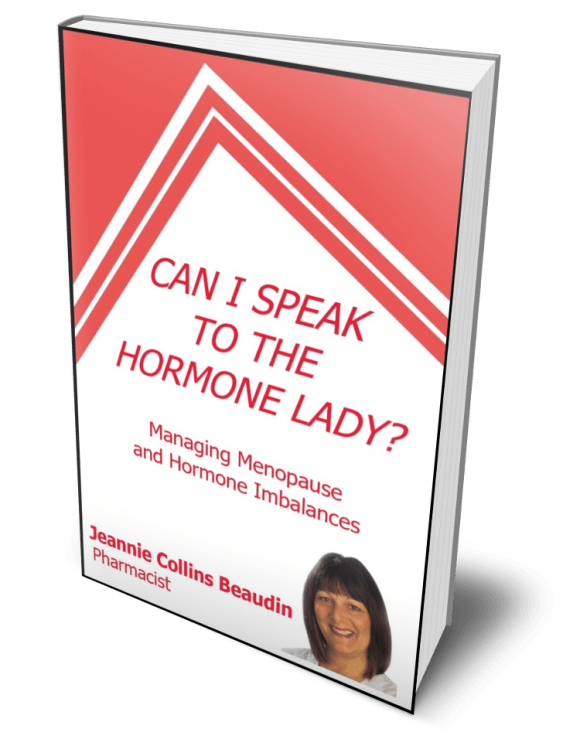
So, as I mentioned in a previous blog, I decided to make an audiobook myself from my first book Can I Speak to the Hormone Lady? Managing Menopause and Hormone Imbalances. I stumbled across a mini-course online, teaching how to do it, and thought “I can do this!” I used to read to my children when they were small, and that included the first 4 Harry Potter books, so I’ve had lots of practice reading out loud! The only other part was getting the right equipment and recording conditions, and learning to edit afterward. I didn’t want a single breath sound left in! I also re-did anything that didn’t sound quite right and, since my reading improved as I progressed through the book, I ended up re-doing the first few sections to make them better quality. I’m sure I’ll continue to improve as I do more of this work.

Of course, it’s not perfect, but I decided it was time to submit it to Amazon/Audible/iTunes for distribution. I was surprised that it will take at least a month for it to be approved and processed. They must listen to every recording to ensure quality!

But, meanwhile, I’d like to share the “5 minute sample” (which is now closer to 6 minutes, as I added the title and a closing to the recording…) If you’re curious, you can listen to it here: https://jeanniebeaudin.wixsite.com/author/audio-books The sample is from the introduction, explaining what the book contains and why I wrote it.

I’d love to hear what you think of my sample if you have 6 minutes to spare… and, of course, you can do something else at the same time if you listen on your phone! I hope to have the full book available for women in their 40s to mid 50s in the new year – in time for New Year’s Resolutions to prevent or fix hormone imbalance symptoms.

And email or comment below to let me know if you love audiobooks or if you’ve never listened to one. I’m curious how many of my readers are also potential “listeners”…

#audiobooks #hormoneimbalances #menopause

Categories
Uncategorized

Small deliberate choices = big results!

Another week just slipped by… didn’t even think about my blog until Thursday. But I did read an interesting “productivity” blog at the beginning of the week that had something to do with it. It started me thinking about my priorities (and unfinished projects!) and I’d like to share the ideas in it that struck a chord for me…

What was I up to this week?

First, let me you what I did do this week. I have two projects I’ve been working on for a while that are close to completion but, for some reason, I’ve been letting sit unfinished. It reminds me of the first sweater I knit – all the pieces were done but I didn’t know how to sew it together… so it sat in a bag for 2 years! My mom didn’t knit so I really didn’t have anyone to ask how it was done. Then one day, I saw a “how to” article, explaining how to sew knitting together with a backstitch, and I finally finished it off. I think I was 11 or 12 when I started and was lucky it still fit by the time it was finished!

One currently unfinished project of mine is a collection of some popular blogs I’ve written, edited together into a book on wellness. Like my sweater, it’s been almost finished for quite a while. My main stumbling block is an interesting title… somehow, words like “wellness” and “staying healthy” just sound boring. I brought up my problem on a video chat last weekend with my kids, and one suggested “The Pharmacist is IN” as a title. I liked that… much more interesting. And the title fits because answering questions was such a big part of what I did as a pharmacist for 40 years. Of course, it would need a subtitle that talks about the contents, like “Answering your questions about health news, research and ideas” or something along that line. It was a definite improvement on my working title (“Staying Well”) so I sat down and edited the chapter titles into questions this week. But what do you think? Let me know if you have an idea that might improve the subtitle!

My second project that’s almost finished is the audio version of my hormone book, Can I Speak to the Hormone Lady? mentioned in an earlier blog. It’s finished except to do a final listen through, beginning to end, and then I need to figure out how to upload it to an audio book distributor… another thing to learn how to do. And that’s always a reason for me to put off a task! Plus, the cover needs to be changed to a square format so I nudged my cover designer (my daughter who has a degree in design!) to do that for me, and got a first draft yesterday. Moving along with it again…

Back to the article…

The productivity article I mentioned at the beginning of this blog is about prioritizing what is important to you and choosing to spend your time on these things. It’s also about minimizing or getting rid of some common time-wasters we all have, so we can get these important things finished!

So, here’s a summary of recommendations from the article that resonated with me and got me going on my projects again:

  • Be intentional – consciously decide what is most important to you and spend time on these things.
  • Create deadlines, even if they’re artificial ones just for yourself. This helps you focus on the things you really want to do and helps make sure they get done in a timely manner.
  • Focus on the process rather than the final outcome you want to accomplish. Achieving small steps is do-able, less intimidating and helps you get there in an organized way without becoming overwhelmed.
  • Chase the small moments, the small actions taken daily. Small actions and creating good habits can change your life and help you achieve your bigger goals, if you plan and choose actions that keep you heading in the right direction.
  • Don’t sit for phone calls – walk, do a chore, etc. This adds exercise and improves your health and ability to focus, plus you can get 2 things done at once! My daughter often does this, for example, folding laundry while chatting with me on a video call. (“Why am I looking at the ceiling fan on this video call???” 😊 ). She also “reads” audiobooks for the same reason – my inspiration for creating an audiobook!
  • Don’t work long hours. The quality of your work and how much you accomplish diminishes when you’re overtired. Rest to refresh or do a mundane task that doesn’t require brainpower to take a break.
  • Don’t automatically say “yes” to every request. Consider whether the activity contributes to your overall life goals.
  • Reduce the number of decisions you need to make for mundane activities – what to wear? What to eat? Save your energy for bigger things by streamlining the everyday decisions. For example, plan the week’s menu and line up work outfits for the week on weekends.
  • Keep your email inbox clean. Delete emails once they’re read, archive ones you might need in the future. (I’m really bad at this… but at least I “search” certain notifications, like my daily Duolingo reminders and various health newsletters, and delete them all every so often)
  • Consider using an organization system, even if it’s just the calendar on your phone – my choice, being a former Palm Pilot user. I loved how it would wake me up in the morning and tell me where I was working, back in my relief pharmacist days. But there are plenty of different ones available – complex and sharable with co-workers and/or family, or as simple as a wall calendar (my hubby’s favourite!)
  • Lastly, avoid drama and negativity. Anger and productivity don’t mix, and chaos is anti-motivating. Stay positive and stay focused on what’s important to you!

So, are you as inspired as I was? Here’s the original article if you’d like to read more:

14 Things My Highly Productive Friends Have Given Up – Tim Dennings, Australian blogger

And please let me know what you think of my proposed book title… The Pharmacist is IN… Answering your questions about health news, research and ideas. I’d love to hear what you think!

#productivitytips #writersblock

Categories
Uncategorized

On blogging…

This is my 200th blog – a milestone I wanted to celebrate! I’ve been writing my weekly Health Blog for the past 4 ½ years, with the occasional break, mostly during holidays. I’ve learned a lot by answering your questions and have had fun sharing new information and ideas I’ve come across.

Many of the blogs I’ve written are referred to as “evergreen” in the blog world – blogs with information that continues to be of value over time to readers. When I check the statistics for my blog, I see that people often read previous articles. There’s also a search tool (magnifying glass symbol) at the top to help find topics you’re interested in and I try to always remember to add search engine flags (preceded by a #) to help them show up in general internet searches.

My original goal

Although my purpose for the blog has evolved over the years, I originally started because it was recommended by book marketing experts as a way to contact readers, a way for them to get to know me as a writer, part of my author’s “platform”, to create a presence on the internet. I’ve found it’s also been a fun way to stay in touch with friends and family who are far away and get to know new readers a little bit. It surprises me that my blog is read all over the world, but with the search tools built into Google, perhaps it shouldn’t. The world seems smaller now than it used to, somehow, with both information and infections so quickly spreading across the globe.

I also read constantly about how to write better, how to improve your blog, even sometimes about how to write characters and construct a novel, which I may try one day. Blogging experts say you should have a purpose for your blog – mine is to both entertain and inform. My goal is to help you be healthier and to inspire curiosity and introduce new ideas to my readers. And once in a while I’ll tell you about something I’ve created or an accomplishment I’m proud of… like today! A blog, experts say, should always end with a “call to action”, encouraging readers to do something after reading but, most of the time, I skip that altogether! Still room for improvement in my blog, I guess…

Can’t be everything to everyone…

I know that not everyone will be interested in every blog, since my subjects can be quite varied while still discussing physical or mental health. I’m always excited when I get a new subscriber and just a little sad when someone unsubscribes, but I know we are all deluged with email these days – sometimes it’s just too much to keep up with!

I’ve also had a few unsubscribe because of technical problems – trouble opening the blog or receiving my email. Experts recommend adding a star or flag to one of my emails to tell your mail server the mail is something you’re interested in, and to add me to your email contact list. You can usually do this easily by hovering your cursor or holding your finger over my mail address in the “from” field, then choosing “add to contact list” from the box that pops up. On my email program, this is found by clicking the 3 dots in the box.

With the audio version of the blog, besides helping me improve at creating audio, it also makes it easier for my subscribers to listen on-the-go. I’ve also learned reading my writing out loud helps to find typos and awkward wording that can slip past when re-reading silently. The brain is amazing at filling in the blanks or seeing what you think is there (not what’s actually there…)

Blogging has its downside

The downside of my blog is that most weeks, I don’t do any other writing! But I am almost finished a book-related project: producing an audiobook from my Hormone Lady book. It’s taken longer than I originally thought it would but I’ve improved with practice, making fewer mistakes that had to be corrected later. While reading it out loud, I also found a few areas that needed improving and updated the print files for future copies. My book is “print on demand” and it’s printed only when ordered, so the newest version is always shipped.

The audio version really is ready to upload to a distribution service, but I know it isn’t perfect and my “perfectionist” side is making me hold back… However, as with writing, they say that “done” is better than “perfect but never finished” and you have to decide at some point to move on to another project.

I also thought I’d try uploading the video of my book interview to YouTube, mostly to learn how to do it. I shared it on Facebook but, these days, you need to pay to have very many people see a post. YouTube offers another medium for reaching potential readers that is easier to share, and figuring out how to use it will be another little learning challenge. So, there’s always something to do…

My “winter project”

Since I’m going to be home this winter and visiting may be restricted, depending on how well we all behave in the next few months, I figure it will be a good time to accomplish a few things. I dug out the outline I started ages ago for my next book and put it front and center on my desk. It will be about the environment, a subject I’ve been thinking of writing about for a while – I’m sure you’ve noticed a blog or two I’ve written on the subject.

Tell me what you think of this idea: I’m thinking of using a photography point of view (drawing from another of my hobbies), looking at the environment through 3 lenses: wide angle (world pollution concerns), a 50mm lens, the “nifty 50” that photographs things life-sized as we see with our eyes, (our personal environment, inside our homes and workplaces) and “macro” (the environment we create inside: our microbiome). Now that I think of it, “micro” (as in microscope) would be more accurate for bacteria, yeasts and viruses… Who knows if I’ll keep that analogy, but it’s helping me to organize what I want to talk about. For several personal reasons, environmental concerns, inside and out, have become a passion of mine over the years.

Staying independent

I’ve had a couple of offers for advertising on my blog in the past year or so, but I’ve decided not to go that route. I really don’t want anyone telling me what I can or cannot write about or influencing what I say. My goal for the blog was never to make money and, except for the odd course I take to learn “how to” (like doing audio), the blog doesn’t cost me anything but my time. Since I learn so much by doing it, it’s worth it!

However, I do like to help others get started in the blogging world, especially those interested in writing about health issues. So, if you’re a health professional interested in starting up a health blog, contact me! The more solidly referenced information out there, the better, to counter all the misinformation we see these days. And, to any pharmacist readers, I think sharing information is a great way to promote a pharmacy or professional practice, rather than relying on sales flyers!

Last word…

I’d like to make sure you continue receiving my emails, and recently mail delivery systems seem to be putting more and more non-spam emails into junk folders. So, please add my email: Jeannie.beaudin@gmail.com to your contact list and, if an email does go to your junk folder, drag it to the inbox or click “not junk” if you see that at the top. Here’s an article that explains what else you can do if that doesn’t work: How to whitelist an email address.

Thanks for reading my blog and I hope to hear from you in the future. Remember, as always, comments and questions are welcomed!

PS: That’s my newest all-the-dye-is-gone photo above. Now I’m wondering… why on earth did I bother dying it in the first place??? 🙂

Jeannie

Categories
Uncategorized

How to Prevent a Pandemic

Rather than waiting for the next pandemic to arrive… then struggle to limit its spread, search for treatments, and race to develop a vaccine to protect ourselves, we need to become proactive. If we can discover how pandemics start and change these factors, perhaps we can prevent them from occurring. Given the loss of lives and freedoms, and the devastation of the global economy we are seeing with COVID-19, this seems a much better strategy than reacting after another one starts.

Essentially all pandemics originate from the diverse microbes carried by animals. When we interact with these animals, the microbes they carry can jump to humans and we often have no resistance to these new organisms. Changes in human activity that increase contact with animals create an increased chance of this happening and therefore an increase in the risk of creating a pandemic. Interestingly, the underlying causes of pandemics are environmental changes, the same ones that cause loss of biodiversity and climate change, say a panel of health and environmental experts.

The IPBES (Intergovernmental Platform on Biodiversity and Ecosystem Services) held a workshop in July 2020 with 22 experts from around the world to discuss these causes and what could be done. Their goals were to investigate and discuss:

  • How pandemics emerge from nature,
  • The role of land-use change and climate change in driving pandemics,
  • The role of wildlife trade in driving pandemics,
  • Learning to better control pandemics, and
  • Preventing pandemics based on a “One Health” approach.

So, what are we doing that increases our risk?

Intensification of agriculture and factory farms with animals being raised in restricted quarters bring animals and people into closer contact, enhancing the sharing of microbes. Recent reports of COVID-19 infection and mutation of the virus in a population of farmed mink in Denmark have alerted us that infections are spread in both directions between animals and people.

Exponential rise in consumption and trade of animals in recent decades, further driven by developing nations adopting our consumption habits, has opened new pools of animal-borne diseases to the world stage. Global travel, even for retired folks like me, helps to carry infectious organisms from one part of the world to another quickly, once a disease is established. In 1918 it was a war that caused people to travel, carrying the deadly virus, but today we travel for pleasure and business, and just to get away from cold winters!

This pandemic has also underlined some poor strategies we’ve chosen in the past. Crowding in large nursing homes allows diseases to spread easily through a vulnerable population. Already one Canadian province has decided to limit the number of seniors who can be cared for on one institution, and they were quick to limit caregivers to one home to prevent workers from carrying organisms from one institution to another.

Basic healthcare is also less available to some minorities, resulting in more cases and worse outcomes in this pandemic. Some occupations, like cashiers and bus drivers, cause workers to be more easily exposed to infectious diseases carried by others. Keeping everyone healthy and protected from infectious diseases, within our own countries as well as around the world, helps us all resist infections that could become a pandemic. As long as the infection exists somewhere in the world, there is the possibility of it spreading to us again even after we have eliminated it here.

Pandemics come from nature

The majority of new diseases (70%), such as Ebola, Zika, and Nipah encephalitis, and almost all pandemics, like influenza, HIV/AIDS, SARS, and COVID-19, are zoonoses – caused by microbes that originated in animals and “spilled over” into humans through contact between wildlife, livestock and people.

Scientists estimate there are about 1.7 million unknown viruses in mammals and birds, and that as many as 850,000 of these could have the ability to infect humans. That’s a lot of potential for pandemics in the future. It is believed the riskiest sources are mammals (especially bats, rodents, and primates) and some birds (particularly water birds) as well as livestock (for example, pigs, camels, and poultry).

Land use change

Activities and changes in land use that bring humans closer to the natural habitat of wild animals is another factor. As humans invade their natural habitats, wildlife are forced to move, increasing and changing their contact with other species as well as humans, and creating opportunities for viral spread and mutations. Changes in the use of land that pressure wildlife habitats are believed to cause at least 30% of new diseases. When viruses jump to a new species, mutations are more common as they adapt to their new environment.

Land-use change includes deforestation, building homes in wildlife habitats, expansion of crop and livestock production areas, and urbanization, the process by which more and more people leave rural areas and move into cities.

The potential to affect human health is mostly ignored when land planning decisions are made. We just learned that a developer has bought a tract of land next to us that runs through a forested area, a wetland, and to the beach and is planning a housing development. We see deer in there often as well as blue herons, geese, ducks and fox. I’m wondering if the bald eagles we often see are nesting in those trees, and if anyone has thought to investigate the plant and animal life it supports. We have regular visits from raccoons and, while not my favourite critters, they are part of the ecology here. If these animals and some of the diverse species that live in the wetland are displaced, will that affect our environment and our health too?

Trade and consumption of wildlife

I was surprised to read that legal wildlife trade has increased 5-fold in the last 14 years, and there is a significant illegal trade as well. Many of these animals are bought for pets, leading to the introduction of new zoonoses like monkeypox. Wildlife are being farmed in some countries for this purpose. Trade in mammals and birds is particularly risky, as they are important reservoirs of potential human diseases.

Regulations that control this trade are limited, spread among numerous authorities, and inconsistently enforced or applied, according to the report of the IPBES described earlier.

How often do diseases jump to humans?

More than five new diseases emerge in people every year, and any one of these has the potential to spread and become a serious pandemic. For this to happen, it simply needs to be an organism that causes severe disease plus one that also spreads easily, often through the air.

What can we do to prevent the next pandemic? And can we afford it?

Global strategies to prevent pandemics based on reducing wildlife trade, decreasing land use change, and increasing health surveillance are estimated to cost between US$40 and 58 billion annually, 100 times less than the cost of a pandemic. So, yes, it’s affordable. With the economic impact of the current pandemic, I’d say we can’t afford not to do this…

According to the report prepared by experts at the IPBES Workshop on Biodiversity and Pandemics, pandemic prevention strategies could include:

  • Assessing the health impact of pandemic and emerging disease risk from major development and land-use projects before beginning the project.
  • Reforming financial aid for land use so benefits and risks to biodiversity and health are recognized and targeted.
  • Assessing effectiveness of habitat conservation measures, including protected areas and habitat restoration programs that can reduce pandemics.
  • Promoting changes that will reduce the types of consumption, globalized agriculture expansion and trade that have led to pandemics. Examples are consumption of palm oil, exotic wood, products that require mining, transportation infrastructure, meat and other products of globalized livestock production. This could include taxes, levies or quotas on meat consumption, livestock production or other forms of high pendemic risk consumption.
  • Building partnerships to reduce zoonotic disease risks in international wildlife trade.
  • Educating communities in infectious disease hotspots regarding the health risks associated with wildlife use and trade known to cause a pandemic risk.
  • Restricting wildlife species that are identified by experts as high-risk sources of human disease, testing effectiveness of market cleaning protocols, and using refrigeration more effectively in markets.
  • Conducting disease surveillance of wildlife in the trade, and in wildlife hunters, farmers, and traders.
  • Improving law enforcement on all aspects of illegal wildlife trade.
  • Supporting “One Health”, scientific research to design and test better strategies to prevent pandemics. One Health is an approach that recognizes that the health of people is closely connected to the health of animals and our shared environment. It is a collaboration between health sectors and disciplines working at local, regional, national, and global levels, with the goal of achieving optimal health outcomes for all.

As a society, we can contribute too. Education about the issues and ways we can change what we do, to reduce the risk of future pandemics and their origins, is important, especially for the younger generation. We can transition to healthier and more sustainable and diverse diets, including responsible amounts of meat, especially from wildlife sources. We can encourage and support incentives for companies to avoid land-use changes that increase pandemic risk, and avoid buying products from unsustainable trade or wildlife farming with increased disease risk. And we can pressure our governments to act on recommendations like those described above.

While we are hearing positive news about COVID-19 vaccine development, unfortunately many more will die from COVID-19 before enough can be manufactured, distributed, and administered to stop its spread. While we continue our actions to limit the spread of this virus, we need to consider what we and our governments can do to prevent the next pandemic that undoubtedly will emerge all too soon.

#preventingpandemics

References:

International report lays out plan to ‘escape from the pandemic era’ – Medical News Today

Workshop Report on Biodiversity and Pandemics of the IPBES – Zenodo

People started coronavirus back-and-forth on mink farms, Dutch study says – CNN

One Health – Centers for Disease Control and Prevention

From the plague to MERS: A brief history of pandemics – Aljazeera
Categories
Uncategorized

What a week…

It’s been a hectic week… so not a typical blog this week. But I thought I’d tell you what I’m up to. Not only have I been preparing for my first Zoom online book reading and interview, to be held live on Saturday morning, but we also sold a property this week – the condo in Florida we bought 10 years ago. Lots of wonderful memories there, and I will miss it. So, it’s been a week of emotions and nerves…

But let me tell you about our exciting event. My pharmacist colleague and blogger, Karen McCurdy-Thompson, will interview me live on Zoom about my book, Can I Speak to the Hormone Lady? Managing Menopause and Hormone Imbalances. The event is sponsored and organized by the Bookmark bookstores in Charlottetown and Halifax, and they also sell my book. A recording of the event will be available afterward.

The interview, menopause discussion, and reading of short excerpts of the book will begin at 11am on Saturday, November 7th, 2020. If you haven’t attended a Zoom event before, it’s simple to join in. Just email Charlottetown@bookmarkreads.ca and ask for a link then, just before 11 on Saturday, tomorrow, click the link they sent you on any computer, tablet or smart phone. If you’re interested in learning about menopause and hormones that are out of control, join us…

Note that, if you aren’t able to attend on Saturday morning, a recording of the event will be available afterward. I will be emailing the link to the recording out to my readers but you can also contact the store email above or email me at Jeannie.beaudin@gmail.com to get the replay link. This is very exciting, and new for all of us… always a learning experience. I guess everyone is trying out new things that will help keep people safe during the pandemic.

Here is the press release for the event:

FOR IMMEDIATE RELEASE

Relief from hormone symptoms for women of all ages: Discussion of book by NB pharmacist and author

November 7, 2020; Cap-Pele, NB, Canada—New Brunswick author, Jeannie Collins Beaudin, will be discussing her book: Can I Speak to the Hormone Lady? Managing Menopause and Hormone Imbalances with pharmacist, Karen McCurdy-Thompson, live by Zoom at 11am, November 7, 2020. The event is sponsored by the Bookmark stores, located in Charlottetown and Halifax.

Can I Speak to the Hormone Lady? is an easy read that gives women of all ages the knowledge they need to understand and take control of hormone-related symptoms. It is based on scientific studies, the author’s 40 years of experience as a pharmacist, and her 10 years as a specialty hormone consultant.

Although the book is primarily aimed at women in their 40s to mid-50s, hormone imbalances that can occur throughout a woman’s life are discussed. Readers will learn what their hormone-related symptoms tell them and how they can control these symptoms using lifestyle and diet changes, herbal medicines, low-dose hormones, and standard hormone therapies. These symptoms, treatments to rebalance hormones, and the system the author used to conduct hormone assessments for over 10 years are explained in clear, easy-to-understand language.

The book also describes what information women should share with their doctor and how to best communicate what they need. Jeannie will be reading short excerpts from her book and answering questions posed by Karen and listeners during the live Zoom event.

To join the Zoom call, contact the Bookmark Charlottetown store by email: charlottetown@bookmarkreads.ca or call 902-566-4888 for a link to the call. At 11am, listeners simply need to click the link on their computer, tablet or smart phone to watch, listen and ask questions. Note that a recording will be available afterward, if you are unable to attend the live event.

About the Author—Jeannie Collins Beaudin is a retired, award-winning pharmacist and former owner of a compounding specialty pharmacy. Her pharmacy practice included hormone consultations by appointment and was featured multiple times in Canadian pharmacy journals. She has studied natural medicines as well as standard and bioidentical (natural) hormones.

Jeannie is a long-time writer and blogger for pharmacy publications and has been writing her own health blog since June 2016, found at http://jeanniebeaudin.wixsite.com/Author . Her book is available at Bookmark stores at 172 Queen Street in Charlottetown and 5686 Spring Garden Road in Halifax.

To register for the live event, email: Charlottetown@bookmarkreads.ca Or call 902-566-4888

Author’s Website: http://jeanniebeaudin.wixsite.com/Author

Facebook: Jeannie Beaudin, author

###

#hormoneinformation #onlinebookevent

Categories
Uncategorized

Are we as logical as we think?

We like to believe we always think logically, but sometimes we fool ourselves or others trap us with faulty logic. This is so common, that philosophers have categorized these gaps in our reasoning and named them to help us recognize when our logic has failed us.

Here are 8 types of failed logic, along with the interesting names they have been assigned:

  • 1. Slippery Slope – Tying a mild negative consequence to a similar but more extreme one and arguing that one will lead to the other. Example: Using marijuana will lead to use of harder drugs and eventually addiction, crime and jail. Like alcohol, there has never been any evidence produced to show that using marijuana socially results in increased risk of drug addiction and its consequences. In Canada, this is reflected in changes in our marijuana laws in recent years. Decriminalization of simple possession of marijuana has meant a reduction in criminal charges that can have a long-lasting detrimental effect on a person’s future, but this was blocked for years by slippery slope fallacies.
  • 2. False Dichotomy – An either/or set of options is presented as if only these 2 possibilities exist, when there are really many more options. “Either you’re with us or against us” is a classic false dichotomy – a person can be partially for or against or just not care! This is also a type of logic fallacy people use against themselves in negative self talk: “If I was just better/smarter/worked harder, I’d make fewer mistakes and be more successful.” Really…smart and hard-working people make mistakes too but, perhaps, may be more likely to learn from them and avoid putting themselves down.
  • 3. Begging the Question – The argument relies on itself to explain its reasoning, also called Circular Reasoning. “My father/husband/politician knows what’s best for me because he told me he always knows what’s right for me, and he’s always right.” You’re right because you say you are right… Yeah, right!
  • 4. Red Herring – Using an argument that seems relevant but really isn’t, also referred to as a Smoke Screen. The argument is designed to mislead or distract, and is often used when the first argument didn’t work. “When you tell me I should eat healthier and exercise, that says to me you think I’m fat. I like myself the way I am, and more people should have better self-esteem.” This fallacy is often used in politics to avoid answering a question…just keep talking and segue to something completely unrelated while no-one notices…
  • 5. Appeals to authority, pity or the “majority” – Using an argument that completely skips logic and, instead, appealing to an outside influence/source that feels/sounds resonant but really isn’t. It seems we’ve been hearing a lot of this faulty logic recently:
  • a. Authority – “The politicians say it’s true so it must be.” If it’s a science issue, we need to listen to the scientists.
  • b. Pity – “I know we need to follow public health precautions, but we’re just too tired of all these restrictions.” Is fatigue really a reason to do something experts tell us is dangerous?
  • c. Majority – “Everyone I know says masks/vaccines are dangerous, so it must be true.” Again, science and experts say otherwise…
  • 6. Ad Hominum Fallacy – When someone points out you’re wrong and you can’t think of a way to defend yourself, so you just insult them instead. This one is also popular in politics – it’s so sad to see personal attacks that have nothing to do with the issues that really concern voters. These fallacies distract from discussion of the issues voters should be learning about.
  • 7. Straw Man Fallacy – Substituting a distorted, exaggerated or misrepresentative version of the argument to make it easier to attack while not actually addressing the original topic. “I think we should spend more money on public health during this pandemic.” “Don’t be ridiculous – we can’t spend all our budget on public health.”
  • 8. Correlation is Not Causation – This is the most important fallacy of all to know about and probably the most often missed. Just because 2 things occur together doesn’t mean one causes the other. For example, heavy smoking can cause fingers to become yellowed, and smoking is associated with lung cancer. Therefore, one could mistakenly reason, yellow fingers cause cancer because the same person often has both. Sound ridiculous? Yes, but we too often see this logic used in science. Here is one: High cholesterol is believed to be a contributing cause of heart disease, and heart disease and stroke occur through common mechanisms; therefore, high cholesterol is cited as a risk factor for stroke even though no studies have proven this is true. Interpreting an association or correlation as a cause is also rampant in diet studies. How many times have we heard that eggs, for example, are bad for us one week then that they are part of a healthy diet the next?

What to do?

So, how do we avoid these errors in logic or refute them when used against us in a discussion? The first step is to recognize them when they occur. Calmly call out the person using the fallacy and bring the discussion back to the original argument. “It seems you don’t have a response to my argument if you’ve resorted to insulting me” or “You’ve changed the topic (or exaggerated the facts); let’s get back to the issue we were discussing” or “If you’re going to quote anyone, be sure you’re quoting someone who’s an expert or knows about the subject” or just quote the true authority on the subject yourself, as in “Well, here’s what the scientists say…”.

And, to avoid being duped by a Correlation is Not Causation fallacy, always check whether the original study concludes that the factors are “associated” with each other rather than whether one has actually been shown to cause the other. It isn’t always easy to detect the difference but watch for “observational” studies – this means a trend was observed but the study was not actually set up to prove causation. Often, they will end these studies by saying “further studies are needed” …

Can’t always win…

Lastly, depending on who your argument is with, try to do this in the spirit of discussion. While discussing ideas with others can be challenging and stimulating, friends have been lost and families divided over arguments that have gone sour. It’s also important to show respect for the other person. If you belittle them for a lack of knowledge or challenge their right to autonomy to choose what they believe, they are likely to dig in their heels and refuse to consider changing their opinion, even when they’re dead wrong and know it. No-one likes to “lose face”.

So sometimes it’s best to state the facts and concede that everyone’s entitled to their opinion except, perhaps, if there is the potential for harm to occur. However, if an opinion is deep-rooted, the person may need to think about what’s been said before considering a change of mind. Just leave them with the facts, agree to disagree and walk away… you can’t win them all on the first try!

References:

8 Logical Fallacies that Mess Us All Up – Medium

Red Herring Examples – Yourdictionary.com

Comprehensive Motivational Interviewing Training for Health Professionals – CCCEP Educational Program 2020

What Does Losing Face Mean? – Yoyo Chinese

Types of strawman arguments – Effectiviology

And I love SuperTramp, so here’s a link to The Logical Song – YouTube

#logicalfallacy #winningtheargument