Categories
Environment

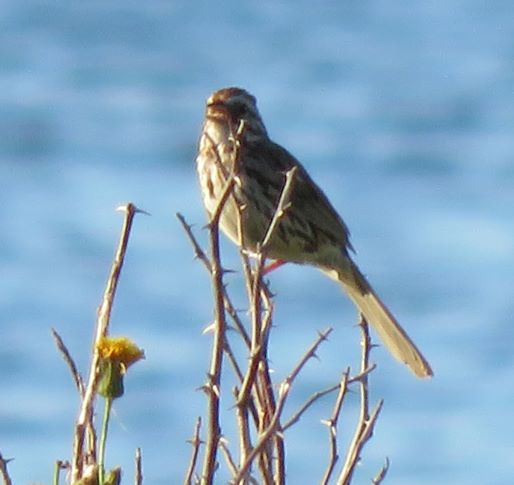
Backyard Birds are Disappearing

The population of backyard birds in Canada and US has decreased by nearly 3 billion since 1970… that’s a huge loss of 1 in 4 birds.

This is an alarming number. Birds are the “canary in the mine”, more sensitive to the environment than humans and a signal of environmental problems. Birds act as pollinators, seed spreaders, predators (often eating bothersome insects) and prey for other animals in the wild. They are also beautiful to watch and their songs are part of the enjoyment of being outside.

Researchers tell us that there is no single reason for the decrease in bird populations, calling it “death by a thousand cuts”. The American Birding Conservancy cites pesticides, domestic cats, habitat loss, and collisions with glass as being the greatest causes of bird deaths.

What can we do?

Protection of habitat is often in the hands of lawmakers, but there is a lot we can do as individuals. Thousands of people making small changes can actually help. Here are some ideas to consider:

  1. Windows – Six hundred thousand to 1 billion birds die after hitting windows in Canada and US. Birds can’t tell the difference between reflections of trees and sky, and the real thing. Lights in windows at night draw birds, especially in high-rise glass buildings, and simply turning off lights at night can make a difference. But homes and smaller buildings are a problem too. Almost half of birds that die from these collisions involve windows in homes. Here are some things you can do:

    1. In a new construction, ask for bird-friendly glass.

    2. Horizontal or vertical stripes, decals or a random design on windows can make a difference. These can be added using opaque or translucent tape, mesh on the outside of windows, or even tempera paint (non-toxic, long-lasting and easily removed with a damp cloth or sponge). If you’re artistically inclined, a seasonal design could be considered and stencils could be used to make this easy and fun.

    3. Screens are usually enough to help birds avoid windows.

    4. See some other ideas for quick and affordable ways to protect birds from your windows here.

  2. Pesticides and herbicides – Avoid using these on your lawn.

    1. Try natural treatments for weeds.

      1. Household vinegar mixed with Epsom salts and a little dish soap can be used as a spray for weeds growing between walkway stones. Click here for an article about this.

      2. Mulch around plants can prevent weeds from growing in the first place.

      3. Good old hand weeding is good exercise and safe for the environment. Gardening gloves and a kneeling pad can make this more comfortable!

    2. Try a lawn of thyme plants instead of grass. A few plants of low-growing thyme planted on a lawn will usually take over grass and weeds. It doesn’t need to be mowed as often as grass and has a pretty purple bloom in late summer. Be sure to choose the low-growing variety.

  3. Cats – We love our cats, but dogs aren’t allowed to run loose in our neighbourhoods, and we shouldn’t let cats either. Keeping cats indoors or walking them on a leash, as you would a pet dog, could save many birds and help species recover. Alternatively, a bell around the cat’s neck could help alert birds to their presence in time to escape.

It’s interesting that populations of water birds are on the increase due to conservation measures that were started several years ago. It’s time to do the same for our common backyard birds, or we could be seeing quiet parks and forests in the future…

References: (click to see original articles)

Birds are dying off at an alarming rate – CNN
Quick and affordable ways to protect birds your windows

Stop birds hitting windows

Categories
Environment Health

Plastic? Think twice…

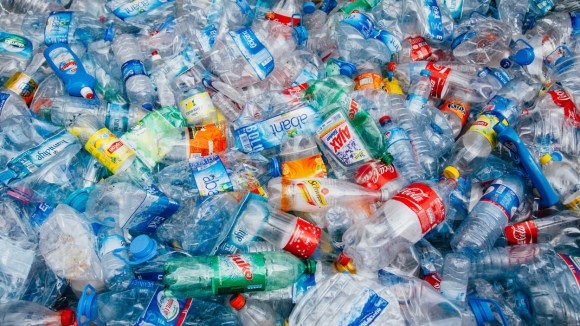
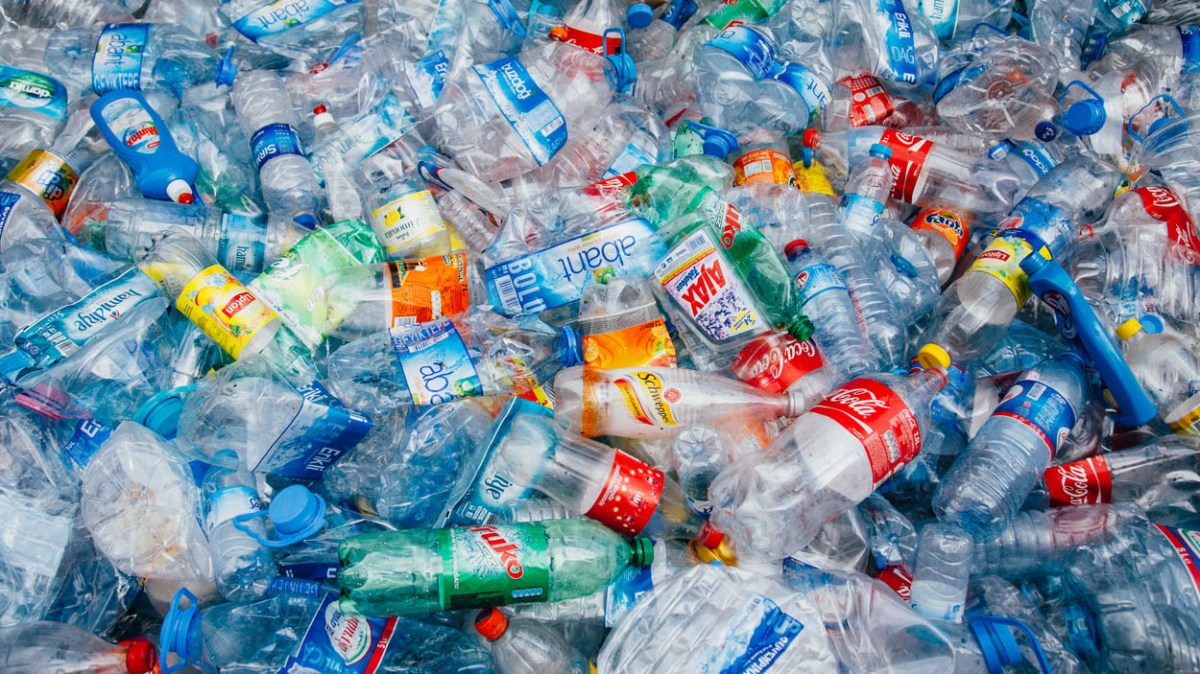
Plastic doesn’t decay…it breaks into smaller and smaller bits until you can no longer see it. We call these microplastics. And these tiny particles are making their way into our drinking water—and our bodies. They can take hundreds of years to decompose, if they do… Plastics have only been around for 50 years, so that’s just an estimate. The bigger problem is that they are not inert…plastics contain substances that can compete and interfere with our hormones.

You don’t have to ingest the actual plastic for it to affect your health either. Substances, sometimes called “plasticers” that keep the plastic soft and flexible can be transferred into your food when you cook, store or serve food in plastic. These fat-soluble chemicals can mix with oily or fatty foods and your body can store them in fatty areas. Hot food, fat or oils, and damage to the surface of the plastic makes it easier for chemicals to transfer into food. Softer plastics are thought to transfer their chemicals more readily.

Plastic in our food

Sometimes you can even taste the plastic…coffee in a Styrofoam cup, a dairy that always sold their chocolate milk in glass bottles because they noticed plastic ones affected the taste. I even noticed water, served in a scratched plastic pitcher at a conference, tasted strongly—unpleasantly—of plastic. I didn’t drink it.

We’ve all put tomato sauce into a plastic container and noticed the orange colour became imbedded into the walls of the container. Plastic takes up oily substances, just as its chemicals pass into fatty foods. Questions have been raised about other substances plastics in the environment could be absorbing and transporting. The United Nations Food and Agriculture Organization is concerned that some plastic particles may be small enough to pass into our bloodstream and collect in our organs where chemicals they contain can gradually leach into our system.

Plastic can affect our hormones

Some of these chemicals are “hormone disruptors”…chemicals that interfere with how your hormones act in your body. And some, like bisphenol A (BPA) have been linked to hormone-related cancers and possible effects on unborn babies because of their hormone-like activity. More study is needed on the health effects of plastics.

Results of a new study conducted by Orb Media, a partner of CBC News, found microplastics in 93% of 11 brands of bottled water they tested from 9 different countries. They were only able to identify particles 100 microns (0.1mm) or larger. It seems likely that there were more smaller particles they were unable to detect.

They defined microplastics as pieces of plastic 5mm or smaller. They are created when plastic waste disintegrates and were also manufactured for use in exfoliant skin care products. The European Food Safety Authority has suggested that most swallowed microplastics are excreted by the body, but researchers have found microplastic beads from skin care products in stomachs of fish in the Grand Lakes. This has lead to banning of these beads in commercial products.

Plastic “islands”

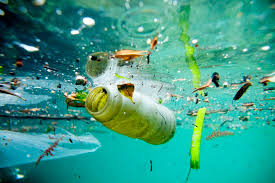
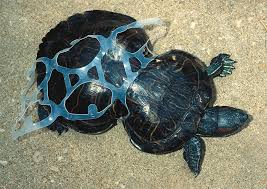
Plastic waste continues to build in coastal waters. Researchers estimate that by 2050 there will be more plastics in the oceans than fish. Ocean currents cause them to collect in some areas, creating plastic “islands”. They block the sun’s rays from entering the water and trap sea life.

It’s easy to think we can’t be ingesting enough plastic to harm us. But we humans are at the top of the “food chain”—everything our food sources take up we consume and concentrate. We need to pay attention to what we put into the environment…and to what we are essentially “feeding” our food!

You can help…

This weekend, go buy yourself a water bottle made of glass, metal or ceramic and stop buying bottled water. If your tap water at home has an unpleasant taste, get a water filter. It’s a simple thing you can do to save the environment, save money, and save your health at the same time.

References:

Exposure to Chemicals in Plastic – Breast Cancer.org http://www.breastcancer.org/risk/factors/plastic

CBC: Microplastics article http://www.cbc.ca/news/technology/bottled-water-microplastics-1.4575045

Categories
Environment Public Health

Something fishy going on…

Researchers at the University of Buffalo have discovered that human antidepressants and their breakdown products are building up in the brains of fish in the Niagra River that flows between Lake Erie and Lake Ontario. Researchers at two universities in Thailand have confirmed these results.

The researchers started out by looking for a variety of chemicals that are in human medications and personal care products. They checked the organs and muscles of 10 species of fish, and antidepressants stood out as the major problem. All 10 species they checked had detectable levels of these drugs.

How is this happening?

The drugs they found: Zoloft, Celexa, Prozac and Sarafem, are widely used in both US and Canada. Usage increased by 65% between 1999 and 2014, according to the US National Center for Health Statistics. The drugs people take do not magically disappear – a significant amount passes out of the body through the urine, sometimes intact and sometimes changed to a slightly different form that may be more or less active than the original drug. Water treatment systems do not remove these drugs, allowing them to flow into lakes and rivers where the fish live, along with treated waste water.

Worse, levels of antidepressants found in fish brains were several times higher than the concentration in the water, suggesting that the drugs are accumulating in fish over time. When fish are exposed to a drug but cannot break it down or clear it from their bodies, this can result in gradually increasing amounts being stored…in this case, in the fish’s brains.

The species tested were smallmouth bass, largemouth bass, rudd, rock bass, white bass, white perch, walleye, bowfin, steelhead and yellow perch. The rock bass had the highest concentrations of antidepressants, but several fish had a variety of drugs in their bodies and all 10 species tested were found to have some level of antidepressants.

What about humans?

The good news (if you can call it that…) is that we don’t eat fish brains, so this is unlikely to affect humans. But what about the fish? It is not yet known how these drugs might affect their health and behaviour, but other studies suggest they can affect feeding behaviour or survival instincts (for example, not noticing predators as readily).

However, if your drinking water originally comes from a lake or river, chances are you’re being exposed to a low-level cocktail of drugs, too. Many experts have felt that the drug levels in drinking water, being much lower than a person would take as treatment, could not have a significant effect. However, no one really knows whether a mixture of many active drugs, consumed at low levels over a lifetime, is a risk to people’s health.

A group of researchers found drug levels high enough to be “of environmental concern” in the Great Lakes and Minnesota River that included traces of acetaminophen (Tylenol), codeine, antibiotics, hormones, steroids, anti-epileptic drugs and dozens of other chemicals.

Health Canada reportedly found traces of drugs in samples of drinking water that came from lakes and rivers across Canada. Their report has not yet been published but was described in an article on cbc.ca website.

Some experts particularly worry about effects on the hormone and immune systems. Researchers have discussed a possible link between hormones from birth control pills that end up in the environment and increased risk of prostate cancer. Other compounds with estrogen-like activity, such as certain pesticides likely add to this risk.Scientists have already proven that these chemicals are creating “intersex” fish – male fish who have developed eggs in their testicles – putting the survival of certain species at risk in some waterways.

What can we do about it?

Wastewater treatment plants focus on killing disease-causing bacteria and removing solid matter, nitrogen, phosphorus and dissolved organic carbons. However, they pay little or no attention to drugs, hormones and chemicals that might be in human urine. Fish, especially those who live near sewage outlets, are being exposed to a cocktail of drugs 24 hours a day and it is not known whether humans exposed to a low level mixture of active drugs could be affected…

Its time to upgrade our sewage treatment systems and find ways to remove these chemicals from waste water, preventing their release into the environment. Treatment of waste water needs to be improved! Make your voice heard – ask for improvements to the waste treatment systems in your area.

Reference articles:

http://www.cbc.ca/news/technology/human-antidepressants-building-up-in-brains-of-fish-in-niagara-river-1.4274735

http://www.cbc.ca/news/health/drinking-water-contaminated-by-excreted-drugs-a-growing-concern-1.2772289

Categories
Environment

It's a shitty problem…

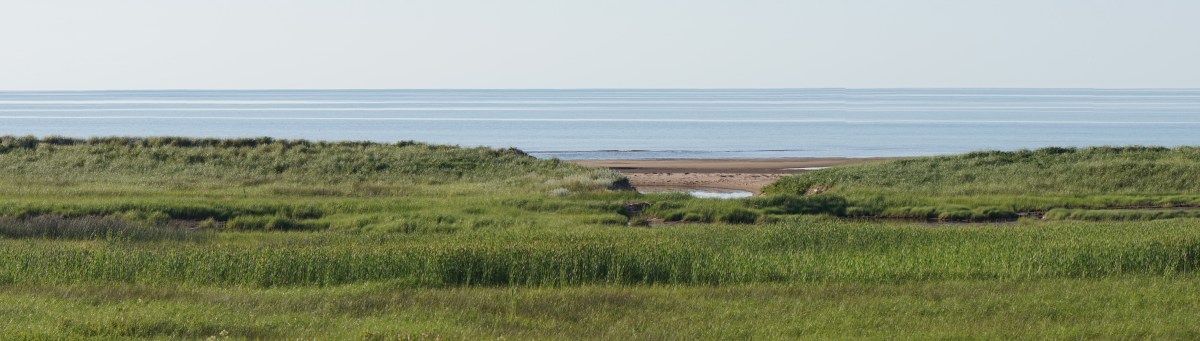
There seems to be a problem in the water…fecal bacteria above acceptable limits are showing up in water tests in some areas of the New Brunswick coastline.

I had a great discussion with my neighbour, Natasha Bell, this week about issues that increase the risk of pollution on our beaches. Initially concerned about the impact of a large proposed campground nearby, she quickly realized that the greater issue is damage to the delicate ecology of the shoreline along the entire coast of our province – and the potential for it to worsen with further development of the coastline. This lead her to become involved in a growing movement to protect our New Brunswick coastline. She established a local group, along with another concerned neighbour, Pierre Gagnon, to create awareness in members of our village council about our concerns.

They subsequently joined forces with 3 other similar groups, creating a large group that has been named SWWAT (Save our Waters, Wetlands and Tourism) to have a stronger voice with our provincial government. I attended a meeting last evening with Natasha and Pierre to discuss future actions concerned citizens can take to identify and correct existing problems and to prevent development of future problems along the NB coastline. It was attended by people from Shediac to Murray Beach, ready to exchange ideas and take action.

The issues are similar along the entire Atlantic coastline and, in fact, in many watershed areas of both fresh and salt waterways. Wetlands have been seen as “wasteland” and simply filled in to create developments for human use. Even my home was built into the wetland before existing regulations were in place. We have returned a swath of land along our property to natural vegetation along an area of water drainage from higher ground, both to try to restore some of the filtration function that was lost and because we love the appearance of the natural vegetation.

But as I thought about what we had discussed after talking to my neighbours and attending a SWWAT meeting, I wondered what I could do to help. I realized that in many ways this is an issue of education and awareness:

  • We need to educate people who use the coastline for recreation or industry that every small action is cumulative – everyone needs to be aware that actions that cause a small amount of damage can add together to cause significant problems for humans, birds, sea life and the overall ecosystem of the coastline.

  • We need to create awareness in municipal and provincial government employees and elected politicians who make decisions that affect our shores:

    • about the facts around issues that are causing damage now;

    • about the importance of finding and correcting the sources of existing problems that are potential health hazards;

    • and about the importance of considering both the current and future impact of decisions and legislation that are passed.

      • It isn’t simply about testing water quality so Public Health can predict when beaches should be closed, it’s about finding and correcting the causes of bacteria in coastal waters and taking action through legislation and policy that will correct existing problems and prevent future deterioration of the ecological systems along our shores.

  • We also need to educate our youth – the next generation – to ensure this wonderful resource is available in the future. Just on our small stretch of beach, we have had late night fires that consumed snow fencing used to prevent erosion of dunes and burned Christmas trees placed against damaged dune areas to trap sand. We’ve also had to pick up broken glass and garbage from impromptu midnight beach parties! But youth can also be a passionate force for positive change, educating their parents at the same time. We realized that the way to reach young people is through engaging their schools and increasing our reach through social media and our website. Youth communicate through electronic media!

  • We need to continue to research solid facts surrounding this issue and communicate these to government and the public to create knowledge and an awareness of the severity of the problem.

  • We want to continue to engage the attention of news media to enable wider awareness of our concerns.

Because I am a blogger and have already created a website and marketing materials when I had my business, I volunteered to work on similar approaches to spread the word about these environmental issues. It’s not only the health of people like me who use the beaches for recreation that is at stake, but also the tourism, fisheries and ultimately the economic health of coastal areas.

The SWWAT group has two requests of government:

  1. Moratorium – We are asking the Provincial Government to impose a temporary moratorium on significant development within 500 meters of wetlands draining into Northumberland Strait until the sources of fecal contamination have been identified and mitigated.

  2. Legislation – We are asking the Government to legislate a long-term wetlands protection plan supported by strict enforcement of protective regulations.

These actions will protect the health and safety of families and visitors to the beaches, as well as the future of the tourism and fisheries industries in the area.

Will you join our cause? Whether you are a resident of the area, enjoy vacationing there, or just want to help a worthy cause, please sign our petition. Help us to direct government attention to saving our shores for all to enjoy in the future!

Categories
Environment

It’s a shitty problem…

There seems to be a problem in the water…fecal bacteria above acceptable limits are showing up in water tests in some areas of the New Brunswick coastline.

I had a great discussion with my neighbour, Natasha Bell, this week about issues that increase the risk of pollution on our beaches. Initially concerned about the impact of a large proposed campground nearby, she quickly realized that the greater issue is damage to the delicate ecology of the shoreline along the entire coast of our province – and the potential for it to worsen with further development of the coastline. This lead her to become involved in a growing movement to protect our New Brunswick coastline. She established a local group, along with another concerned neighbour, Pierre Gagnon, to create awareness in members of our village council about our concerns.

They subsequently joined forces with 3 other similar groups, creating a large group that has been named SWWAT (Save our Waters, Wetlands and Tourism) to have a stronger voice with our provincial government. I attended a meeting last evening with Natasha and Pierre to discuss future actions concerned citizens can take to identify and correct existing problems and to prevent development of future problems along the NB coastline. It was attended by people from Shediac to Murray Beach, ready to exchange ideas and take action.

The issues are similar along the entire Atlantic coastline and, in fact, in many watershed areas of both fresh and salt waterways. Wetlands have been seen as “wasteland” and simply filled in to create developments for human use. Even my home was built into the wetland before existing regulations were in place. We have returned a swath of land along our property to natural vegetation along an area of water drainage from higher ground, both to try to restore some of the filtration function that was lost and because we love the appearance of the natural vegetation.

But as I thought about what we had discussed after talking to my neighbours and attending a SWWAT meeting, I wondered what I could do to help. I realized that in many ways this is an issue of education and awareness:

  • We need to educate people who use the coastline for recreation or industry that every small action is cumulative – everyone needs to be aware that actions that cause a small amount of damage can add together to cause significant problems for humans, birds, sea life and the overall ecosystem of the coastline.
  • We need to create awareness in municipal and provincial government employees and elected politicians who make decisions that affect our shores:
  • about the facts around issues that are causing damage now;
  • about the importance of finding and correcting the sources of existing problems that are potential health hazards;
  • and about the importance of considering both the current and future impact of decisions and legislation that are passed.
  • It isn’t simply about testing water quality so Public Health can predict when beaches should be closed, it’s about finding and correcting the causes of bacteria in coastal waters and taking action through legislation and policy that will correct existing problems and prevent future deterioration of the ecological systems along our shores.
  • We also need to educate our youth – the next generation – to ensure this wonderful resource is available in the future. Just on our small stretch of beach, we have had late night fires that consumed snow fencing used to prevent erosion of dunes and burned Christmas trees placed against damaged dune areas to trap sand. We’ve also had to pick up broken glass and garbage from impromptu midnight beach parties! But youth can also be a passionate force for positive change, educating their parents at the same time. We realized that the way to reach young people is through engaging their schools and increasing our reach through social media and our website. Youth communicate through electronic media!
  • We need to continue to research solid facts surrounding this issue and communicate these to government and the public to create knowledge and an awareness of the severity of the problem.
  • We want to continue to engage the attention of news media to enable wider awareness of our concerns.

Because I am a blogger and have already created a website and marketing materials when I had my business, I volunteered to work on similar approaches to spread the word about these environmental issues. It’s not only the health of people like me who use the beaches for recreation that is at stake, but also the tourism, fisheries and ultimately the economic health of coastal areas.

The SWWAT group has two requests of government:

  1. Moratorium – We are asking the Provincial Government to impose a temporary moratorium on significant development within 500 meters of wetlands draining into Northumberland Strait until the sources of fecal contamination have been identified and mitigated.
  2. Legislation – We are asking the Government to legislate a long-term wetlands protection plan supported by strict enforcement of protective regulations.

These actions will protect the health and safety of families and visitors to the beaches, as well as the future of the tourism and fisheries industries in the area.

Will you join our cause? Whether you are a resident of the area, enjoy vacationing there, or just want to help a worthy cause, please sign our petition. Help us to direct government attention to saving our shores for all to enjoy in the future!

#Environment #Wetlands

Categories
Environment

How clean is the water you swim in?

Would you boil your lobster in ocean water these days? Might want to think twice about that…

Water quality at beaches in our area is being questioned, with beach closures more than once already this summer due to excessive fecal bacterial counts. Some types of pollution can be less obvious than the photo above. How clean is the water your kids are swimming in? Is it even being tested so you know?

The factors that contribute to increased bacteria in our coastal waters, rivers and lakes are not all known. However, it seems likely that the more crowded and popular an area is, the greater the likelihood of a problem developing. Population density, surface water run-off, and aging septic systems are all suspected contributors to high fecal bacteria counts. These bacteria put swimmers at risk of illness and infections…

Adding to the problem, is that government water testing requires 48 hours – water samples are being taken on the weekend and results are only announced on Monday, after many have spent the weekend swimming in potentially polluted water. Government officials insist that results cannot be provided in a more timely manner.

A quick internet search found a do-it-yourself test, Aquavial, developed and manufactured at University of Waterloo in Ontario that detects several bacteria (including E.coli, Pseudomonas, Salmonella, and Staphylococci), biofilm and fungi, even when levels are very low. It can be used for testing drinking water as well as any fresh water you plan to swim in, and gives results in 15-30 minutes. Check it out at https://aquabsafe.com if you want to check the river or lake you swim in – a single kit costs $20 and they sell a 6-pack for $100…enough to do weekly testing for the rest of the summer!

Unfortunately, it is the presence of enterococci that confirm fecal matter in salt water as E. coli grown only in fresh water so, to my knowledge, this test could not be used in ocean waters to detect fecal contamination. Currently the only fast test is for E. coli DNA, requiring only 4 hours, but this test is very costly and not widely available.

Much of the economy in coastal areas – especially tourism and fisheries – is tied to the environment. Our shores and coastal waters need to be kept clean to ensure these industries remain healthy. Those who use coastal areas for recreation or commerce need to be educated in how to preserve important wetlands and prevent damage to sensitive coastal areas. It is much easier (and less expensive!) to prevent damage than it is to try to repair the damage later.

Coastal areas, with their dunes and wetlands, are an ecosystem that serves many functions:

  • Filtration

    • Run-off water flows slowly through a marsh, allowing sediments to settle.

    • Wetland plants consume excess nutrients (including heavy metals) preventing accumulation in lakes, rivers and oceans.

    • Wetlands filter out and absorb bacteria from surface run-off water. Marshes can filter out up to 90% of bacteria.

  • Storage of water

    • Slowed water flow allows ground water to be replenished

  • Biological productivity

    • Because they absorb nutrients, wetlands are highly biologically productive. Freshwater wetlands compare to tropical rainforest in plant productivity.

  • Wildlife habitat

    • 95% of commercially and recreationally harvested fish are wetland dependant. Many bird, animal and insect species also rely on wetlands.

  • Erosion protection

    • Dunes and wetlands protect the coastline against storms, erosion and rising sea levels.

What can we do to help protect our dunes and wetlands?

  • Stay out of the dunes

    • Use only designated walkways when crossing dunes and wetlands.

    • Beach grass and dune vegetation protect against loss of dune sand and dunes provide habitat for animals and birds, and protect wetlands during storms. Simply stepping on beach grass can kill the plant.

  • Leash your dog

    • Leashing keeps dogs out of dunes where they can damage plants and disturb wildlife, and away from other people who may not love dogs as you do.

  • “Carry in, carry out”

    • Be sure to take everything you brought with you when you leave (including doggie do-do!)

    • Litter can take years to decompose (even when it’s out of sight in the ocean) and it can be a health hazard to birds, wild life and sea creatures.

  • No open fires

    • Using driftwood for fires removes a valuable natural resource that can trap sand and stabilize dunes.

Pollution of coastal waters is tied to destruction of wetlands along the coast. We all need to do what we can to preserve these natural filtering structures so everyone can enjoy our beaches and oceans for generations to come.

In eastern Canada, several environmental groups have sprung up demanding a governmental moratorium on further commercial development within 500 meters of wetlands until the sources of current problems are identified and corrected. Meanwhile, simple testing with confirmation of the more complex government testing later may be an effective way to protect your family from unnecessary exposure to bacteria and fungi while enjoying your favourite summer water activities in an area that is at risk.

Educate yourself and others who use coastal areas about how to prevent damage to natural structures that protect the health of our coastal areas and the people and wildlife who use them!