Categories
Health

Gut Bacteria Have Many Roles

The Mayo Clinic reported on some interesting research this week. A study conducted in mice has shown a link between the presence of a particular bacteria in the gut, called Collinsella, and increased risk of developing rheumatoid arthritis. This bacteria is not usually found in the intestines but was found in significant numbers in people with rheumatoid arthritis, inspiring researchers to run a test in mice.

Rheumatoid arthritis (RA) is an autoimmune disease where the body’s immune system mistakenly attacks itself, causing damage to joints with swelling and pain. It can also cause damage to other parts of the body, including the skin, eyes, heart, lung and blood vessels. To date, no cause or cures have been identified, and treatments focus on relieving pain and swelling, and slowing the progression of the disease.

Researchers treated the mice by introducing a specific good bacterial flora to compete with the unwanted bacteria. This resulted in decreased symptoms and fewer inflammatory indicators associated with rheumatoid arthritis in the treated mice.

Since mice’s immune systems and arthritis processes are similar to those in humans, this suggests that a similar treatment could give people relief from this difficult to treat disease. Further, it suggest that examining intestinal bacteria may provide a way to detect who is at risk of developing arthritis and even the possibility of preventing it from occurring. It is expected that, like the mice, humans will be unlikely to experience side effects from this treatment.

The Mayo Clinic is also researching other autoimmune and infection problems that might possibly be related to improper bacteria in our digestive systems. These include conditions such as:

  • Gluten sensitivity

  • Irritable bowel syndrome

  • C. Difficile gut infection

  • Colon cancer

  • Bacterial vaginosis and reproductive health problems

While it will be interesting to see results of human trials using treatment of RA with good bacteria, there is no reason not to try this therapy on yourself if you are suffering with one of these diseases. Discuss this possibility with your physician! There are many good quality probiotics available without prescription that might give similar results to the product used in the mice experiment in arthritis.

This ties in closely with my earlier book review blog post, Bacteria for Breakfast, http://jeanniebeaudin.wixsite.com/author/single-post/2016/07/22/Bacteria-for-Breakfast-Probiotics-for-Good-Health-%E2%80%93-A-book-review that discusses how gut bacteria can influence the function of the immune system. Click here if you missed it!

Reference: Mayo Clinic Microbiome Program and https://www.ScienceDaily.com/releases/2016/07/160711151315.htm

Categories
Health

Infrared sauna..health effects?

This question from a reader prompted me to investigate use of infrared as a treatment for inflammation, pain and autoimmune diseases.

Here’s what I found…

Mayo Clinic describes infrared saunas as being similar in function to heat saunas: regular heat saunas warm the body by producing heat in the air around the body; infrared saunas produce warmth directly, generating heat in the tissues (similar to the way longer wavelength microwaves heat food). They report these treatments are considered safe, with no reports of adverse effects.

While we are all familiar with light emitting diodes (or LEDs) in our TVs and lightbulbs, infrared-LEDs (or IR-LEDs) emit light in a specific wavelength that is longer than visible red light – somewhere in the range of 800-1000 nanometers (nm). Infrared rays are invisible to humans but sometimes appear red due to a small amount of red or orange wavelength light being also emitted.

Infrared light waves can penetrate the skin up to 3 – 4 cm, depending on the wavelength and power intensity of the LED. While the IR-LED does not feel warm on the skin (or only slightly warm), it generates heat in and below the surface of the skin. Users will usually describe sweating during use.

In addition to generating heat, studies have found that IR-LEDs reduce “mediators of inflammation”, substances that the body produces to create and sustain the inflammatory process. Infrared LEDs also dilate blood vessels. They are used in medicine to reduce edema (swelling caused by increased fluid in the tissues), reduce production and movement of inflammatory substances, and to accelerate skin and connective tissue healing.

Studies have demonstrated increased healing rates of 25-35% post-surgery and similar rates of improvement in soft tissue injury, such as sprains. IR-LEDs have also been shown to decrease pain and increase range of movement in injuries with no bone involvement, such as tennis elbow.

Many diseases of aging, for example rheumatoid arthritis, involve production of inflammatory substances that have been shown to be reduced by IR-LED irradiation, suggesting a potential use in these diseases. Animal studies suggest IR-LED may also improve healing of nerve lesions but, as of the publication of the articles I found, additional study was still needed.

Infrared-LEDs are available as small portable units as well as complete saunas. The technology is considered very safe to use, with the exception of early pregnancy when no saunas of any type are recommended (increased body temperature can be harmful to the baby). I would expect heat therapy would be safe for small area treatment, such as a joint, with a hand-held unit but best, as always, to check with your doctor first.

Regarding IR-LED use in autoimmune diseases, the focus of the question I received, there didn’t seem to be as much research available. Infrared-LED seems to be primarily recommended for inflammatory diseases: cardiovascular disease, diabetes, rheumatoid arthritis, Chronic Fatigue Syndrome, chronic muscle and joint pain, poor digestion and anger/depression (although no mechanism was given for these last two actions). Infrared saunas are recommended for those with increased blood pressure who wish to use a sauna. They cause a temporary reduction in pressure due to dilation of blood vessels, as compared to heat saunas that raise blood pressure when used.

Only one reference I found (blog by physician Amy Myers) referred to autoimmune action. She described many of the benefits of infrared LED as being produced by vasodilation and increased blood circulation to the area. She also described differences in various wavelengths of infrared radiation:

  • Near-infrared (shorter wavelength) – best for wound healing and improving immune function

  • Middle-infrared – ideal for increasing circulation and promoting muscle relaxation

  • Far-infrared (longer wavelength) – mainly for detoxification

I would expect that one would need to use a sauna-style of near infrared LED to expose the entire body to achieve immune effects. A hand-held unit could be used when only a small area needs to be treated for pain or inflammation.

It is recommended to use IR-LED for 5 to 30 minutes, with one source recommending no longer than 20 minutes per session. Sessions can be repeated several times daily, however. The effect is considered useful for temporary relief when used for pain and inflammation.

Bottom line…

For pain and inflammation, infrared-LED can be useful but would be expected to give subtle improvements. There does not yet appear to be a lot of scientific study for its use in autoimmune disease but it is safe and not extremely expensive for those who want to try it. For relaxation or detoxification (produced by sweating), infrared saunas would function similarly to heat saunas.

Healthy Aging Review 2015

Categories
Health

Yin and Yang

I’ve seen the symbol for Yin and Yang many times, but never understood what it represented beyond light and dark, male and female, strength and passivity. I was surprised to find a detailed explanation of Yin and Yang in body functions in a scientific article about chronic inflammation.

During the Yin phase, natural cell death, or apoptosis, is promoted. Growth of various tissues is slowed, inflammation is promoted and potential tumor growth would be blocked.

During the Yang phase healing of wounds is promoted, growth is stimulated, and anti-inflammatory mediators are produced, but there is a tendency toward tumorigenesis, or the growth of new tumors.

As with other Yin and Yang interpretations, the need for balance between the two opposing elements is important.

Acute inflammation, the type that occurs in response to injury or acute illness, is considered a “friend” that protects the body against harmful elements. However, chronic or persistent inflammation becomes a “foe” that eventually destroys tissue integrity and function. The immune system uses inflammation to stimulate its protective actions but this function needs to be self-terminating… stimulating acute Yin inflammation when necessary to kill off foreign invaders such as bacteria and reverting to the Yang anti-inflammatory growth and repair phase when the threat is gone.

The ability of our immune system to protect us from disease is affected by the amount of oxidative stress (quantity of damaging free radicals versus protective antioxidants) in our system, immunosenescence (the gradual deterioration of the immune system that occurs with age) and altered function of various hormones (the stress hormone, cortisol, as well as estrogen, progesterone, androgens, insulin, and thyroid).

Here are some simple ways to address each of these factors:

  • Oxidative stress – increase the amount of colored fruits and vegetables to ensure adequate intake of antioxidants.

    • Brightly coloured foods are known to contain these beneficial substances, and including five different colours on your plate is an easy way to increase intake of antioxidants.

  • Immunosenescence – ensure optimal bacterial flora in the digestive system.

    • Substances that control the amount and type of inflammation in the body are largely produced in the gut, and are controlled by the type of bacteria that resides there. Eating more fermented food, such as yogurt and sauerkraut, or taking a probiotic supplement, introduces good bacteria to the digestive system, and is especially important after taking antibiotics.

  • Altered hormone function – reduce stress, and change response to stress.

    • Stress hormones, Including cortisol, are an important anti-inflammatory factor. However, cortisol also increases blood sugar levels. While this function is important for the “fight or flight” response, with chronic stress cortisol tends to cause unhealthy weight gain around the waist. Increased levels of cortisol can also interfere with the function of reproductive hormones that are similar in structure (estrogen, progesterone and androgens) giving the effect of a lack of hormone even if levels are normal.

    • While it maybe difficult to avoid stress, you can change your response to stress. Simply pausing to do a few deep breaths, and thinking positive thoughts can induce a relaxation response, and reduce chronic production of cortisol.

    • Work to keep a positive outlook – look for the good side of every situation!

Even low-level ongoing inflammation has been associated with many chronic diseases, such as heart disease, arthritis, and dementias. Working to keep your Yin and Yang balanced, and your immune system functioning properly, may be the ideal approach to preventing chronic disease.

Reference: Inflammation, Chronic Diseases and Cancer-Cell and Molecular Biology, Immunology and Clinical Bases, Mahin Khatami. Intechweb.org

Categories
Health

A must-read for coffee lovers!

Many good things have been said about the benefits of drinking tea, but what about coffee? Rally ‘round, coffee lovers…here’s some good news!

An analysis of 9 studies suggested that 1 to 2 cups of coffee daily was associated with a decrease in the occurrence of Alzheimer’s disease, dementia and cognitive decline or impairment. They stated that drinking a moderate 1 to 2 cups daily was found to be more beneficial than no coffee or more than 2 cups daily.

Coffee can help your circulation by improving the function of small blood vessels. A study, looking at blood flow in the finger, found a 30% increase in blood flow for 75 minutes after a cup of coffee compared to people drinking a cup of decaf. So a cup of hot java really does warm up cold hands and feet! The American Heart Association described this action as “perking up your blood vessels”… The study also noted, however, that caffeinated coffee also slightly raises blood pressure, so don’t have a cup just before checking your pressure, to ensure a true reading.

In people with chronic hepatitis-C liver infection, higher caffeine intake (123-308 mg per day) is linked to a 61% decreased risk for advanced hepatic failure, a possible outcome of hep-C infection. They also noted that the liver enzyme, ALT (an enzyme that is often elevated in liver disease), was lower in people who drank more caffeinated beverages. Two studies suggested increased coffee drinking is associated with decreased liver cancer. However, they did state that more research is needed.

Although previous studies have suggested an association between coffee drinking and lung cancer and favoured black tea as a better choice, a study sponsored by the Canadian Cancer Society and Canadian Institute for Health Research found there is no strong support for this link. Their study of over 2,500 people did not show any significant difference between coffee and black tea when it comes to lung cancer risk, once the numbers were adjusted to take smoking into consideration. Perhaps previous study results were due to people being more likely to have a cigarette with coffee than with tea!

Several compounds in coffee have been found to be protective against colorectal cancer. A 2016 study published in Cancer Epidemiology, Biomarkers & Prevention found that regular coffee consumption was associated with 26% lower chance of developing colorectal cancer. Additionally, the study stated that those who developed this cancer were less likely to be physically active or eat 5 or more servings of vegetables daily and were more likely to report a stronger family history of colorectal cancer.

Caffeine content is affected by the type of coffee bean, roast style, how the coffee is brewed and the cup size. An average cup of coffee is estimated to contain 95mg of caffeine but can range from less than 15mg (decaffeinated) to over 500mg for the largest sizes served at some coffee shops. See this article for more details.

References: Univadis.ca; Medscape.com

Categories
Health

Increase in child inflammatory disease

Recent reports in the news discussed a significant increase in inflammatory bowel disease (IBD) in Canadian children…7.5% each year between 1999 and 2010. IBD most commonly begins around age 20, and in the past has almost never been seen in children less than 5 years old. But now, even babies are being diagnosed with it. So, what is happening?

IBD is a group of diseases that include Crohn’s disease and ulcerative colitis. These are lifelong diseases with no cure… medications only control and reduce the symptoms to a varying extent, depending on the individual patient’s response. Those affected experience recurring bouts of abdominal pain, cramps, diarrhea and severe fatigue.

Almost 250,000 cases have been diagnosed in Canada, and 10,000 new cases are diagnosed each year. The cause is vaguely described as likely being a combination of hereditary and environmental factors that trigger the immune system to malfunction and attack the digestive system. As well as genetics and environment, vitamin D and gut bacteria have been proposed as being involved in the cause.

Lack of vitamin D has been linked to increased inflammation and pain. In northern countries like Canada, insufficient sunshine is available to enable production of adequate vitamin D during the winter months, putting people at increased risk of deficiency.

As well, babies under 6 months are recommended to be kept out of sunlight and to be protected with sunscreens after 6 months of age. Since breast milk does not contain adequate vitamin D and without sun exposure babies are unlikely to produce adequate amounts of their own vitamin D, supplementation of 400iu per day is recommended.

During birth and early life, babies are exposed to their mothers’ bacterial flora. With antibiotic use, however, good bacteria are destroyed along with the infectious bacteria, so mothers do not always have the ideal bacteria to share with their infants.

In my previous blog reviewing the book Bacteria for Breakfast, I discussed how the type of bacteria in our digestive system can influence the function of the immune system. It seems to me that correcting the balance of bacteria in the digestive system should be part of the basic treatment for any autoimmune disease…or a strategy for prevention.

Standard treatments for inflammatory bowel disease, however, tend to ignore the environmental factors that might prevent the disease if avoided or changed…instead they focus on which elements of the immune system can be blocked by drugs to reduce the inflammatory response in the bowel. Since they don’t correct the underlying problem, these drugs are needed lifelong to control symptoms…certainly more lucrative than finding and correcting the underlying cause. Perhaps this is the reason researchers are not addressing the root of the immune malfunction.

However, you don’t need a prescription to replace vitamin D or try probiotics. Both are safe to take, even for young children, as long as recommended daily amounts of vitamin D are used. Specially formulated versions of vitamin D and probiotics are available for children and even for young babies.

With an increase in an inflammatory disease like IBD and other immune dysfunction conditions such as allergies, perhaps gut bacterial health and vitamin D status will be given greater consideration in childcare recommendations, and will become an increased focus of research for possible causes of the increase of inflammatory diseases in children.

The role of inflammation in chronic diseases is an area of current study for me and in upcoming blogs I plan to address this topic further…sign up for my mailing list if you’d like to receive notice of these postings!

Categories
Article reprint Health

COLD SORES

Cold sores may occur anywhere on the body, but they most often appear on the gums, lips, around the mouth, nose, cheeks or fingers. Infection begins with a prodrome (tingling, burning or stinging sensation) which may last two hours to two days, followed by redness, swelling and blisters that break and ooze, forming a crust that eventually sloughs off. The entire cycle usually lasts seven to 10 days.

Ninety percent of people get at least one cold sore in their lives. The initial infection, which most often occurs between six months and three years of age, is generally worse than reoccurrences. The first episode usually occurs inside the mouth and can involve pain, fever, and swollen lymph nodes. It may be severe enough to cause difficulty swallowing. With both initial infections and cold sore reoccurrences, symptoms last about a week and resolve spontaneously.

Outbreaks can be triggered by trauma to the skin, menstruation, sun exposure, stress, illness, fever and other causes that contribute to reduced immune system activity. Most people have about two reoccurrences per year, but 5-10% of sufferers have more than six episodes yearly.

“Once a person has been exposed to the herpes simplex virus, it remains in the body and can be reactivated at any time.”

Cold sores are contagious and can be spread by direct contact with infected saliva or skin, or by contact with an item (such as a towel) that has been contaminated with the infection. There are two variations of the Herpes Simplex virus, called Type I (HSV-1) and Type II (HSV-2). Initially, HSV-1 was found on the face, while HSV-2 was found only in the genital area of patients. Now, however, both variants can be found in either location, but HSV-1 is most common. This article will discuss only oral infections.

Treating cold sores
Treatment approaches include reducing reoccurrences, decreasing pain, preventing secondary infection and reducing duration of the infection.

One approach to reducing the frequency of these embarrassing, unsightly infections is to identify and avoid triggers. General measures to maintain a healthy immune system, such as getting plenty of rest and paying attention to good nutrition, particularly during periods of increased stress, can be suggested. Sun exposure is a common trigger, so reducing UV light exposure by applying a sun block to the affected area year-round can help prevent outbreaks. In patients with a reduced immune response, prescription antiviral medications may be required.

A novel approach to preventing cold sores is the use of “thermal defence technology.” The Intercept-CS device uses the “heat shock” response to thermal stimulation (given in three 30-second treatments at five-minute intervals) to promote the production of heat shock proteins. These react with the immune system to help recognize and kill virus-infected cells without damaging healthy cells. It’s recommended that the treatment be performed within the first three hours of the prodrome phase of cold sore development. A clinical study cited on the product website demonstrated that this treatment could prevent 46% of cold sores from developing further. The downside is the cost: $99.00 per unit plus two treatment activators, and $45.00 for two replacement treatment activators. It is also only available through selected retail outlets.

Many OTC cold sore preparations are aimed mainly at reducing discomfort. These products contain a local anesthetic (such as benzocaine, lidocaine, benzyl alcohol, camphor, menthol or phenol) to decrease pain and itching, or are designed to form a protective film over the sore to reduce contact with irritating substance. Products of this type include Zilactin, Anbesol, Orajel, Tanac and Fletcher’s Sore Mouth Medicine.

Two products, Abreva and Lipactin, have been shown in clinical studies to shorten the duration of cold sores. Abreva contains docosanol 10%, an active ingredient that blocks viruses from penetrating into cells, reducing their ability to replicate. It has been shown in a large clinical study to shorten healing time by one to four days and to reduce discomfort. It should be applied as early as possible in the prodromal stage, and used five times a day for up to 10 days.

Lipactin contains heparin 17.8 units per gram and zinc sulfate 0.56 milligrams per gram as active ingredients that are also understood to reduce viral replication. It is recommended that the product be applied three to six times daily, beginning as soon as an outbreak is detected.

Natural alternatives
One alternative approach to preventing and treating cold sores takes into account the fact that the amino acid lysine inhibits the growth and spread of herpes simplex virus. Increasing consumption of lysine-rich foods (red meat, milk, eggs, cheese, wheat germ, brewer’s yeast, and fish) or taking supplements (e.g. 1000 mg three times daily) may help reduce the occurrence and shorten the duration of cold sores. The ratio of lysine to arginine is also important, as arginine inhibits absorption of lysine. Reducing consumption of foods rich in arginine, such as chocolate, peanuts and almonds, would increase the absorption of lysine. A pilot study conducted at the University of Southern California found that lysine ointment produced full resolution of cold sores in 40% of participants by the third day, and in 87% by the sixth day.

The herb, lemon balm (Melissa officinalis), has antiviral properties. In a study conducted in Germany, lemon balm cream promoted the healing of cold sore blisters in five days compared to 10 days in the control group. Used regularly on the affected area, it may reduce the frequency of recurrences.

Resveratrol, a compound found in red grapes, has also been shown to be active against the herpes simplex virus in laboratory studies. A study at Northeastern Ohio University found it to be as effective as 5% acyclovir ointment in suppressing cold sore development. It was also shown to be effective in animals with herpes simplex virus that was resistant to acyclovir. No side effects were reported.

Peppermint oil, also used in irritable bowel syndrome for its anti-spasmodic activity, also has been shown to penetrate the skin and have a direct virucidal effect against the herpes simplex virus. However, as the degree of absorption is not known it should not be given to patients with gastroesophageal reflux disease due to its ability to relax smooth muscle sphincters. It is also not recommended for patients taking calcium channel blockers as its relaxant action is believed to be similar in mechanism to this class of drug.

Immune stimulating herbs, such as Reishi (Ganoderma lucidum), astragalus and echinacea may be helpful in controlling cold sore outbreaks by strengthening the body defences that normally keep the virus in latent form. As a general caution, any patient with an autoimmune disorder, organ transplant, or liver disorder should consult their doctor before use. Keep in mind that Reishi reduces blood clotting and could affect anticoagulant therapy.

Erpace, marketed by Boiron, is designed to soothe pain and itching and promote healing of lesions. It contains essential oils of chamomile, oregano and marjoram, and lappa major mother tincture in a base of sweet almond oil. Oregano oil and marjoram oil are noted for their antiviral action while chamomile is an anti-inflammatory and an antiseptic. Lappa major (also known as burdock) is an antimicrobial that may also increase immunological activity.

For clients interested in homeopathic options, apis mellifica is recommended for use during the prodromal stage, rhus toxicodendron during the blister phase and mezerium would be suggested once the lesions have crusted over. Homeopathic medications are generally recommended up to 30CH dilution as OTCs (i.e. without the involvement of a qualified homeopath), and are dissolved under the tongue three to four times daily, or as often as every half hour in an acute situation. Homeopathic medication would be administered more frequently, rather than in larger quantities, to achieve a more intense and faster response.

There are many different approaches to treating and preventing cold sores, and they are not mutually exclusive. You may find, for example, that modifying the diet to increase absorption of lysine will complement a topical therapy. So, ask about additional treatment ideas the next time you seek help for a cold sore.

Originally published in Drugstore Canada

Categories
Health

The Mind/Body Connection

Researchers have shown that the mind and the body are connected in several ways… What we think and believe, and our attitudes and moods can actually have physical effects… and physical processes, for example exercise, can affect how we feel. There is actually two-way communication between the conscious part of the brain and the rest of the body through nerves, hormones and the immune system.

A good example of beliefs creating a physical change is the “placebo effect”. A placebo is a tablet, capsule or injection that contains no medication – basically a sugar pill. The placebo effect is a phenomenon where a person receiving a placebo has an improvement in their condition, either actual or perceived. The size and colour of the placebo can even make a difference, with larger coloured capsules found to have greater effect than small white tablets. Studies have shown that placebos can even have an effect when the person knows the pill contains no active ingredient.

This phenomenon is so widely known in the science community that all properly conducted studies must be “placebo controlled”. This means, in order to be considered a valid study, the drug or treatment needs to be compared to a sham equivalent, usually without the patient or the researcher knowing whether the placebo or the active treatment is being given to avoid reporting bias.

Even with active medications, an increased effectiveness has been noted when patients know they are receiving a medication than when they are not aware they have been treated. So, the placebo effect is part of the response to active treatments as well. The manner in which a treatment is given can also affect the response. Administering a treatment with concern and caring can actually result in better results for the patient.

Your emotions can also affect your health. Sadness, stress or anxiety can result in physical effects…even good stress, like having a baby or moving to a new home, can take its toll on your health.

The list of health effects that can be caused by emotions is long, and includes back pain, change in appetite, chest pain, constipation or diarrhea, extreme tiredness, general aches and pains, headaches, high blood pressure, insomnia, heart palpitations, sexual problems, shortness of breath, stiff neck, upset stomach and weight gain or loss.

So, what can a person do to improve emotional health? Of course, if your physical problem is severe or if your negative feelings are extreme, it’s advised to discuss the problem with your doctor. You also want to determine whether it is caused by emotions or a disease process.

Familydoctor.org has some suggestions for what you can do yourself to prevent health problems that might develop due to emotions or stress. The first step is to recognize your emotions, the effects they are having and why you are having them. I recall an interesting book on back pain by Dr. John Sarno I read several years ago, where he reported significant numbers of patients whose back pain resolved once they realized it was a manifestation of their stress. This supports the idea that acknowledging the influence the mind can have on health can be an important step in healing.

The FamilyDoctor site also suggests several other helpful tips to minimize negative health effects due to stress and emotions:

  • Express your feelings – Keeping feelings inside may make you feel worse. It’s OK to let loved ones know there is something bothering you or to discuss the issue with a friend, doctor or counsellor and ask for advice and support.

  • Keep your emotions in perspective – Live a balanced life, let go of unimportant issues and accept things you can’t change. Try to focus on what is positive in your life. Be like the little girl in the YouTube video doing her morning affirmation in front of a mirror: “I love my family, I love my house, I love my life!” Dwell on the positive, not the negative.

  • Calm your mind and body – Find relaxation methods, such as meditation, music, yoga, breathing exercises or whatever works for you.

  • Take care of yourself – Keeping a healthy routine with balanced meals, enough sleep and exercise can reduce the physical impact of stress and other emotions.

Consciously changing the way you think and feel takes time, effort and practice, but maintaining a positive outlook can maximize the benefit you receive from your medication and improve your health!

Categories
Health

The Vaccine Debate

Vaccines are described as the single most effective medical intervention in history…more lives have been saved by vaccines than by any other treatment. In fact, vaccines have been so effective in preventing diseases that many people alive today do not realize how severe diseases like polio, measles, mumps, diphtheria, tetanus and pertussis can be.

I should confess that I am biased in favour of vaccinating – I was one of the first pharmacists to be certified to give vaccines in the province of New Brunswick and continued on to work with a team of nurses and pharmacists who taught and certified hundreds of pharmacists in several Canadian provinces. To do this, I studied large amounts of scientific information about many aspects of vaccines and their use.

Vaccines are overwhelmingly safe…most reactions are minor, such as a sore arm or mild fever. All reactions are carefully tracked and documented to detect any potential problems as soon as possible. Severe anaphylactic (allergic) reactions occur less than 2 times per million doses given, but every person administering vaccines is trained to detect and treat these severe reactions and must be equipped with medications needed to do so.

Concerns have been expressed about the possibility that giving several vaccines at once could overwhelm the immune system, but scientists confirm our immune systems have the capacity to handle several thousand vaccines at once. They point out that during a normal day, a child is exposed to several hundred different antigens that trigger the immune system into action, and this is what a vaccine does.

An article in 1998 suggested that the measles vaccine was causing autism, but this has been disproven long ago. In spite of this, some parents still refuse to vaccinate their children based on this and other misinformation.

The mercury-containing preservative, thimerosol, has also been of concern to some parents. Although it was never demonstrated to cause a mercury-related health problem, it has been removed from all child vaccines manufactured since 2001, except flu vaccine that comes in multi-dose vials, most likely due to the number of allergies to this ingredient. Note that single-dose influenza vaccine does not contain this ingredient.

Another common vaccine ingredient that has drawn concern from parents is formaldehyde, used to inactivate viruses and bacterial toxins in vaccine manufacturing. Although most is removed from the final product, a very small amount remains. The human body actually produces its own formaldehyde when proteins are processed, and a baby’s body at any given time will contain 10 times the amount that would be in a vaccine. This small amount has been shown to be completely safe and our bodies have mechanisms to eliminate it, along with the formaldehyde we regularly produce ourselves. Far more dangerous amounts are found in second-hand cigarette smoke and car exhaust, and most dangerous are the workplace exposures to formaldehyde, such as hairdressers exposed to some hair smoothing products that produce formaldehyde when used.

Although we rarely see many of the childhood diseases we vaccinate against now, they still exist and could quickly become commonplace again. We saw this with pertussis (whooping cough) in our province. Because of higher rates of reactions from a vaccine that contained whole inactivated viruses, immunization rates dropped and over a thousand cases were documented in one season. Pertussis is similar to a mild cold in a healthy adult, but can be fatal to a small baby. Government’s response was to inform the public and step up vaccine availability to bring the disease under control again. There is ongoing research to ensure that the resurgence is not due to decreased effectiveness of a newer improved vaccine with fewer reactions.

It is true that some vaccines are more effective than others. The shingles vaccine, for example, only reduces occurrence of the disease by about 50%, although it is pointed out that cases tend to be less severe in those who have been vaccinated, and “post herpetic neuralgia”, pain that can continue for weeks or months after a bout of shingles, was also reduced. Many feel that even this level of resistance to getting shingles makes it worthwhile taking the injection.

It’s flu season now, so let’s talk about the flu vaccine… The severity of influenza will vary from year to year, depending on the nature of the strains going around that particular year. Because the flu virus changes frequently, researchers track influenza cases around the world and choose 3 to 4 strains that they expect could cause the worst illness, creating a new combination each year.

The flu is not just a bad cold…it kills 300,000 to 500,000 people in an average year around the world, mostly the elderly. Young children are also at increased risk, as are pregnant women, and those already in poor health or with chronic conditions like asthma or heart disease. Vaccinating a pregnant woman also gives protection to her baby, a definite plus since the vaccine cannot be given to children under 6 months of age.

Some don’t bother getting the vaccine, stating they are healthy and not worried about catching the flu, but we all need to keep in mind that we could pass the illness on to someone who is more vulnerable than we are. If more people are vaccinated, it is less likely we will have a large epidemic – this is referred to as “herd immunity”…the whole community is protected because there are fewer people who can spread the virus to others.

I have had clients claim that they “caught the flu” from the flu vaccine, but this is not possible. The pieces of virus in the vaccine are dead and cannot start to grow causing an infection…it’s just not possible. It is possible, however, to catch the flu from someone else in the first 2 weeks after a flu shot because it takes 2 weeks for antibodies that protect us from the virus to develop in our bodies.

However, I did read about one incorrectly made batch of vaccine that reached the market in the ‘90s that actually did cause some severe illness. The manufacturing problems were detected and corrected to avoid recurrence of a similar problem. The manufacturing of vaccines is highly regulated to ensure “bad batches” do not occur today.

Vaccines containing an “adjuvant”, an extra ingredient designed to increase response to the vaccine in those with weaker immune systems, are also known to have somewhat increased reactions such as pain in the area of the injection and mild fever. The special vaccine produced to fight the H1N1 flu epidemic of 2009 contained an adjuvant to ensure the highest level of immunity possible would be produced. This H1N1 virus was similar to the one that caused the Spanish Flu of 1918. That epidemic killed 50 to 100 million people, about 3 to 5% of the world’s population at that time, many of them young healthy adults.

Again this year, experts are predicting a flu season that could be more severe than others. Getting a flu shot is free for many, and takes just a few minutes. And it’s available as close as your neighbourhood pharmacy or doctor’s office. So why not take a few minutes and protect yourself and others around you from a preventable illness!

If you have any questions about vaccines that I haven’t answered, click the “Comments or Questions” button, or ask your pharmacist or doctor!

Categories
Health

5 Questions you should ask about your medications…

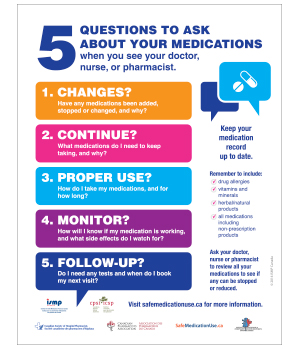
Medication errors can happen for many different reasons, but you can work along with your health care providers to prevent these errors, both as a patient and as a person who helps a friend or relative with their medications. An important way to prevent errors is to have all the right information…

With that in mind, the Institute for Safe Medication Practices (ISMP) has developed a list of 5 questions you should ask whenever you are:

  • Being discharged from hospital

  • Having an appointment with your doctor or specialist

  • Talking to your pharmacist or

  • Having a visit with a home care nurse

These times are referred to as “transitions of care” and are the most likely times that your medications might be changed and mistakes could happen. Asking questions will help ensure you understand how your medications are supposed to be used. These occasions also give you an opportunity to learn more about your medications, such as what each does, how it is to be used, how long it should be taken, and what side effects you should watch for.

Here are the recommended questions you should ask:

  1. Changes? – Have any medications been added, stopped or changed and Why?

  2. Continue? – What medications do I need to keep taking and Why?

  3. Proper use? – How do I take my medications, and for how long?

  4. Monitor? – How will I know if my medication is working, and what side effects to I watch for?

  5. Follow-Up? – Do I need any tests, and when do I book my next visit?

To make this easier, ISMP has organized these questions onto a page you can download and fill in on your computer or tablet, or just print off and take to your doctor, pharmacist or nurse. You can download it here.

Be aware that most pharmacists can book an appointment with you to review your medications in detail. For some people, this may be a benefit of your prescription medication insurance coverage. But even if it is not covered, it can be a good investment in your health if you take several medications or have a complicated medical therapy. If you specifically ask the pharmacist to look for medications that can be stopped or “deprescribed”, a review may mean you have lower medication expenses and a simpler medication program in the future.

It is also important to keep an up-to-date medication record. You can find a free app for your computer or phone (Apple, Android or Blackberry) by clicking here or googling “my med rec”. Be sure to include a list of drug allergies, any vitamins or minerals, herbal or natural products, and any non-prescription products in your medication record. This list can be especially helpful when being admitted to hospital or when trying to determine if any medications can be discontinued.

More medication means greater chances for drug interactions. While drugs can be life saving, drug interactions and unwanted side effects can harm your health. Sometimes a drug is added solely to counter a side effect of another drug you are taking, when the problem could have been solved by changing the original medication.

So, learn as much as you can about your medications and how to benefit most from what you are taking. Communicate clearly with your doctor, pharmacist and nurse practitioner that you want to be taking the least number of medications possible for the shortest time necessary to keep you healthy. And, lastly, learn what lifestyle or diet changes can be tried to improve your health. Work hard to make these changes so you can minimize the medication you need to control chronic diseases like diabetes, heart disease and arthritis.

The CEO of the Canadian Patient Safety Institute (CPSI), Chris Power, advises:

“Be as informed as you can be and go into that relationship with your doctor, your nurse or your pharmacist or whomever is providing care, knowing that you’re a partner and you have a right and a responsibility to ask questions and to understand what’s happening with your health care.”

Categories
Health

Testosterone – Women need it too!

Testosterone has been described as the hormone of desire… Although it’s in the androgen hormone class, considered to be “male” hormone, both men and women produce testosterone. It’s the difference in amounts produced and the balance between estrogen and testosterone that determine male or female body characteristics.

Interestingly, many more articles have been written about overproduction of testosterone in women, as can occur in polycystic ovary syndrome, for example. Underproduction can also be a problem for women, but doctors rarely test for this.

With low testosterone, women can feel fatigued and notice less interest, not only in sex, but in doing things they normally like to do. The term “lack of a sense of wellbeing” has been used to describe how women with low testosterone can feel.

Physically, they may notice decreased muscle size and strength, and reduced hair growth on the body, particularly underarm, pubic and leg hair. These physical changes often carry more weight when speaking with your healthcare provider about the potential for this type of hormone imbalance.

Interestingly, taking hormones by mouth can lead to low testosterone effect. The liver filters virtually everything you swallow as soon as it is absorbed from your digestive system. This is referred to as the “first pass effect”, where the drug is changed or partially removed from the blood stream before it has a chance to reach the rest of the body. This is one reason that transdermal drugs (or drugs administered through the skin) are generally used in lower doses. With the transdermal route, the drug reaches the body before the liver has a chance to metabolize it. Hormone preparations are generally 1/10th the dose when given through the skin, as compared to dosing by mouth.

However, with oral hormones there is another known effect… In response to swallowed hormones, the liver produces a special protein, called sex hormone binding globulin (SHBG) that binds to hormones making them unavailable to act in the body and, essentially, inactive.

When estrogen is swallowed, such as with hormone replacement or birth control tablets, the liver is stimulated to produce SHBG, presumably a mechanism developed to protect us from accidentally ingested hormones in our food.

However, SHBG binds testosterone 10 times more strongly than estrogen. This means that taking estrogen by mouth will result in increased SHBG that will scoop up much of the testosterone your body is producing. Testosterone is still being produced but you may experience the symptoms of low testosterone. Regular blood tests for total testosterone would show a normal amount, but a test for “free testosterone” (testosterone not bound to proteins) would show the effective deficiency.

So, what can be done to correct testosterone deficiency? I always recommend treating the cause if one is identified so, for women with a secondary deficiency caused by taking estrogen by mouth, a simple solution is to change the estrogen to a patch, cream or gel formulation, eliminating the first pass effect on the liver and reducing production of SHBG.

If this is not the cause, and total serum testosterone is found to be low, testosterone replacement can be considered. Swallowed testosterone is known to be hard on the liver, with increased liver cancer reported with some oral forms. As well, available tablets and capsules currently on the market are dosed for men and contain far more hormone than women need. I’ve seen prescriptions for women to take one man-sized 40mg capsule once or twice a week, but even this is more than women would produce, and would result in swings in testosterone blood levels that would be far too high on the days immediately after taking a dose.

Women produce less than 1mg of testosterone daily. It is easy to understand that a 40mg capsule would come with the recommendation to stop taking it if she developed facial hair growth or acne. Even the cream formulas that are available come in 25 and 50mg pouches or pumps with no accurate way to measure a lower amount.

However, testosterone cream can be accurately compounded by a pharmacist and loaded into needle-free syringes for accurate measurement. I always prepared the cream as 1% testosterone (10mg/ml) making it easy to calculate the desired dose. A 1ml syringe would contain 10mg – generally enough for 10 days of testosterone replacement, although some women have reported results with doses as low as 0.15mg!

Because hormones are stored away in fatty tissues in the body, I generally recommended using 2mg daily for the first week or two (since some of this would be stored away) then reducing to 1mg or less daily to avoid any chance of overdosing. One of the first signs of too much testosterone is often an outbreak of acne. I encourage women to identify the lowest dose that is effective for them – the “normal” amount can vary from person to person, and we need to remember that we are adding to the amount being produced, which can also vary from person to person.

Men can also become deficient in testosterone. Some refer to this as “andropause”… others have jokingly called it “grumpy old man syndrome” since deficiency most commonly occurs later in life, the man may be stooped and thin due to decreased muscle and possibly the onset of osteoporosis, and his mood may have become less than cheery.

Testosterone replacement for men is readily available in capsules, injections and creams and, although somewhat less convenient, the creams or injections would be preferred to reduce the effect of hormone on the liver. However, as injections are generally given every 2 to 4 weeks, they have the disadvantage of producing a higher blood level of hormone immediately after the injection and a lower level before the next injection is scheduled. A simple blood test would confirm that testosterone is needed and that the dosing is correct.

So, if any of the symptoms of low testosterone sound familiar, talk to your doctor about it. If you are interested in more information, I would recommend “The Hormone of Desire” by Dr. Susan Rako as an excellent source of information on testosterone deficiency in women.