Categories
Uncategorized

Podcast – “Becoming Elli”

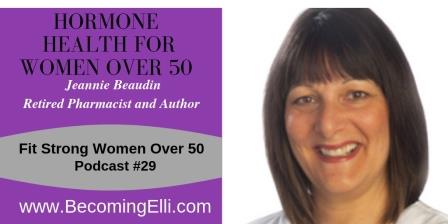
I wanted to tell you about an interview I had for the podcast, “Becoming Elli: Fit and Strong, Women over 50”. Hosts Chris and Jill asked me lots of questions about fitness and health from a pharmacist’s point of view along with a few questions about my book, Can I Speak to the Hormone Lady?, just released.

The podcast interview, along with a somewhat abstract article I stumbled across about what defines your sense of self-worth (Your job? Your earning power? Are you, as a person, more than what you do for a living?), lead me to ask myself why I blog and why I wrote a book – what is my ultimate goal?

Why do I write?

It certainly isn’t to make money (since it’s highly unlikely I will!). I think it’s partly because I enjoy writing and learning how to improve my writing skills. It’s exciting and healthy to learn new skills after retirement. But mostly I write to share what I’ve learned: I’d like to think that a few things I write might help someone, just as the work I did as a pharmacist helped those I came in contact with.

Part of me (well, really, most of me) would just like to write, and put it out there for those who are interested. But I read that most writing just disappears into the ocean of millions of books and articles that are posted. So that means, if I want to achieve my goal of helping people, I need to do something to help those who could benefit from the information find what I’ve written.

So, while I will soon be back in Canada writing my regular information blog, answering readers’ questions and sharing health information that I learn, I hope no one will be put off by my feeble attempts to get the word out about my new book…

Podcast – BecomingElli.com

As for the podcast… well, I discovered that I tend to talk a lot when I’m nervously talking on a subject I’m passionate about… I think I talked a bit too much (eek!). But the hosts had lots of great questions and some really made me think hard to come up with a good answer. Hope you enjoy the podcast! Here’s the link:

https://becomingelli.com/hormone-health-for-women-over-50-with-jeannie-beaudin/

Heading home soon

Only 10 more days for us, here in southern Spain… then a long trip back home and likely some jet-lag! I hope to be back soon to my usual routine of answering health related questions you may have and sharing interesting information I come across. It just might be time to start working on my next book…

If you have a question about any health or wellness topic, please send me a message through the “Questions / Comments?” button! I want my blog to be about things you want to know…
Categories
Uncategorized

Podcast – "Becoming Elli"

I wanted to tell you about an interview I had for the podcast, “Becoming Elli: Fit and Strong, Women over 50”. Hosts Chris and Jill asked me lots of questions about fitness and health from a pharmacist’s point of view along with a few questions about my book, Can I Speak to the Hormone Lady?, just released.

The podcast interview, along with a somewhat abstract article I stumbled across about what defines your sense of self-worth (Your job? Your earning power? Are you, as a person, more than what you do for a living?), lead me to ask myself why I blog and why I wrote a book – what is my ultimate goal?

Why do I write?

It certainly isn’t to make money (since it’s highly unlikely I will!). I think it’s partly because I enjoy writing and learning how to improve my writing skills. It’s exciting and healthy to learn new skills after retirement. But mostly I write to share what I’ve learned: I’d like to think that a few things I write might help someone, just as the work I did as a pharmacist helped those I came in contact with.

Part of me (well, really, most of me) would just like to write, and put it out there for those who are interested. But I read that most writing just disappears into the ocean of millions of books and articles that are posted. So that means, if I want to achieve my goal of helping people, I need to do something to help those who could benefit from the information find what I’ve written.

So, while I will soon be back in Canada writing my regular information blog, answering readers’ questions and sharing health information that I learn, I hope no one will be put off by my feeble attempts to get the word out about my new book…

Podcast – BecomingElli.com

As for the podcast… well, I discovered that I tend to talk a lot when I’m nervously talking on a subject I’m passionate about… I think I talked a bit too much (eek!). But the hosts had lots of great questions and some really made me think hard to come up with a good answer. Hope you enjoy the podcast! Here’s the link:

https://becomingelli.com/hormone-health-for-women-over-50-with-jeannie-beaudin/

Heading home soon

Only 10 more days for us, here in southern Spain… then a long trip back home and likely some jet-lag! I hope to be back soon to my usual routine of answering health related questions you may have and sharing interesting information I come across. It just might be time to start working on my next book…

If you have a question about any health or wellness topic, please send me a message through the “Questions / Comments?” button! I want my blog to be about things you want to know…

Categories
Uncategorized

Thoughts on Retirement…

An old high school friend just announced her retirement on Facebook. She’s sleeping in, enjoying leisurely coffee and lunch with friends… if every day is like her first, she says, it’s magic! And I agree – retirement is the magic we look forward to after years of hard work. It should be exactly what you want it to be.

Of course, we don’t all want the same experience for this phase of life… And please don’t call it our last phase (that’s depressing)! I think retirement should be thought of as just the next stage of life, but the one where you truly get to design your days, months and years. Something to celebrate!

The old image of the retired Grandma, knitting in her rocking chair, babysitting the grandkids isn’t valid for everyone – and perhaps for few these days. While I must admit that I do love knitting, I find I have much less time for it now than when my children were young!

Retired people are starting new businesses, taking university courses and travelling around the world. We’re keeping active, trying new hobbies and physical activities. We’re paying more attention to our diet and our health so we can enjoy our new lifestyle for many years to come.

The first few weeks feel like a magical vacation that doesn’t have to end. But after a successful career, many of us want more. We’re used to the great feeling that comes with achievement, making a difference, learning new skills.

So, don’t just drift along in your retirement or slip into a life directed by others unless that is what you really want. If you’re bored with your retirement life, it’s time to take charge. It’s time to think about change and what you really want for this phase of your life. Take some time to plan your future, think about what an ideal lifestyle is for you right now, make sure you can finance it, then make it happen. Your family may wonder what happened to “Grandma”, but let them wonder! Or tell them you just decided to “get a life”…

Like many people, I had a financial plan for retirement, but didn’t really plan what I wanted to do. When I retired, my husband and I went on an adventure – we rented an apartment in Spain for 3 months. After a couple of weeks of sightseeing, though, I wanted a project. I had been thinking about writing a book on my work with women, how I helped them overcome unpleasant menopause symptoms. I wanted to include all the background knowledge I used to understand what was happening and teach women what I did to correct imbalances so they could help themselves. I began writing in the mornings, sitting on a sunny balcony overlooking the Mediterranean, typing on my iPad using only chapter titles as the roughest of outlines.

In two months, I had a first draft completed but I’ve been redrafting it and learning about the publishing industry ever since. I eventually realized that, without a good plan, I’d done it all backwards: I should have learned about writing and publishing first, then started seriously writing. I should have taken some time to plan my writing career.

But I’ve also spent my first 3 years of retirement trying out all the activities I’ve wanted to do but had little time for while working and raising children. Doing more drawing, getting back to my classical guitar, seeing more of the world and learning a new language (Spanish) were all on my list, as well as writing and learning how to write better (which is a major reason I blog!).

It’s quite a long list so perhaps I haven’t had enough time to really delve into each as much as I’d like. I guess I’ve been taking “turns” with each activity. My blog will be 3 years old in June. I bought a book about portrait drawing then practiced until my drawings started to look quite a lot like the subject (fun!). I’ve only been playing my guitar on and off but I’m close to being back to the skill level I had when I was a teenager. And I’m writing this blog from Spain – our third trip here – and working up the nerve to actually start speaking the language after doing 3 years of learning on Duolingo (a free language learning app where you can learn many languages). Time will tell where my true focus will be, if any. I may just keep on enjoying each activity without really becoming an “expert” at any, and that’s OK too.

So, how is your retirement going (or retirement plans, if you’re not there yet)? Are you still driven to learn and do new things? Do you plan to start a second career… to do what you’ve always wanted to do? Or does simply spending time with family make you happiest? Only you can decide.

There are no wrong answers – that’s the best part of retirement – as long as you take advantage of this new beginning, this opportunity to change tracks, if that’s what you want. The important thing is to stop for a moment, give it some thought and make some plans while you have the chance!

Interesting link:

Free language learning app: Duolingo.com

Categories
Uncategorized

Time to Talk About the Environment…

Although I’m busy seeing all there is to see while in Spain (this photo is of Malaga, taken from the top of a nearby mountain), I want to share with you some of what is different here. One notable difference is what we see on television in the evening…

It seems that European television takes a step back and looks at the news and world situation from a different perspective than what we see in North America. I just watched an amazing interview of atmospheric scientist, Katharine Hayhoe, conducted by Christiane Amanpour.

Dr. Hayhoe is a Canadian living in Texas and she excels at communicating what is happening to our environment on a level we can relate to – where we are and where we live. She entertains while she explains how climate change multiplies the extremes of weather, storms, wild fires and more that we experience now.

But don’t take my word for it… listen to her TED talk (click here) and, as she recommends, talk about it.

The CNN Interview:

https://edition.cnn.com/videos/world/2019/01/08/katharine-hayhoe-amanpour-climate-change.cnn

Categories
Uncategorized

Need a Mood Boost? Eat This.

Sharing a great article about diet and moods from a fellow Canadian pharmacist, Irene Hogan:

http://www.irenehogan.com/need-a-mood-boost-eat-this/

Hope you find it interesting – I did! And her references are well worth reading too…

Categories
Uncategorized

Antidepressants or Natural Therapies – Which works better?

The surprise answer is that in many cases they are equally effective.

Antidepressants have been used for decades and billions of dollars have been spent on these drugs, but they are surprisingly ineffective. The difference between the drug effect and a placebo (or sugar pill) is almost undetectable except in the most severe cases of depression. Placebos themselves are surprisingly effective – when a person expects to get better, sometimes that is all that’s needed to help the mind heal itself.

The US Centers for Disease Control and Prevention report that the rate of suicide has increased by 30% since 1999. At the same time, the use of antidepressants has increased by 65%. This suggests the drugs are not great at preventing suicide. In addition, some of these drugs have a “black box” warning, the highest level that can be applied to a drug. It warns doctors to monitor patients for new suicidal thoughts that may occur shortly after beginning therapy.

Statistics show that more people are on long-term financial assistance due to mental illness than before these drugs were introduced in the 1950s. One analysis suggests that the drugs may actually block a full recovery, even though symptoms appear to improve in the short term. Studies have found that more patients who used non-drug therapies had recovered and returned to work after one to two years of treatment compared to those who took medications.

At an educational session many years ago, the speaker told us that mental illnesses were a result of a chemical imbalance in the brain. Depression was caused by too little serotonin or norepinephrine. They explained that antidepressants re-balanced these chemicals (called neurotransmitters), by increasing the available amount of the ones believed to be low in depression. I often explained this to patients when I counselled them about their medication in my pharmacy.

However, newer studies have shown that the brain changes how it functions to accommodate for the effect of the drug. When the patient tries to stop the medication, it takes a while for the brain to return to normal. This manifests as a return of the mental illness, sometimes more severe than it was before. This has often been interpreted as a need to continue treatment, rather than a withdrawal effect of the medication. As a result, sometimes patients are kept on treatment for many years.

The longer the person has been taking the medication, the longer it can take for brain function to return to normal. This can make it very difficult to stop the medication. It is recommended to taper the dose gradually when attempting to discontinue treatment to reduce withdrawal effects.

As well, antidepressants have side effects that range from weight gain to erectile dysfunction. The small benefit these drugs provide needs to be weighed against the side effects they cause.

So, do studies show that alternative “natural therapies” work for depression?

The answer is yes! Good quality scientific studies are available to support some of these non-drug treatments:

  1. Exercise

    1. A 2007 study at Duke University Medical Center in North Carolina found that 30 minutes of walking or jogging three times a week was more effective than an antidepressant or placebo. (Psychosomatic Medicine, Sept 2007, 69(7), p. 587-96)

    2. A review (or “meta-analysis”) of studies that included exercise and antidepressant medications in 2016 confirmed the effectiveness of exercise. (Journal of Affective Disorders, 15 Sept 2016, vol.202, p.67-86)

  2. Bright light therapy

    1. Bright light (10,000 Lux, 30-60 minutes daily first thing in the morning) attempts to duplicate the effect of being in sunshine. A review of studies showed significant effect, with the largest study showing an effect approximately equal to antidepressants when added to medication. Of course, spending time in actual sunshine could be expected to give the same beneficial effect.

  3. Mediterranean diet

    1. While less studied, a small Australian study, the “SMILES Trial” suggests a Mediterranean Diet that includes local unprocessed foods may work better than antidepressants. After 12 weeks on the diet, 32% experienced remission compared to only 8% of those who received only social support.

  4. Cognitive behavioural therapy (CBT)

    1. Cognitive Behaviour Therapy, or CBT, is a non-drug, “talk” therapy used to treat psychological illness. It aims to help people understand their thoughts and feelings, and what makes them feel positive, anxious or depressed. It helps people to identify the problems that are troubling them and find different ways to think and behave to manage their feelings.

    2. The evidence for benefit from CBT is indisputable. It is as effective as antidepressants but, unlike medication, the effect continues after the therapy is completed. The other plus is that a person can’t overdose on a bottle of “therapy”, unlike antidepressants…

So, if you get the “blues” this winter, talk to your doctor. But, before they take out the prescription pad, be sure to ask whether non-drug therapies might be appropriate for you. While you may benefit from medication, or a combination of medication and non-drug therapy, it’s worthwhile discussing your options first.

Of course, considering the positive effect of exercise, sunshine, a healthy diet and discussing ways to deal with problems effectively with someone you trust, perhaps these are things we should all be doing every day anyway to keep our bodies and our minds healthy!

References:

Anatomy of an Epidemic, by Robert Whittaker

Why Natural Depression Therapies are Better Than Pills, Dr. Matt Strauss (Pharmacy Practice Journal)

Categories
Uncategorized

Technology… Creating memories

It’s amazing what can be done with technology now, isn’t it? My friend and I both lost a parent in the past week, and we both had an opportunity to improve the experience and create positive memories to cherish in the years to come using a little technology. Let me tell you our stories…

My mom had decided it was time to move from her apartment to a higher level of care before she went into hospital. So, we had started clearing out her apartment when her health really started to fail, and old photo albums had already been pulled from their hiding places. When she moved from ICU to palliative care, the grandchildren came to visit and say their good-byes. They helped to clear out her apartment, too, and found the stack of albums.

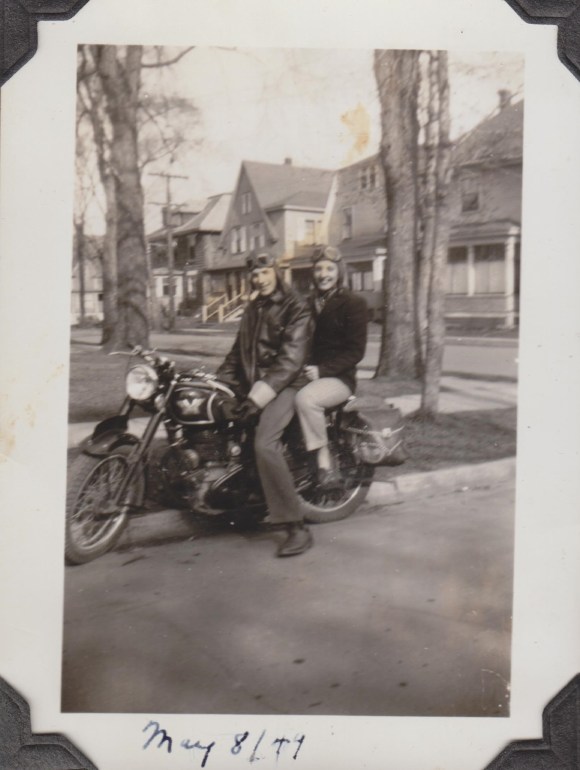
They were fascinated by old photos of my mom and dad in their younger days – in a park, on their wedding day, on a motorcycle! – and with another album of a wonderful garden party my mother had thrown years ago. They scanned several of the photos using their cell phones and were able to put the photos up on the large TV in my mother’s room wirelessly from their phones, with the aid of a small piece of equipment (essentially a wire with a USB on one end and an HDMI plug on the other). Not wanting to overtire her, they showed the older photos one afternoon and the garden party the next. She smiled often, making a few comments as her energy allowed, and we could tell she really enjoyed sharing the memories and seeing the friends and family who had attended the party again.

And, not only did this make her last days more pleasant, it created positive memories for us and helped us to create some happiness in a sad place. I wanted to pass along this experience, in hopes that someone else might be able to recreate something similar should they find themselves in a comparable situation.

My friend, holding vigil with her dad, helped to create a feeling of inclusion for her siblings who were not able to be there. Using video conferencing, she was able to share her father’s last moments with them, gaining their support and avoiding any potential future regrets of “not being there”. It’s thoughtful and caring that most hospitals make Wifi available for patients and their families now…

Losing a parent is one of the most difficult passages in our lives. It is wonderful when we can use technology to make challenging times easier and more positive, bringing families closer together.

Categories
Uncategorized

Learning how to learn…

I’ve been trying to learn Spanish for a couple of years now… never making much headway. But our upcoming trip to Spain has motivated me to work harder and I think I’ve finally turned a corner – I’m getting it! Nothing like a little motivation…

Are you finding it more difficult to learn new things that when you were younger? One skill we are not taught, is how to learn… or maybe how to convince ourselves that we really do want to learn what we need to know!

Facts are quickly becoming less important in the digital age – what matters is being able to find information we need (or want) to learn and being able to use what we find. So, we need to focus on becoming better at using the information technology that is available to us and better at processing the data that we find. Information is cheap and readily available… it is thinking skills that matter although sometimes we do need to know enough to trigger us to look further. We need a balance of knowledge, and skills to use that knowledge effectively.

How do we learn best? Here are some suggestions I found in a book I recently read:

  1. Establish value – I think this is one of the most important factors. We need to see knowledge and skills as valuable, or the brain simply discards the information soon after we “learn” it. We need to create meaning, make sense of the information, think about how and why it’s important to you. This may be best done by thinking how it relates to what you already know. If you’re a Big Bang Theory fan, you may recall the episode where Amy stops reading and stares into space for several minutes, explaining that she’s finished reading and now she’s thinking about what she read… (establishing its value and relating it to what she already knows, no doubt!)

  2. Target your learning – Decide what you want to learn and know why you want to learn it. Set goals and targets. Have a reason to learn.

  3. Be curious – Take on the challenge of learning things you don’t know but find interesting.

  4. Extend your skills – These days, average won’t do, especially in the workplace. Develop skills, knowledge and understanding beyond the basics to become an expert. Expertise is needed if you want to be essential to the system and it’s gratifying to gain a thorough understanding of a subject that interests you, or just to be the best you can at your work!

  5. Relate – Nothing can be isolated. Knowledge needs to be related to other facts/procedures/systems. Understand how new knowledge fits with the old. For my Spanish, I’ve noticed similarities with French (in which I am already quite fluent), and this helps me remember more easily.

  6. Rethink – You need to constantly review knowledge and understanding as the environment changes. You need to “learn from your learning”, updating previous knowledge with new facts and techniques. Keep an open mind to new ideas presented by others in the field you are studying. With the volume of information available in this electronic age, it is impossible to read and learn every aspect of a subject. Discussion and sharing with others enables you to have a broader perspective that may influence your understanding of the subject and future direction of learning.

Constantly ask yourself: “How does this new learning relate to what I already know?” Understanding what you’re learning, versus memorizing facts, increases retention and keeps you more interested in what you’re learning.

But, understanding where to find information quickly is now often more important than acquiring a vast knowledge base. I have my phone loaded with translation files so I will be able to quickly look up the Spanish words I can’t remember.

And, don’t forget that You Tube now has a database of videos demonstrating everything from appliance repair to setting up a website and more! A friend we were visiting complained that she had never figured out how to lower the racks in the dishwasher she had bought 2 years before. My husband (who uses the internet regularly to learn how to do all kinds of things!) pulled out his phone and within 2 minutes found a video of how to adjust the racks in her model of dishwasher. We all learned something about learning that evening!

Various fields may have specific sources for the highest quality information. A focus of learning that may give the greatest benefit, especially in the workplace, is to learn the best sources of the information you need. Peer learning – learning from each other – is often a very effective way to gain this type of information. A role for leadership in today’s workplace is helping workers develop skills needed to quickly find information they need themselves. Often, part of this is simply providing an avenue for employees to share the knowledge they already have.

Keep in mind that spreading learning over time and acquiring knowledge when you need it enhances integration into actual practice and helps decrease the inevitable forgetting. Having the skills to learn “on demand”, when the information is needed, avoids the necessity of memorizing facts and processes before they are needed and gives the advantage of better retention because the meaning and need are clear to us!

As a practicing pharmacist, some of my best learning was in response to questions from clients. In fact, I became a “hormone expert” because I received so many questions about menopause, as treatment went through radical change in response to study results. I even received a phone call one morning from a woman asking to speak to the “Hormone Lady” as my reputation spread… all due to learning “on demand” in response to a need.

So, “learning how to learn” (and where to find the info you need) may be the most important skills we can acquire. And our best learning is very often in response to an immediate need…

What do you need to learn about? The goal of my blog, in addition to sharing interesting health information I’ve read, is to help readers with health and wellness related questions they have. Click the red “Questions/Comments” box to let me know what health information you’d like to see in a future blog!

(Note: Names are never mentioned in articles to maintain confidentiality!)

Categories
Uncategorized

Why I blog…

I hope you are enjoying your summer! I’m just back from a vacation in Miscou Island that included mackerel fishing and spending time with extended family, some of whom I hadn’t seen for over ten years. I’ve also had some special events with neighbours that included a fabulous lunch with 9 great women who live on my street. Not surprisingly, I’ve had no time to research a health blog for this week. This is how to take a vacation from retirement, I guess! I hope your summer is including similar activities…

So, instead of a health blog, this week, I thought I’d tell you a little about me – why I blog and how I got started writing.

I’ve been writing for a long time – probably over 20 years – usually volunteering to write an article for a local newspaper or a pharmacy journal. I have always liked sharing what I know, with the hopes that my knowledge may help someone. I quickly discovered that I enjoy writing and that I continually learn as I research new information for my articles.

But when I owned my pharmacy, it was also a great way to promote my business at the same time. As a pharmacist, I certainly preferred having clients, new and old, come to my store because they were looking for help with a health problem, rather than just to pick up something that was on sale (especially non-pharmacy items!).

When I first started my pharmacy in the mid-90s, a good friend and mentor, who already owned her own business, suggested I host a short seminar at my pharmacy. I had already spoken to a support group of parents with children who had asthma, so my first talk was already prepared.

The asthma talk was a great success, and afterward I was able to help one attendee, who was being treated for asthma, to learn that he actually had an incorrect diagnosis. He had asked me about the difference between asthma and a condition called Sarcoidosis, which he had been diagnosed with 10 years earlier. The symptoms are similar but the treatment is different. It was very rewarding to know I played a part in the dramatic recovery he experienced once he started taking the correct medication. Now, 20 years later, most pharmacists are compensated by Medicare to do this type of work, and it’s called a Medication Assessment.

I decided to host an event once a month, researching and writing presentations on many different topics. I learned a lot in the process, as I organized what I already knew and learned more with each presentation. It was also another effective way to promote my pharmacy as a place to learn about medications and the diseases they treat. I began receiving invitations to speak to various groups and, as they say, the rest is history… as my husband and I built a successful pharmacy business together.

I found I really enjoyed writing so, when I retired from active pharmacy practice, I decided to continue. In addition to writing articles for a national pharmacy journal, Pharmacy Practice Plus, I have been working on a book based on the specialized hormone work I did for clients for over 10 years. I hope that my book will help to inform women about how their reproductive systems work, how hormones function in the body, and what options are available to treat hormone imbalances. Through my work with women, I learned that greater understanding can help women communicate their hormonal issues more effectively with their physicians.

One recommendation for writers is to develop a “platform” – a way to reach potential readers. Hosting a blog and developing a list of subscribers is one suggested component of a good platform, as well as developing a following on social media, such as Facebook, Pinterest and LinkedIn. This was my inspiration to start my blog, as well as to set up a Facebook page and social media accounts. This gives me several ways to share the link to my weekly blog and reach out to people who are interested in learning about health issues.

“Likes” and “shares” on social media are positive parts of a writer’s platform, but a list of subscribers is the most helpful when talking to publishers. So, if you enjoy my blog, can you please subscribe to it, as this will help me to find a publisher for my book! I promise I will never share your email address – I use my list only to send a link to my weekly blog and, eventually, to tell you when my book is available.

As well as clicking the pop-up window (sorry about that irritating function, but blogging experts say they do work!) I also have a “Join my mailing list” box on the right side of my blog page. On a phone or tablet, scroll to the bottom to find the box.

And if you know someone who might also appreciate the information I share, please pass along my link: http://jeanniebeaudin.wixsite.com/author or just tell them to Google “Jeannie Beaudin blog” to find me! I really appreciate it, and you just might help me to get my book published sometime in the (hopefully) near future!

Thank you for your support!

Categories
Uncategorized

New Year’s resolutions??

Did you make a New Year’s resolution? Is it something you really want? Well, now is time to start doing the work it takes to make it happen!

You know, most people don’t fulfill their resolutions… One-quarter give up after only a week, one-third after a month. After 6 months less than half are still trying and, after all is said and done, only 8% are successful.

Why does this happen? Well, life gets in the way…we get busy, make excuses, fall behind, lose motivation and get frustrated.

But, if your resolutions are truly important to you, do it right! Don’t leave worthwhile changes to chance or rely on an approach that is almost guaranteed to fail.

Making successful change involves 3 steps: setting your goals, determining exactly what you have to do to get there, and checking back to make sure you’re on track. And I guess there’s a 4th step – congratulating yourself when you succeed!

So, let’s see what this looks like…

First…setting the goals. Large companies and institutions use a system called SMART goal setting, and you can use this too. What are SMART goals, you ask?? They are detailed goals that are Specific, Measurable, Achievable/Actionable, Relevant and Timed. And they write them down and keep them front and center to make sure they aren’t forgotten.

Be Specific – Know exactly what you want to achieve. Many resolutions are vague, such as enjoy life more, or spend more time with family. Make yours specific…use numbers, pin down details of what you want to achieve.

Make it Measurable – Include parameters you can measure so you know exactly what you are aiming for.

Achievable and Actionable – Make sure what you want to do is actually achievable…don’t set yourself up for failure! Be realistic about your goals. Include details about what actions you need to take to be successful. Learn from earlier attempts, if you’ve tried and failed to reach this goal in the past.

Be Relevant – Choose goals that you really want to achieve. Change is almost always difficult…you have to really want it!

Timed – Set a realistic time frame…next month? By the end of the year? Don’t make the time too long and definitely don’t leave your goals open-ended, to be accomplished “some day”. Interim deadlines are often a good strategy too, and can keep you moving along with your plan.

Next, you need to determine the details of exactly what you will do to achieve your goals within the time you have given yourself. Write the steps down; set a time frame for each. Large organizations call this a strategic plan (and actually pay thousands of dollars to develop these!), but yours doesn’t need to be overly complicated. Just be sure that, like your goals, your action plan is doable, specific and timed. And remember, with some goals there are proven plans already out there… for example, for quitting smoking or losing weight (2 of the most popular New Years resolutions!).

Thirdly, keep this written plan somewhere where you won’t just forget about it. You may want to post your plan where you will see it every day, or make your update part of your Saturday morning coffee routine. Depending on your time frame, the first of every month can be often enough to make sure you are still on track. But be specific about this, and mark it on your calendar!

Remember that vague resolutions are often just unattainable dreams…written, focused goals with well-planned, practical steps to get there will greatly increase the likelihood of achieving the significant improvements in your life that you desire. And be sure to celebrate your success and reward yourself for a job well done when you achieve your New Years resolutions for 2017!

My resolution for 2017 is to self-publish the book on hormones I have been working on for the past year. I want to achieve this by June 2017 and have enrolled in an online course to learn exactly what I need to do to publish and market my book effectively. My first step is to build a mailing list so I can effectively tell people when my book is available. Please help me by subscribing to my blog, if you haven’t already, so your name will be added to my list! Thank you for your support…

#Resolution #SMARTgoals