Categories
Uncategorized

Environmental links to cancer

I used to give a presentation on breast cancer prevention some years ago, and I just realized I’ve never blogged about this subject. Though years have passed and, sadly, little has changed in information on environmental connections to cancer, much of what I learned is still not well known by the public.

I recall reading somewhere that breast and prostate cancers are suspected to have similar causes, both being hormone-related cancers, so this information will be of interest to the guys too. I’ve always thought it was better to prevent cancer than to have to treat it… and the strategies to prevent cancer may help to prevent a recurrence in someone unfortunate enough to have already been diagnosed with it.

The causes of cancer have eluded us for generations, despite the “war on cancer” announced so many years ago. This may be because the cause, as understood by many researchers is likely to be a combination of factors that add together. These likely include genetics (less than 10% of breast cancers), exposure to cancer-causing chemicals or “carcinogens” (sometimes causing problems years after exposure), a poorly functioning immune system (that does not repair cell damage efficiently enough) and perhaps diet and other lifestyle factors.

However, little research money appears to be allocated to finding the causes, with much more going to early detection and treatment. I guess you’d want this, if you had cancer, but wouldn’t we all rather not get it in the first place? Of course, with much research money being supplied by manufacturers, the fact that preventing disease doesn’t result in income could also be a factor in where research dollars are spent… It’s up to government to take the lead in prevention and environmental research.

And it’s up to us to push them to do it!

My story…

I’ve known too many friends and family members who’ve been diagnosed with cancer. Unfortunately, the incidence continues to increase, even as treatments become more targeted and successful. But, like much I blog about, I have personal reasons for taking a particular interest in this subject.

My story started back 25 or 30 years ago when, for some unknown reason, I started having problems with some “lady parts”—lumps in the breast (fortunately all non-cancerous), bad PAP tests that required cryosurgery. Like most people, I just assumed these things were random occurrences and never thought to search for a cause. No one asked about my lifestyle or medications, to check for a change that might have been connected to my problems.

Tupperware parties were popular then, and I had bought a wonderful set of plastic cups with the “sipper seal” that prevented many spilled milk days in our house. After my kids outgrew the kiddie cup stage, the idea hit me that they would make great coffee cups—ones that would fit into the tiny cupholders in my car. No more spilled coffee on my way to work!

Eventually my coffee started to taste more and more like plastic, as the hot beverage broke down components in the plastic cup. Finally, one day it tasted so bad I pulled over and dumped it out and stopped using the cups for my coffee. A few months afterward, all my health problems went away.

A support group event

I didn’t associate the health events with my plastic consumption until a friend who was a breast cancer survivor invited me to an event her support group was hosting, a year or so later. It would have been the late 1990s. They presented a documentary film created in 1997 called “Exposure: Environmental Connections to Breast Cancer”, hosted by Olivia Newton-John, also a breast cancer survivor.

The 55-minute film interviewed cancer researchers and clinicians, and the award-winning producer and director were there for a discussion afterward. My friend and I bought a VHS copy of the film and I started giving a presentation based on the documentary’s research to any groups of women who wanted to listen.

The information in the film is still relevant now, over 20 years later, and many of the strategies for avoiding known carcinogens still seem to be surprising to many. This is just another example of the lack of “knowledge translation” I talked about last week. I’ll post a link to the film in the references, so you can check it out yourself if you’d like.

Plastic and cancer

So, back to plastic. One of the researchers in the film talked about an experiment they were doing with breast cancer cells. They had placed the cells in a plastic test tube with no nutrients or hormones to help them grow. They should have been just lying there quietly but, instead, they were growing like crazy. Something in the plastic was feeding the cancer cells. It was a revelation to the researchers—the first realization that something in plastic was hormonally active.

Since then, plastics have been classified into safer or more harmful types. You may have noticed a number enclosed in a triangle of arrows on most plastic containers. This is a classification of the plasticers (chemicals that make plastic flexible) in the plastic into various types. Although safety recommendations vary slightly by source, most recommend 2, 4 and 5 as the safest, and 1, 3, 6 and 7 to be used in moderation and never reused. No plastics are recommended to be heated, including in the microwave, or used for hot food.

Here’s a chart from the David Suzuki Foundation:

So, you see, my plastic cup didn’t just make my coffee taste like plastic, it was delivering a hormonally active substance into my body daily, that was making me sick. The worst part is that these chemicals are fat-soluble… they dissolve in oils and fats and are stored in the fatty tissues of the body. Now, 25 years later, I expect they’re still hiding in my body. Losing weight could be expected to liberate these chemicals as my body converts to using up fat I’ve stored away over the years.

If you look closely at the packaging, you’ll notice that Styrofoam cups and plastic utensils are generally made of plastic #6, a plastic that should not be used with food. Of course, we can choose not to use these items, but why are they still being manufactured and sold? Our governments are often slow to create regulations that protect us!

As a hormone specialist pharmacist, I learned that the hormone, progesterone, “opposes” or balances the action of estrogen. It’s not a leap to expect that it would also counter the action of estrogen-like chemicals as well, although I’ve not seen studies that specifically looked at this—and I have to wonder why these studies haven’t been done. I still use a low dose of progesterone to try to prevent problems because of what I learned as a compounding pharmacist.

Cellphones

While searching for an online version of the Exposure video, I stumbled across case reports of breast cancer that appeared to be associated with storing a cellphone close to the breast. These cancers were unusual, occurring in young women, exactly beneath the area where they habitually carried their phone, sometimes with several different types of cancer occurring at once. These women had developed a habit of carrying their phone tucked into their bra for hours each day.

In the report, they pointed out that most cellphone manufacturers recommend holding your phone slightly away from the body (or using a Bluetooth headset), and not storing the phone close to the body, especially not against the skin. I think I’ll start carrying mine in the front pocket of my purse, farther away from my body, rather than in the back pocket so I can feel it vibrate (telling me I have a message or call). I’ll just turn up the volume instead! Microwave radiation drops quickly with distance… creating a small space or non-metal layer quickly makes a large difference in the strength of the radio waves.

However, it is noteworthy that these cases were in people who carried their phone in direct contact with the skin, in the same spot for many hours each day. Overall, cellphone use has not been demonstrated to increase risk of cancer significantly. (See Mayo Clinic reference below).

And more…

Of course, there are other environmental factors that are of concern that should be discussed–pesticides being one. Chemicals that are designed to kill pests could be expected to do us harm too, if we are exposed. How much is too much? Which (if any) are safer? A subject for a future blog, perhaps.

But I’d encourage you to watch the “Exposure” video (link below in the references) that delves into the subject… an hour well spent in my opinion (and I’ve watched it quite a few times!)

PS…

One thing that has changed since the documentary was made, is that mammograms use less radiation now, resulting in a safer test. The test is also less accurate when breast tissue is more dense, as it is in premenopausal women. Many jurisdictions (with the notable exception of the US) begin screening mammograms only at age 50 and perform them only every 2 to 3 years to minimize exposure and maximize benefit.

PPS…Faith restored

On the “good news” front, I just got an appointment for early next week to hopefully (finally!) find out what is causing my “falling through the cracks” symptoms. My faith in the Canadian healthcare system has been restored! Fingers crossed for a clear explanation of what’s going on and a plan to get things back to normal as quickly as possible…

References:

Women’s reproductive system as balanced estradiol and progesterone actions—A revolutionary, paradigm-shifting concept in women’s health—Science Direct

Exposure: Environmental Links to Breast Cancer (1997)—Culture Unplugged

Cellphones and Breast Cancer—Environmental Health Trust

Is there any link between cellphones and cancer?—Mayo Clinic

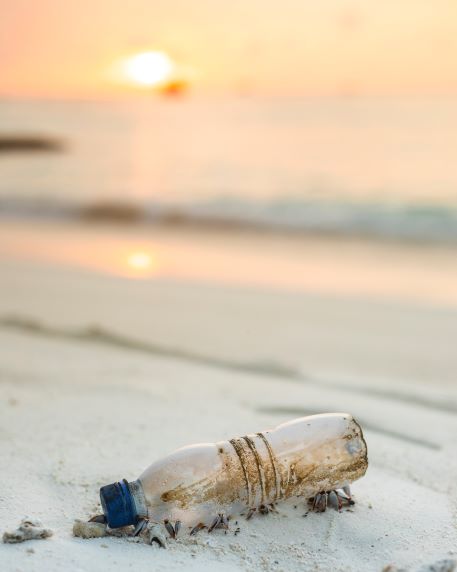
Photo credit: Ishan @seefromthesky on Unsplash

Categories
Uncategorized

Staying positive… taking control

As you can imagine, waiting (not always so patiently!) for test results has made me even more interested in reading articles about lifestyle strategies for disease prevention. Doing something positive by creating a healthier lifestyle, one that can reduce the risk of cancer and other diseases, is something patients can do for themselves. Feeling that you’re in control of something in your life is good for both your mental and physical health.

On the upside, two health professionals have told me that slow results usually mean the test result will be negative. More suspicious samples are fast-tracked through the system, as they should be. So, perhaps slow is good. I’m afraid last week’s blog was a bit of a frustrated rant… so I’m trying to shift to a better, more positive frame of mind by taking control of what I can, and changing to a healthier lifestyle!

Looking at the research…

While I still like Michael Pollan’s Food Rules best for their simplicity: [Eat food (real food, not processed), mostly plants, and not too much], there certainly is some interesting research that many of us don’t hear about.

It’s always been difficult to conduct diet research on humans—it’s just too hard to completely control a person’s diet for the years it would take to really learn what’s best. But here are some of the diet recommendations and strategies being investigated that have caught my attention and that seem to make sense…

Eat more foods with flavonoids

For years researchers have found that some people who eat more foods with antioxidants, called flavonoids, have extra protection against heart attack, stroke, Type 2 diabetes, and some types of cancer, as well as lower blood pressure. But they weren’t sure why eating more of these foods didn’t work as well for everyone.

New research has discovered that certain bacteria in the gut break these compounds down into substances that deliver the benefit. Those with more diverse gut bacteria are the ones who benefit more.

Foods rich in flavonoids include berries, apples, pears, dark chocolate, and red wine. Ensuring you also have some fermented foods in your diet, like sauerkraut, yoghurt, kombucha and others, can help to ensure you benefit maximally from these tasty flavonoid-containing foods.

Meanwhile, increased diversity of gut bacteria is being found to be associated with reduced risk of several inflammatory and autoimmune diseases. Antibiotic overuse and poor diets are believed to have reduced the variety of microbes in our guts, with some species actually now extinct in some populations.

Ditch sugar and processed food

For all that we’ve been warned to avoid fatty foods, sugar is now believed by some researchers to be much worse. And when the fat is removed from food, it loses a lot of its taste. So, food processers have been making up for this by adding sugar (which we all love!). Multiple studies have suggested that increased amounts of processed foods in our diets can increase risk of cancer and heart disease.

Besides the obvious weight gain too much sugar can cause, there’s also Non-alcoholic Fatty Liver disease (NAFL) that is caused by the body storing some of that excess sugar in the liver as fat. Fatty liver disease is a risk factor for liver dysfunction as well as cancer.

Of course, if one were to eliminate both fat and sugar, that would leave only protein… and high protein diets can be hard on kidney function, as the kidneys are required to filter all the amino acids from the excess protein. To me this suggests a balanced diet with some fat and protein, plenty of fiber (think vegetables!) and a very low amount of sugar.

My sister (also a retired pharmacist) loves to watch videos of researchers discussing their work and she passes some of them on to me. A recent one discussed the effects of sugar on cancer cells and whether cancer is a genetic disease (caused by damage to DNA), or a disease of damaged mitochondria (the tiny energy-producing organelles in the cytoplasm (the fluid part of the cell outside the DNA-containing nucleus). Transferring damaged over-producing mitochondria from a cancer cell to a normal cell caused it to become cancerous but transferring DNA did not.

This suggests that cancer could be a disease of excess energy production by damaged mitochondria, allowing a cell to grow non-stop, rather than a disease of damaged DNA. The researcher suggests the damage seen in DNA could well be a “downstream” result of the rampant cell growth, not the cause of it. He also discussed that, since cancer cells are known to use mainly sugar for energy (and not fat or ketones, produced when fat is used for energy rather than sugar), removing sugar from the diet may be a strategy for future cancer treatment.

So, what the heck—I figure I might as well go “Keto” for a while, as I wait for my test results. At least I’ll be doing something positive rather than just sitting around waiting for a letter in the mail…

Intermittent Fasting

While I’ve blogged about intermittent fasting before, it’s worth mentioning again. When you limit your eating to less than 8 hours each day, your body goes into “clean up” mode, devouring dead and damaged cells… basically clearing out the garbage. This is called “autophagy” … eating oneself! (I’ll post the link to my article below, if you’re interested in reading it.)

The premise behind intermittent fasting is to stop eating and snacking throughout our waking hours so our body can spend time cleaning house rather than just processing a constant intake of food. This can be done either by compressing daily food intake into 8 hours or less, or by taking in less than 600 calories on 2 non-consecutive days of the week.

Many cultures have fasting rituals—the month-long celebration of Ramadan is one example, where followers do not eat during daylight hours. Historically, humans did not have the plentiful food supply we have today, and this has created a huge change in modern eating habits, with 3 full meals plus 2 to 4 snacks every day. Grazing, as one friend calls it, leaves little time for cleaning out the garbage in our cells.

“Knowledge translation” takes a long time…

When I retired from active pharmacy practice and started this blog, I had the time and interest to read as much as I could about creating a healthy lifestyle. I subscribed to several health newsletters that give me a steady stream of research-based information to share with you all. It is notable that new medical discoveries take an average of 17 years to become standard medical practice. They call this transfer of knowledge into practice “knowledge translation” and it’s a big problem in the world of science. Writers like me are trying to speed this up a little…

The IF Diet (Intermittent Fasting blog (Jan 2020) link: https://jeanniebeaudin.wixsite.com/author/post/the-if-diet

References:

Consumption of ultra-processed foods and cancer risk—British Medical Journal

The Effects of High-Protein Diets on Kidney Health and Longevity—Journal of the American Society of Nephrology https://jasn.asnjournals.org/content/31/8/1667

Flavonoid-rich foods lower blood pressure via gut bacteria–

Medical News Today

Microbial Diversity and Abundance of Parabacteroides Mediate the Associations Between Higher Intake of Flavonoid-rich Foods and Lower Blood Pressure—Journal of Hypertension

Categories
Uncategorized

Falling through the cracks…

Some patients have always fallen through the cracks of our medical system, with unnecessary delays in diagnosis. We’re all human… a significant symptom can be ignored or misinterpreted, or we can put off investigating the cause of a nagging problem that could suggest a serious condition. But during the COVID pandemic, the cracks in the system have become wider. With fewer in-person appointments, cancelled screening clinics and hesitation to seek treatment because of worry about virus exposure, experts are warning that diseases are likely being diagnosed later when they’re harder to treat.

They worry that because early-detection procedures like PAP tests, mammograms and the PSA test for prostate cancer are being postponed, we may see cases where the diseases these tests screen for are more advanced at diagnosis. This can sometimes mean more expensive treatment and worse outcomes because diseases are more likely to have spread when diagnosed. Just like a house fire, cancers and infections are best treated sooner before they have a chance to advance and spread.

It will take time for statistics to show how much of this is happening and to what extent the problem of decreased health screening is affecting our health and our chances of surviving health problems that are detected further along in the course of the disease. But, anecdotally at least, I’m seeing that this is happening.

Of course, for privacy reasons, I don’t want to describe the cases I’ve learned about amongst family and friends, but I can tell you my story. You may have noticed that I took a break from blogging this summer… but it wasn’t because I was having too much fun to write. The truth is, I haven’t been feeling well for the past several weeks. And I still don’t know the cause.

So, from my point of view, here are some of the “cracks” that it’s easy to fall through…

Crack #1: one thing at a time

In mid-May I noticed some abdominal discomfort—nothing too terrible. Then a week later a sudden severe pain sent me to Emergency… Crack #1 to avoid: try not to have 2 things going on at once (not that we really have that choice…). If you do, be sure to explain that there seem to be two unrelated things going on. Turned out I had a kidney stone (perhaps obvious from the level of pain…) but since they couldn’t see the stone on a CT scan it was diagnosed as a kidney infection. I spent the next 2 weeks on an antibiotic that made no difference. A later scan showed several smaller stones, confirming what I had suspected must be the cause at the time because the pain was so severe.

But in spite of visits with 4 doctors and a nurse practitioner, along with a series of tests, there’s still something else going on that hasn’t been diagnosed yet. At least I’ve progressed from phone appointments to in-person ones as my symptoms have gradually worsened.

Crack#2: describe symptoms clearly

I can see that the system is backed up, with longer delays than usual in getting appointments and results of tests. Crack #2: make sure the person on the phone understands your symptoms and how severe they are. Avoid the “Fine, thank you” automatic response when a health professional asks how you’re feeling—be truthful and accurate. Let them know how the symptoms are affecting your daily life.

Crack #3: know your receptionist

One important lesson I’ve learned is that the receptionist is the gatekeeper of the doctor’s time. While it may seem weird to be describing details of an illness over the phone to someone who isn’t a health professional, she is the person who decides how soon you need to be seen. So, heed Crack #3 and treat the receptionist like the important person that they are… describe what’s going on politely and carefully along with any frustration or desperation that you may be experiencing! And thank them profusely for helping you to be seen in a timely manner—it’s probably due to their actions. Usually, they’re the ones who manage the doctor’s schedule and often are the ones with the connections to the receptionists in the specialists’ offices.

Crack #4: communicate well

Crack #4 is about lack of communication. If you go to an after-hours clinic or emergency department, your doctor may or may not know about it afterward. Even if the Nurse Practitioner in your Family Doctor’s office sees you and documents her observations on your chart, your doctor may not see it until your next visit with them. Your family doctor should be the central hub of your healthcare and seeing them regularly, especially when you have a health issue, helps keep your care from various sites coordinated. Make sure they are well informed and aware of any care you receive outside their office. At least now we have electronic health records in most areas, so information about various treatments in different locations is accessible to everyone who is treating you and needs it. They just need to know it’s there and to look.

Crack#5: avoid vacations!

And Crack #5 is: don’t get sick during vacation (as if we have a choice!). Many doctors are not able to find locums to cover the office when they take vacation, leaving patients to rely on after-hours clinics and emergency departments. Even our local blood collection/lab sample drop off clinic, usually lined up daily to overcapacity, just closed up for a week to take a holiday. For many like me, we were left wondering where to go and this resulted in yet another extra week’s delay for me and many others in getting test results needed to help find a diagnosis.

My story…

So, where am I now? I just learned this week that my latest test, the one that should finally provide a diagnosis and the test I’ve waited 2 months to get, has a 2 to 3 month wait for results. I can’t believe it. I’m unbelievably frustrated that any lab could take 2 months to process a sample and that, as the receptionist told me, it could take an additional month in this age of electronic communication to send me a letter by snail mail with an appointment to hear the results. I think I cried on the phone in frustration. I’m hoping my newest favourite receptionist may be able to work some magic and expedite this process somewhat for me, the way the receptionist in my family doctor’s office was able to get me into the specialist more quickly. The words “possible carcinoma” on a June 30th test should have resulted in quick action but here I am, 2 months later, still waiting for a diagnosis. Whatever it is, I just want to know. It’s more than a little stressful and certainly not the norm in any medical system, including ours. Might be time to send an email to my local politician…

The bottom line

I guess, the bottom line is that we all need to be proactive about our health. Even in these days of the continuing pandemic, we still should insist that routine care and screening tests are completed in a timely manner. Vaccines and well-fitting masks are tools we have to make sure we stay safe from the virus while we do this. If you have unusual unexplained symptoms, insist that they be diagnosed. Keep asking for investigations until the problem is resolved. Remember that your family doctor is usually the most important healthcare professional to work with you and to coordinate and oversee your care.

So, if you’ve missed any screening tests in the past year and a half, now is the time to book an appointment. Just like a house fire, it makes a big difference if you catch it early. If something seems to be wrong with your health, check it out right away and keep pushing until you get an answer… that’s what I’m doing, even though it seems to be taking much longer than it should.

Categories
Uncategorized

Afraid of needles?

This article is about how to have less fear and pain when getting an injection, so I decided to be kind and use a photo of a different kind of needle… not to further upset anyone! A friend told me that just seeing news reports about COVID upset her because they so often showed needles being given… she was terrified of needles and couldn’t watch, even on TV.

And she’s not alone. Twenty five percent of people report being afraid of getting an injection and 5 to 10% are reported to actually refuse injections because of needle phobias. But with a deadly disease like COVID-19, we need to have as many people vaccinated as possible to stop the spread of the virus. An ideal scenario would be to have enough people immunized to make the virus extinct, as was done with polio. Perhaps we were so successful with it because they developed an oral form of the vaccine. Remember the drops on the sugar cube? Nothing to fear there!

But, until they find a way to present the COVID vaccine as a sweet treat, we need to remove all barriers we possibly can to getting immunized.

When I started giving injections, I worried about causing pain… I didn’t want to hurt anyone! I knew there had to be something in the administration technique that reduced pain, as some flu shots I’d had in the past were completely painless while others had quite a sting, so I read everything I could about reducing needle pain. I learned there are lots of things both you and the injector can do that help.

This year, after seeing some dubious injection technique in TV news reports, I wrote an article about how injectors can drastically reduce the pain of an injection, making the needle itself almost (or in some cases, completely) painless. Our national pharmacy journal ran my article 3 times, and it was published on an American nurse practitioner website too! I hope the information is helping to lessen the pain of immunization for some people. Injections really can be pain-free—I can honestly say I didn’t feel the needle at all at my second COVID shot. It’s all about technique and that nurse was very good! 😊

So, if you’re afraid of needles, read on…

Pain-free injections

Some key actions for injectors to take to reduce injection pain are to let the alcohol dry, make sure the needle goes into the belly of the muscle (not too shallow, and not too high or low on the arm), put a little pressure on the skin near the injection site (so your brain will register pressure not pain), insert and remove the needle quickly (avoids pain, just like a quick paper cut is often painless), and put pressure on the injection site (with a cotton ball) immediately afterward. It also helps to do something to distract the person, even if it’s just by telling them to take a deep breath.

As a patient, it’s absolutely your right to ask the person giving you an injection to let the alcohol dry before injecting, or to give the needle at a certain spot if you know where a deltoid (arm) injection is supposed to be given. You could also ask them to make it as quick as possible and offer to hold the cotton ball afterward to continue the pressure on the injection site while the injector completes records and prepares a bandage. If you’re an injector and interested in reading the article I wrote, here’s a link to the post on the Nurse Practitioners for Women’s Health website.

What you, as a patient, can do: Play the “CARD” system…

CARD is an acronym for 4 activities that reduce pain, fear, fainting and other symptoms some people experience when getting an injection or before and after. It stands for Comfort, Ask, Relax and Distract. The system was scientifically tested in schools in Niagra, Ontario, and was found to reduce fear of needles by almost half. The system is easily adapted to work in most settings where injections are given.

Here’s what they suggest:

Comfort—Wear short sleeves so it’s easy to expose the injection site. Bring a snack: eating something can keep you busy and distracted.

Ask—If you’re worried about anything, for example side effects, don’t hesitate to ask. The person giving the injection usually knows the answers to most questions about injections or can easily find the answer for you. Did you know there is a numbing cream/patch you can use? Ask about this before you go if you think it will help (It is available at most pharmacies and has to be applied to the injection site an hour before the injection. Make sure you know exactly where to apply it.). Should you look at the needle or look away? Do you want to be told just before it’s given, or would you rather not know? Tell the injector for your preference.

Relax—If the muscle that is being injected is contracted or tense, the needle is more likely to hurt. Make sure your arm is completely limp and relaxed. Although it’s more difficult right now with COVID restrictions, having a friend accompany you can help you feel more confident and relaxed. Make your appointment at the same time as a friend or family member so you can boost each other’s confidence while waiting. Take a deep belly breath just as the needle is being given to help you to relax. This works as a distraction too (discussed next).

Distract—Distraction can actually reduce the pain you feel. I used to let younger children play a drawing game on my iPad to distract them (especially effective when iPads were new!). After the injection (when they didn’t like me anymore), I would ask if they’d like me to send their drawing to Mommy or Daddy’s computer… that almost always made me a cool person again and distracted them from what just happened! But even chatting with the injector can also help you relax. Tell them your worries—there’s often something extra they can do to help resolve your fears, or just talk about the weather to distract yourself. One elderly gentleman that I gave a flu shot to insisted that I hadn’t given him his injection—he had been busy chatting with an attractive assistant and didn’t even notice when I gave him his needle! It only took me about 2 seconds to give the actual injection, so it was easy to miss, I guess…

In addition to addressing the pain of injections, the CARD system also considers the stress that many people experience when getting an immunization. And it’s not just children and adolescents… adults fear injections too. It’s time for us all to improve injection experiences by working together to make them easier, more comfortable and more pleasant.

Click here to learn more things you can do to squelch your fear of needles… CARD for adults: https://immunize.ca/card-adults

…A softer kind of needle

References:

Tips for Giving a Pain-Free, Effective Injection—Jeannie Collins Beaudin (NPWH website)

Improving the vaccination experience with CARD—Government of Canada, Public Health Services

CARD for Adults—Immunize Canada

#FearOfNeedles #PainFreeInjections

Categories
Uncategorized

Revealing your COVID vaccine status …Privacy vs safety

Privacy is important these days, and nothing is more private than our medical information. But when it comes to being safe in a pandemic, it’s also important to know how safe stores, restaurants and businesses are, especially as they start to fully re-open and masks are no longer mandated. Whether a person has been fully vaccinated makes a huge difference in how likely they are to catch the coronavirus and transmit it to others, as well as how sick they might become if they contract the virus.

Do we have a right to ask a person’s vaccination status before they provide a service, especially if unmasked? Can an employer require their employees to disclose their immunization status and make this information public? Can you be required to show proof of COVID vaccination before travelling to another country?

CTV News interviewed several personal injury, employment and privacy specialists to get their expert opinion on these questions. Their comments were interesting, I thought, so I wanted to share some of what they said. Quite a can of worms…

What if you can’t get vaccinated?

Of course, there are some people who cannot be vaccinated for medical reasons, such as allergy to a component of the vaccine, or who do not respond well to vaccines, due to low immune function or medications that block the immune system. These people need to be protected from discrimination.

Employers cannot force employees to disclose their vaccination status to clients and they certainly cannot disclose this information on the employees’ behalf, the lawyers emphasized. One suggested businesses could post a sign on their door saying that no personal health information would be divulged about their employees. But that sounds like something that might have the potential to reduce business…

Safety first

However, employers have a right and requirement to provide a safe work environment for other employees and their clients. This means that employers may need to know who is unvaccinated… whether they cannot, or choose not, to take the vaccine. In the name of safety, these employees may find themselves required to work from home or in a modified position that reduces contact with others, if there is a potential safety risk to others. If that’s not possible, due to the nature of the work, they may be considered unsuitable for the position and not be hired.

Can you ask if employees are vaccinated?

Yes, as a customer you have a right to ask an employee or service provider if they are vaccinated, but they are not legally required to answer. Employers are not allowed to reveal health information, like immunization status, without the employee’s permission. However, customers may start to “shop around” for safer places to do business, if this information is not revealed.

An alternative, is for businesses to continue to provide safety measures, like physical distancing, altered store layout, sanitization and perhaps continued masking to make customers feel safer when shopping there or using their services.

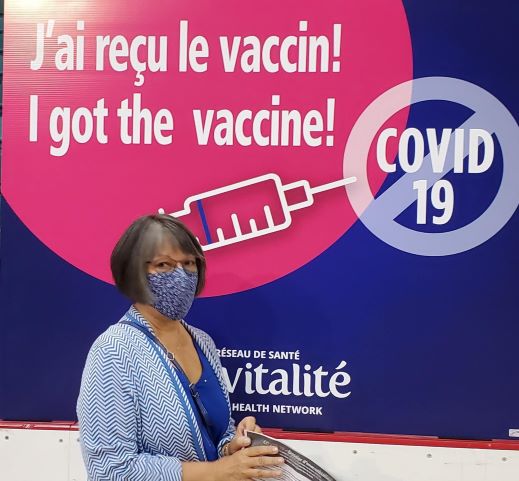
With COVID-19, vaccination status has become less of a privacy issue. Many people (like me!) are excited and happy to be fully vaccinated, and want to tell the world, even though it’s really private medical information. It’s quickly becoming a minor privacy issue for most people—in fact, it’s becoming the norm.

Of course, it can work the other way too—businesses may want to ask customers whether they are vaccinated. In fact, some already are, like airlines who will only allow those who are fully vaccinated to book a flight. Countries and even some Canadian provinces are only allowing those who are 2 weeks past their second shot to enter without restrictions, citing safety of their citizens. Many are also requiring proof of a negative COVID test as well… all medical information that, in other situations, would be private.

Can vaccination be required before travelling to another country?

Yes, certain vaccines, like yellow fever, are already required for travel to certain countries. This sets a precedent for requiring any vaccine that is deemed necessary to improve safety while travelling. Although we’re still waiting for the dust to settle on travel vaccine requirements, no-one will be surprised if full COVID immunization is required by many countries to protect their citizens as well as travellers. International discussions about the form that “COVID-19 vaccination passports” will take emphasizes that these will be a likely requirement for travel when international borders open.

Safety trumps privacy… always

Employment lawyer, Sunira Chaudhri, discussed whether a business could be held liable if a customer were to become sick after contact with unimmunized employees. While she said it isn’t completely clear yet, she also said it’s certainly possible an employer who allows unvaccinated employees to contact clients unmasked (after mask restrictions are lifted) could be sued if a client or other employee became very ill. To make the workplace as safe as possible, she indicated, employers are going to have to ask about vaccination status and employees are going to have to disclose it. “Safety trumps privacy, always” she said.

So, just like airlines and other countries are requiring proof you are 2 weeks past your second COVID-19 vaccination, employers may develop policies and protocols that require proof of vaccination before an employee returns to the workplace or works in close contact with clients. It’s not the law that you have to get vaccinated, but there may be consequences for those who are not, like an assignment to a position with little or no contact with other employees or the public, or losing a job altogether.

What about insurance?

They didn’t interview an insurance specialist, but their comments would have been informative as well. If the insurance industry becomes involved and senses increased liability (and future costs), choosing not to be immunized against COVID-19 could become very expensive for employers and employees. I guess it all depends on how low case counts and risk of contracting coronavirus infection become. Epidemiology experts predict that COVID is here to stay and will continue to circulate in the human population, hopefully as a less severe infection as our immunity builds. Perhaps even most of the unvaccinated population will eventually develop immunity from having recovered from an actual infection.

The bottom line is that we may not have a true choice (other than to just stay home) as to whether to disclose our vaccination status. Safety first… But hopefully, eventually enough of us worldwide will be vaccinated to stop or at least drastically slow the circulation of this deadly virus and these requirements will become a temporary measure. It’s already happened with polio and some other diseases that are included in childhood immunizations. Until then, be ready to produce proof of vaccination if you want to travel and possibly if you want to apply for that new job.

Next week…

And if the reason you (or someone you know) hesitates to get your COVID shots is that you’re afraid of needles (common in 25% of the population!), next week’s blog might help you!

References:

Customers can ask about an employee’s vaccination status, but employers can’t share it: experts–CTV News

6 Frequently Asked Questions: Vaccinations + the Workplace–Miller Titerle + Company

Categories
Uncategorized

Vaginal dryness… a fixable problem

Some time ago, I was chatting with a friend who had had ovarian cancer and the topic of vaginal dryness popped up. She was suffering terribly and knew that she shouldn’t use any hormone treatments because of her hormone-related cancer, but no-one had mentioned anything she could try that was safe for her to use. I was surprised to find out no-one had told her there were non-hormonal treatments she could use that would help.

Treatments for vaginal dryness are common knowledge for pharmacists and many other health professionals, and sometimes we forget that our knowledge is specialized. It’s easy to wrongly assume that everyone knows about lubricants and moisturizers. But I learned from my friend that this isn’t always the case. I was glad I was able to help her, and thought I’d put the information out there for anyone else who might need it!

What causes vaginal dryness?

The cells that line the vagina grow in response to the hormone estrogen, making the vagina walls thicker and more elastic. These cells also produce moisture called mucus, much like the inside of our nose and other “inside linings” in various parts of the body. When estrogen levels drop, though, these cells slow down their growth and mucus production, resulting in a thinner lining and less mucus to lubricate and keep the area moist as it should be.

This moisture is moderately acidic and this helps prevent infections. It also helps sperm survive and travel through the woman’s genital system, making mucus production important for those who are trying to become pregnant.

Low estrogen levels, like women often experience after menopause, are a common reason for vaginal dryness, but they aren’t the only reason. Women can notice more dryness any time estrogen levels are falling, such as during breastfeeding, after childbirth, with heavy cigarette smoking (another reason to quit!), during depression or excessive stress, with immune system disorders (such as Sjogren syndrome), during some cancer treatments (for example, hormone blocking therapy, chemotherapy or radiation to the pelvis), and after surgical removal of the ovaries.

Some women will even notice less mucus being produced during parts of their normal cycle, as estrogen cycles through its normal ups and downs. Estrogen is highest at the time of ovulation, roughly at day 14 of a normal cycle (although this varies from woman to woman) and lowest when her period begins.

Women can use this mucus production to predict how high their estrogen is, and when they have ovulated. After the menstrual period, estrogen and mucus production gradually increase. The highest or “peak” production of mucus occurs when a woman is ovulating, and the mucus changes in colour from clear, slippery in texture, and “stretchy”; to creamy, yellowish/white and non-stretchy immediately after ovulation occurs. (“Stretchy” refers to the ability of estrogen mucus to form strings when stretched between 2 pieces of toilet paper.)

Being dehydrated or taking medications that cause mouth dryness, like decongestants and some antidepressants, can also cause the vagina to be dryer. These “anticholinergic” medications that reduce secretions throughout the body as a side effect, provide a helpful action for a stuffy, runny nose in the case of decongestants. Drinking extra water throughout the day can help reduce this drying side effect when it is bothersome.

What does vaginal dryness feel like?

Women will commonly notice pain or discomfort during sexual intercourse because of a lack of lubrication. This can lead to a loss of interest in sex, since it is no longer pleasant and sometimes downright painful. Some women will notice light bleeding after intercourse, due to small tears in the vaginal lining caused by friction.

In worse cases of vaginal dryness, women will notice ongoing soreness and/or irritation. They may also experience vaginal itching, stinging or burning. Just the friction of clothing against the area can even become uncomfortable.

How is it treated?

There are several different types of products that can be helpful for vaginal dryness. I think of these as “steps” to progress through, depending on how bothersome the dryness has become:

  • Vaginal lubricants (e.g. KY Jelly®, Taro Gel®, other generic brands)—I refer to these as the “lowest level” of treatment. Think of lubricants as a replacement for the mucus that is missing. Lubricants can give immediate relief, but the effect doesn’t last. They are useful before or during intercourse and can be inserted or applied to the outer area of the vagina or applied to the man’s penis before entry. Water based products (essentially water with a gelling agent or silicone added) are both effective and recommended over oil-based products like Vaseline®, mineral oil, or other oils. Note that oils can break down latex products like condoms, increasing the risk of breaking.
  • Longer-lasting lubricants (e.g. Replens®)—I think of these as the next step in vaginal dryness treatment, and would be recommended for women with ongoing symptoms. When inserted, these products adhere to the walls of the vagina for several days. They are recommended to be used every 3 to 4 days for continuous relief of symptoms.
  • Vaginal moisturizers (e.g. RepaGyn® vaginal suppositories)—When you need more than just lubrication, a moisturizing product may work better. Moisturizers contain ingredients that “plump up” the cells of the vaginal lining, helping to heal and thicken the lining while providing moisture. RepaGyn® has been demonstrated to promote healing after gynecological procedures including chemotherapy and radiation. Its effect is similar to estrogen therapy, but without hormones. RepaGyn® comes as a suppository, inserted 2 or 3 times a week, making it less messy and more convenient to use than gels.
  • Hormone treatments (Estrogen creams, suppositories, rings, patches, tablets)—These are usually reserved for women who don’t find sufficient relief from non-prescription treatments, or who have additional bothersome hormone-related symptoms such as urine leakage, hot flashes, night sweats, etc. Since these symptoms are often caused by menopausal hormone changes, women may benefit from replacing hormones, either vaginally or systemically (by mouth or through the skin as a patch or gel). Of course, these are considered inappropriate for any woman who has had a hormone-dependent cancer, due to increased risk of a return of the cancer. Your doctor would assess your risk factors vs benefits from this therapy before prescribing. If estrogen is only needed for vaginal problems, generally a very low dose is used, and the treatment is inserted into the vagina or applied directly to the area.

Effective treatments are available in any pharmacy without a prescription. So don’t be shy—it’s OK to ask to speak to your pharmacist in a private area about your health problems. And talk to your partner about any dryness, even temporary, so they will understand and help too.

However, if you aren’t getting relief from non-prescription treatments you’ve tried, ask your doctor or other health practitioner for advice. He/she can prescribe higher-level hormone treatments if needed. Remember vaginal dryness is a fixable problem…

References:

Vaginal dryness—Mayo Clinic

RepaGyn information brochure

Replens information

#VaginalDryness

Categories
Uncategorized

Do we still need to wear masks? …and other COVID “trivia” questions

First, I want to tell you I received my 2nd shot this week… I’ve finally joined the list of those fully vaccinated (well, I will once a couple of weeks have passed for the vaccine to do its magic). It feels good to be better protected and helping to make our world safer!

COVID-19 still has a fascination for many of us—it’s still often the first item on the news each day, especially here in Eastern Canada where provincial borders have been closed for months except for essential travel. I don’t know about you, but I can’t resist reading the latest study or statistics on the coronavirus. I expect we’ll be learning about it for many years to come.

So, this week I thought I’d write about some of the COVID (not-so-trivial) trivia I’ve been reading in the medical news, as researchers work to solve the mysteries and questions about the coronavirus and how it behaves.

Can we stop wearing masks once fully vaccinated?

Dr. Theresa Tam, Canada’s chief public health officer, gave the perfect answer to this question we all want answered: “It depends…”. Here’s how she explained it: Vaccines are never 100% effective, so you need to consider how much risk you can tolerate and how risky your surroundings are when deciding whether to wear a mask. You should think about:

Personal risk:

  • Are you vaccinated? One shot or two?
  • Do you have any underlying health conditions that could add to your risk if you do get sick?
  • Are you taking any medications that suppress your immune system? (steroids, organ rejection drugs, certain arthritis/psoriasis/inflammatory bowel disease medications, etc.)

Environmental risk:

  • Are you indoors or out? (Outside is safer)
  • What is the infection rate in the area?
  • Are the people you are with vaccinated?
  • Can you physically distance from others?

As you can see, having a strong ability to fight off any potential coronavirus infection plus a low to non-existent risk of close contact with anyone with the virus means the event is much safer and a mask might be unnecessary. Those who are less healthy will want to keep using a mask in crowded places, like a grocery store, and we all would be wise to use one if there are any cases in the general area. I plan to continue using one for a while yet.

Officials are warning that, as we open up our communities, there is a good chance cases will increase again as people travel more. Our province waited until 75% of adults were partially vaccinated and 20% were fully vaccinated before beginning to reopen, and changes will be gradual to minimize the potential of a 4th wave of infections until 75% are fully vaccinated (hopefully by mid-summer!).

Can dogs and cats catch COVID-19?

Yes! A small study found that 1/3 of cats and 1/4 of dogs, whose owners were infected with COVID-19, also tested positive for the coronavirus. Animals were at less risk if they spent more time outdoors and away from their owners, but they only displayed mild symptoms or none at all. There have been no reported cases of humans catching the coronavirus from their pets, including from virus being transported on their fur, and risk is considered low.

Should you get vaccinated if you have long COVID?

Yes! Those with “long COVID”—lingering symptoms like fatigue and loss of taste and smell that persist for weeks to months after recovery from an acute infection—will sometimes notice an improvement in symptoms after receiving immunization. Researchers suspect that the response to the vaccine enables the immune system to eliminate lingering low levels of virus that may be causing ongoing symptoms.

How much does the first shot help?

Studies find varying levels of response to the first injection of COVID-19 vaccine, depending on the person’s immune system response and the virus variants in the area, but a recent study found 81% response to the first shot and 91% to the second. Another study predicted a 40 to 50% reduction in ability to transmit the coronavirus after a single shot. Because of a worldwide shortage in vaccine, several countries have decided to delay the second shot by up to 4 months with the goal of reducing total deaths from the virus. Interestingly, older people have been noted to mount three and a half times larger response when the second dose is delayed to 12 weeks after the first. This suggests we should get an excellent response when boosters are needed.

What can we do to fly more safely?

Here are some suggestions I found to help keep you safer if you’re thinking of taking a flight:

  • Avoid non-essential air travel unless fully vaccinated (2 weeks after 2nd shot), as currently advised.
  • Check conditions (infection rate) at your destination.
  • Wear a mask in taxis, airports and planes. Consider double-masking and ensure mask fits properly (no gaps). Remember children cannot yet be vaccinated and a recent survey suggests that as many as 20% of unvaccinated adults stated they would lie if necessary to gain access to “vaccinated only” venues… 😮
  • Roll down windows in taxis going to and from airports to improve air circulation.
  • Bring snacks/lunches. Service is limited on many flights. If possible, eat before boarding the plane to avoid the need to remove your mask. If it’s necessary to eat on the plane, having your own food make it faster for you to eat, meaning your mask will be off for less time.
  • Note that large aircraft all have HEPA (high-efficiency) air filter systems, but smaller, older aircraft may not. Exercise extra caution when taking smaller, regional flights.

Are rashes a symptom of COVID?

Yes, weird skin rashes are now recognized as another symptom of COVID-19, along with fever, dry cough, loss of taste and smell, headaches, muscle and joint pain, nasal congestion, and fatigue.

Chilblain-like red/purple, swollen, or blistered skin on toes (mainly in children and young adults) were recognized first and nicknamed “COVID-toes”, but now they realize these can occur in fingers as well as toes. Sometimes this is the only symptom that is noted. Other types of rashes are now known to occur also. These include:

  • Macropapular rash (flat and raised areas of discoloured skin) found on the trunk of 47% of patients, usually those middle-aged to elderly.
  • Hives (aka uticaria—raised areas of itchy skin), in 26% of patients, although sometimes these occur as a side-effect of medications used to treat COVID-19.
  • Vesicular lesions (fluid-filled sacs under the skin, similar to chicken pox) that appear about 2 weeks after infection in about 9% of cases.

It’s affected us all…

During the past year and a half, we’ve all suffered at least a little from “COVIDosos”—my made-up name for the effect the virus has on us even if we didn’t catch it. We’ve gone through difficult changes like learning to physical distance and getting used to wearing masks, and we’ve experienced stress and worry, as the virus waves crashed over us.

Closed gyms, cancelled activities, and spending more time at home to avoid potential exposure to the virus have made it more difficult to stay in shape. And closed borders, quarantines and cancelled trips have left us missing family and friends. Thank goodness for video chats! But I’m excited to be starting to get back to normal, or at least the “new normal”, whatever that turns out to be.

I sometimes think how strange our great-grandchildren will think this time must have been. I had started an art/travel journal in January 2020, when we arrived in Spain for a 3-month winter escape. When the pandemic hit, it became my COVID journal, as we watched Spain begin to close down, travelled through airports on the way home and then self-isolated for 2 weeks at home. I still write in it from time to time. Sometimes I wonder if journals such as mine will survive and possibly be of interest to a future generation one day…

#COVIDfacts #DoWeStillNeedMasks #CanPetsCatchCOVID #HowToFlySafely

References:

COVID-19 and pets: Can dogs and cats get coronavirus? https://www.mayoclinic.org/diseases-conditions/coronavirus/expert-answers/can-pets-get-coronavirus/faq-20486391

How to fly safely this summer—CNN Travel http://www.cnn.com/travel/article/flying-safely-summer-2021-wellness/index.html

In Surprise Twist, COVID-19 Can Cause Weird Skin Rashes. Here’s What to Look Out For—Science Alert https://www.sciencealert.com/in-surprise-twist-covid-19-can-cause-weird-skin-rashes-here-s-what-we-know

Delaying 2nd Pfizer vaccine dose may protect better against COVID-10: study—Global News https://globalnews.ca/news/7861754/pfizer-vaccine-second-dose-delay/

Categories
Uncategorized

Every body is beautiful

How do you feel about your body? Critical or comfortable? Ashamed, accepting, proud? Do you love your body, accept what you’ve got, or are you downright self-conscious? A show on CBC Radio today got me thinking about this subject that’s been in the back of my mind for a while…

Who decides what’s beautiful anyway?

For far too long beauty has been dictated to us by magazines and movies—the goal for us all has been to be a youthful size 2 or buff and muscular, straight from the gym. And, when we don’t achieve these impossible goals, we criticize ourselves and sometimes feel ashamed of our bodies and our lack of willpower.

Even the medical BMI (Body Mass Index) that health professionals use to gauge our ideal weight is skewed to thinness. Although extreme excess weight can have health consequences, analyses show that those in the “overweight” BMI category statistically live longer, on average, than those in the normal and underweight groups. In the interest of helping us to be healthier, doctors will often recommend losing those “extra pounds” whether they have anything to do with the reason for our visit or not, leading some to dread or even avoid medical visits.

It’s all hard on the self-esteem, isn’t it! I think it’s time to work on normalizing our opinions of our human selves… time to be proud of who we are and comfortable with how we look. Our focus should be on being healthy and enjoying life, whatever size or shape we are. Curves are good! We’re made to be “curvy”.

Not just weight…

There are other worries people have about how they look, too. Scars, birth marks, and skin conditions can all take their emotional toll on those affected if they let them. But it can help to realize that most of the worry is your own. If other people have a problem with your outer appearance or your skin condition, it’s really their problem, right? And people really don’t notice, especially when they know you.

So, I’m not just writing this article for those who have some characteristic that they worry makes them stand out from the crowd in some way. I want to convince those in the crowd not to judge individuals based on some fabricated ideal of “perfection” that none of us achieve more than temporarily in our lives, if at all.

Accepting and ignoring physical so-called flaws in others, and looking instead for their positive qualities, can help build their self-esteem while helping us be less critical of ourselves. Skin markings or colour, skin conditions, type of clothing or extra pounds do not determine who a person is, and we can train ourselves not to make unwarranted judgements based on physical characteristics.

So, love and accept yourself and those around you. Have a goal of enjoying life and making others lives better. Remember that your thoughts are just “suggestions”, not necessarily truths or paths you must follow. You can pause, and create new thoughts or suggestions to block ongoing critical thoughts of others. Being healthy, sexy, energetic, and beautiful is not exclusive to those who are young, slim and muscular.

Life is too short to waste it craving for impossible physical perfection. Look for the best in others and you may find it easier to love the skin you’re in. And I think it works the other way too—if you love and accept your own imperfect self, you may find it easier to accept others as they are, as well.

If you’d like to listen to this thought-provoking CBC show, here’s the link:

How to embrace the body you’re in—Now or Never, CBC Radio One https://www.cbc.ca/radio/nowornever

Photo: Partial eclipse of the sun, June 10th, 6:15am, Cap-Pele, NB, jcb

#bodyimage

Categories
Uncategorized

I’m celebrating this week!

Celebrating blogs and books…

It’s a celebration week! It’s been five years since I started this blog… five years and 225 articles! And I’ve learned a lot about writing as well as health along the way. My style has changed from quite “clinical” in early blogs (just the facts, ma’am!) to a much more personal and, I hope, more entertaining style.

My goals have been to keep being curious about health, to continue to read and learn as I did in my years as an active pharmacist… and to get you curious and interested in learning how to be healthier–and live longer and better–too. I hope you’ve enjoyed the journey as much as I have.

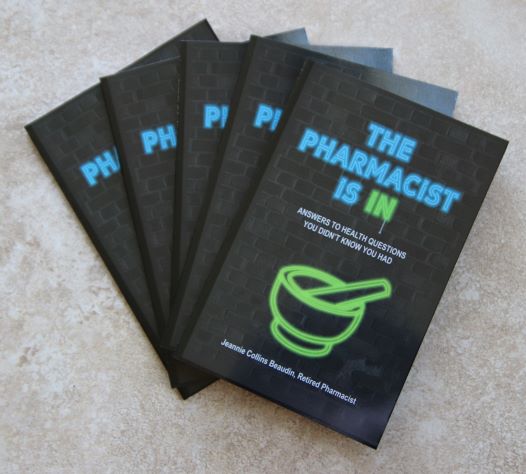
To celebrate my milestone, I ordered some author paperback copies of my newest book, The Pharmacist is IN; Answers to Health Questions You Didn’t Know You Had, just for fun. There’s something about holding a book in your hands, isn’t there? Especially one that you’ve written yourself! If you didn’t get a chance to look it up when it was first published as an e-book in May, the book is a sampling of my blogs, gathered together in an interesting way, to be sold inexpensively (or given away!) to “showcase” and introduce people to my blog, while getting them to focus more their health.

Not on Amazon this time…

Unfortunately, unbeknownst to me, Amazon has changed its rules regarding books made from previously published blogs. “Blogged” books aren’t allowed on their platform now, although I’ve bought books there made this way in the past and thoroughly enjoyed them (even knowing I could have found the same material in bits and pieces for free by spending time searching for it).

Strangely, my book shows up in an Amazon search, but only as an “out of stock” paperback. However, it’s available as an e-book at many other online retailers. The paperback version is also available to local bookstores, to order in through their regular wholesalers, on request. I was disappointed that there don’t seem to be other online stores that do “print on demand” (printing and shipping single copies for individual customers). If you know of one, please let me know–many of my readers prefer print books!

So, to celebrate my 5 years as a (somewhat) serious writer, I’ve put the e-book version on sale (for free!) for anyone who is interested for a few weeks. Here is the link to all stores where it’s available as an e-book: https://books2read.com/u/bwoB1Z (Note: all links work except the Amazon one, so you can go to Kobo, Apple, Google Play Books, Barnes and Noble or others—all have my book for $0.00 for the next few weeks). Feel free to share the link with anyone who might be interested (or who you think ought to be thinking more about their health 😊)

Have you tried audiobooks?

I also decided to create an audiobook and it’s available now too through all major online bookstores (except Amazon!). I did this for 2 reasons: it helps me edit better when I read the material out loud, and my children (and, I’m learning, many others!) love the audiobook format because they can listen on their smart phone, usually with headphones, while doing other things like walking the dog, driving to work or doing the laundry!

The audiobook publishing company I use also provides 100 codes I can give away to provide free copies. So, if you’d like to listen instead of read, or are just interested in trying out the format, email me and I’ll send you a code for a free copy!

The audiobook, like the e-book, can be loaded onto any smart phone, tablet or computer and, I understand, the program to listen is built into the code link (I’m new to this…let me know if you have any problems and I’ll find the answers!). The free app to read the e-book format can be downloaded by clicking a link on the page (usually at the bottom) of any of the online stores, so they make it easy to try out e-books and audiobooks!

I have both the Kobo and Kindle (Amazon) apps on my phone and tablet. Of course, reading on a tablet is more like reading a book because of the size of the screen, but I like having a few books on my phone too, in case I end up sitting in a waiting room somewhere, with nothing to do. I also have a storage card in my phone for extra space to download lots of books, although it’s not necessary. I find the apps very easy to use, and both of the apps I have work in a similar manner.

Extra benefits of e-books…

The great thing with e-books is, when you’ve finished reading a book, you can have another one ready to go. And, when you go on vacation, it’s much easier to pack all those juicy beach reads! There are tons of books that are free or very inexpensive in e-book form. I subscribe to two services, Kindle Buffet (all the books you can eat!) and The Fussy Librarian, that send a selection in book categories of your choice every day.

And library books too!

You can also access library e-books, through a program called Libby, using your local library card number. Hoopla is another library service that works similarly–my first book, Can I Speak to the Hormone Lady? Managing Menopause and Hormone Imbalances, is available there and The Pharmacist is IN has been submitted to Hoopla, too, and should be available soon. I’ve been a library user since I was a child and love to support libraries!

Lastly, I’ll let you in on a little secret—online companies monitor how many times a book is looked up, downloaded and commented on (or “reviewed”) and they use this information to decide how often they will show the book to people who are browsing their site. So, if you find my compilation of blogs interesting, I hope you will leave a little comment to help others find it.

And THANK YOU in advance! Every little bit helps…

Here are the links to get the e-book or audiobook for free:

The Pharmacist is IN e-book https://books2read.com/u/bwoB1Z

My email to request a code for a free copy of the audiobook: Jeannie.Beaudin@gmail.com

#FreeAudioBook #FreeBook #HealthyLifestyle

Categories
Uncategorized

Thoughts on re-opening after COVID…

At last, we are seeing the light at the end of the COVID tunnel… It’s exciting to think of getting back to normal – especially seeing family we miss so much – but we still want to open our communities up safely. Experts warn that we still need to be careful to avoid a fourth wave. This week New York announced that fully vaccinated people no longer need to wear masks and that they likely have more risk of being run over in the parking lot than contracting COVID-19 in a grocery store when fully immunized. Images of unmasked people returning to sidewalk cafes generated some excitement for many of us.

In Canada, with our alternative strategy to delay the second shot, the scenario might be a little different. We likely need to flip to “normalcy” more gradually. Everyone who wants it will have partial immunity (the first shot) by the end of June or sooner — a decent 80% or more for most — and that will start making a difference while we line up for our “top up” (family lingo for a second drink…).

While many of us are looking for solid guidance with experts telling us what is safe to do and when, it’s somewhat of a game of numbers… and “guesstimates” of how protected we are in different situations.

Considerations…

It makes sense to me that each geographical area should make recommendations for opening based on the local situation. And each of us will need to estimate our risk — and that of others — in each situation. As I see it, several factors need to be considered:

  • Is there community spread of the virus in the area, especially cases that cannot be traced to the source?
  • What percentage of the population has been vaccinated? One shot or both?
  • Which activities involve less risk, and can be started sooner? Indoors or out? How many people? How well do you know them (whether they’re vaccinated, how much risk they’ve exposed themselves to, etc.)?
  • On a personal level, what is your tolerance for risk? Do you have underlying health problems, a lowered immune response (due to medication or an autoimmune disease) or contact with family that is at higher risk?
  • Although vaccines can prevent serious disease and hospitalization by 100%, none can completely prevent us from catching the virus (the best vaccines have around 95% protection). The risk of a mild/asymptomatic case of COVID and of passing the virus on to someone who has not been vaccinated or is at higher risk is thought to be very low but not shown to be zero, as yet.

Canadian experts are recommending that we delay re-opening until 75% of the population have received their first shot, and that we will still need to be cautious to reduce the chance of a fourth wave this summer. It’s a balance between trying to help the economy and saving lives, of course. But what is a life worth? As tragic as it is to see businesses close, it is worse to hear the numbers of lives still being lost.

There isn’t a play book for the ideal way to reopen our communities. We’ll only know in hindsight how cautious we need to be to avoid a resurgence of cases (and deaths). I guess we’ll have more information to base decisions on, if and when the next pandemic happens.

Decisions affect lives

In my province (New Brunswick, approximate population 800,000), communities were put in shutdown as soon as community spread was detected, and kept that way until every case could be traced and isolated. This has kept our loss of life to 43 people, as of yesterday… each one a tragic loss. In provinces that delayed closing for several weeks when they reach this point, the numbers were much worse. Ontario, for example, has had over 500,000 cases and 8,000 deaths in a population of close to 15 million. To compare the 2 provinces, that’s about 10 times the death rate per 100,000 population (5.4 in NB vs 53.3 in ON). The governments of several Canadian provinces are currently being criticized for delaying necessary shutdowns for several weeks longer than they should have. And delaying needed action to control a pandemic is turning out to harm the economy, not help it, as businesses closures are extended to gain control of the virus spread.

The future?

In the longer view, experts tell us that COVID-19 and its variants will very likely become a seasonal disease, much like the flu. There will always be those who are not vaccinated for various reasons, and it will be a long time until every country has good vaccination rates (if ever…). It’s not certain how high the vaccination rate needs to be to achieve herd immunity (the level of immunity that will prevent the disease from spreading through a community) but experts talk about 70 to 80% vaccination rates. With vaccine hesitancy (resistance to vaccination) as high as 40% in some countries, this suggests that outbreaks will continue to occur. And we know that, the more the virus spreads, the greater the chance that mutations, resistant to the vaccine, will be created.

Perhaps it will become like malaria, where you’ll want to check the disease rate in an area and whether it’s a resistant strain before you travel there. And maybe you’ll want to renew your immunity with a booster a few weeks before travel or take a drug with you to prevent or treat an infection if you are exposed, presuming portable forms are developed.

We’ll likely want to protect ourselves, at least during “COVID season”, by wearing masks on public transportation (especially planes) and perhaps also in public places, as they do in Asian countries that have experienced this level of risk from viral infections in the past. It may become “rude” not to wear a mask if you have sniffles or a cough, even if it’s “just a cold”. Given the non-existent flu season this year, we may want to use masks to protect against that virus during flu season too.

By the way, CTV News reports that Canada is on track to pass the US in percentage immunized (albeit with one shot rather than two, following the UK, India and other countries with limited supply of vaccine). Perhaps we should start up a friendly competition for “best immunization rate”… 😊

Anyway, these are my musings this week after reading the news. My hubby and I will be 4 weeks post-shot-#1 as you read this… hence my focus on how things are changing. But, after more than a year of taking precautions against exposure to this nasty virus, I’m wondering whether we will ever completely return to “normal”. Hopefully our new normal will be a better one and, having learned from this devastating pandemic, we’ll be more prepared in the future…

References:

Businesses welcome back customers as New York reopens – New York Times

Do we still need to wear a mask outdoors? CNN Health

Canada’s COVID-19 vaccination rate likely to surpass US this week – CTV News

#ReopeningAfterCOVID #ReopeningCommunities