Categories
Uncategorized

How much protection can you expect from your first COVID shot?

We know that the COVID-19 mRNA vaccines (Pfizer and Moderna) can give 90 to 95% immunity within a few weeks of having both shots. But how well do they protect after only one shot? Do we really need a second shot? And how long is it safe to delay it? Lastly, what can we expect to be able to do differently while we wait for our second injection (about 3 months for most Canadians).

Here in Canada, our government decided to delay the second COVID-19 injection, to allow more people to get their first shot while supply is limited. It seems to me that this is a smart decision, even though it’s not what is recommended by the manufacturer. But the government has based its decision on emerging science and, like so many aspects of this new pandemic, we’re learning as we go and adjusting what we do as the science emerges.

How well do our bodies respond after the 1st shot?

Creating immunity is a process. You can think of it as your immune system learning something new. Just like in school, lessons are presented to you, then you have to study for a while to actually learn the material. With vaccines, the shot is the “lesson” and then your immune system has to get to work and learn what it has to do to protect you from the virus. This can take several weeks, and during this time, your immunity will gradually rise.

I found results of testing with the Pfizer vaccine and, since the Moderna vaccine works in the same way, results could be expected to be similar. Here are some numbers for how much protection was found after one shot:

· 70% protection against getting COVID-19, 3 weeks after the 1st shot

· 90% protection against hospitalization, 4 to 5 weeks after the 1st shot

Do we really need a 2nd shot?

While some may think that the first injection must give you half immunity and the second tops it up to the 85 to 95% we’ve heard about in the studies, it’s not quite like that. As you can see from the numbers above, at 4 weeks and longer, experts say you are probably still increasing immunity from the first shot.

But remember when you were in school, how reviewing the material would help you remember it much longer? With vaccines, the second shot picks up from the first, giving your immune system some extra training so it will remember how to fight the virus longer… In other words, your immunity will last longer if you get the second shot. So, yes, you do need the 2nd shot to keep the effect lasting longer.

How long does the first shot last?

Since the vaccine is so new, scientists still don’t know how long our immune systems will be able to recognize and fight off the coronavirus, even after the 2 injections. They suspect we may need a yearly booster. Remember “cramming” to refresh the knowledge stored away earlier so you could recall it more quickly during an exam?. Similarly, getting a yearly booster just before the virus season starts, as we do for the flu, can help our immune systems recognize the coronavirus more readily when risk of infection increases, as we stay inside more during the cooler weather in the fall and winter. Scientists will continue to measure how long immunity lasts and future immunization schedules will be based on what they learn.

This is the third coronavirus we’ve had to deal with in the past few years… SARS (aka SARSCoV1 or Severe Acute Respiratory Syndrome), MERS (Middle East Respiratory Syndrome that fortunately didn’t reach North America) and now SARS-CoV2 that causes COVID-19.

Scientists warn us that, the longer this virus circulates in humans anywhere in the world, the greater the risk it will mutate into an infection that can evade current vaccines. I was happy to hear that patents may be suspended on the current vaccines, opening up production to any company with an appropriate facility. We need to get vaccines to every country in the world for their protection now and for our protection in the future. The more the virus spreads anywhere in the world, the greater the risk of variants and new strains that can cause another wave.

Happily, I’ve read that researchers are also working on a vaccine that will work against all coronaviruses. If they are successful, we could expect that it might give at least some protection against the next SARS-CoV virus that comes along as well as the current one.

What can we expect to be different after the first shot?

Prime Minister Trudeau told us this week our communities should be able to open up somewhat, once 75% of the population has received their first shot. However, our top doctors warn that we will still need to continue some level of restrictions (although likely not quite as strict) to prevent a 4th wave… something none of us wants. It’s looking like we won’t be going to big music concerts this summer but the border to NS should be able to open up, allowing us to visit our kids. We love the “Atlantic bubble” we have when all provinces have low case counts!

But it all depends on making sure every case is tracked to its source, and everyone exposed is isolated to stop the spread. No exceptions. The variants are so contagious, it only takes one person doing a few errands or attending a gathering to start an outbreak.

And once you’re fully vaccinated?

Studies are ongoing to ensure fully vaccinated people cannot transmit the virus to others, even if they don’t get sick themselves. There’s also the problem with variants: will the existing vaccines protect us from these viruses that are slightly changed? Unfortunately, new variants continue to be found as the virus spreads around the world, and each will need to be tested and verified to be susceptible to the vaccine. I read this week about a triple-mutated variant that’s been discovered in India, dubbed the Bengal Strain. More changes in the virus increase the chance that it can evade the vaccines.

Supplies of vaccine are increasing quickly here in Canada, and our injection rate may soon be limited by the number of people who are trained to administer injections. At this point, that sounds like a good problem to have! Pharmacy technicians are being trained in some provinces to increase the capacity of pharmacies to immunize—a great idea, in my opinion. And many nurses and doctors have come out of retirement already to staff many of the government-run vaccine clinics.

Until significant numbers of people everywhere are vaccinated, the coronavirus will continue to circulate and mutate. I was glad to hear talk of suspending patents on vaccines so many more manufacturing plants can be more easily set up, greatly increasing world supply.

The future…

Once this virus has been brought under control around the world, the work needs to begin to build better global systems to monitor for new viruses, share information and develop systems to control contagious diseases. If not, we could be facing another pandemic all too soon.

As for me, I’m thinking that a mask or two will become a regular part of my travel gear, especially when flying. And it might just be a good idea to keep one handy during flu season too. It’s amazing that we didn’t have enough cases of the flu this year to declare that flu season had started! I think I’ve gotten over the discomfort of wearing a mask in public and will keep using one both to protect myself when it seems necessary and to protect others when I have a cold… how about you?

References:

Why your 1st COVID-19 shot is more protective than you might think—CBC News Second Opinion

#CovidVaccinationFirstAndSecondDose
Categories
Uncategorized

Could non-alcohol beer benefit people with fatty liver disease?

Fatty liver disease, a condition of extra fat buildup in the liver, is a growing problem in North America, affecting 20 to 40% of the adult population. As the disease progresses, it can cause inflammation and damage to the liver. Eventually scar tissue can form (called fibrosis) and, when extensive, it is known as cirrhosis of the liver. Cirrhosis can lead to liver failure and liver cancer…

I always thought that fatty liver and cirrhosis were only caused by drinking too much alcohol. But there are two main forms of fatty liver disease: alcoholic and non-alcoholic. About 5% of the disease is the alcoholic type, caused by heavy drinking. The balance, those with non-alcoholic fatty liver, occurs in people who aren’t heavy drinkers. Although the underlying cause isn’t known for sure, being very overweight, having Type 2 diabetes, or metabolic syndrome (a combination of insulin resistance, high blood pressure, high cholesterol, and/or high triglycerides) are associated with risk. About 1 in 10 children are reported to be affected by non-alcoholic liver disease.

Symptoms of fatty liver disease

Those with fatty liver often have no symptoms until it progresses to cirrhosis of the liver. Symptoms can include abdominal pain or a feeling of fullness in the upper right side of the belly, nausea, loss of appetite, weight loss, yellowish skin and whites of eyes (jaundice), swollen belly and legs (edema), extreme tiredness or mental confusion and weakness.

Because early fatty liver disease often has no symptoms, it is sometimes elevated liver enzymes, found in a routine blood test, that first alert your doctor that something may be wrong (increased liver enzymes in the blood are a sign of liver injury of some kind). An ultrasound or CT scan of the liver may show suspicious changes, but a liver biopsy (a sample of the liver) is the best test to confirm the diagnosis and see how advanced the damage is.

How is fatty liver treated?

There is no specific treatment for fatty liver disease. Instead, the focus is on changing lifestyle to control factors that contribute to the condition, such as:

  • Avoiding alcohol
  • Losing weight (even 5 to 10% loss can help)
  • Controlling diabetes, cholesterol and triglycerides
  • Taking vitamin E
  • In some cases, taking certain diabetes medications (thiazolidinediones) can be helpful

What about prevention?

Preventing a disease is always better than trying to cure it, especially when there aren’t good treatments available. Strategies to prevent fatty liver disease are similar to those for any healthy lifestyle. Stay at a healthy weight, exercise regularly, limit alcohol consumption, and treat other health conditions, such as diabetes or metabolic syndrome as recommended by your doctor. Getting regular check-ups can help to detect elevated liver enzymes that are often the first sign of fatty liver disease.

Make sure you aren’t taking medications that can damage the liver or, if you need to take one that does, be sure to monitor liver function as your doctor advises. Note that taking more than the recommended dose of acetaminophen (Tylenol), included in many pain and cold medicines, can cause liver damage.

Hepatitis viruses can also cause liver damage, but vaccines are available for hepatitis A and B. If you are at risk of exposure to either of these viruses, ask your doctor (or pharmacist in some areas) about getting vaccinated.

The liver is amazingly able to heal itself. Avoiding alcohol, changing your diet, or losing extra weight can reverse early liver damage. Fatty liver disease by itself won’t kill you, but it can develop into a more serious problem if it progresses to cirrhosis of the liver that can become liver failure or liver cancer.

The Mediterranean diet, which is high in vegetables, fruit and good fats (like omega-3s) and low in added sugar, is considered an example of a good diet for those diagnosed with or worried about developing fatty liver disease. If you are overweight, it is recommended to lose weight slowly, but steadily, as rapid loss can actually make fatty liver worse.

Although older medical textbooks warn that ketogenic (“keto”) diets can cause liver damage, newer studies that actually measured the effect on fatty liver disease have shown that these diets improve the fat content of the liver, in spite of increasing fats in the blood (which led earlier researchers to wrong conclusions). Studies have shown that the fat content of the diet, even if unrestricted, does not block the beneficial improvement in fatty liver from a diet low enough in carbohydrates to induce production of ketones (“ketogenesis”).

Generally, restriction to less than 20 grams of carbohydrate daily (or up to less than 50 grams, depending on the person) is required to stimulate ketone production. Test strips are available to detect ketones in the urine. Those with diabetes need to avoid dangerously high amounts of ketone production (called ketoacidosis) that can occur when insulin is too low, causing the body to become too acidic. But a diet just low enough in carbs to cause a low level of ketone production is sufficient to improve fatty liver.

Here is a quote from a study (see reference #4 below) on the effects of the keto diet on fatty liver disease (with the “science-ish” terms translated…): “The common belief that increasing dietary fat intake invariably leads to fatty liver and prevents fat mass loss has been recently proven wrong by an elegant experiment, showing that a normocaloric HFKD (normal calorie high fat ketogenic diet) inhibits de novo lipogenesis (new formation of fat) and induces fatty acid oxidation, leading to weight loss and reduced hepatic (liver) fat content. On the contrary, a hypercaloric (high calorie) balanced diet decreases intrahepatic fatty acid oxidation (oxidation of fats in the liver) and increases de novo lipogenesis (new formation of fat) primarily from carbohydrate, and not lipid (fat) substrates, leading to non-alcoholic fatty liver disease (NAFLD) development.” These researchers are telling us it’s the carbohydrates from sugar and white flour in our diet, not the fats, that create fat deposits in the liver and fatty liver disease!

So, besides cutting out added sugar and staying away from anything made with flour (which can be tough to do), how can you get the benefits of a mild ketone-producing diet? Well, I’m a big fan of substitution! Although I’ve always been leery of sugar substitutes, the newer ones use more natural substances that taste sweet but don’t have the carbohydrates of regular sugar. Erythritol, monk fruit and stevia (from the leaf of the stevia plant) are three I know about, that seem better than older sweeteners, like saccharin and cyclamates that were suspected of increasing risk of cancer. Almond and coconut flour can be used to make almost carb-free substitutes for bread, cake and muffins, and there are tons of recipes for keto-friendly desserts and snacks on the internet now. All you have to do is search for something that looks tasty!

But the best way to lower your carbohydrate intake, is to adjust your taste to less-sweet foods. I’ve found that, as I gradually reduce the amount of sugar I add to my food, I have started to prefer my food (even desserts!) to be less sweet, just as my taste adjusted to less salty food when we cut back on salt years ago. It’s interesting what “creatures of habit” we are, even in our taste preferences…

So, could beer (regular or non-alcoholic) be good for fatty liver disease?

It’s well established that heavy drinking can cause damage to the liver, but what about moderate amounts? And is any type of alcohol better than others?

There seems to be a debate over whether low to moderate drinking can contribute to fatty liver disease, with some researchers advising that no amount of alcohol is safe, while other studies suggest that moderate drinking (2 or less drinks per day) may be better than drinking no alcohol at all.

Part of the problem with the studies may be that only one factor (the alcohol) is being tracked, while we know that diets are complex and vary greatly from person to person and culture to culture. For example, if you substitute a sugary drink, like pop or juice, for an alcoholic one, you could be increasing added sugar enough to cause more fats to be stored in the liver, leading to fatty liver disease.

An interesting study done in mice suggests that the hops in beer may have a protective effect on the liver. When they dosed mice with pure alcohol (ethanol), beer with hops, and beer without hops (in equal amounts of alcohol), those who received the beer containing hops had significantly less fat deposited in their livers. This has led to the suggestion that dealcoholized beer with hops might be a good choice for people with fatty liver disease—both to cut back on alcohol consumption (for heavier drinkers) and to benefit from the possible liver protection hops might provide. Of course, we need to keep in mind that the study tested mice not humans. Note that hops give beer its bitter taste—a more bitter beer will contain higher amounts of hops.

Bitter beer has never been a favourite for me, but perhaps my taste can adjust to that too! Since 1/4 to 1/3 of us (statistically) have at least the beginnings of fatty liver disease, it’s something worthy of our attention. Here is a fun article on “10 Brilliant Benefits of Non-alcoholic Beer”, from having fewer calories to being a great choice when you’re the designated driver. Newer non-alcoholic beers have great taste–they’re real beer that has had the alcohol removed before bottling!

So, this was an interesting adventure down a complex rabbit hole, that started with a message from a regular reader! I love the ongoing communication I have with my subscribers, so drop me a note if you see something interesting or confusing, have a question you’d like answered or just want to make a comment on what I’ve written…

#fattyliverdisease #KetoDietandFattyLiver

References:

1. Fatty liver disease: What it is and what to do about it – Harvard Health Publishing

2. Type and Pattern of Alcohol Consumption is Associated With Liver Fibrosis in Patients With Non-alcoholic Fatty Liver Disease — The American Journal of Gastroenterology

3. Effect of a ketogenic diet on hepatic steatosis and hepatic mitochondrial metabolism in nonalcoholic fatty liver disease — Proceedings of the National Academy of Sciences of the United States of America

4. Beneficial effects of the ketogenic diet on nonalcoholic fatty liver disease: A comprehensive review of the literature – Wiley Online Library

5. Hops (Humulus lupulus) Content in Beer Modulates Effects of Beer on the Liver After Acute Ingestion in Female Mice — Journal of Alcohol and Alcoholism

6. Fatty Liver Disease – Cleveland Clinic

Categories
Uncategorized

May is Cancer Research Month…

Finding cures, debunking myths, searching for causes

Cancer research is gradually turning cancer into a chronic disease for many and a cure for significant numbers. Cancer is a generic term for a collection of diseases that can affect any part of the body. While there are similarities in these diseases, there are differences that require tailored approaches. The causes vary with various types of cancer.

Similarities

All cancer involves uncontrolled growth of cells in the body, caused by damage to the growth control mechanism in the cell. Most of the time, damage is repaired by our immune system or the cell just dies, preventing cancer from developing. Too high a rate of damage (for example, caused by daily cigarette smoking) or too little repair (for example, increases in rates of cancer as we age and our immune systems become less efficient) can increase the chance of a damaged cell growing and dividing unchecked.

Differences

Some cancers are easier to detect, either because of where they are located (e.g. on the skin) or because we have a test that will detect changes early (e.g. mammograms for breast cancer, PSA blood tests for prostate cancer). Like any disease, cancer is easier to treat successfully when detected early, while the growth is small and hasn’t spread.

Cancer myths debunked

Myth—Cancer is a death sentence

In increasing numbers, cancer is becoming a chronic disease or is cured completely. We all know someone who had cancer 10 or more years ago and is doing well. I have a friend whose cancer was 25 years ago and has had no sign of recurrence.

The 5-year survival rate for all cancers combined is now about 67%; those for breast, prostate and thyroid cancers are 90% or better. Researchers are constantly finding better treatments and methods to detect cancers early when they are more easily treated. Survival rates have increased by 1.5% on average each year since 2001.

Of course, ideally we want researchers to find the causes of cancers and to recognize pre-cancerous changes so we don’t need to suffer through treatments and worry. Cell changes in the cervix, and bowel polyps are now recognized as potentially pre-cancerous changes that are searched out and treated before cancer can develop.

Myth—Cancer is contagious

Cancer cannot spread from on person to another. However, a few cancers are caused by an infection that can be passed to another person. Two examples are cervical cancer, caused by human papillomavirus (HPV), and liver cancer, that can be caused by hepatitis B and C viruses. We now have vaccines to prevent these infections which are reducing the cancers they cause.

Myth—Cell phones cause cancer

Somehow the rumour that 5G cell signals cause cancer has been spreading through the internet. While we do know that exposure to ionizing radiation (e.g. X-rays) can cause cancer, cell phones emit radio waves, a type of non-ionizing radiation that has never been found to cause cancer.

Myth—Artificial sweeteners cause cancer

Although older sweeteners, like cyclamate combined with saccharin, were found to cause bladder cancer in lab animals, currently used sweeteners, like stevia and the sugar-alcohols (e.g. erythritol, sorbitol), have been well tested and were found to be safe. Aspartame has also been tested in over a half million human subjects and no links were found to various cancers, like lymphoma, leukemia or brain cancer.

I’ve found that aspartame and some of the other artificial sweeteners tend to have an unpleasant aftertaste, however, especially when too much as been added. Of course, we know that too much added sugar is bad for our health. Excess artificial sweetness may fit into the same category by keeping up our cravings for the sweet taste. But it’s surprising how quickly our taste will adjust to less added sweetness, as it does for decreased salt. Since cutting back on sugar and salt, I find many commercial baked goods too sweet or salty for my taste preference now. I commonly reduce sugar in recipes by 1/3 to 1/2.

Myth—Herbal medicines can cure or treat cancer

While some natural medicines or treatments like acupuncture and massage may help with side effects or the stress of cancer or its treatment, none has been shown to cure or treat cancer.

Remember that herbal medications are medicines still in their natural form, and can have side effects or drug interactions you need to watch out for. For example, kava kava may cause liver damage and St. John’s wort can increase the effects and side effects of some antidepressants, since it works by a similar mechanism. Be sure to discuss any use of herbal medicines with your doctor or pharmacist.

Myth—Most cancers run in families

While an estimated 3 to 10% of cancers are the result of inheriting a faulty gene from a parent that increases cancer risk, most cancers are not inherited. Most cancers are believedthoroughtly to be caused by damage to one or more genes that starts in a single cell during a person’s lifetime.

A newer alternative explanation for cancer, being investigated, is that damage occurs to the energy-producing mechanism of the cell (the mitochondria), providing the cell with unending energy to grow and divide faster and longer than normal cells that die off after a finite number of cell divisions. Interesting research… hopefully it will result in new ways to treat or prevent cancers.

But even inheriting a bad gene doesn’t necessarily mean you will get the associated cancer. Genes need to be “expressed” or turned on to have an action, in this case, increasing a person’s chance of developing cancer. Epigenetics is the study of the factors that turn particular genes on and off, and these factors can be controlled and changed. This research is also working toward new treatments and prevention strategies for cancer.

Myth—There is no cure for cancer

Many cancers today can be cured, especially if detected early. Testicular and thyroid cancers have a 60% cure rate. Breast, prostate and bladder cancers are cured around 50% of the time. These percentages increase each year, as cancer researchers do their work.

Cancer prevention

Many cancers are preventable. For example, according to the WHO report on Cancer in 2020, 2.4 million deaths occur every year due to use of tobacco products. Other known risk factors are heavy alcohol consumption, excess body weight, physical inactivity, and poor nutrition.

There are also known environmental factors, like exposure to certain pesticides and herbicides, asbestos, second-hand tobacco smoke, radiation and excess exposure to the sun’s ultraviolet rays that cause cancers. Too few of the chemicals we use have been thoroughly tested for carcinogenic (cancer-causing) activity.

And there are many chemicals produced inside our bodies that cause or stimulate cancer growth too, like oxygen radicals, excess hormones and other substances that induce inflammation or stimulate growth of malignant cells.

I keep watching for research into causes for cancer, so we can all take steps to avoid this terrible group of diseases, but it’s also important to take advantage of screening strategies for early detection that scientists have developed. Researchers tell us that about half of all cancers could be prevented.

More resources need to be directed toward cancer causes and prevention. While cures are increasing, overall rates of cancer are increasing too. And even when the science is there (for example, smoking has been known to cause cancer since the 1950’s) it can take decades for change. We need better systems to turn scientific discoveries into action and results. This is called “knowledge translation”… on average, it takes 17 years for a scientific discovery to be implemented as regular practice or policy. COVID research has been a refreshing and inspiring exception, thank goodness! It’s been inspiring and informative to watch the science evolve and be implemented in such a short time.

During the month of May, Cancer Research Month, please pause a moment to thank and support the researchers who continually strive to eliminate cancer by researching treatments, causes and prevention strategies.

References:

Medical myths: All about cancer – Medical News Today

Colon polyps – Mayo Clinic

Cancer-causing substances in the environment—National Cancer Institute

Tobacco use causes almost one third of cancer deaths in the WHO European Region – World Health Organization

A Call For More Research On Cancer’s Environmental Triggers—NPR

#CancerResearch #CancerResearchMonth

Categories
Uncategorized

What’s the best mask to protect against variants?

We know now the main way the novel coronavirus that causes COVID-19 spreads is through the air in droplets an infected person breathes out. And we know that clouds of the tiniest of these droplets, called an aerosol, can linger in the air for up to an hour. This is why, until everyone is vaccinated everywhere in the world, masks are our best defense against the pandemic along with physical distancing and washing our hands.

So, sure, we’re all tired of wearing masks, just like we’re tired of staying home and wish we could visit friends and relatives on the other side of those closed borders. But images of ICUs and descriptions of “long COVID” help us to be patient… and reports of how contagious some of the variants can be are convincing of the danger that is still out there. We all want to avoid that.

So what’s the best mask available to us?

3 basic types of masks

There are 3 main types of masks: the N-95, disposable medical masks, and cloth masks. Keep in mind that any mask is better than none, but they are only as effective as the fit around your face. All air must be breathed through the mask in order to be filtered. Any air that escapes around the mask because of gaps in the fit can carry virus into the person’s airway or, in the case of someone who is infected, out into the air for someone else to breathe in.

I discovered that the Centers for Disease Control and Prevention (CDC) in the USA did some research on masks in January of this year. They found that there’s more than one way to get a high level of protection from the masks that are available to us.

The N95 mask

N95 masks, also referred to as respirators, are the gold standard and are strongly recommended for healthcare workers who are working closely with patients who have (or are suspected of having) the novel coronavirus. At the beginning of the pandemic, there was such concern that the public would buy up all available masks, along with no studies to prove they helped (since the virus was so new), that authorities told the public not to use masks at all.

However, it’s been over a year now… enough time to learn that the virus travels through the air and to manufacture all the masks the public might want to buy. I see N95s at my local Costco, always in stock, these days. But is it the best mask to wear when you go shopping or enter a public place?

It might not be. But you should be aware that an N95 mask is harder to breathe through because of its higher filtration. It also only works to filter 95% of particles you breathe in if it is fitted tightly to the face. When fitted properly, it will leave a reddened line or dent in the face where it seals after just a few hours of wear. You may need to adjust the ear loops by tying a knot in them to make sure the mask is pressed securely against your face. Many of us would be uncomfortable wearing one for any length of time unless we were required to do so for our work. You do get used to them after a while…

Medical procedure (surgical) masks

The flat, pleated medical procedure masks, also called surgical masks, are made with 3 layers of good quality filtering material but, because of their design, they typically don’t create a good seal around the face. This allows air to leak around the mask, reducing its filtering ability. The CDC’s study showed we could expect about 56% blockage of particles from a medical mask alone that is worn properly.

Knotting ear loops

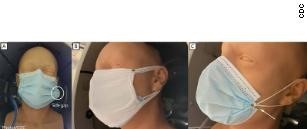
Another method of improving the fit of a medical mask they tested, was to tie a knot in the ear loop close to the fabric then tuck in the sides. This pulls the medical mask more into the shape of the N95 mask, greatly reducing gaps on the sides and around the nose. One study found this alone improved filtration to at least 77% of particles.

Cloth masks

Homemade cloth masks were the first alternative suggested to medical masks that were difficult to find a year ago. The initial recommendation was to make one from 2 layers of tightly woven cotton fabric or heavy t-shirt material but, with research, that was upgraded to recommending 3 layers of different fabrics, ideally one of them being non-woven material. There are lots of patterns for sewn or folded masks (that don’t require sewing) on the internet and, of course, you can buy cloth masks anywhere now. I wish I’d known that I could have cut up a t-shirt for some protection on our trip home from Spain in March 2020! The CDC study found approximately 51% reduction in inhaled particles using a 3-layer cotton cloth mask, and this would very with the materials used.

One advantage of cloth masks is that they are washable, so you don’t have to worry about supply. Plus you can individualize them, adjusting the loops and shape if needed, so they fit your face snugly. You can even have fun with designs and colours—I love the “matching” look 🙂 and comical ones. However, the filtering capacity varies widely depending on the fabric used. When I sewed masks, I put a pocket for a filter on the inside so users could increase the filtration according to changing recommendations. Blue shop towels were one recommendation for a non-woven filter, and I used these in my masks until the most recent recommendation – double masking.

Double masking

I started noticing people on TV wearing two masks in late January. It turns out that this technique is based on the research by the CDC mentioned above. The fabric medical masks are made from filters well – the problem is leakage around the edges of the mask where gaps often occur because of the curves of the face. Woven cotton, especially when cut on the bias (diagonal), and knitted fabrics have some stretch and can mold to the face better than medical mask material.

As well, when a mask is sewn, it can be sized and shaped to fit over the nose and chin and tucks can be added wherever they are needed to fit the shape of the individual’s face. When I was sewing masks for family and friends last year, I was surprised that a mask that fit most faces would gap badly on others or just be so large it would slide off and not filter at all. Faces come in all sizes and shapes! I ended up making 3 different sizes for adults and added extra tucks for my hubby’s masks.

So the CDC looked at 2 options: placing a well-fitting cloth mask over a medical procedure mask and tying the ear loops to improve the fit. Both approaches significantly improved the filtration ability of the medical mask.

Combining 2 methods

They tested combinations of either 2 masks used together, or a medical mask tied and tucked as described (and shown in the photo above). Here are some numbers from their studies:

  • Doubled or tied mask with a simulated cough (exhalation) and unmasked reciever – 85.4% reduction in particles exhaled
  • Inhaling with doubled or tied mask, with an unmasked source – 82.2% reduction in particles inhaled
  • With both the source and receiver with doubled mask – cumulative reduction in exposure of 96.4%
  • With both the source and receiver using a tied mask – cumulative reduction of 95.9%

The study also commented on mask fitters (small, shaped devices worn over a medical mask to seal it to the face), and covering a medical mask with a stretchy, close-fitting fabric, like a length of pantyhose fabric or a “gator” necesita scarf. Both these techniques were found in two other studies to give similar results to double masking. Mask fitters are also referred to as a mask seal or brace, and are worn on top of a face covering to improve fit. You can buy these already made or make your own. Here are some videos and instructions. The last example, on slide 35, is the simplest to make and, if making for yourself, you can just knot the elastic to fit rather than using slide clamps, if you don’t have access to these.

Can you just layer 2 medical masks?

No. The CDC notes that layering 2 medical procedure masks does not give similar results, as this does not improve the fit. They also recommend choosing cloth masks with a nose wire to ensure a good fit over the nose.

So, you might want to consider using an N95 mask, now that they are more readily available, if someone in your household has COVID or if you are in some other higher-risk situation. However, using a medical mask with either a well-fitting cloth mask over it, tying the ear loops to improve the fit, or using a mask fitter will work very well in most situations you will encounter in public. Now that variants are spreading, it’s worthwhile to take that extra step to ensure good filtration and good fit for whatever mask you choose to use.

One last bit of COVID news…

As you know, I’m always reading quirky heath news. Here’s an interesting one for you. Flushing a toilet or urinal creates aerosols… and we know that those with COVID excrete the virus (they can actually detect whether anyone using the “facilities” in a building has it by doing a single test of its wastewater). So, the advice, if you need to use a public restroom, is to flush then get the heck out of there quickly. I’ll probably wear a mask in public washrooms from now on, even when COVID is long over with…

References:

More scientists now believe COVID-19 spreads primarily through the air — CTV News

Maximizing Fit for Cloth and Medical Procedure Masks to Improve Performance and Reduce SARS-CoV-2 Transmission and Exposure, 2021 – Centers for Disease Control and Prevention (CDC)

Double masking can block 92% of infectious particles, CDC says – CNN Health

What you need to know about face masks as protection against coronavirus – CNN

How to make a Badger Seal – University of Wisconsin-Madison

Don’t linger after you flush — CTV News

Categories
Uncategorized

How to criticize…

I’ve been a reviewer of educational programs for pharmacists for over 20 years and, somewhere along the way, I learned tips on how to critique a person’s writing. I think this advice can apply to any time we want to share an opinion on work someone has done or even on an opinion they’ve expressed, so I thought I’d pass it along. Too often, conflicting opinions are expressed rudely, especially on the internet where people feel anonymous. It makes me cringe, knowing there’s a human somewhere on the other side of the screen…

Expressing opinions

The way you express your opinion can either begin a stimulating discussion where both parties can learn something (even if it’s only what others think) or it can shut down the conversation and belittle the other person. And isn’t it conversation, learning and new ideas that make life interesting?

In conversation, it helps to acknowledge the other person’s opinion before expressing your own—perhaps by saying something like: “That’s an interesting take on the situation” or ” Now, that seems different from my experience”. You get the idea. We all have different points of view and experiences, and these colour how we judge events. We believe what we do for a reason. Acknowledging and trying to understand others’ opinions broadens our understanding of the experience, event or whatever is being discussed.

Churchill famously often used to begin with “I may be wrong, but…”, allowing him to more easily change his mind when he learned additional facts that warranted it. None of us can claim to know everything. We form our opinions on what we know, and it’s just smart to keep the door open to changing your mind after you’ve learned more.

On the internet, it’s much easier for some to become the bully when they don’t know the person who wrote the post. These are the ones we call trolls, although I expect they don’t see themselves that way. We need to remember there is a real person, a human with feelings, behind that text.

Helpful tips

So, the tips I was taught to follow, when doing a formal review of an educational program, besides following these thoughts, were to start the critique by pointing out what was good about the program, offer constructive criticism of what I felt could be improved, and to finish with something positive. You can almost always find something complimentary to say about a piece of writing or a passionate opinion (if only the commitment to an idea).

It was also recommended to make positive suggestions for improvement, rather than just criticize what was said. Offering an additional credible source of information to support your suggestion carries more weight than just you saying it. I often add a link to a recognized website with authority on the subject to support my suggestions.

In conversation with a person who believes facts we know are incorrect according to current science, for example, in the debates over vaccines and masks, pointing out that they are incorrect won’t help change their mind. First, it is recommended to try to understand why they believe what they do. People who are fearful, may want to deny that the pandemic is real to reduce their fear; someone whose child has had a bad reaction could understandably believe that all vaccines are dangerous. Simply commanding a person to “Take your medicine” without understanding why they are hesitant, answering their questions and gaining their trust, rarely results in increased compliance to taking medication. I learned this and more in a 10-hour program on how to counsel patients effectively.

Sadly, on the internet where it’s difficult to build real relationships and many feel they are almost anonymous, there are too many people who feel justified in creaming someone because they have a different opinion. I see this all too often on a Pharmacy website I follow. It surprises me that nice polite Canadians can sometimes be so mean to their colleagues. Fortunately, they’ve not done it to me yet (I write articles for the site from time to time), but I have experienced this on FaceBook. I just keep being nice and point out where my facts came from (I don’t just make stuff up!!).

And after you’ve been trolled?

So, here’s a suggestion for when you run into someone who hasn’t learned to be kind when they have a critique of your work or have a different opinion than you. Keep a little file, folder or book with complementary comments and praise you’ve received, cards you’ve received that say what a great friend you’ve been, thank you’s for something kind you’ve done.

Either ignore or respond to the critique in a calm, polite way, depending on the comment and venue then, later, browse through the wonderful feedback you’ve received in the past to remind yourself that not everyone is a troll.

Over the years, I’ve received many cards and thank-you notes from happy clients and I still have them—they’re shown in the photos above and below. It raises my spirits to look through them from time to time…

Thank-you’s for some pet medicines I made over the years…

#VaccineDebate #InternetTrolls

Categories
Uncategorized

Why do we get “addicted” to coffee?

Have you ever wondered why we crave caffeine or nicotine when we consume them regularly? Or why, after a while, all we’re doing is satisfying the craving? And why we don’t feel so good without our drug of choice after we’ve adapted to it? It’s all about what happens when these substances attach to receptors on the surfaces of cells in our bodies…

Many drugs work by attaching to a receptor on the surface of a cell—we can think of receptors as tiny “locks” throughout our bodies, each one with its specific shape, waiting for the substance (its “key”) to come along, attach, and turn the receptor on. This creates an action inside the cell, like caffeine giving us energy, or nicotine relaxing us. When the effect is pleasant, or helps us feel better, sometimes we keep consuming these “keys”, like caffeine, nicotine, alcohol or even narcotics, trying to keep the effect going.

However, your body always tries to keep things on an even keel. We call this “homeostasis”. So, if you keep lots of your drug of choice in your system, eventually your cells make more receptors for the drug. This results in you just feeling your ordinary self when the substance is in your system. This is known as “developing tolerance” to the drug.

Of course, it’s a bit more complicated than this, with other substances often attaching to the same receptor, creating competition and sometimes providing different actions, but you get the idea. It depends on which key gets into the lock and whether it turns it on.

But if you don’t consume a favourite drug you use daily, after a little while you’ll have lots of empty receptors looking for the “keys” they’re used to having. This can cause you to feel not-so-great. With caffeine, you may have a headache and feel sluggish; with nicotine you may become irritable, feel anxious, or have insomnia.

You start to crave the drug because you know it will make you feel better but, really, once you’ve developed tolerance to the drug, all it will do is make you feel like your regular self. That’s why people will sometimes gradually increase the amount of drug they use, as they try to get the same drug effect that they used to experience.

This lock-and-key concept applies to many substances, from hormones to some medications you take. Even drugs like Tylenol and Advil can eventually cause headaches if taken daily, then suddenly stopped. We call this “medication induced headache” and it happens because your body has adapted to having the medication there all the time.

Without the substance around for a period of time, cells gradually return to making fewer receptors again and the cravings will stop. Some receptors, like those for opiates and nicotine, take longer to return to normal numbers, making these drugs harder to quit. Caffeine receptors seem to return to normal amounts in 3 or 4 days when you quit coffee, and cravings and withdrawal are much less of a problem if you taper your coffee intake gradually.

This week I came across the cutest explanation of how all this works by David B. Clear (a scientist/blogger/cartoonist who lives an idyllic life on an island in the Mediterranean). He uses caffeine as an example. Since I’ve had an extra-busy week, I’m just going to share it with you. He’s also much funnier than I am and even uses cartoons to explain how caffeine works and why we crave it so much. I don’t know about you, but making coffee is the first thing I do when my feet hit the floor in the morning! I’ve always thought it was the taste I was craving… but I very likely have lots of extra caffeine receptors waving around in my brain!

Anyway, here’s the link… hope you enjoy this fun science-y explanation of how caffeine works and why we crave it!

https://medium.com/i-wanna-know/how-caffeine-works-26f7bf813b94

#caffeine #coffeeaddiction #caffeinewithdrawal

Categories
Uncategorized

Can Adults Have ADHD?

ADHD or Attention Deficit/Hyperactivity Disorder, is a neurodevelopmental (or brain development) condition that is quite common in children. Five to ten percent of school-aged children in the US (depending on the source you read) are reported to have been diagnosed with it. But can adults have the condition too?

What is ADHD?

There is no single laboratory test to diagnose ADHD. It’s diagnosed by analyzing symptoms and problems the person has, such as:

  • Lack of attention and focus, daydreaming
  • Hyperactivity, always fidgeting or moving
  • Being impulsive
  • Difficulty controlling emotions
  • Self-focused behaviour: interrupting others, trouble waiting their turn
  • Poor organization and time management skills
  • Forgetfulness
  • Problems finishing a task
  • Difficulty following instructions

While all children show these traits at times, children with ADHD do this more regularly and the behaviours can affect success in school and interactions with other children. The diagnosis of ADHD is a process with several steps. The doctor will want to make sure it isn’t another problem with similar symptoms, like a sleep disorder, anxiety, depression, or a learning disability. They may want to talk to teachers, parents and others who care for the child to assess behaviour in different situations. Sometimes, if it is felt that medication would be beneficial, a trial will be done to assess how well a particular medication works before starting a regular prescription. Regular drug holidays are recommended to ensure it is still needed.

There are 3 types of ADHD: predominantly inattentive, predominantly hyperactive-impulsive, and a combination of the two. Symptoms can change over time, as the person ages and, while males are more often active, females tend to be the inattentive type that is less often diagnosed.

And, yes, the condition can continue into adulthood. However, adults are less likely to be diagnosed and the symptoms can be different.

Symptoms in adults

While many of the symptoms of ADHD in adults are similar to those in children, adults often exhibit restlessness and inattention, rather than overt hyperactivity. Fidgeting can continue for adults, as well as impulsivity.

As adults, those with ADHD can still tend to get distracted easily and misplace things. They might lose their temper quickly, be more irritable and impatient than others, and interrupt other people who are speaking. They may also have more difficulty than most in following instructions. Adults with ADHD could find dealing with stress to be a challenge. At work, they may miss deadlines and have difficulty staying seated, succeeding better at a job where they can move around.

But many adults have learned adaptations to control their symptoms and to turn what can be a problem in childhood into an advantage as an adult. A job that requires lots of energy might be perfect for someone with ADHD. Having an ADHD mind that likes to think “out of the box” can be an advantage for work that requires innovation and creativity. Smartphones are an ideal tool to keep on schedule and ensure important tasks are not forgotten.

Some years ago, my husband and I were watching a program on TV about adult ADHD. At the end of the documentary, we looked at each other with the same thought: my hubby had ADHD. But he has turned it into an advantage. He’s always had plenty of energy to keep up with the middle school students he taught and innovative ideas to make their curriculum interesting. Understandably, his most disliked part of the job was sitting in staff meetings. I think his favourite invention is the sticky note and he’s used them well for years to keep organized and remember tasks that needed to be done—a great adaptation strategy.

My friends have always been jealous of me with my “hyperactive hubby”… He always been energetic and looking for projects to do around the house. I’d come up with an idea for a home improvement and, next thing I’d know, it was done!

What’s the cause?

The cause of ADHD is generally thought to be genetic—it tends to run in families—or a result of how the brain developed, perhaps influenced by something like nutrition or smoking/alcohol use during pregnancy. But there has been some suggestion it could be due to (or worsened) by pesticides or food additives and colouring agents—chemicals in our food. Some parents report improvement in their child’s symptoms by changing to whole, unprocessed food in the diet. As this is a healthy change, it’s worth trying.

Research has not shown ADHD to be caused by too much sugar in the diet, watching TV or playing video games excessively, poverty or poor parenting. However, these factors could potentially worsen ADHD symptoms.

But there are medications to control symptoms and increase the person’s ability to succeed in a setting that requires sitting still and paying attention, like school. Unfortunately, most schools are not geared to teaching children who don’t fit “in the box” of sitting at desks in rows in a classroom, making it more difficult for a very active child to be successful and harder for the teacher to cope.

However, learning coping strategies to compensate for negative symptoms, while choosing activities and careers that take advantage of the positive aspects of ADHD can help a person succeed and thrive because of their differences. Coping strategies should be part of any treatment that is considered necessary.

One positive characteristic of some with ADHD is the ability to change. My hubby actually loves new situations and thrives in new challenges. In these days of rapid change, this can be a distinct advantage. Albert Einstein is quoted as saying: “The measure of intelligence is the ability to change” and, although politicians are often criticized for changing their minds, Churchill is reported to have said “Those who never change their minds, never change anything.”

We all need to use whatever traits we have to our best advantage. And we need to work to develop schools and workplaces that compensate for behaviours that can be less successful while developing each person’s strengths. It’s important to recognize ADHD, in adults as well as children, to help them achieve the success they deserve in today’s world.

#ADHD #AttentionDeficit

References:

Attention-Deficit/Hyperactivity Disorder (ADHD) – Centers for Disease Control and Prevention (CDC)

What to know about untreated ADHD in adults – Medical News Today

14 Signs of Attention Deficit Hyperactivity Disorder (ADHD) – Healthline

Causes of and Risk Factors for ADHD—Healthline

Categories
Uncategorized

Ecotherapy: the Park Prescription

When you were a kid, did your Mom just tell you to “Go outside and play” like mine did? Turns out, she wasn’t just getting you out of her hair. She was doing something that was good for your health, something more than encouraging you to get some exercise. And now, doctors are doing the same, even for us grownups. Some are now writing prescriptions instructing their patients to spend a specific amount of time outdoors, in nature, each week.

Ecotherapy

It turns out that there are many heath benefits to spending time, not just outdoors, but in a natural setting. Ecotherapy is a newer scientific field that studies the effects of natural settings on our health. Studies comparing brain activity of healthy people after a 90 minute walk in nature, as compared to a similar walk in an urban setting, have shown reduced stress, anxiety and depression. They also found decreased repetitive thoughts, lower blood pressure and decreased levels of the stress hormone, cortisol, that raises blood pressure and cholesterol, causes inflammation and has other detrimental effects when it is elevated too long.

Benefits were noted after about 20 minutes, so each session in natural surroundings is recommended to be at least this long.

What are the benefits?

Exercise

First, there’s the most obvious: exercise. Many of us do something active while we’re outside and away from our entertaining screens. I’m sure you already know the benefits of exercise in improving health and reducing risk of many diseases from heart disease and cancer to the risk of falling, with a long list between these two, not to mention maintaining healthy bones and muscles.

Exercise is important for all ages and levels of fitness. I remember seeing an elderly woman in Spain, walking on the Paseo Maritimo with her walker, enjoying the sunshine and view of the Mediterranean in spite of her level of disability. Even a small amount of movement can maintain or improve your capacity for exercise and ability to function.

Mental health

You might be less aware of the mental health benefits of being outdoors, even if you’re just relaxing on a park bench. Appreciating nature’s beauty distracts us from our worries and even improves depression and anxiety. It’s just plain good for your mental health. I’ve found that a walk on the beach near my home, regardless of the weather, always makes me feel better when I’m upset about something. It even helps make a good mood better than ever!

Interestingly, even bringing the sounds of outdoors to those who cannot get outside is reported to make a difference in brain activity, directing attention outward, distracting focus from worrying about problems. Looking at pictures of nature, especially a favourite spot or a place you’d like to visit, is also helpful in distracting from inward-directed focus that occurs during anxiety, post-traumatic stress disorder and depression.

Immune system

But you may not realize that, when you’re outside in a natural setting, you also expose yourself to a variety of healthy microbes that are different from what are in your home, just by breathing. Some call this “forest bathing” but healthy microbiota exist in any park or garden with plants and trees, not just in large forests. Perhaps a better term is “nature bathing”, immersing yourself in nature.

Spending time outside in various natural settings increases the variety of microbes in our bodies, along with the exposure we choose when eating various fermented foods that contain microbes, like certain cheeses (cheddar, gouda, and mozzarella), yoghurt, kefir, miso, and fermented vegetables or pickles made without vinegar. Microbes we inhale eventually are swallowed and added to the mix. Scientists now recognize that the digestive system is much more than just a way to get nutrients into our bodies. The types and balance of bacteria, fungi and viruses living there (collectively called the microbiome) produce nutrients for us, influence our immune systems and even communicate with our brains.

And we can’t forget about COVID…

These days we have even more reason to spend time outdoors. We’ve learned that improved ventilation and maintaining space from others are important factors in reducing spread of viruses and being outside in fresh air provides ideal ventilation and plenty of space to spread out while still enjoying the company of others. Of course, it will still be a while until crowded venues, like outdoor concerts, are recommended but we’re seeing higher numbers allowed for outdoor activities than for indoor ones because of the infinite “air exchange” nature provides, the natural movement of air that carries away those nasty viruses, if any happen to be present.

So, don’t be surprised if the first prescription your doctor gives for a milder health complaint is a “Park Prescription” with instructions to spend a couple of hours a week at your local park or even just 20 minutes 3 times a week. In fact, the benefits of a Park Prescription could be expected to add to any other treatment you may need to use. If you have other health conditions, your doctor may also have additional advice or cautions as you start your “prescription”.

This is a world-wide movement inspired by Healthy Parks Healthy People, an initiative of the National Park Service in the UK and being promoted in Canada by Park Prescriptions, A Prescription for Nature.

You can read more about it below, but why wait for your doctor to tell you to get outside and enjoy nature? After over a year of COVID restrictions we all have at least a little COVID fatigue… the “COVID-osis” I wrote about a couple of weeks ago. Isn’t it great to know that just going outside and absorbing a little nature can get us on the road to a cure!

Note: The above photo is of a little creek flowing into the Saint John River (in the background), on a walking trail near the Princess Margaret Bridge in Fredericton.

#mentalhealth #forestbathing #NaturePrescription

References:

Health benefits of nature—Healthy by nature

PaRX– A Prescription for Nature

11 Probiotic Foods That Are Super Healthy—Healthline

Healthy Parks Healthy People—National Park Service

Sour mood getting you down? Get back to nature—Harvard Health Publishing

Spending time in nature helps mental health—CBC News

Categories
Uncategorized

Seasonal time change-Love it or hate it?

This year I voted for the first time ever in a TV News poll. The question was: should we continue to change clocks in this spring and fall? I voted no!

Why vote no?

Changing our clocks often creates confusion. Not all countries change at the same time and some areas don’t change at all now. It doesn’t take much imagination to understand the confusion this must create for travellers, airlines, distance meetings on the Internet, and showing up for church on time on that first Sunday.

For example, I always assumed that all countries changed their clocks at the same time. How else could international travellers and transportation systems manage during that week? We jokingly chastised a friend for arriving an hour late at our meeting place while staying in France, presuming she’d forgotten to change her clock. Later we realized Canada changes a week before Europe does and, of course, we were following Canadian news. I had wondered why my phone hadn’t changed the hour automatically… turns out it was smarter than we were!

But time change can also affect health and how well you sleep while your body adjusts its daily cycles by that hour. Animals, plants, and even microbes have these daily cycles as well as humans. They are part of the biological clock which controls cycles of various lengths, some of which are longer than a day, like women’s menstrual cycles. The daily cycles are called circadian rhythms, from the Latin term “cerca diem” which means “around a day”.

Each of us has our own ”chronotype”, or individualized daily rhythm. Some of us are “early birds”, others are “night owls”, and these tendencies often run in families. But our rhythms are also affected by factors outside the body, especially light, including artificial light from our home lighting and devices. Getting more or less sleep than usual, changing time zones, and working a night shift can affect circadian rhythms. Hormone changes like menopause and the menstrual cycle can also have an influence. And aging can change your circadian rhythms too—our chronotype is often different in later life than it was when we were teenagers, sliding us more toward the “early bird” type, quite different from the teenage “night owls” who love to sleep in.

Your body has its own clock… located in the brain

Biological rhythms are controlled by a cluster of neurons (nerve cells) called the SCN (superchiasmatic nucleus) located in the hypothalamus section of the brain. It’s located behind the eyes, it’s very sensitive to light, and it receives direct nerve input from the eyes.

The SCN sends signals throughout the body to regulate many activities. It cues systems like digestion to produce digestive enzymes at mealtimes, and the endocrine system to produce hormones that wake us and help us go to sleep. The sleep/wake cycle is one of the most well-known circadian rhythms. Those who are completely blind and keep their eyes closed during the day, can reduce the amount of light falling on the back of the eyes enough to disrupt their day/night cycle. I had a young client who was blind that used a drowsy-causing antihistamine to help correct his sleep/wake cycle because of this many years ago.

Circadian rhythms can also affect metabolism and weight gain by regulating blood sugar and cholesterol production. They can control how sharply your brain focuses and can affect risk of mental health problems like depression, bipolar disorder, and dementia. The immune system is also influenced, impacting DNA repair and our natural systems of cancer prevention.

What can time change do?

Arbitrarily changing the time with the season means all these automatic functions need to shift by an hour. We know that travel across several time zones requires a major shift of circadian rhythm, with the well-known fatigue we call “jet lag”. But even 1 hour can leave us tired and not functioning our best for a few days while we adjust to the sudden change, rather than experiencing the gradual change of the seasons.

Circadian disruptions, even of only 1 hour, have been shown to result in serious sleeping problems – struggling to fall asleep, waking during the night, and being unable to sleep as long as you want in the morning. Disruptions are also suggested as potentially contributing to obstructive sleep apnea, where breathing stops briefly, disrupting sleep and decreasing oxygen levels.

Timing of drug administration in relation to circadian rhythms may influence drug effectiveness too. Chronobiology, the study of the effect of the circadian rhythm on our biology, is part of a current area of research into personalization of medicine along with other factors that affect an individual’s response to medication.

What can you do to help stabilize your circadian rhythm?

Going to bed and getting up at the same time each day helps to keep the circadian rhythm on an even keel. Using less bright lighting after sundown, and especially reducing blue light that the SCN is most sensitive to, can reduce the effect on your circadian rhythm and your sleep. Most devices have a dimmer for the screen and some now have built-in filters for blue light, the colour of light that seems to affect the SCN most.

Why do we change the clocks anyway?

Originally clocks were changed to provide more daylight hours for farmers and the “war effort”, while keeping sunrise earlier during shorter winter days. But is this still needed with mechanization of farming and the peace time we now enjoy? Or is it just a habit or tradition? Several jurisdictions have already fixed their clocks and more are considering it.

Why did I vote to freeze clocks?

I voted we should stay permanently with Daylight Savings Time in that CTV opinion poll, mainly because of the unnecessary confusion created by the shift and the lack of a good reason to continue the tradition. But this year I noticed it took me longer to adapt to the change. It’s Thursday as I write this and last night was my first good night’s sleep this week. It’s taken me four days to adapt my internal clock to the 1 hour shift last Sunday. So negative health effects are another reason to stop seasonal time adjustments. I was happy to see that the majority in the poll voted to stay in Daylight Savings Time permanently too!

So, how did you make out this week? Did you find yourself a little draggy in the morning? Any trouble falling or staying asleep? I’m curious… Shall we do our own little poll? Are you in favour of eliminating the twice yearly time change? Vote below!

References:

What to know about circadian rhythm—Medical News Today https://www.medicalnewstoday.com/articles/circadian-rhythms?utm_source=Sailthru%20Email&utm_medium=Email&utm_campaign=MNT%20Daily%20News&utm_content=2021-01-12&utm_country=&utm_hcp=&apid=30707099

Circadian Rhythm—Sleep Foundation https://www.sleepfoundation.org/circadian-rhythm

Circadian Rhythms—NIH National Institute of General Medical Sciences https://www.nigms.nih.gov/education/fact-sheets/Pages/circadian-rhythms.aspx

Get in Touch With Your CircadianRhythm—WebMD https://www.webmd.com/sleep-disorders/find-circadian-rhythm#1

#sleepbetter #circadianrhythm #seasonaltimechange

Categories
Uncategorized

Neti pots: salt, steroids, baby shampoo?

People have used saline rinses for the nose and mouth for centuries, and doctors still recommend them for minor infections and pain. Rinsing helps to wash away bacteria and viruses and inactivates some of them, giving our immune system a better chance to overcome the invaders. But what’s the best solution to use?

Chronic sinus problems…

When I first went to my doctor with a sinus problem that wouldn’t go away, she suggested trying a neti pot rinse with saline 3 times a day as a first treatment. While it helped clear away some of the excess mucous that was clogging my breathing, the relief was very temporary. I progressed to steroid nasal sprays that, again, gave only short-lived improvement and subsequently to an Ear, Nose and Throat specialist who gave me more steroids in a higher dose, this time in a form designed for inhalation but mixed with saline and used with a neti pot. You may remember the blog I wrote about the vertigo and tinnitus that developed after just three weeks on that regimen. On hindsight, it may have been because I used it at bedtime, thinking I would sleep better if I could breathe through my nose. Some of the solution probably stayed in my sinuses longer that it should have because I was laying down, increasing my exposure to the drug and worsening the side effects.

Through all this, I couldn’t help thinking that there must be bacteria or yeast that were the underlying problem but weren’t being addressed. My sinus problems had started right after a nasty chest infection–why would parents bring their terribly sick, coughing child into the pharmacy, infecting others, while waiting for his prescription to be filled?? We know now that masks are an excellent tool for preventing spread of infections–we should continue using them when we are ill even after the pandemic is under control. Sorry for the rant…

It took 2 courses of different antibiotics to clear my chest infection and I suspected it was a resistant organism that was at the root of my chronic sinusitis. However, I was told that we couldn’t do a culture of the sinuses to see what was going on. It was frustrating to be treating only symptoms and not the cause. Especially after my reaction to high dose nasal steroids, I didn’t relish using them for the rest of my life and worried I might eventually lose my hearing (a year later, I still have tinnitus in one ear…)

Adding baby shampoo…

So, it goes without saying that I read everything I come across about the nose and sinuses. And, a few weeks ago, I found an article about using baby shampoo in a neti pot for chronic sinusitis. Baby shampoo? Yes, but well diluted, of course, down to 1%, or one ml in 100 ml of saline. Normal saline, a solution of salt in water that is the same saltiness as tears and other body solutions, is used rather than plain water, as it is much less irritating to the sensitive lining of the nose. The writer described getting significant relief from his chronic sinusitis of many years, when nothing else had helped, by using soapy water as a nasal rinse.

Of course, I dug further into the science. Shampoos and other soaps contain surfactants, chemicals that break up surface tension, allowing oil and water to mix, and (as we all know in these days of COVID) they actually kill many infectious organisms. Some bacteria produce a “biofilm”, a film that protects them against our immune systems’ advances, making them more resistant. The surfactants in shampoo help to break up these films, allowing the immune system to do its thing more effectively. Baby shampoo is gentler than many other soaps, being designed for babies, so is chosen because it will cause less irritation in the sensitive lining of the nose.

I couldn’t wait to try it… in fact, I tried some liquid hand soap I had on hand but it was quite irritating. I don’t recommend this! But the baby shampoo didn’t irritate my nose, although I read some people do complain of this. Reducing to 0.5% might solve the problem if you experience irritation, but it might not work as well.

However, this has been a game-changer for me! I no longer have to take decongestants or steroid spray every day. In fact, I can’t remember the last time I used either. And, once the congestion was under control, I found I didn’t need to use the 1% shampoo in saline rinse every day. However, it’s safe to use daily if needed. I find that using a nasal rinse with 1% baby shampoo 2 or 3 times a week keeps everything under control for me.

So, here’s how I do it:

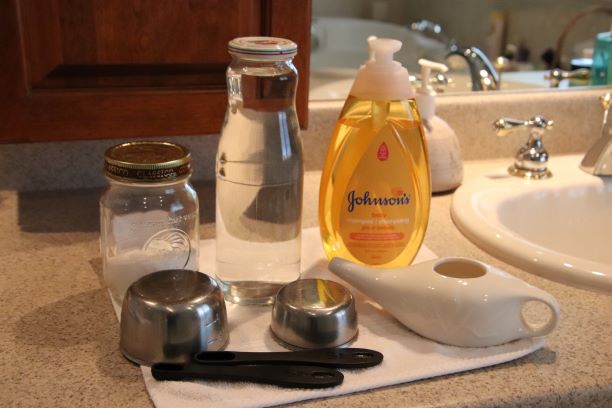
  • I use 2 measuring cups (1 cup and ½ cup), measuring spoons (1/2 and 1/4 tsp), non-iodized salt, baking soda, and baby shampoo (preferably unscented). I find the shampoo bottle with pump attached is really convenient.
  • I boil tap water and let it cool, but you can also use distilled water. Boiling kills any organisms that might be in the water and evaporates chlorine that is usually added to city water supplies. I do a kettle full, pour it into a glass jar while still hot, and store it in in my washroom with the rest of my equipment.
  • Mix up some salt and baking soda–I mix 1 tablespoonful of baking soda with 1 cup of sea salt. They recommend avoiding iodized salt, as the iodine can be irritating. Note that proportions of salt and baking soda vary in different recipes, up to half and half, but I find the mixture above works fine.
  • To prepare the solution, I use 2.5ml (1/2 tsp) of the salt mixture in 250ml (1 cup) of water and stir well until dissolved. Some recommend warming the water to body temperature, but I find room temperature is fine (and simpler!)
  • I pour half the solution into a 125 ml (1/2 cup) measuring cup, then add 1.25 ml (1/4 tsp) of baby shampoo to the remaining ½ cup and stir well. It takes a couple of minutes of stirring for the shampoo to mix in thoroughly.
  • I do a rinse with the soap solution first, then usually do a few other things, like rinsing off the equipment I’ve used and brushing my teeth (letting my sinuses “soak”, so to speak), then I rinse the soapy solution out of my nose with the remaining non-soapy saline solution.
  • Make sure your equipment is thoroughly cleaned after each use. I rinse everything with hot tap water immediately after using then let air dry, and I spray with alcohol then let dry after every 2 or 3 uses. You can also just put the equipment in the dishwasher to clean everything well.
  • And here is a video of how to actually do the neti pot rinse.

What about COVID-19? Can nasal rinses help?

Of course, in these days of the coronavirus pandemic, many are wondering whether nasal rinses can prevent or treat COVID-19. While it is unlikely that it could be a cure, studies have shown that saline rinses can reduce viral shedding in ordinary coronavirus infections like the common cold, making the infection less likely to spread to others. Adding a surfactant, like baby shampoo, would be expected to have a better chance to neutralize the coronavirus as it is an enveloped virus (surfactants can disrupt virus coatings, as they do when we wash our hands properly). Studies on the effects of nasal rinses on COVID-19 are ongoing (so no conclusions yet), but it’s interesting that we do know the spread of influenza and common colds could be reduced somewhat, along with congestion symptoms, by using a nasal rinse with baby shampoo when infected. So, while it’s not likely to be a cure, using nasal rinses when infected may be able to reduce the risk of spreading the novel coronavirus.

Of course, wearing a mask is almost certainly far superior at preventing infection than trying to rinse the virus away could be. Once the virus has entered the nasal passages, rinsing could only be expected to temporarily reduce the virus count, even if effective, so we want to prevent it from getting into our bodies through proper use of masks and physical distancing from others.

Sore throats and minor mouth infections

Saline solution (without shampoo!) can also be used as a gargle for minor sore throat or sore mouth (such as a canker sore). It is less important to use purified water and normal saline, as the lining of the mouth is not as sensitive as the nose. I like to use lots of salt and warm tap water so it will dissolve faster when using as a gargle or mouth rinse.

My hubby swears by using salt for a sore throat or mouth sores (something he’s done since he was a child), and he’s right—it really works quite well to relieve soreness and speed healing. Of course, if the pain is severe or you don’t get relief from milder pain within a couple of days, see your doctor. You may have a more serious infection. Although the solution is safe, it is recommended not to swallow it, especially if you have high blood pressure, as salt can increase pressure in some people.

So, have you tried saline rinses or gargles? Is it a family tradition? I’m wondering how many know about and use this simple at-home treatment…

References:

Impact of Nasal Saline Irrigations on Viral Load in Patients With COVID-19—U.S. National Library of Medicine https://clinicaltrials.gov/ct2/show/NCT04347538

No, Mouthwashes and Nasal Rinses Aren’t Cures for COVID-19—Healthline https://www.healthline.com/health-news/no-mouthwash-and-nasal-rinses-arent-cures-for-covid-19?c=197157373360

Baby shampoo nasal irrigations for the symptomatic post-functional endoscopic sinus surgery patient—American Journal of Rhinology http://www.neilmed.com/articles/babyshampoo.pdf

What to know about gargling with salt water—Medical News Today A guide to salt water gargles: Sore throat, other conditions, and recipe (medicalnewstoday.com)

#netipot #sinusrinse