Categories
Uncategorized

Breast cancer… sometimes misunderstood!

Since October is Breast Cancer Awareness Month, I thought I’d dedicate a blog to this terrible disease that affects 1 in 8 women in North America, not to mention the impact it has on their families and those they love.

So here are some myths about breast cancer, and what the experts say about them…

Myth #1

A breast injury can cause breast cancer. Although a breast injury can sometimes cause changes in the breast tissue that might mimic the look of a cancer in a mammogram, it cannot cause cancer. But just to be sure, your doctor may want to do a needle biopsy, removing a small amount of breast tissue with a needle and syringe to examine in a lab, if an area looks different than usual due to a previous injury.

Myth #2

Underwire bras increase the risk of breast cancer. The wires do not cause cancer, but they can irritate the skin under the breasts, causing it to break down. Irritated skin is less resistant to bacteria and fungi which could cause an infection or abscess in the breast. Also non-wired bras are more comfy!!

Myth #3

IVF increases the risk of breast cancer. In vitro fertilization (IVF) involves the use of estrogen-like drugs to stimulate the ovaries to produce eggs. This led some experts to wonder whether the treatment could increase the risk of hormone-sensitive cancer cells developing, or at least speed the growth of any of this type of cancerous cells that might be forming. Although no studies have specifically been done to confirm this doesn’t happen, one trial compared the cancer risk of women who had had IVF with those who had not, and found no difference.

Myth #4

I won’t develop breast cancer because no-one in my family has had it. Most women who are diagnosed with breast cancer have no family history—only 5-10% of breast cancers are caused by a genetic mutation that was inherited. In fact, many diagnosed women have no known risk factors at all. Obviously, we’re missing something… (perhaps an environmental connection?) More research into the causes, please!!

Myth #5

Stress can cause breast cancer. While too much stress can certainly affect our health, there is evidence to show there is no association between stress and breast cancer. On the other hand, breast cancer most certainly causes stress! We can all benefit from learning effective ways of dealing with the stresses of modern life…

Myth #6

A healthy lifestyle eliminates breast cancer risk. A healthy lifestyle can reduce the risk of breast cancer, but it can’t eliminate it. Refer back to Myth #4… we need more research into the causes of breast cancer!

Myth #7

Breast cancer only occurs in older women. It is true that most cancers occur in older women. Age is a known risk factor—one we can’t do anything about. Screening mammograms are recommended only after age 50 in most countries, and after 40 in the US, as they are less accurate in younger women with more dense breast tissue. But about 5% of cancers are diagnosed in women under 40 years, typically in those with a strong family history of the cancer. It is recommended to watch for any unusual breast changes, like lumps, puckering of the skin or a nipple pulling inward (inverted nipple) and to see your doctor right away if any of these occur.

Myth #8

All breast lumps are cancerous. Actually, most new breast lumps are not cancer. A cyst (a pocket of liquid surrounded by a membrane) feels like a lump, and these are fairly common. However, always see your doctor right away for an evaluation if you notice a new lump or any other unusual breast change.

Myth #9

An abortion increases the risk of breast cancer. An abortion interrupts the normal hormone cycle of pregnancy (and pregnancy before age 30 is believed to reduce breast cancer risk), causing some to wonder whether it could increase the risk of a hormone dependent breast cancer. However, a large observational study in Denmark and several other smaller studies found no link between abortion and breast cancer.

Myth #10

Nipple piercings increase breast cancer risk. Piercings do not increase cancer risk, but they can lead to increased risk of infection, abscess, nerve damage, scars, cysts and difficulty breastfeeding (due to blocked ducts from scar tissue).

Myth #11

Sugar causes breast cancer. Refined sugar in excessive amounts is bad for our general health, but there is no evidence it directly causes breast cancer. I have read reports of research looking at very low sugar/high fat diets (an extreme form of the keto diet) to slow the growth of cancer cells in general, but the studies are not yet conclusive. Studies specifically looking at sugar and breast cancer have had “mixed and inconclusive” results, according to experts.

Myth #12

Men do not get breast cancer. Yes, they do! One in every 100 cases of breast cancer occurs in men. Men also should stay alert to any changes in the breast area, particularly as it can spread more quickly in males since they do not have as much breast tissue to contain it. As well, men are not screened for this cancer and tend to have less support when they are diagnosed with it.

Myth #13

Mammograms and biopsies can cause breast cancer to spread. The thinking here is that the squeezing and poking of a potential cancer could cause the cells to seed in another part of the breast. Some women also worry that the radiation of the mammogram could cause a cancer to begin. However, very low doses of radiation are used in current mammograms, and these are considered safe (although the operator, being there daily, needs to protective themselves from work-related exposure). No evidence has been found that these tests cause cancers to spread and they give valuable diagnostic and early-detection information that save many lives.

Myth #14

No lump means no cancer. Cancers that have formed “palpable” lumps (ones that can be felt with the fingers) have often been there, growing, for several years. The advantage of screening mammograms is that they can often detect a cancer before it is large enough to be palpable, greatly increasing the chance of a complete cure.

Myth #15

Anti-perspirants cause breast cancer. This myth started because many breast cancers occur in the upper outer area of the breast, the area closer to the armpit. However, very little if any of the ingredients in anti-perspirants are absorbed and there is no evidence that they would cause cancer if they were absorbed. At least one large well-conducted that compared breast cancer survivors with healthy women found no evidence of a problem with anti-perspirants or deodorants. The tiny grains of minerals left on the skin by antiperspirants do, however, show up on a mammogram, causing confusion for the radiologist interpreting the image. This is why they always insist that these products not be used on the day you are having a scan.

Myth #16

Carrying a phone in your bra can cause cancer. While most experts will say there is no evidence that cell phones cause any type of cancer, a few have reported case studies of unusual cancers that began in the same location where the woman carried her phone for several hours every day. Not proof of a cause, but one doctor was suspicious enough to publish a report after seeing several similar cases (which I linked to in my Sept 17th blog on environmental links to cancer). It might be a good idea to carry your phone in a purse or proper phone case, both to protect it and possibly also you! Cell phone manufacturers do recommend avoiding exposure of the phone to sweat, as the liquid could cause damage to the phone (as happened to my daughter, who no longer tucks hers into the waistband of her workout pants!)

So, there you go… less to worry about, right? I think the key in avoiding many diseases, including cancer, is to strive for as healthy a lifestyle as possible: eat well, exercise, limit alcohol to recommended amounts, and avoid exposure to nasty chemicals. And, since it’s Breast Cancer Awareness month, maybe make a little donation that might help researchers find the causes and cures for this disease that affects too many women…

References:

Medical Myths: 15 breast cancer misconceptions—Medical News Today

Antiperspirant Safety: Should You Sweat It?—WebMD

Categories
Uncategorized

Falling through the cracks…

Some patients have always fallen through the cracks of our medical system, with unnecessary delays in diagnosis. We’re all human… a significant symptom can be ignored or misinterpreted, or we can put off investigating the cause of a nagging problem that could suggest a serious condition. But during the COVID pandemic, the cracks in the system have become wider. With fewer in-person appointments, cancelled screening clinics and hesitation to seek treatment because of worry about virus exposure, experts are warning that diseases are likely being diagnosed later when they’re harder to treat.

They worry that because early-detection procedures like PAP tests, mammograms and the PSA test for prostate cancer are being postponed, we may see cases where the diseases these tests screen for are more advanced at diagnosis. This can sometimes mean more expensive treatment and worse outcomes because diseases are more likely to have spread when diagnosed. Just like a house fire, cancers and infections are best treated sooner before they have a chance to advance and spread.

It will take time for statistics to show how much of this is happening and to what extent the problem of decreased health screening is affecting our health and our chances of surviving health problems that are detected further along in the course of the disease. But, anecdotally at least, I’m seeing that this is happening.

Of course, for privacy reasons, I don’t want to describe the cases I’ve learned about amongst family and friends, but I can tell you my story. You may have noticed that I took a break from blogging this summer… but it wasn’t because I was having too much fun to write. The truth is, I haven’t been feeling well for the past several weeks. And I still don’t know the cause.

So, from my point of view, here are some of the “cracks” that it’s easy to fall through…

Crack #1: one thing at a time

In mid-May I noticed some abdominal discomfort—nothing too terrible. Then a week later a sudden severe pain sent me to Emergency… Crack #1 to avoid: try not to have 2 things going on at once (not that we really have that choice…). If you do, be sure to explain that there seem to be two unrelated things going on. Turned out I had a kidney stone (perhaps obvious from the level of pain…) but since they couldn’t see the stone on a CT scan it was diagnosed as a kidney infection. I spent the next 2 weeks on an antibiotic that made no difference. A later scan showed several smaller stones, confirming what I had suspected must be the cause at the time because the pain was so severe.

But in spite of visits with 4 doctors and a nurse practitioner, along with a series of tests, there’s still something else going on that hasn’t been diagnosed yet. At least I’ve progressed from phone appointments to in-person ones as my symptoms have gradually worsened.

Crack#2: describe symptoms clearly

I can see that the system is backed up, with longer delays than usual in getting appointments and results of tests. Crack #2: make sure the person on the phone understands your symptoms and how severe they are. Avoid the “Fine, thank you” automatic response when a health professional asks how you’re feeling—be truthful and accurate. Let them know how the symptoms are affecting your daily life.

Crack #3: know your receptionist

One important lesson I’ve learned is that the receptionist is the gatekeeper of the doctor’s time. While it may seem weird to be describing details of an illness over the phone to someone who isn’t a health professional, she is the person who decides how soon you need to be seen. So, heed Crack #3 and treat the receptionist like the important person that they are… describe what’s going on politely and carefully along with any frustration or desperation that you may be experiencing! And thank them profusely for helping you to be seen in a timely manner—it’s probably due to their actions. Usually, they’re the ones who manage the doctor’s schedule and often are the ones with the connections to the receptionists in the specialists’ offices.

Crack #4: communicate well

Crack #4 is about lack of communication. If you go to an after-hours clinic or emergency department, your doctor may or may not know about it afterward. Even if the Nurse Practitioner in your Family Doctor’s office sees you and documents her observations on your chart, your doctor may not see it until your next visit with them. Your family doctor should be the central hub of your healthcare and seeing them regularly, especially when you have a health issue, helps keep your care from various sites coordinated. Make sure they are well informed and aware of any care you receive outside their office. At least now we have electronic health records in most areas, so information about various treatments in different locations is accessible to everyone who is treating you and needs it. They just need to know it’s there and to look.

Crack#5: avoid vacations!

And Crack #5 is: don’t get sick during vacation (as if we have a choice!). Many doctors are not able to find locums to cover the office when they take vacation, leaving patients to rely on after-hours clinics and emergency departments. Even our local blood collection/lab sample drop off clinic, usually lined up daily to overcapacity, just closed up for a week to take a holiday. For many like me, we were left wondering where to go and this resulted in yet another extra week’s delay for me and many others in getting test results needed to help find a diagnosis.

My story…

So, where am I now? I just learned this week that my latest test, the one that should finally provide a diagnosis and the test I’ve waited 2 months to get, has a 2 to 3 month wait for results. I can’t believe it. I’m unbelievably frustrated that any lab could take 2 months to process a sample and that, as the receptionist told me, it could take an additional month in this age of electronic communication to send me a letter by snail mail with an appointment to hear the results. I think I cried on the phone in frustration. I’m hoping my newest favourite receptionist may be able to work some magic and expedite this process somewhat for me, the way the receptionist in my family doctor’s office was able to get me into the specialist more quickly. The words “possible carcinoma” on a June 30th test should have resulted in quick action but here I am, 2 months later, still waiting for a diagnosis. Whatever it is, I just want to know. It’s more than a little stressful and certainly not the norm in any medical system, including ours. Might be time to send an email to my local politician…

The bottom line

I guess, the bottom line is that we all need to be proactive about our health. Even in these days of the continuing pandemic, we still should insist that routine care and screening tests are completed in a timely manner. Vaccines and well-fitting masks are tools we have to make sure we stay safe from the virus while we do this. If you have unusual unexplained symptoms, insist that they be diagnosed. Keep asking for investigations until the problem is resolved. Remember that your family doctor is usually the most important healthcare professional to work with you and to coordinate and oversee your care.

So, if you’ve missed any screening tests in the past year and a half, now is the time to book an appointment. Just like a house fire, it makes a big difference if you catch it early. If something seems to be wrong with your health, check it out right away and keep pushing until you get an answer… that’s what I’m doing, even though it seems to be taking much longer than it should.

Categories
Uncategorized

Masks 4 All?

We are learning new information on COVID-19 every day. As much as we are saddened, stressed and fatigued with news of the virus, we do need to pay attention to the news because what we need to do—how we need to change our behaviour—is constantly changing.

The consensus on whether the public should wear masks is changing too. Various countries have taken a different approach to masks and researchers are noticing that masks for all is one of the strategies that successful countries, with the flattest curves on graphs of both cases and deaths, included masks along with physical distancing, washing hands, disinfecting surfaces regularly and staying home as much as possible.

The reasons given for not advising the public to wear masks when outside their homes include:

1. They have not been proven to be effective

2. They may encourage people to touch their faces to adjust the mask

3. Non-healthcare people don’t know how to put on and remove a mask properly

4. Masks need to be saved for healthcare workers, as there are not enough available for everyone (at least in North America)

In my opinion, reason #4 should be listed first…

There is no question that high-level masks should be reserved for those working directly with people who are infected. The N95 mask is designed to filter out 95% of particles from air the wearer is inhaling. This includes bacteria, viruses and fine mist that is generated during certain medical procedures. But simple, inexpensive, homemade cloth masks may be all the is needed by the general public.

The key function of masks worn by the public is to prevent people from exhaling bacteria and viruses when they talk or cough. It is known that some people have few or no symptoms of COVID-19 but can still unknowingly spread the disease. When you wear a mask to the grocery store or pharmacy, you are mainly protecting others, more than yourself. Wearing a mask doesn’t mean you don’t still have to wash your hands and avoid touching your face…it’s an extra measure of safety that is added onto what we are already doing to help protect others. Any of us could have the coronavirus but not realize we do because we do not have any symptoms. Because of the way they work, homemade cloth masks work best when everyone wears one.

Reason #1: not proven to be effective

So, are masks worn by the public effective? As medical policy makers have been saying, there is no proof they are…until now. Research in Asian countries and in Czechoslovakia, where rates of coronavirus spread are impressively low, is suggesting that their policy of masks for all is making a difference. Countries, like South Korea, Japan and Hong Kong where wearing a mask in public when you are sick is a custom, are among those with the lowest curves showing numbers of cases. As China opens up businesses and people there return to work, we will see a further test of masks combined with other strategies as the world watches whether a second wave of coronavirus can be prevented there.

Meanwhile, growing evidence of virus spread by people without symptoms is prompting the World Health Organization and governments to reconsider their policies stating that masks do not need to be worn by the public. Masks are recommended to be worn by those with symptoms that suggest COVID-19 infection, but it is beginning to seem likely that it is also being spread unknowingly by people with the virus who do not have a cough, sore throat or fever.

Reason #2: “may” encourage people to touch their faces

My first question is: do healthcare workers touch their faces more when wearing a mask or to they adapt to it quickly when told they must not do this? This, again, has not been proven to be a problem when wearing a mask and, in fact, I’ve read the opposite expert opinion elsewhere: that a mask stops a person from touching their face…it physically block you from doing this. The jury is certainly out on this one… Let’s just say that the rule of avoiding touching the face is still an important one and must be remembered whether you wear a mask or not.

Reason #3: lack of education about how to use a mask

A significant cause of infections of healthcare workers is improper removal of contaminate protective clothing. Remember that the purpose of Personal Protective Equipment (PPE) in hospitals is to create a layer that blocks viruses from reaching the worker. In the process, the outside of the equipment (including the mask) is very likely to be contaminated. The worker must learn to remove the equipment without touching the outside as this would expose them to viruses and bacteria.

But is this also an issue for people who wear a mask in public? The main purpose (as stated earlier) is to prevent the public from expelling droplets that may contain viruses when they talk or cough. This makes removal technique much less important than for those who are surrounded by viruses as they work with sick patients every day. But, just like learning to wash our hands properly, members of the public can learn to take precautions when removing their masks.

When removing your mask, it is best to handle it only by the straps or elastic, avoid touching the outside or inside and put it directly into hot soapy water (soap kills the coronavirus) or a mild bleach solution (1 part bleach to 9 parts water). Leaving it in a laundry basket can create risk of exposure for the person doing the laundry later, although generally viruses do not live more than a few hours on porous surfaces like cloth or paper. You could also put your masks into a laundry bag or pillowcase to enclose them until wash day. After removing your mask, you should wash your hands…but if you’ve just returned from an “outdoor adventure” (like shopping 😊) you should be washing your hands anyway.

The mask also needs to be put on properly for best effectiveness…it should fit as snugly as possible to maximize the filtering effect, including squeezing the metal clip or wire that is (hopefully) inserted in the edge positioned over the nose. The mask must be kept over both the nose and mouth to be effective, and we’ve all seen photos of people who have only covered their mouth with the mask or (heaven forbid!) dropped it below their chin to talk.

Remember that it is also possible to catch viruses through the eyes (although less common than through the mouth and nose), so wearing glasses to protect the eyes is also a good idea.

Reason #4: not enough masks to go around

We know that there are problems providing enough masks for our front-line healthcare workers who really need them. If everyone starts competing for the limited supply currently available, the problem will become worse. We cannot allow that to happen.

The earliest masks were a piece of fabric tied across the face, first used during the bubonic plague. Even these simple masks were reported to result in fewer infections in those that wore them. In areas of the US hardest hit, seamstresses and quilters have started making masks from cloth and many have posted patterns on the internet to encourage others. I saw a photo of homemade masks left hanging outside in Czechoslovakia for anyone needing one to freely help themselves.

The initial thought was that, even though these homemade masks are untested, it was better to have an untested one than nothing at all. But there have been preliminary tests that show this: a cloth mask does not filter as well as an N95 mask, but it does make a difference. Patterns that allow a filter to be inserted may provide even better protection. Paper towel is suggested as a simple filter that adds to the effectiveness while still allowing you to breathe easily. A double layer is more effective. And stay tuned as researchers look at what materials work best. We may need to use these for 12 to 18 months, until a vaccine is available.

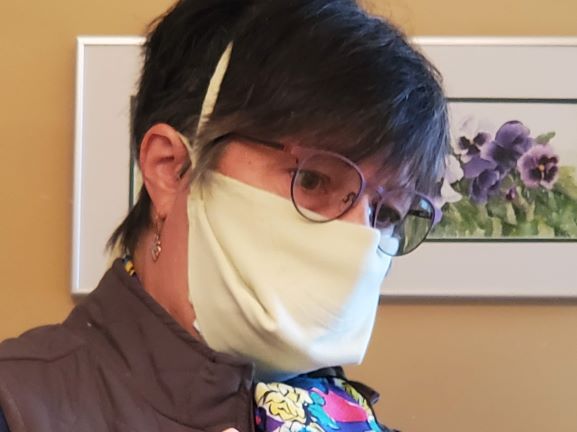
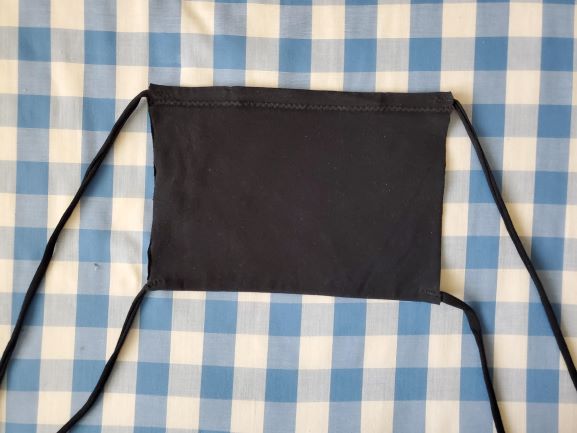
So, I made 27 masks this week. I distributed some of these to my friends, family and neighbours along with the pattern so they can make more. A double layer of cotton t-shirt fabric or tightly woven cotton are suggested as effective fabrics and the stretch allows a comfortable and snug fit without using darts or tucks, keeping the construction simple and quick. Five to six adult- and 2 child-sized masks can be made from one large adult cotton t-shirt. The sewing so limited the mask could be sewed by hand if you don’t have a sewing machine. I will post the pattern and instructions for use below. This design fits best if the top straps pass over the ears and the bottom straps are pulled up and fastened at the top of the head. Note that woven cotton, cut on the bias (diagonal) provides some stretch.

I plan to make as many as I can—although I may be limited by my t-shirt supply (any donations welcome!)—and I want to encourage others to wear them and make them too! Will you join me in the movement to slow the spread of COVID-19 by helping to make “masks 4 all”?

Slogan for the mask campaign in Czechoslovakia:

“My mask protects you. Your mask protects me.”

References:

WHO considers changing guidance on wearing face masks- The Guardian

CSC considering recommending general public wear face coverings in public—The Washington Post

Alternative fitted face mask pattern–Unity Point Health (made with t-shirt fabric or woven cotton)

Jeannie Beaudin’s Simple Mask Pattern (with filter pocket)

Made from a t-shirt, preferably 100% cotton, heavyweight

Sides are left open so a paper towel (folded in half) can be inserted as a filter for extra protection. One large short sleeve t-shirt makes 5 or 6 adult and 2 child size masks.

Cut across the t-shirt, 13 inches up from the hem. Turn inside out and cut away seams from the sides. Save to use as ties. Cut 9-inch strips, so you have 9 x 13 rectangles with one 9-inch edge already hemmed (from the bottom of the shirt). This edge will form the top of the mask.

You will be able to get 2 from the bottom front, 2 from the bottom back plus 1 to 2 from the upper section , depending on the size of the t-shirt. Sleeves can be made into child-size masks or ties if necessary.

Insert wire of some kind into the pocket formed by the t-shirt hem. Four-inch pieces of pipe cleaner, or 2 to 3 twist ties can be used. Center the wire then stitch across the pocket on each side of it to keep it centered.

Fold up the bottom so it just overlaps the hem stitching. Zigzag along the overlap or hand sew with hem stitch if you don’t have a machine.

The ones from the upper back won’t have a pre-hemmed edge. Fold this 9 x 13-inch rectangle in half. Stitch a ¼-inch seam across the 9-inch side. Place your wire on top of the seam allowance, and stitch in place with a wide zigzag stitch that jumps over the wire or hand-stitch in place. Turn right side out and press lightly.

Cut strips ½ to 1 inch wide from leftover fabric for ties. There will likely be enough in the lengthwise fabric since most t-shirts are more than 18 inches wide, but they can also be cut crossways from the upper part of the t-shirt or the sleeves. If you want to be “fancy” you can pull lengthwise on the strips so they curl, then stitch with a zigzag stitch to keep them folded in half.

Stitch securely to each corner of the mask. Can tuck the end of the strap between the layers before stitching.

Child mask is made the same way from the sleeve fabric or other leftover sections. Trim to width needed to reach from front of one ear to the other. Depth can be adjusted to reach from bridge of nose to under the chin when folded in half.

To wear:

Fold a piece of paper towel in half and insert into the mask through the side opening. One piece of multi-size towel works perfectly. Place the wire edge over the bridge of your nose. Pass the upper ties over your ears and tie snugly behind the head. Pull the lower ties up and tie near the crown of your head. Tuck the sides in under the ties that are pulled upward, making a neat little pocket. Squeeze the wire so it fits snugly over your nose (this will keep your breath from escaping and fogging your glasses!). Wear glasses for extra protection for your eyes!

To remove:

Try to hold the mask by the ties when you remove it (the front could be germy…). Remove the paper towel from the pocket through one of the side openings and discard immediately. Drop the mask into hot soapy water, swish/ soak for 5-10 mins so mask is well exposed to soap (soap kills viruses!), rinse, wring, roll in a towel to absorb excess moisture and hang to dry. Wash hands!

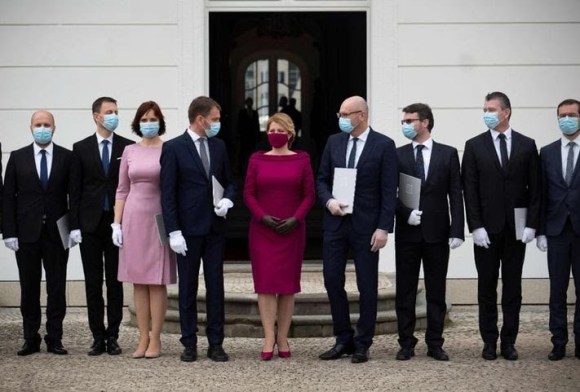
P.S. Won’t we all be stylish this spring! You could make lots of different colours to match your favourite outfits this summer!! …Just like the Prime Minister of Czechoslovakia 😊

#Masks4all #shouldwewearamask #howtomakeafacemask

Categories
Health

Coffee…for diabetes, Parkinson’s, liver and more?

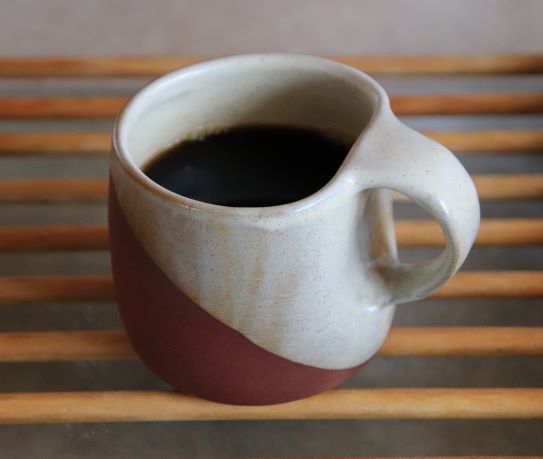
I love my morning coffee, so I “perk up” whenever I see a study that suggests this habit is a good thing! Are you a coffee lover too? Then read on…

Overall, coffee drinkers were found to have more health benefits than risks from their habit, compared to those who did not drink any coffee. The average daily intake in those who were studied was 3 to 4 cups per day compared to no coffee daily, although some studies looked at how health changed in the years after people increased or decreased their coffee intake by a cup or two.

5 Benefits of coffee

  1. Coffee and diabetes—a 2014 study followed over 123,000 people for 4 years. Those who increased their daily coffee intake by 1 cup per day had an 11% lower chance of developing Type 2 diabetes. Those who decreased their coffee consumption (by an average of 2 cups per day) had a 17% higher risk for Type 2 diabetes. Changes in tea drinking were not linked to diabetes risk.
  2. Coffee and Parkinson’s disease—Several studies suggest that caffeine, whether in coffee or other drinks, may help decrease risk of developing Parkinson’s. One analysis determined that men who drink 4 or more coffees per day may have 1/5 the risk of those who do not. Another study in 2012 suggests that the caffeine in coffee may help control movement in people with Parkinson’s. Another study in 2017, that found a link between coffee intake and Parkinson’s, also noted coffee drinkers may be less likely to develop depression and dementias like Alzheimer’s as well. However, there wasn’t evidence to show that drinking decaf coffee would help prevent Parkinson’s.
  3. Coffee and liver diseases—Researchers in Italy found that coffee decreases risk of liver cancer by about 40%. Their numbers suggest those who drink 3 cups a day may have 50% decreased risk of liver cancer. A different literature review in 2019 concluded that “coffee intake probably reduces the risk of liver cancer”. Another large analysis in 2017 found coffee also appeared to decrease risk of non-alcoholic fatty liver disease and cirrhosis, as well as liver cancer.
  4. Coffee and heart health—We often think negatively of coffee when it comes to heart health, since people are advised not to drink it just before measuring their blood pressure. But drinking coffee in moderation, two 8-ounce servings per day, may protect against heart failure (when the heart can’t pump enough blood to meet the body’s needs), according to a 2012 study. They found an 11% lower risk of heart failure in those who drank this moderate amount versus those who drank none. Another analysis in 2017 found that those who drank 4 to 6 cups of either caffeinated or decaf coffee daily appeared to have a lower risk of Metabolic Syndrome—in other words, they had lower blood pressure, lower blood cholesterol, and lower blood sugar—and this included a decreased occurrence of Type 2 diabetes.
  5. Overall health—An umbrella study in 2017, using combined data from 218 other analyses of studies, found coffee consumption seems generally safe within usual daily amounts. It showed the largest risk reduction in those who drank 3 to 4 cups daily and that coffee is more likely to benefit health than harm it. Mortality from any cause was reduced by 17% in these coffee drinkers.

An exception to the benefit of coffee is during pregnancy, when drinking more coffee could result in low birth weight of the baby (31% greater relative risk), increased risk of pregnancy loss (an increase of 46%) and increased chance of preterm birth (12-22%). Another exception is for women at risk of bone fractures (but not men for some reason…). Increased coffee was associated with an increased risk of breaking a bone only in women. Their recommendation was for women already at risk of a bone fracture to avoid coffee.

So, I guess I can happily continue my morning coffee—no risk of pregnancy for me and my risk of bone fracture is low! I usually enjoy 3 cups as I peruse the morning news and emails, and check Facebook for photos of what my wonderful granddaughters are up to! Hmmm…must be time for cup #3…

PLEASE NOTE: A little clarification on the numbers in this blog. The percentages in this article are “relative risk” numbers not overall risk. They compare risk with the factor to risk without it. For example, a relative risk increase of 50% could mean 10% without the risk factor have the condition compared to 15% with it…or 0.01 vs 0.015%. “Actual risk” numbers were not quoted in my references, only the percentage increase in risk.)

References:

Health benefits and risks of drinking coffee https://www.medicalnewstoday.com/articles/270202.php#benefits

Changes in coffee intake and subsequent risk of type 2 diabetes: three large cohorts of US men and women https://link.springer.com/article/10.1007%2Fs00125-014-3235-7

Coffee consumption and health: umbrella review of meta-analyses of multiple health outcomes https://www.ncbi.nlm.nih.gov/pmc/articles/PMC5696634/

#Coffee #Diabetes #Parkinsons #Liverdisease

Categories
Health

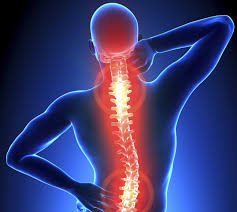
Back pain – Part 1

Problems with a sore back or neck? You’re not alone. It’s estimated that over 80% of people experience this pain some time in their lives. But how these problems are treated and what medications are used is changing…

Why?

First, many treatments in the past have resulted in high failure rates. Complete bed rest, disk replacements, steroid injections and spinal fusions have not delivered the success rates that were claimed and sometimes had nasty side effects. Some patients actually became worse instead of better…

Secondly, too many people are dying from overdoses of narcotics prescribed for pain – nearly 4,000 in Canada last year – and it’s not just drug-abusers living in the streets. In spite of having told us years ago that these drugs were safe when used for pain with less than 1% becoming addicted, 4 out of 5 heroin users in one government study reported having started opioid use with a prescription. And many of these started with pain relief for muscle or joint pain that just didn’t get better. Canadians are the highest users of opioids in the world.

The Centers for Disease Control (CDC) in US stated that overall one out of every 550 patients started on opioid therapy died of opioid-related causes, an average of 2.6 years after their first prescription. This statistic increased to 1 in 32 patients who were taking the equivalent of 200mg a day of morphine or more. These same statistics were observed in Ontario residents on Social Assistance. The CDC stated “We know of no other medication routinely used for a non-fatal condition that kills patients so frequently.

So, how did all this happen?

One defining characteristic of opioids is “tolerance”, where your body adapts to the effects of narcotics. This means you require increasing doses over time to achieve the same pain relief. However, these drugs have another property that was not widely recognized initially and is rarely discussed with patients, called “central sensitization”. This is a condition where the brain becomes sensitized to pain and eventually even non-pain messages coming in. Levels of pain messaging chemicals (like NMDA) increase, sending even more pain messages whirling around the brain’s central nervous system (CNS). This results in the perception of pain from sensations that would normally not be painful, and the person is on his way to long-term chronic pain with seemingly no real cause.

Essentially, the brain, when exposed to opioid drugs, “learns” to experience chronic pain in response to sensations that are not normally painful. Unfortunately, with long-term use of opioids, these changes can be very difficult to reverse when the drug is stopped.

Treatment for muscle and joint pain is changing…

Governments are responding to these alarming statistics. In Canada a new guideline was created: The 2017 Guideline for Opioids for Chronic Non-Cancer Pain. In it, they strongly recommend optimizing treatment with non-opioid drugs (anti-inflammatory medications like naproxen and ibuprofen, and in some cases muscle relaxants) and non-drug therapies (like heat and exercise), rather than giving a trial of opioid drugs.

The American College of Physicians (ACP) responded by creating similar pain medication guidelines in 2018. Both guidelines recommend using opioids as a last resort and then only in people with no history of drug abuse or mental health problems. The Canadian guideline strongly recommends that not more than the equivalent of 90mg of morphine be given daily and that current patients taking more than this for chronic non-cancer pain should be gradually reduced to 90mg daily for safety reasons.

A new study this year, the SPACE study, found that the ability to function and relief from chronic pain was not significantly different in patients who took only anti-inflammatories compared to those who took opioids for their pain. And those who took the narcotics had more side effects.

So, even if you had success taking Tylenol #3 or Dilaudid the last time your back “went out”, don’t be surprised if your doctor gives you Naproxen 500mg instead if it happens again. He’ll be following pain management guidelines that have your best interests in mind!

Next week I’ll talk about non-drug strategies for back and neck pain…

Further reading:

Crooked by Cathryn Jakobson Ramin

Back pain: How to live with one of the world’s biggest health problems – The Guardian

Categories
Health and Beauty

8 Ways to Keep Your Skin Younger and Healthier

Your genes will always have some influence on skin getting drier and thinner regardless of what you do, but there are preventive actions you can take to slow the effects of “extrinsic” aging, the aging caused by factors outside your body… limiting the effects of environment and making the best lifestyle choices for healthy skin!

Here are 8 ways to help keep your skin as healthy and youthful as possible:

  1. Protect your skin from the sun every day – sun or cloud, winter or summer.

    1. UVB rays result in a tan or sunburn and are largely blocked by cloud, while UVA rays can often pass through cloud or glass damaging skin without causing a visible burn or tan.

    2. Use a cream or lotion daily that contains SPF 15 to 30, depending on the sensitivity of your skin to sunlight, plus an effective UVA blocker (Note that “SPF” refers to effects on UVB rays only). Apply daily to your face and hands – the most exposed areas of the body.

    3. Wear a wide-brimmed hat to further reduce sun exposure to the face and neck.

    4. Like a tanned look? Try a self-tanner – they’re much improved from earlier versions, giving a more natural skin tone and won’t damage your skin.

    5. Avoid tanning beds and lamps – they also cause skin damage and aging.

    6. Remember the sun is strongest between 10am and 3pm, and you will need greater protection during these hours.

  2. If you smoke – stop!

    1. Toxins in cigarette smoke speed skin aging.

    2. Smoking can cause a dull, sallow complexion and decreased blood flow to the face resulting in less healthy skin.

    3. Preventing aging is yet another good reason to quit!

  3. Pay attention to your facial expressions – especially frowning…

    1. Repeated frowning, squinting or pursing of lips creates skin folds or lines that eventually become permanent.

    2. Watch for lines that indicate facial muscles you frequently use:

      1. Between brows – frowning

      2. “Crows’ feet” at corners of eyes – squinting (wear sunglasses to reduce this)

      3. Lines radiating from your mouth – pursing lips

    3. Smiling uses far fewer facial muscles, so avoids potential lines and wrinkles…and brightens your day and that of everyone around you at the same time!

  4. Eat a healthy diet

    1. Fresh fruit and veggies provide nutrients needed for healthy skin:

      1. Vitamin C is needed to form collagen, part of the support structure of skin.

      2. Vitamins E, A and Biotin (a B vitamin) are also important for skin.

      3. 5 to 7 servings of fruit and vegetables daily will generally provide enough of these nutrients to help keep skin healthy (although a new study suggests that 3 to 4 servings may be adequate for maximum health benefit – stay tuned for recommended dietary changes in the future!).

  5. Limit Alcohol – Alcohol is reported to dehydrate skin, making it look more aged.

    1. Avoid binge drinking, drink only in moderation (1 to 2 drinks per day), and keep hydrated by drinking water along with alcohol.

      1. A guideline could be one glass of water for each drink, for example.

  6. Exercise on most days

    1. Exercise boosts circulation and immune function throughout the body, including the skin

    2. Incorporate activity into your daily routine.

      1. It may give your skin a more youthful appearance.

      2. And, being fit looks good at any age!

  7. Cleanse skin

    1. Many references suggest cleansing gently but thoroughly to remove makeup, sweat and bacteria without irritating skin.

    2. However, exfoliating (gently removing the outer layer of dead skin cells) has long been used to give skin a fresher, smoother surface.

      1. Exfoliating before applying a moisturizer may help the moisture to penetrate the skin more readily.

      2. Author’s note: I have used a “buff puff” type sponge to cleanse daily for many years with good success, originally to keep pores open to prevent blemishes, but I continued to use it for its exfoliiant action. This might not be an option, however, for those with very sensitive skin, although “gentle” versions are available.

  8. Apply a facial moisturizer every day.

    1. Even an inexpensive facial moisturizer will help maintain hydration of the skin, giving a more youthful appearance.

    2. Using a moisturizer with sunscreen added can simplify your skincare regimen — 2 steps in one!

    3. Drinking water regularly also helps keep skin hydrated. Avoid bottles or straws that cause you to “pucker up” your mouth when drinking (see #3!)

Having compounded cosmetics for several years in my pharmacy, I have a few “favourite” skin ingredients:

  • DMAE – helps to tighten the tiny muscles that support the skin temporarily (12-24 hours)

  • Glycolic Acid – help loosen dead skin cells on the surface of the skin, creating a smoother surface (not recommended for those with sensitive skin, and use with caution in eye area)

  • Lipoic Acid – reported to help improve dark circles under the eyes

  • Vitamin C Ester – helps with collagen formation to prevent thinning of the skin (the ester form is better in creams as it can pass through skin easier and is less irritating than plain vitamin C)

These are inexpensive ingredients, so you can likely find reasonably-priced creams containing some of these.

Keep in mind that sun exposure is considered the greatest avoidable cause of skin aging and damage. Brown “age” spots (also referred to as “liver” spots) are a visible indication of sun damage. If numerous spots appear, ask for an assessment by a dermatologist. These spots can be removed with a prescription strength peeling agent targeted to the damaged area – ask your doctor!