Categories
Health

Time to think about COVID again??


I know, I know… we’re all tired of hearing about it. Won’t COVID ever go away? **sigh** Instead of settling into a flu-like seasonal pattern, this virus has taken on a life of its own and refuses to behave like most viruses.

How COVID-19 is different

An article in The Conversation newsletter this morning discussing a new study of people in nursing homes – a vulnerable population we need to protect – caught my attention. Surprisingly, those who had been infected with the BA.1-2 strain were 30 times more likely to catch the BA.5 strain that followed it a few months later. This is the opposite of what is expected – usually, catching a virus improves resistance to infection approximately as well as getting a booster shot (just a riskier way to develop immunity). This virus continues to surprise researchers… 

If this applies to all ages (and chances are, it does), this means that the protective practices we all know so well –handwashing, distancing, and masks – are important again. The medical community is already reporting an uptick in cases here in Canada this summer, and school hasn’t started yet. In communities south of the border, where kids are already back to class, some schools have already cancelled classes to try to control the spread. 

And, rather than settling into a predictable seasonal pattern like the ‘flu, it seems to surge in late summer, just as the kids are heading back to close quarters in school where bugs are passed around more easily.

COVID also is good at hanging out in our bodies long after we should have recovered — something rarely seen with other common respiratory viruses. Researchers report that 1 in 10 will continue with disabling symptoms from the infection for months to years in the form of Long COVID. This is a huge future concern for our healthcare systems.

Metformin… wonder drug?  

Another interesting study I read on the subject of COVID, was that the diabetes medication, Metformin, can reduce the chance of developing Long COVID by 43% if taken early in the onset of the acute infection. I have to admit, my greatest fear beyond the risk of having a severe infection (for which I never miss a booster!) is getting Long COVID. 

Metformin, by the way, may just become the wonder-drug of the century, from what I’ve been reading about it recently. As well as improving insulin sensitivity (its main use), it’s been found to reduce the risk of relapse of certain cancers and appears to promote longevity, according to preliminary research. People with Type 2 diabetes who take Metformin statistically live longer than people who don’t have diabetes!  

Type 2 diabetes develops when insulin stops working as it should – the body becomes resistant to the effect of the insulin hormone (called “insulin resistance”) and, in response, the pancreas produces more insulin to keep blood sugar normal. This compensation can continue for years – some estimate that insulin resistance can start as long as 10 years before sugar in the blood (“blood glucose”) starts to rise.  

It astounds me that doctors still only look at blood sugar, even though blood insulin measurement is a relatively inexpensive test. My doctor told me that they don’t do this test (that would detect the development of diabetes years sooner) because there was no “protocol” for it! Why isn’t there a protocol for a simple test that would diagnose a serious disease like diabetes years sooner??? This is a prime example of one of the biggest problems in medicine – “knowledge translation”, getting what has been learned through research into real-world practice. It takes, on average, 17 years for an important medical discovery to become routine practice for doctors. Old habits are hard to change, and it takes time for practice guidelines and protocols to be re-written and put into practice. Like all of us, medical professionals need to be educated about new ways of doing things and then need to actually change their way of doing things. You know about old dogs learning new tricks. But I might be ranting again, am I??? 

And the new vaccine… 

Another factor against us as fall approaches, is that the newest version of the COVID vaccine – the updated one that’s strongly recommended – won’t be available for several weeks, probably November here in New Brunswick, my pharmacist told me.  And he’s not sure he’s going to offer it, as it increases his workload incredibly and, at the same time, compensation for giving the shot has tanked… so won’t be financially feasible for many pharmacists. It’s hard to hire extra staff when you’re making almost half as much as last year for each injection given, while salaries have gone up. This may mean that shots will be harder to access than before. 

The epidemiologists are predicting a late-summer “COVID wave”, so it’s looking like there will be a gap in protection for many people. 

Time to think about digging out those masks and hand-sanitizers again… 

Actually, I’m still finding masks tucked into purses and coat pockets, so I don’t have to dig too far, but I’ve started feeling a little silly wearing one again, much like I did back in early 2020. We seemed to be the only ones who were wearing one then… and they were homemade since the commercial ones were being reserved for medical workers. I’ve since upgraded to N95s, of course. 

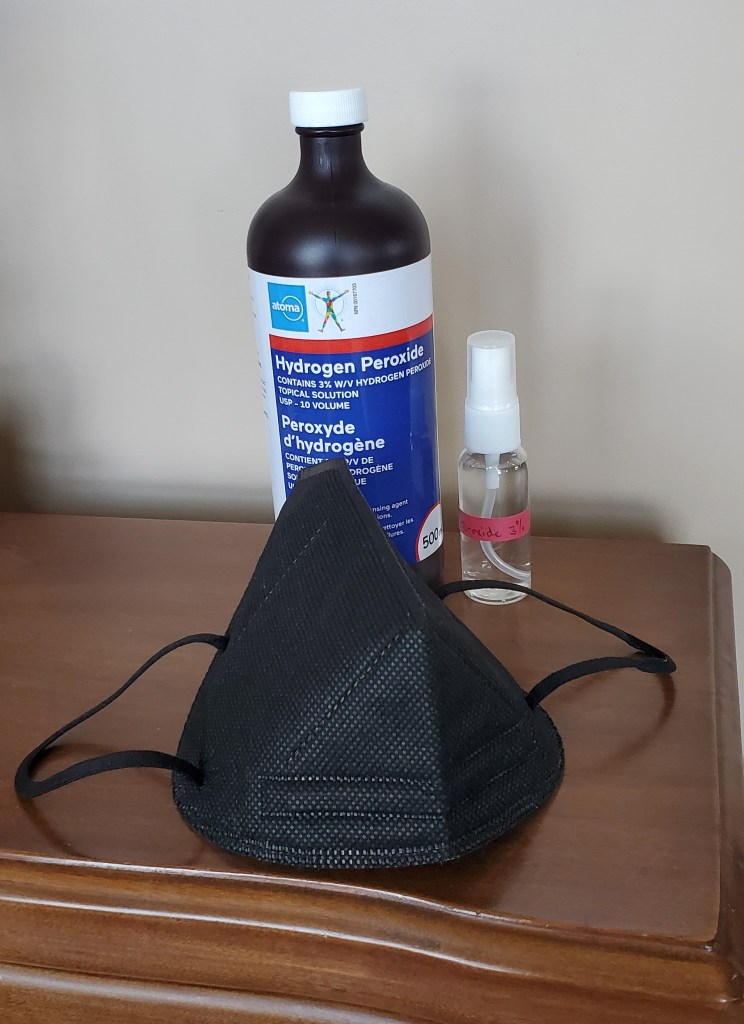
I still have my little spray bottle of hydrogen peroxide to sterilize my masks too, sitting on my buffet. Hydrogen peroxide, used as a steam after each use, has been shown to sterilize masks well enough for hospital re-use up to 30 times, so we know peroxide kills COVID and doesn’t damage the mask. When coupled with rotating masks so they’re only worn every 3 to 4 days (also known to kill off the virus) I feel safe re-wearing masks until they are obviously soiled. I’m hoping someone will test this cleaning method but, until then, I’ll keep my 4 masks lined up, spraying each after wearing it, and putting it at the back of the line, as this is the best practical method of sanitizing I know of! 

So, how about you? Will you be going back to masking and hand-washing, with cooler weather and classes keeping people indoors, or are you going to just take your chances when you’re in crowded places??? It’s time to think about it… 

References/Additional Reading:

COVID-19 boosters are the best defence — The Conversation

“Breakthrough” study: Diabetes drug helps prevent long COVID — Medscape

Outlive – Dr. Peter Attia (check your local public library for availability) 

Lifespan – Dr. David Sinclair (longevity researcher at Harvard Medical School). Available through the public library system. 

One in five doctors with Long COVID can no longer work: Survey — Medscape

Stay tuned for a future blog on longevity! And, just a reminder, the ads you see here are sponsored by my web hosting site, WordPress, and not endorsed by me! (The price to be paid for a free website these days…) jcb 

Categories
Uncategorized

Severe COVID-19…who is at most risk?

Why do some people get sick and die from COVID-19 while others don’t know they’ve even had it? While we still don’t know all the answers, researchers are learning why this happens and who is at higher risk.

As we start to open businesses, it will be important to protect those at greater risk of the severe form of COVID-19 infection. So, who is at risk? And is there anything we can do to increase the chance of having a mild case of the virus when exposed? Knowing who is at higher risk of dying from this disease means we can take extra precautions to prevent them from exposure to this deadly virus. We can also ensure they are tested and treated at the first sign of symptoms.

Potential risk factors identified so far include age, gender, some medical conditions, certain medications, poverty and crowding, certain occupations, and pregnancy. It is likely that more risk factors will be identified as research progresses.

Age

First, we know that those over age 65 are at higher risk and those in care homes are at further increased risk. We have painfully watched, seemingly helpless, while the coronavirus has swept through too many nursing homes. In Canada, 82% of deaths from COVID-19 have occurred in long-term care residences as reported on May 7th, 2020. In the US, percentages of long-term care home deaths range from 20 to 80% by state, averaging 42%, based on data reported by May 22th, 2020. Clearly, we need to improve systems in our seniors’ residences to better protect our vulnerable elderly population.

Gender

While equal numbers of men and women contract COVID-19, several studies show men have been more affected with the severe form than women. Experts say one reason is that women tend to have stronger immune systems. Another is that men are more likely to not take early symptoms as seriously, on average, resulting in seeking treatment when the infection is more severe.

Medical conditions and medications

People with underlying medical conditions are also at increased risk of more severe viral infections, especially if not well controlled. These conditions include lung diseases, like emphysema and asthma, serious heart conditions and those whose immune system is weakened (“immunocompromised”). Conditions that affect the immune system include cancer treatment, smoking, organ or bone marrow transplantation, poorly controlled HIV or AIDS, and long-term use of corticosteroid treatment and other medications that reduce the immune response. The immune system generally weakens with age, which may explain the vulnerability of the elderly.

Even having low vitamin D, a vitamin that is essential for a properly functioning immune system, is thought to be a risk factor for more severe illness. Keeping up your general health by eating a healthy diet and getting exercise is a good recommendation to ensure your best chance at fighting the virus if you should catch it.

Being severely overweight (Body Mass Index “BMI” over 40) increases the risk of the severe form of COVID-19 and people with diabetes, chronic kidney disease requiring dialysis, and liver disease are also at greater risk. Even having insulin resistance, a pre-diabetes condition where higher amounts of insulin are needed to allow sugar into the body’s cells, has been noted as a risk factor. It is very important to continue medications and treatment, including emergency care, for these diseases during the pandemic to enable the maximum resistance should you contract the virus.

Poverty, overcrowding, homelessness

Those living in overcrowded or homeless situations have difficulty maintaining physical distancing, putting them at increased risk of contracting the coronavirus. As well, staying at home when there is little space and no access to outdoors creates stress for families. Elderly living alone can suffer from severe isolation.

Poverty is known to be a risk factor for poor health in general and having poor health status puts people at greater risk of the severe form of COVID-19. Being unable to afford good quality food and medicines, and, in some countries, health care increases the chance of a person having poor health and being less able to fight off infection.

One article I read suggested that the most likely place to catch the coronavirus was within your own residence! Essential workers are more likely to live in overcrowded living conditions and can be a source introducing the virus into the home. Many households do not have enough space to allow physical distancing and self-isolation when necessary allowing infection to easily spread to others living there. We have seen the result of living conditions in long-term care situations, with many sharing the same living space.

Occupations

Three factors are used to determine the amount of risk a worker faces:

  1. Contact with others – How much contact is required to perform the work?
  2. Physical proximity – How close does the worker need to be to others while working?
  3. Exposure to disease – How often is the worker exposed to hazardous conditions?

Although many workers have started to work from home (estimated at about 1/3 of workers), essential workers such as those in retail and health care are forced to risk their health and that of their families. Front line health care workers, of course, are at the top of the list but I was surprised to see that the dentistry profession was at greater risk than doctors and nurses, with dental hygienists at the top of the list (see reference below for details).

But as stores begin to reopen, the safety of retail workers and those who use their services depends on the preparations made by the employer. Will they be able to maintain physical distancing? Are there increased cleaning and hygeine procedures in place? Are the staff provided with masks and will customers also be required to wear masks?

And risk and pay are not aligned. Some of those at greatest risk because of an inability to avoid close contact with others include bus drivers and cashiers, while most jobs that can be performed at home are higher-paying ones.

Pregnancy

Because COVID-19 is such a new infection, we are still learning whether pregnant women or their unborn babies are at increased risk of complications if the mother becomes infected. While information is limited, so far there does not seem to be any indication that they are at higher risk of getting the infection or having more serious illness if they do. However, as pregnant women are at increased risk with other infections, like the flu, caution is recommended.

Additionally, a small study has noted some damage to the placenta caused by blood clots in pregnant women who contracted COVID-19, but most delivered healthy babies. This is an area that doctors and researchers will be watching closely.

The advice for pregnant women is to stay home as much as possible; avoid visitors, public transit, and crowded places; wash hands often, avoid touching frequently touched surfaces and don’t touch your face; and practice physical distancing. Talk to your doctor about whether you can have appointments by phone or videoconference. And check for updates as researchers gather evidence in the coming weeks and months (see reference below for the Public Health Agency of Canada or verify with your country’s health agency’s recommendations).

The bottom line?

Of course, these are things we all need to continue doing. While we may be able to loosen restrictions for periods of time while the virus isn’t present in our area, experts say it is almost certain that there will be a second wave of infection that will require us to self-isolate again. This will be our life for a while and the more we can do to limit the spread of the virus, the more freedoms we can earn for ourselves.

In my province, New Brunswick, Canada, we are in “Phase Yellow” which allows us to have gatherings of up to 10 people indoors or up to 50 outdoors (where sunlight, open air and wind lower risk). My friends are happy that their hairdressers are allowed to open too! We’re seeing only 1 or 2 new cases every couple of weeks here, but still unfortunately rates in neighbouring provinces rates are still higher so borders remain closed. I miss seeing family in Nova Scotia and Quebec, but we all need to do what we can to limit the spread of the coronavirus. We’ll get through it eventually, but it will take time and patience.

And I’m still making masks, although not as many these days, especially as the weather is warmer and we are allowed to join friends at our beach. I’ve lost track of how many masks I’ve made but it’s over 200 now. And I’ve been painting designs on them, now that I have more time.

I’m having some fun while still helping friends and family… and I hope you are all doing the same. Take care of your health, protect each other, and stay safe!

#COVID19risk #covid19 #coronavirus

References:

82% of Canada’s COVID-19 deaths have been in long-term care, new data reveals – The Star

Nursing Homes & Assisted Living Facilities Account for 42% of COVID-19 Deaths – FREOPP

Why COVID-19 is Hitting Men Harder Than Women – Healthline

Coronavirus Disease 2019—People Who Need Extra Precautions – Centers for Disease Control and Prevention

Poverty advocates call for protection of vulnerable amid COVID-19 pandemic – The Globe and Mail

Overcrowded Housing and COVID-19 Risk among Essential Workers – PPIC

These are the occupations with the highest COVID-19 risk – World Economic Forum

Pregnancy, childbirth and caring for newborns: Advice for mothers during COVID-19 – Public Health Agency of Canada

Insulin resistance marker correlates with COVID-19 morbidity, mortality – Univadis

How COVID-19 might affect a pregnant woman’s placenta – Live Science