
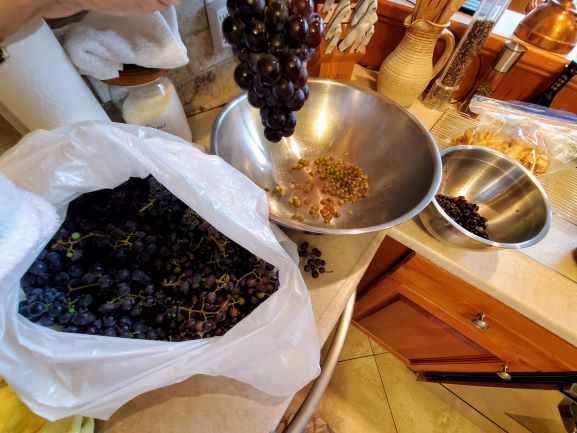
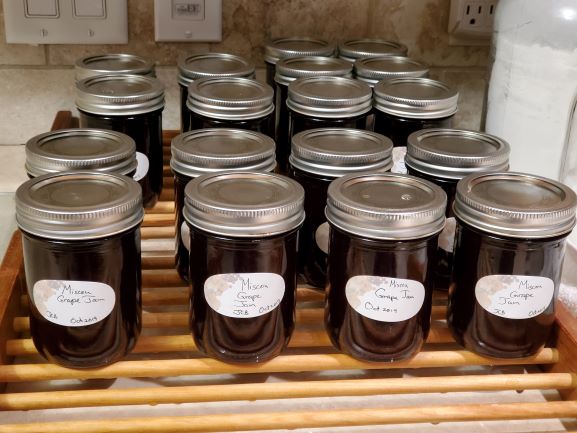
I’m late getting to my blog this week… a busy week making 18 bottles of salsa and 18 jars of grape jam. I even tried out a recipe for “scoops” corn chips (the best way to eat salsa…) and I’ll be making them again! I guess that’s part of fall and carrying the benefit of the harvest of fresh vegetables and fruits into winter. It’s even more wonderful if you get to participate in the harvest, as we did in Miscou Island in northern New Brunswick, helping family pick the grapes growing in their backyard and cut the vines down to the old growth. It was an amazing way to spend a sunny autumn afternoon.
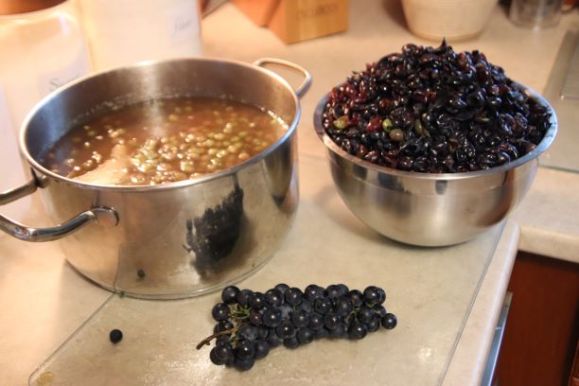
The best parts of making your own food, including preserves, is that you know what they contain and even where the ingredients came from. You also get a relatively unique product to enjoy and share, something different than you might find in the grocery store. I’m thinking my preserves might make great Christmas gifts, something consumable for those of us in my generation looking at downsizing or those of a younger generation living in an apartment with limited space. I’ve always felt that a hand made gift is truly a gift from the heart… something special, whether it was made by the giver or someone I don’t even know.
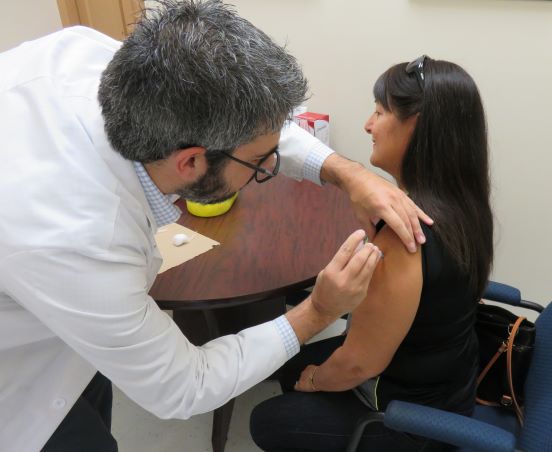
But, aside from thoughts of harvest, Thanksgiving and preparing for winter, fall also makes me think of getting my flu shot. I suppose that’s part of preparing for winter, the season when we see so many cases of influenza. I gave flu immunizations for many years at pharmacies and clinics, even visiting seniors’ homes to bring the service to them.
I never liked hurting people, though, so I read everything I could to learn how to make the injection less painful. And my patients have often told me that they hardly felt the needle at all – one elderly gentleman, who was chatting with one of the nurses working with me, insisted that I hadn’t given him his injection when I told him he was ready to go to the waiting area. Distraction is one of the best “pain relievers”!
Here are some tips I learned to decrease pain from injections. Ask the person giving you your flu shot if they use these techniques:
-
Let the alcohol dry before giving the needle
-
Wet alcohol stings
-
-
Apply slight pressure to the top or sides of the arm with the free hand
-
The brain registers pressure instead of the pain from the needle
-
-
Insert and remove the needle quickly
-
Like a paper cut you don’t notice until it bleeds, a quick needle is felt less. I routinely completed the injection part of a flu shot in about 2 seconds!
-
-
Use distraction
-
As with the elderly gentleman I described earlier, you will experience less pain if you focus on something else. Even taking a deep breath just before the needle helps you to focus on your breathing instead of the injection.
-
I used to use my iPad to distract children – it was so effective, especially when iPads were new… I set them up with a drawing program to try out while I prepared their flu shot. Etch-a-sketch was my favorite. Some parents had played with the original toy, and this would start a conversation. After the injection (when I wasn’t quite so popular with the child) I would offer to send their drawing to Mommy or Daddy’s computer. Most children would instantly forget the needle when they realized they could keep their drawing!
-
-
Rewards for children are discouraged
-
One parent mistakenly offered to buy a toy for their child if it hurt. So, of course the child screamed bloody murder after his shot and cried for 5 long minutes to make sure he got the toy!
-
However, planning an enjoyable activity afterward can help. “After we’re finished at the pharmacy (or doctor’s office) we’ll go to the park (or any place they enjoy)”. What the heck…I think grownups deserve a little fun, too, after doing a good deed for their community and family!
-
There has been some controversy over vaccines in recent years and it’s important to keep a healthy perspective. While there are always some who will react to any medication, the overall benefit of vaccines to the general population outweighs the potential harm from the illnesses they prevent. All practitioners who give vaccines are trained to ensure they are given safely and to refer those at risk of a reaction to the safest location to receive them, even if it’s a hospital for those at high risk. Getting a vaccine helps to protect those who can’t get immunized (or don’t respond to vaccines because of a medical condition or medication) by preventing the spread of the illness.
Here are two earlier blogs I wrote about flu shots and other vaccines, in case you missed them:
So, if you are able to take the flu shot, I hope you will do it. It only takes a half hour or so, including the waiting period afterward to make sure everything is fine!

 Jeannie Beaudin, Artist and Author