Categories
Health

Shift Happens… Take time now to think about your future health

Shifting to healthier habits is often hard to do. In fact, many of us don’t even think about our health… until something bad happens to us or someone we know. Your family doctor used to be the person who urged you to make healthy changes – telling you it’s time to quit smoking, exercise more or shed a few extra pounds – but, with the health care system today, often they only have time to look after the immediate problem that prompted your visit. You need to take charge of your future health yourself…

So how do you make change happen before a shift in your health happens?

Change in habits occurs in stages. When you’re aware of these stages, sometimes you can move things along and make the change happen faster. Here is how we progress when we try to change, regardless of what new habit we are trying to form (or what bad habit we are trying to break!):

  • Pre-contemplation – We are blissfully living our lives, not aware that we are doing something that could harm our health in the future or at least not consciously thinking about what we should be doing to be healthier. Life is busy, and sometimes we need something to grab our attention and make us realize we should be changing some habits that are less than ideal for our health. We feel fine. We just aren’t interested. Besides, habits are hard to change. It’s easy to say, “I don’t need to do anything right now…I’ll think about it later”.

    • One of my goals in writing this blog, is to encourage people to think about making changes that will improve their health…and help them live longer and happier lives! Don’t wait for something bad to happen to realize you need to change to improve your health in the future.

  • Contemplation – Then we face a crisis in our health or a serious illness in someone close to us. This starts us thinking about being healthier. Or maybe we read something or hear a speaker that catches our attention. My husband finally quit smoking years ago after hearing David Suzuki explain that you can’t keep dumping poison (for example, cigarette smoke) into your body for years, then expect to be able to do the things you want to do when you’re older – your body can only handle so much abuse. What he said struck a chord with my hubby and he made up his mind that it was really time to quit.

    • Think about what you should change that will make a difference in how you feel and what you are able to do in the future? What is one habit you could you improve to increase your chance of staying healthy and active well into old age? What could you change to be able to do more things you enjoy right now?

  • Preparation – Habits are hard to change. Preparing yourself can help make it easier, and there are strategies to increase the likelihood that you’ll stick to your new way of living.

    • Find someone who will join you in your new habit. Sign up for a class that will help get you started. Research exactly what you need to do to make the change easier.

      • For example, if quitting smoking, there are medications like nicotine replacement that can reduce cravings. To increase exercise, choose a convenient time of day then set a recurring alarm on your phone or computer to remind you it’s time for your walk. Want to eat healthier? Sign up for a food delivery service like Hello Fresh or Good Food to make it easier to start cooking better meals. Want a better outlook on life? Sign up for a yoga or meditation class or download an app on your tablet and use it every day. You get the idea…

  • Action – Pick a date that is not too far in the future. Give yourself a deadline to start. Giving yourself little rewards helps too – challenge yourself to stick to your habit and plan something special on the weekend to celebrate your success. Even something simple like an “X” on each day of a calendar can be encouraging as the X’s add up. Find a way to make yourself committed to change.

    • Set a date to start your new healthy habit and mark it on your calendar. Tell someone who will join you or support you with your plan and be accountable to them. Track your progress and decide what you will do to celebrate your success! Keep in mind that small rewards given often work better than large ones off in the future.

  • Maintenance – It’s easy to slip back into old habits or get busy and forget about your plan for a healthier life. But, if you do, remember that if you did it once you can go back and do it again! It takes a while for a new change to become a habit and relapses are normal. So, don’t beat yourself up about it and don’t give up!

    • Expect slip-ups…they almost always happen. But keep working to make your new healthy habit part of your life. If you practice your healthy change even for 1 day, you can make it a regular activity!

Realize that it takes time to make a habit of a new healthy activity – longer for some than for others. But keep your goal of enjoying life as you get older in mind. Every little change can help. Take time now to decide how you can improve your enjoyment of life in the future by keeping your body and mind healthy and active!

Categories
Health

8 Steps to a Long and Healthy Future

Lola Holmes, age 100 — World’s Oldest Active Curler.

Scientists say human lifespan in the future could be as long as 120 years. So, if we retire at age 60, we could be living half of our lifetime in retirement. Does this change how you think about your future?

Diet, exercise, taking care of your health and avoiding accidents are, of course, important to survival. But they also increase your odds of experiencing productive, disability-free and enjoyable elderly years. Studies of populations with high numbers of people who live to age 100 also suggest that having a purpose in life outside of yourself, doing good for others, and making your mark are also important factors in longevity. Being socially connected with family and close friends is considered essential for optimal health as well.

So gear your life plan to longevity to make the best of the time that may be available to you. Just imagine all you could accomplish in those extra 60 years if you maintain a healthy body and mind!

How you begin your day has a strong influence on how your day goes, and each day influences what you accomplish in life. Let me share what I learned in reading a thought-provoking article entitled “How to Feel Amazing Before 8 a.m.” — and I expect these ideas would work as well for retired folks (like me!) who start their day at 8:30…

  1. Set yourself up the night before for a successful day.

    1. No screens for 1 hour before bed (except perhaps a low-light e-reader)

    2. Stop thinking about work (if not retired!) or about your problems

    3. Be ”present” with loved ones or enjoy a hobby or relaxing activity (reading, art, etc)

    4. Create a good sleep environment (cool, quiet room, comfortable bed)

  2. Sleep at least 7 hours, or your ideal amount of sleep

    1. Getting enough sleep is associated with improved memory, longer life, more creativity, lower stress, increased attention, less dependence on caffeine, greater ease in maintaining a healthy weight, and decreased risk of depression and accidents.

    2. Set your bedtime to allow sufficient sleep before your chosen wake up time.

  3. Set an alarm and get up at your planned time.

    1. This can give you your first achievement of the day and is thought to boost daily confidence.

    2. Choosing an earlier wake time is an ideal way to “create time” for projects or activities you’ve been wanting to do.

  4. Change your environment soon after arising.

    1. A fresh environment boosts energy.

      1. Step outside for 5 to 10 minutes, look out the window to check the weather, water your plants or just move to another part of your home to welcome the new day

      2. This increases energy because the brains loves novelty and newness.

  5. Take 5 to 10 minutes for some type of meditation or writing

    1. Imagine the future you want to create for yourself

    2. Assume the feeling of being there to improve your mood for the day

    3. This can be done in the “fresh environment” you chose in step 4.

Albert Einstein said: “Imagination is more important than knowledge. For knowledge is limited to all we now know and understand, while imagination embraces the entire world, and all there ever will be to know and understand.”

  1. Listen to Quality information as you exercise.

    1. You need to be physically fit to enjoy your elderly years.

    2. Stimulating your brain as you exercise your body sets you up for a productive day.

    3. Headphones with a screen or just audio are both effective.

    4. Try TED Talks, audiobooks, or online courses (many free ones are available).

  2. Eat a healthy breakfast and include foods that help brain function (at breakfast and through the day)

    1. Suggested “brain foods”: nuts, seeds, avocados, beets, blueberries, bone broth, coconut oil, egg yolks, turmeric

    2. Include fermented foods and foods that contain probiotics and fiber.

      1. A healthy gut = a healthy immune system and healthy brain function. The gut and brain communicate with each other through nerves and chemicals called neurotransmitters.

  3. Then begin work on your creative project while you are in an energized “peak state”, early in the day.

    1. Do tasks or projects that are most important to you first to make sure they get done.

    2. With the energy and sense of achievement you’ve created, you may find that you get more done later in the day too…

Accomplishing something significant early in the day, sets you up for a great day. And taking those few minutes to think about what is most important helps to ensure you focus on what you really want to accomplish. Just imagine what you can do with that “extra” time each day…

I wrote this article because I‘d really like to do this… Are you with me?

References:

Medium.com

I’ve Decided to Live 120 Years by Ilchi Lee

CTV News — World’s Oldest Curler

Categories
Health

5 Questions you should ask about your medications…

Medication errors can happen for many different reasons, but you can work along with your health care providers to prevent these errors, both as a patient and as a person who helps a friend or relative with their medications. An important way to prevent errors is to have all the right information…

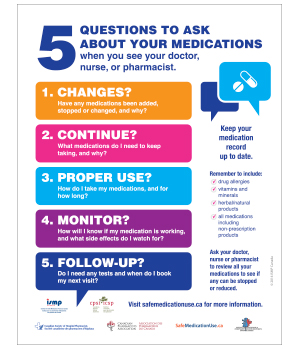
With that in mind, the Institute for Safe Medication Practices (ISMP) has developed a list of 5 questions you should ask whenever you are:

  • Being discharged from hospital

  • Having an appointment with your doctor or specialist

  • Talking to your pharmacist or

  • Having a visit with a home care nurse

These times are referred to as “transitions of care” and are the most likely times that your medications might be changed and mistakes could happen. Asking questions will help ensure you understand how your medications are supposed to be used. These occasions also give you an opportunity to learn more about your medications, such as what each does, how it is to be used, how long it should be taken, and what side effects you should watch for.

Here are the recommended questions you should ask:

  1. Changes? – Have any medications been added, stopped or changed and Why?

  2. Continue? – What medications do I need to keep taking and Why?

  3. Proper use? – How do I take my medications, and for how long?

  4. Monitor? – How will I know if my medication is working, and what side effects to I watch for?

  5. Follow-Up? – Do I need any tests, and when do I book my next visit?

To make this easier, ISMP has organized these questions onto a page you can download and fill in on your computer or tablet, or just print off and take to your doctor, pharmacist or nurse. You can download it here.

Be aware that most pharmacists can book an appointment with you to review your medications in detail. For some people, this may be a benefit of your prescription medication insurance coverage. But even if it is not covered, it can be a good investment in your health if you take several medications or have a complicated medical therapy. If you specifically ask the pharmacist to look for medications that can be stopped or “deprescribed”, a review may mean you have lower medication expenses and a simpler medication program in the future.

It is also important to keep an up-to-date medication record. You can find a free app for your computer or phone (Apple, Android or Blackberry) by clicking here or googling “my med rec”. Be sure to include a list of drug allergies, any vitamins or minerals, herbal or natural products, and any non-prescription products in your medication record. This list can be especially helpful when being admitted to hospital or when trying to determine if any medications can be discontinued.

More medication means greater chances for drug interactions. While drugs can be life saving, drug interactions and unwanted side effects can harm your health. Sometimes a drug is added solely to counter a side effect of another drug you are taking, when the problem could have been solved by changing the original medication.

So, learn as much as you can about your medications and how to benefit most from what you are taking. Communicate clearly with your doctor, pharmacist and nurse practitioner that you want to be taking the least number of medications possible for the shortest time necessary to keep you healthy. And, lastly, learn what lifestyle or diet changes can be tried to improve your health. Work hard to make these changes so you can minimize the medication you need to control chronic diseases like diabetes, heart disease and arthritis.

The CEO of the Canadian Patient Safety Institute (CPSI), Chris Power, advises:

“Be as informed as you can be and go into that relationship with your doctor, your nurse or your pharmacist or whomever is providing care, knowing that you’re a partner and you have a right and a responsibility to ask questions and to understand what’s happening with your health care.”

Categories
Book review Health

A Healthy Diet Should Be Easy and Fun…

What makes a diet healthy? Does it have to be complicated? Do we really need to learn about saturated fat, omega-3’s, carbohydrates, and antioxidants? Maybe it’s time to simplify what and how we eat…

A recent news report described how the scientists, who first claimed that saturated fat was bad for us years ago, had received payments from the sugar industry. Newer reports are saying that it is really sugar, and not fat, we should avoid to prevent chronic conditions like diabetes and heart disease. Other reports say that refined white flour acts very similar to sugar once it is absorbed into the body.

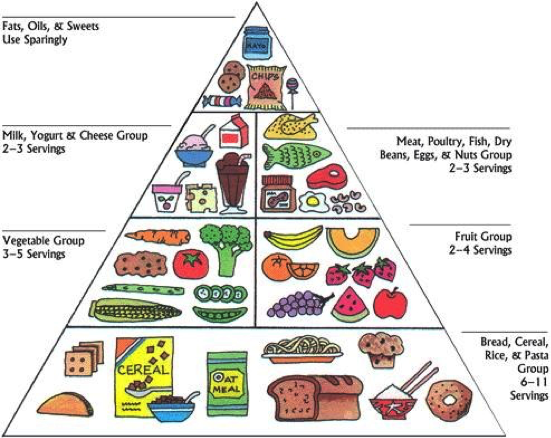
Even the basic Food Pyramid – remember this? Its emphasis on grains and drastically reduced fat intake is being questioned after so many years of use. Current thought is that it is too vague, with no indication of serving sizes, and places too much emphasis on carbohydrates.

It seems that eating healthy has become a complicated matter, with conflicting recommendations. Scientists seem to be searching for which nutrient is causing increased rates of chronic disease in North America. The fact that they seem to change their minds about what is good or bad for us every few years suggests that we need to look at the bigger picture rather than single nutrients in food.

Nutritional science is a relatively new field, in existence for about 200 years. Some have compared this “science” to the surgery in the 1600s… not yet very advanced! Well-meaning scientists’ attempts to identify individual nutrients that are causing the problems have led to a great deal of confusion for consumers. The reason behind all this research is that our Western diet has been linked to obesity, type-2 diabetes, about 80% of cardiovascular disease, and over one third of all cancers. The good news is that changing from a Western diet to a healthier one results in rapid improvements in health.

Many very different traditional diets exist that are not associated with chronic diseases. These include the high fat diet of the French, the high animal protein diet of the Masai tribes in Africa, and the high carbohydrate diet of Central American Indians. None of these traditional diets have been linked to the chronic diseases that we see associated with the typical Western diet, although they are very different from each other. Our Western diet is unique in containing large amounts of processed food and meat, lots of added fat and sugar, and lots of refined grains, but very little vegetables fruit and whole-grains.

So, after so much talk about what to avoid, what should we eat?

I think I’ve found a good answer in a little book I stumbled across called “Food Rules, An Eaters Manual” by Michael Pollan. He proposes 3 simple rules that make a lot of sense:

  1. Eat food

  2. Mostly plants

  3. Not too much

Sounds easy, right? I certainly thought so. Let me explain the rules a little and you will see why they make sense to me…

1. Eat food

This means, eat real food, with ingredients that you would find in your Mom’s cupboard, food that has not been highly processed. Food processing is designed to make food last longer on store shelves, not to make it taste better or to be healthier for us. The amount of processing of food is a major difference between the harmful Western diet and healthier traditional diets.

2. Mostly plants

Vegetarians generally tend to be healthier than those who eat meat. It is suggested, however, that using meat as a flavoring or in small amounts can result in a diet that is just as healthy as a vegetarian one. Whether it is some component of meat or the fact that larger amounts leave less room on the plate for vegetables has not been determined, but simply reducing the amount of meat in your diet and eating more plant foods is a simple rule to follow to improve your diet.

3. Not too much

How much you eat and how you eat it may be as important as what you eat. When you are distracted while eating, you tend to eat more so eating in front of the TV or while driving or working means you will likely eat more. When you eat quickly, you also often eat more, since it takes about 20 minutes for your brain to register that you are full. You should eat only until no longer hungry, rather than eating until you are full or have finished everything on your plate (in spite of what your mother may have told you!). Eating more slowly will allow you to more readily detect when you are no longer hungry before you have actually overeaten.

Here are some other suggestions for healthy eating:

  • Shop mostly on the outer areas of the grocery store; avoid the centre aisles that are mostly processed packaged foods. Buy at a farmers’ market as often as you can – they sell locally grown, whole foods that don’t need to be preserved to reach their market. If you worry about food spoiling, freezing is often the best way to preserve food without losing the nutritional value.

  • Avoid “lite”, “low-fat” and “nonfat” foods – generally these tend to be more highly processed and often sugar is added to boost flavour that is lost when fat is removed.

  • Eat only food that will eventually rot – if bacteria and fungi don’t go for the food, we probably shouldn’t either!

  • An old Chinese proverb says “Eating what stands on 1 leg (plants, mushrooms) is better than eating what stands on 2 legs (fowl), which is better than eating what stands on 4 legs (cows, pigs, etc).” Of course, this ignores healthy legless fish, but it’s an easy rule to remember!

  • Eat your colours – a variety of colours indicates a variety of nutrients and it helps your meal look more appetizing too!

  • Eat food that is grown in healthy soil (this often means organic) or is fed healthy food (usually this means pasture raised rather than grain fed). Just like us, plants and animals need healthy food to be healthy themselves! More nutritious food generally has better flavour and is more satisfying…

  • Alcohol of any kind has health benefits. It is best taken in moderate amounts with food and on a daily basis rather than binge drinking. How alcohol improves health is not well understood but it is part of several healthy traditional diets, notably the French diet.

  • “The whiter the bread, the sooner you’ll be dead” is an old saying that has merit…white flour is not much different from sugar once it’s ingested. The substances that are removed from whole grains to make them white are the most nutritious part of the grain – it just makes sense to eat the whole grain.

  • Eat when you are hungry, not when bored, as a reward, or for entertainment. Be aware of why you are eating.

  • Use a smaller plate and smaller serving containers. We eat more when a larger portion is served, and we serve ourselves more when using a larger plate or serving from a larger container.

  • Make eating an enjoyable experience – share meals with others whenever possible, take your time and enjoy the taste of the food and the company you are sharing it with. Treat the preparation and eating of meals as a family or social ritual to be enjoyed, to elevate it from a biological necessity to the enjoyable part of life that food should be!

Lastly, what matters is what we do routinely – breaking the rules for special occasions can be good for our happiness and probably also for our health. So all we really need to do to be healthy, is to keep “Everything in moderation” along with the basic 3 rules: “eat food, mostly plants, and not too much”!

To learn more, read Michael Pollan’s short, well-researched book, Food Rules: An Eater’s Manual or his more detailed In Defense of Food: An Ester’s Manifesto.

Categories
Health

Preventing Bladder Infections… Update!

I received a useful comment from a reader and have decided to pass her suggestion along. She tells me she has had good success in preventing bladder infections by taking d-mannose powder daily. This product was actually somewhat familiar to me from my study of natural medicines several years ago. I decided to do a little research to update my knowledge.

D-mannose is a simple sugar found naturally in apples, oranges, peaches and some berries, including blueberries and cranberries. It may actually be the d-mannose content of cranberries that gives it its ability to prevent bladder infections. Like cranberry, d-mannose works by preventing bacteria from sticking to the bladder walls and starting an infection.

I found a study that compared d-mannose 2 g daily mixed in 200 ml water, with nitrofurantoin 50 mg and no treatment. The effect of d-mannose in reducing recurrence of bladder infection was similar or slightly better than the effect of nitrofurantoin, and both were significantly better than taking no treatment at all. It should be noted that d-mannose only works to prevent infection from e-coli, the bacteria normally present in our anal area that causes an estimated 90% of bladder infections. So, although an infection caused by other types of bacteria could still occur, d-mannose can still make a significant difference in the infection rate.

Other studies, done in mice, suggest that d-mannose is safe to take long-term if taken in appropriate amounts, but excess may cause kidney damage. Side effects may include bloating or loose stools and, if this occurs, reducing the dose would likely reduce these effects.

Caution is recommended in women who are pregnant or breast-feeding — although it is thought by some experts to be safe, being a simple sugar, it has not been studied in these populations. It is also recommended to use caution if you have diabetes, as it may make it harder to control your blood sugar, since it is a sugar. However, as most d-mannose is absorbed more slowly than regular sugan and excreted intact through the urinary system relatively quickly, people with well-controlled diabetes generally do not have any problem, according to other sources. Checking your blood sugar more often when starting this therapy would be advised to alert you to any potential problems.

As an interesting sideline, studies also suggest d-mannose may act as a prebiotic, encouraging growth of “good” bacteria in the digestive system.

The recommended dose of d-mannose for prevention of urinary tract infections, as used in the study, is 2 g (or approximately one teaspoon) once daily in adults, and one half to 1 teaspoon for children, dissolved in a glass of water. Dr. Jonathan Wright, one of the first physicians to begin using d-mannose, claims 85 to 90% effectiveness from this treatment in his patients. D-mannose is available in health food stores and some pharmacies. He also discusses a high success rate in treating active infections with the same dose given every 2 to 3 hours, but cautions that another treatment should be considered if no improvement within 1 to 2 days. I noted that he used an equivalency of 1gram = 1 teaspoonful… Regardless of the actual equivalency, 1 teaspoonful appears to be the dose commonly recommended for adults. Your pharmacist could weigh a sample of the powder for you, if you want to calibrate your 5ml teaspoon from your set at home!

If you decide to stay with cranberry, it is probably best to choose a cranberry concentrate capsule with a high amount of cranberry content (and presumably more d-mannose) rather than the sweetened juice to avoid the increased intake of glucose (sugar) it contains. A price calculation I did several years ago also found high-dose capsules were less expensive than an equivalent amount of juice!