OK… I made that up. But don’t you think there should be a month set aside to help people learn about menopause?
Knowledge can be medicine. Women fare better when they know what to expect and what they can do about it… and the men we spend time with can be more empathetic if they understand what’s happening to us! I suppose if you haven’t been through menopause and don’t know anything about it, you might not think it’s that important… But it can be a miserable experience when symptoms get out of control. If you’re informed, you’ll recognize the signs the “Change” is starting and will know what you can do to make it easier. It’s always best to prevent a fire, or at least put out those early sparks, then to wait until the whole house is engulfed, right?
Putting out fires
For over 10 years, as a pharmacist that specialized in hormone balance, I helped women communicate their menopausal misery with their doctors, most of whom, unfortunately, had little time to listen to what the “Change” was doing to their patients. Sadly, that’s how the system often is now… 10 to 15 minutes and only 1 or 2 “issues” per visit, please… that’s all the time available per patient. While gathering information for busy physicians, I also taught women about non-medical strategies they could try to lessen their need for medications and improve their overall health.
The stories I heard from women during consultations made me realize I got off easy during my Change. I knew my hormones were already out of balance when I was only in my mid-40s and worked with my doctor to correct it. I believe this made the entire menopausal transition easier for me and I encourage others to do the same.
But some women told me how they carried extra clothes with them in case what they were wearing became soaked during a hot flash. Others talked about needing to change the bed sheets in the middle of the night after a severe night sweat. One woman told me how she would grab some clothes when shopping (anything at all!) when she felt a flash coming on, and duck into a changing room so she could strip to her underwear…
And hot flashes are just one symptom of menopause. Heart palpitations, another symptom that’s not as well known, would send some women to their doctors, thinking they had a heart problem. “Fourmications”, a feeling of insects like ants (les fourmis in French) crawling on the skin make some women feel like they’re losing their sanity. And the mental effects of fluctuating hormones can be very distressing, with irritability, forgetfulness, insomnia, and more.
Being a Baby Boomer and a health professional, I decided at age 40 to learn about menopause. I wanted to be ready when it started… I wanted to know what to expect and to be in control. Although on average, menopause (the time when periods stop, technically the date of your last period) occurs at age 52, things almost always start to change years before. The date of the final period is only set once you’ve gone for a year with no flow, and the time from when you first notice changes until the end of that period-free year is known as Perimenopause. This phase can last for many years. After that, it’s all called “Postmenopause”.
It’s OK to talk about it…
It’s something that essentially all women go through, and we can suffer terribly, but we feel like we’re not supposed to talk about it. Is it because it’s associated with getting older in a society that values youth? Could it be because menopause and menstruation involve bleeding and reproduction?
Generations ago, pregnancies were hidden because, after all, if you were pregnant, you must have had sex, right? How silly… Women now show their baby bumps with pride and wear comfortable clothes instead of tents. It’s time to normalize another female reproductive milestone – menopause! After all, the menopause change is just another normal stage of life we pass through.
But, like everything else, this is slowly changing. Can you believe there’s a humorous novel out new this year about menopause? Yes, it’s true… it’s called The Menopause Murders. I’ve read it and it’s hilarious! While some menopausal symptoms and risks of treatments are exaggerated in places (for its comedic story value, of course) it also alerts readers to what some of the negative symptoms of menopause are, including the mental health effects. Author Mary Maloney also delves into the debate over which treatments are best to choose, while her lively characters entertain you. (Disclosure: This is a non-affiliate link, however, I was provided with a free copy of the e-book by the author and had some good laughs while reading it!)
A source of information
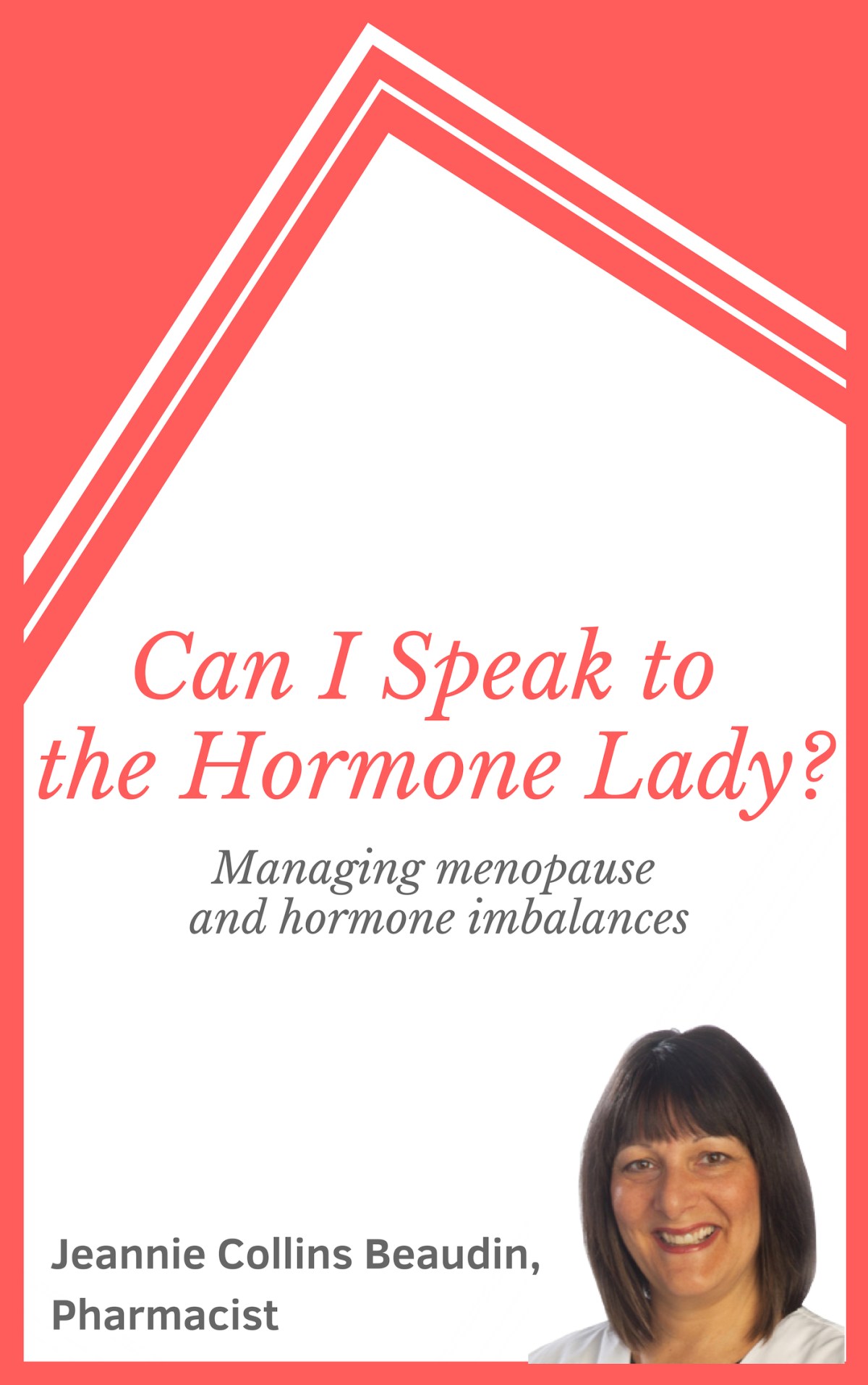
My long-term readers will remember that I also wrote a book about hormones, but mine was a serious one passing on the information I had learned as a pharmacist with a specialty in compounding hormones. On retirement, I sat down (on a balcony in Spain overlooking the Mediterranean!) and wrote everything I knew on the subject so the knowledge wouldn’t just “disappear”. The result was Can I Speak to the Hormone Lady? Managing Menopause and Hormone Imbalances, a fully-referenced book that explains what your hormonal symptoms are telling you, and your options to get back in balance and in control. Surprisingly, the book is selling more now than it did when I first published it. Although it’s available in print and as an e-book, it’s the audiobook that’s taking off now. I think the newest generation coming up to the menopause milestone likes to just load books onto their phone and listen and learn as they walk the dog or do household chores. Nothing like doing 2 things at once for productivity!
And, if you’d like more info about menopause and its treatments, my very first blog is a nice long one with lots of tips and non-drug ideas to improve symptoms. You’ll find it here: A Step-wise Approach to Menopause Treatment
I really love it when a reader contacts me, whether a reader of my blog or my books. Such a thrill (we writers really are so easy to please… 😊) It’s fun that we get to know each other a little, while I answer questions they may have, and we discuss our similar experiences. Sales and traffic charts are one thing but talking directly to a reader—a real person—is a completely different (and wonderful) experience for any author!
Women have helped each other through various stages of life for generations: the teen years, pregnancy, raising children, building careers. Menopause is just another stage of life where talking about it can help you and others sail through more easily. Do we avoid talking about it because approaching menopause means you’re getting older in a society that values youth? I love to say that being retired is the best job I’ve ever had (and I once had a job presenting seminars on a cruise ship!) It is life’s most wonderful reward after working hard and raising a family. I finally have time to do all the things I’ve wanted to do, and go places I want to go, and I can do it on my own schedule. What could be better than that?
Health = independence
I think another key message about menopause is that it marks the time of life with the most independence for women—as long as we maintain our health. So, part of the menopause discussion needs to be about staying healthy, both in body and mind, so we can maximize this wonderful postmenopausal time of life. While I began my blogging journey by writing about hormone balance for women 6 years ago, I’ve gradually expanded into a wider range of health information… what we should know to stay healthy and independent. And along the way, I’ve been learning a lot, both about health and how to write about it!
I hope you’re enjoying the blogging thoughts I share and having a wonderful healthful Menopause May! And let me know your burning (and non-burning) health questions… to be answered anonymously as always!
PS: Comments below are welcomed and seen by others; comments made through the “Contact” button at the top of the post are private and received through my email.
 Jeannie Beaudin, Artist and Author