Categories
Health

Time to think about COVID again??


I know, I know… we’re all tired of hearing about it. Won’t COVID ever go away? **sigh** Instead of settling into a flu-like seasonal pattern, this virus has taken on a life of its own and refuses to behave like most viruses.

How COVID-19 is different

An article in The Conversation newsletter this morning discussing a new study of people in nursing homes – a vulnerable population we need to protect – caught my attention. Surprisingly, those who had been infected with the BA.1-2 strain were 30 times more likely to catch the BA.5 strain that followed it a few months later. This is the opposite of what is expected – usually, catching a virus improves resistance to infection approximately as well as getting a booster shot (just a riskier way to develop immunity). This virus continues to surprise researchers… 

If this applies to all ages (and chances are, it does), this means that the protective practices we all know so well –handwashing, distancing, and masks – are important again. The medical community is already reporting an uptick in cases here in Canada this summer, and school hasn’t started yet. In communities south of the border, where kids are already back to class, some schools have already cancelled classes to try to control the spread. 

And, rather than settling into a predictable seasonal pattern like the ‘flu, it seems to surge in late summer, just as the kids are heading back to close quarters in school where bugs are passed around more easily.

COVID also is good at hanging out in our bodies long after we should have recovered — something rarely seen with other common respiratory viruses. Researchers report that 1 in 10 will continue with disabling symptoms from the infection for months to years in the form of Long COVID. This is a huge future concern for our healthcare systems.

Metformin… wonder drug?  

Another interesting study I read on the subject of COVID, was that the diabetes medication, Metformin, can reduce the chance of developing Long COVID by 43% if taken early in the onset of the acute infection. I have to admit, my greatest fear beyond the risk of having a severe infection (for which I never miss a booster!) is getting Long COVID. 

Metformin, by the way, may just become the wonder-drug of the century, from what I’ve been reading about it recently. As well as improving insulin sensitivity (its main use), it’s been found to reduce the risk of relapse of certain cancers and appears to promote longevity, according to preliminary research. People with Type 2 diabetes who take Metformin statistically live longer than people who don’t have diabetes!  

Type 2 diabetes develops when insulin stops working as it should – the body becomes resistant to the effect of the insulin hormone (called “insulin resistance”) and, in response, the pancreas produces more insulin to keep blood sugar normal. This compensation can continue for years – some estimate that insulin resistance can start as long as 10 years before sugar in the blood (“blood glucose”) starts to rise.  

It astounds me that doctors still only look at blood sugar, even though blood insulin measurement is a relatively inexpensive test. My doctor told me that they don’t do this test (that would detect the development of diabetes years sooner) because there was no “protocol” for it! Why isn’t there a protocol for a simple test that would diagnose a serious disease like diabetes years sooner??? This is a prime example of one of the biggest problems in medicine – “knowledge translation”, getting what has been learned through research into real-world practice. It takes, on average, 17 years for an important medical discovery to become routine practice for doctors. Old habits are hard to change, and it takes time for practice guidelines and protocols to be re-written and put into practice. Like all of us, medical professionals need to be educated about new ways of doing things and then need to actually change their way of doing things. You know about old dogs learning new tricks. But I might be ranting again, am I??? 

And the new vaccine… 

Another factor against us as fall approaches, is that the newest version of the COVID vaccine – the updated one that’s strongly recommended – won’t be available for several weeks, probably November here in New Brunswick, my pharmacist told me.  And he’s not sure he’s going to offer it, as it increases his workload incredibly and, at the same time, compensation for giving the shot has tanked… so won’t be financially feasible for many pharmacists. It’s hard to hire extra staff when you’re making almost half as much as last year for each injection given, while salaries have gone up. This may mean that shots will be harder to access than before. 

The epidemiologists are predicting a late-summer “COVID wave”, so it’s looking like there will be a gap in protection for many people. 

Time to think about digging out those masks and hand-sanitizers again… 

Actually, I’m still finding masks tucked into purses and coat pockets, so I don’t have to dig too far, but I’ve started feeling a little silly wearing one again, much like I did back in early 2020. We seemed to be the only ones who were wearing one then… and they were homemade since the commercial ones were being reserved for medical workers. I’ve since upgraded to N95s, of course. 

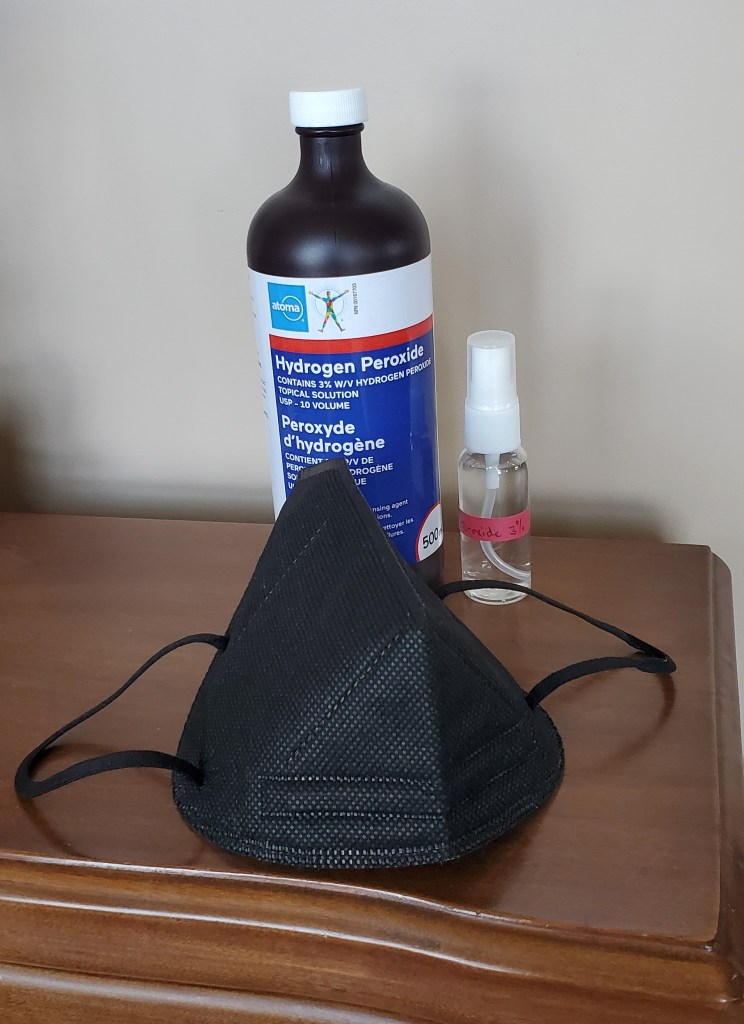
I still have my little spray bottle of hydrogen peroxide to sterilize my masks too, sitting on my buffet. Hydrogen peroxide, used as a steam after each use, has been shown to sterilize masks well enough for hospital re-use up to 30 times, so we know peroxide kills COVID and doesn’t damage the mask. When coupled with rotating masks so they’re only worn every 3 to 4 days (also known to kill off the virus) I feel safe re-wearing masks until they are obviously soiled. I’m hoping someone will test this cleaning method but, until then, I’ll keep my 4 masks lined up, spraying each after wearing it, and putting it at the back of the line, as this is the best practical method of sanitizing I know of! 

So, how about you? Will you be going back to masking and hand-washing, with cooler weather and classes keeping people indoors, or are you going to just take your chances when you’re in crowded places??? It’s time to think about it… 

References/Additional Reading:

COVID-19 boosters are the best defence — The Conversation

“Breakthrough” study: Diabetes drug helps prevent long COVID — Medscape

Outlive – Dr. Peter Attia (check your local public library for availability) 

Lifespan – Dr. David Sinclair (longevity researcher at Harvard Medical School). Available through the public library system. 

One in five doctors with Long COVID can no longer work: Survey — Medscape

Stay tuned for a future blog on longevity! And, just a reminder, the ads you see here are sponsored by my web hosting site, WordPress, and not endorsed by me! (The price to be paid for a free website these days…) jcb 
Categories
Uncategorized

Long Neuro-COVID…

Understanding how COVID could affect your brain

Now that we have vaccines and better treatments for COVID, researchers are finding time to investigate the possible long-term effects of this infection. Although most people recover completely within 2 to 4 weeks, as many as 1 person in 3 continue to have effects from the virus more than 3 months after diagnosis. For some, these problems continue for many months, and doctors are struggling to find effective treatments to get them back to normal. Long-COVID-19 [also called “post-acute sequelae of SARS-CoV-2 Infection” (PASC) or just post-COVID-19 syndrome], is defined as the effects of COVID-19 that persist more than 3 months (or 4 weeks, depending on whose definition you use!) after being diagnosed with the SARS-C0V-2 coronavirus. And the stats of how many have these complaints are all over the map, because of poor definition and diagnosis of this condition patients call “long COVID”.

A recent study of surviving patients (with no previous neurological symptoms) hospitalized for COVID-19, examined symptoms they continued to experience 6 months after leaving hospital:

  • Fatigue 34%
  • Memory/attention problems 31%
  • Sleep disorders 31%
  • Hyposmia (loss of sense of smell) 18%
  • Cognitive defects 17.5%
  • Postural tremor 13.8%
  • Subtle motor/sensory deficits 7.6%

Overall, 40% of people in the study had neurological abnormalities. Increased age, other health conditions, and severity of COVID-19 were all risk factors for this long neuro-COVID. Although this study examined people who were hospitalized with the virus, other studies are finding similar numbers in those with mild symptoms who did not require hospitalization.

With approximately 240 million cases and almost 5 million deaths confirmed worldwide as I write this, there will be a large population of recovered COVID-19 patients that could end up with long-term consequences of this contagious disease. Multi-organ effects of the virus are well-documented, but the potential long-term effects are just now being collected and assessed.

There are 3 main types of long-term effects of COVID: respiratory (shortness of breath, chest pain), cardiac (heart inflammation or damage), and neurological symptoms (brain fog, fatigue, headache, numbness/tingling, disorders of taste/smell, sleep disorders, decreased exercise tolerance, dizziness, problems with body temperature regulation, and muscle/joint pain). I’ll be focusing on the neurological symptoms—those related to nerve function.

Some lingering neurological symptoms can be common in anyone needing a stay in ICU—1/3 of ICU patients with respiratory failure or shock from any cause can have cognitive (thinking) impairment that compares to moderate traumatic brain injury. This is referred to as “post intensive care syndrome” and it’s more common in the elderly and those with underlying health conditions. However, some people are also reporting similar impairment in their thinking after recovering from mild or moderate COVID that did not require hospitalization.

Although the coronavirus is named SARS-CoV2 (SARS stands for Sudden Acute Respiratory Syndrome), scientists now know that it has effects on many body systems. In addition to respiratory symptoms (cough, fever, shortness of breath), it also increases the ability of the blood to form clots, and clots can cause damage in the heart (heart failure, myocarditis), and brain (strokes, seizures) as well as the lungs (scar tissue) that can cause health problems and increase risk of other diseases in the future. In addition, COVID-19 can weaken blood vessels and cause them to leak, potentially contributing to long-term problems with the liver, kidneys, and brain. Increased rates of new onset diabetes, heart disease and kidney are also reported.

Other effects are believed to be caused by how our bodies’ immune systems respond to the virus infection, creating multisystem inflammatory syndrome, with some organs and tissues becoming severely inflamed. Immune cells go everywhere in the body, so inflammation and an immune response elsewhere in the body can result in overactivity of immune cells in the brain—sometimes creating an “autoimmune” reaction where the body attacks itself.

Researchers are also suggesting the possibility of ongoing viral infection as a potential source of long COVID symptoms, possibly in the gut or elsewhere outside the respiratory system. The infection is known to affect the olfactory glands (the “smell” organ in the nose), with loss of smell and taste relatively common in acute COVID-19. This is thought to be a possible route for the virus to infect the brain, a possible cause of the brain damage they see in neuro-COVID. However, no virus has yet been detected in the brain itself. The research continues…

Experts warn the combined effects of COVID—direct viral effects, system inflammation, strokes, and organ damage (lungs, liver, pancreas, and kidneys)—might even increase risk of developing Alzheimer’s disease in the future. Inheriting the ApoE4 gene increases risk of both developing Alzheimer’s and severe COVID, a connection that researchers note and something that COVID survivors might want to keep in mind. Investigating possible parallels between Alzheimer’s and Neuro-COVID could potentially find better ways of preventing and treating both diseases.

Some long-term effects of COVID-19 are similar to those of Chronic Fatigue Syndrome (CFS)—extreme fatigue that is worse after physical or mental activity, but doesn’t improve with rest. Like Post COVID-19, it often begins after a viral infection. There is some hope that research into long-COVID-19 causes and mechanisms, may also help those who suffer from CFS.

But COVID can have subtle long-term effects too—one small study found persistent impairment in sustained attention in a group of younger people thought to be fully recovered from COVID. Whether this is due to underlying inflammation, silent strokes (a stroke with no obvious immediate symptoms) or lack of oxygen while sick is not known. Silent strokes typically affect the brain’s white matter that contains the nerves that connect different parts of the brain. This wiring is needed for attention and, when it’s damaged, it is more difficult to sustain and focus your attention for a length of time.

So, there is still a lot to learn about this new(ish) virus and what it can do to us. Organizing and sharing information between researchers around the world will help find the answers we need sooner.

The World Health Organization (WHO) recently published a standardized definition of Post COVID-19 syndrome, something needed to help researchers gather data in a consistent manner world-wide. The following are the criteria they describe, after consultation with international experts and patients:

  • A history of probable or confirmed SARS CoV-2 infection
  • Symptoms for at least 3 months from the onset of COVID-19
  • At least 2 months of the symptoms that cannot be explained by an alternate diagnosis
  • Common symptoms: fatigue, shortness of breath, cognitive (thinking) dysfunction, and others (such as anxiety; depression; pain; and hearing, smell and taste changes or loss)
  • Symptoms generally affect everyday functioning
  • Symptoms may be new-onset following an initial recovery or continuing from the original infection and may fluctuate or relapse over time

There have been some criticisms of this definition: it bases the diagnosis on excluding other causes rather than by simply including a set of symptoms, and some think the definition could have included new-onset diabetes, heart disease and kidney disease as symptoms of ongoing COVID related disease.

By comparison, the Centers for Disease Control (CDC) in the US defines “Post COVID conditions” as symptoms of COVID-19 that persist beyond the acute phase of 4 or more weeks.

We may also need a separate definition to describe post COVID-19 in children, as their symptoms can be different from those in adults. So far, there is limited data in young patients, but case reports are beginning to be collected and shared. A UK study published in January 2021 found 13 to 17% (depending on age) still had symptoms at 5 weeks from onset of the virus infection. Another study in Italy in November 2020 found 52.7% of the 120 children studied had at least 1 symptom at 4 months after diagnosis. Again, statistics all over the map, probably due to a lack of definition and diagnosis of the disease.

Symptoms in children included sore throat, joint pain, fatigue, headache, chest pain, gastrointestinal (digestive) problems, nausea, mood swings, dizziness, and rashes.

In children, the virus can trigger Multisystem Inflammation Syndrome (MIS-C), also known as Pediatric Inflammatory Multisystem Syndrome (PIMS). Case reports describe some children with extensive neurological symptoms and fatigue, similar to that in adults.

One benefit of developing and sharing a strong definition of a disease is to help doctors learn about it and diagnose it more accurately. Because of a lack of knowledge and awareness of Post COVID-19, many patients have been misdiagnosed over the past year and a half, some being told it was just stress, anxiety or “all in their head”.

As one woman said: “I just want doctors to have the courage to say they don’t know what’s wrong, and to offer to read, consult or test further to find out what it could be.” Having had a series of (non-COVID) misdiagnoses in the past few months myself, I must say the doctor who most impressed me was the one who said he didn’t know what I had, shared several possibilities, and asked if I wanted to have another test that might give more information. For whatever reason, it’s hard for some doctors to be “human” and admit they’re sometimes making an educated guess, and studies have shown it often takes women longer to be diagnosed (and women are less likely to be believed when describing symptoms) than men. As a patient, I really appreciated the doctor sharing the thought process of his diagnosis and discussing my options.

Meanwhile, in early September, the British Medical Journal (BMJ) hosted a webinar with a group of experts to discuss how to diagnose and treat Post COVID-19 most effectively. That’s a giant first step toward sharing current information.

There are so many reasons to do everything we can to avoid catching and passing on this contagious virus. It’s important to understand the risk of long-term effects, that they can develop even after mild cases and may not be evident until well into the future, and the possibility that the virus has to potential to affect our brain function. These give us more reasons to do everything we can to avoid this infection!

Lastly, on a positive note, there are some basic strategies that are known to decrease the risk of neurological disorders, like Parkinson’s disease, Alzheimer’s disease, and might be expected to decrease the chance of long neuro-Covid getting worse rather than better. These include getting regular exercise (sometimes within set limits), eating a healthy diet, and staying socially engaged with other people. These strategies can reduce risk of developing Alzheimer’s by 40%!

So, next time you’re talking to someone who’s hesitant about whether to take the plunge and get that vaccine, you can tell them about how doing so might help protect their brain!

P.S. Had my long-awaited surgery 24 hours ago, and starting to feel better already! In spite of its shortcomings, and even with all the COVID tests and protocols it must deal with, modern medicine is still wonderful. The doctors, nurses and all the support staff are still working hard to keep us healthy and safe. I thought it was cool that I was introduced to the entire team before I was put under!

This blog was longer than usual, but there’s so much information and research coming out now about previously unknown consequences of COVID-19. There seem to be new articles on this topic every week. If you’re interested in reading more, here are the references I delved into when writing this week’s blog…

References:

COVID-19: from an acute to chronic disease? Potential long-term health consequences—NIH National Library of Medicine PubMed.gov

WHO Coronavirus (COVID-19) Dashboard—World Health Organization

COVID-19 (coronavirus): Long-term effects—Mayo Clinic

Long-term neurological manifestations of COVID-19:prevalence and predictive factors—EAN Pages

‘Ill, abandoned, unable to access help:’ Living with long COVID—Medical News Today

Women and pain: Disparities in experience and treatment–Harvard Health Publishing

#longcovid #longhaulers #neurocovid