Categories
Health

Vitamin K2 – the Link Between Heart Disease and Osteoporosis

A hen and her chicks in the garden at our apartment building in Spain

Well, some of our family have gone home to Canada, and I’m finding a bit more time to read these days. I’m into a book about the tie between heart disease and osteoporosis. Who would have thought there is a connection? I certainly didn’t. But the book’s explanation of why we are seeing too much of these chronic diseases makes sense…

The connection is calcium – too little of it leads to thinning of bones and risk of osteoporosis – and too much can result in calcification (or “hardening”) of the arteries and blockages that can cause heart disease when they occur in arteries that supply the heart muscle. While this seems to present a paradox… too much calcium in one case and too little in the other… the link is a nutrient that controls where calcium goes in the body.

That nutrient is vitamin K2, a vitamin that was not widely studied until the last 20 years. It’s sister vitamin, K1, was researched more thoroughly as it was thought to be the only active form of vitamin K in the body. K1 is needed for blood clotting and is the vitamin whose action is blocked by the blood thinner, warfarin.

Vitamin K2, on the other hand, controls where calcium goes once it’s absorbed from the digestive system. It does this by activating two substances: osteocalcin and matrix gla protein (MGP). Once activated by vitamin K2, osteocalcin attracts calcium to bones and teeth making them stronger. Activated MGP, on the other hand, sweeps excess calcium away from soft tissues, including arteries and veins, preventing and removing dangerous plaque from inside arteries. A lack of vitamin K2 means that osteocalcin and MGP cannot be activated and therefore cannot perform these important functions.

Vitamin D is important too. You likely already know that this vitamin is needed to absorb calcium from your digestive system. This makes it an important factor in preventing osteoporosis. You may have taken calcium supplements with vitamin D added right into the tablet and probably have learned that it’s called the “sunshine vitamin” because we make it when the sun shines on our skin.

But vitamin D is also needed to make the MGP protein that removes calcium from soft tissues, preventing and reversing hardening of the arteries. So, vitamins D and K2 work together to prevent both osteoporosis and heart disease – vitamin D helps to get calcium into your system, and both vitamins K and D are needed to make sure the calcium goes to the right place.

Recommendations for calcium and vitamin D supplements have recently changed. Although recommended for many years for prevention and treatment of bone loss, recent studies suggest there may be more harm than benefit, especially in healthy adults and that there’s more to having healthy bones than just swallowing lots of calcium.

This information about vitamin K addresses several “paradoxes” in our explanation of causes of heart disease: Why do 50% of people who have a heart attack have normal cholesterol? Why do the French, with their rich, fatty diet, have less heart disease than us in North America? This is often called the “French Paradox”, and could be explained by different farming practices. How could there be so much osteoporosis (a disease of too little calcium) and heart disease (a disease of too much calcium) in a single population eating a similar diet?

Both heart disease and osteoporosis increased when farming practices changed in North America. Grass contains the precursor to vitamin K2 that animals convert for us. When animal feed was changed to grains to simplify production, the animals no longer ate chlorophyll, the green substance in plants with the pre-ingredient needed to produce K2. Without realizing the difference, we dramatically changed the content of our diet. Not only are you what you eat, you are what your food eats!

Vitamin K1 is found in green leafy vegetables, the broccoli/cauliflower family of vegetables, and small amounts in meat, fish and eggs. Animals and some bacteria can convert K1 into K2 but humans cannot. We need to consume it regularly in our diet as we don’t store this nutrient.

Choosing grass-fed meat and pastured eggs (from hens that feed in a pasture) can correct a vitamin K deficiency. Since betacarotene (a yellow nutrient) and chlorophyll (the green stuff in plants that animals make into vitamin K2) usually occur together, butter and egg yolks that contain vitamin K tend to be darker yellow. I’ve noticed that egg yolks here in Spain are a deep golden colour, so I suspect that hens here must be allowed to feed in pastures. Perhaps that’s one reason that the Spanish are one of the healthiest populations with a longer life span than us in North America!

Cheese is produced by bacterial action on milk, and some of these bacteria produce vitamin K2 at the same time. So some cheeses also contain vitamin K2. Some of us also have bacteria in our digestive systems that can convert small amounts of K1 to K2, but these bacteria can’t produce enough K2 to satisfy our needs.

If you can’t find grass-fed food or fermented products with the vitamin, you can take a vitamin K2 supplement. But supplements may not all be created equal. K2 is also called menaquinone or MK and, just to make it complicated, there are several different types of MK, depending on whether they are produced by animals or bacteria. MK-4 comes from animal sources. It works well but is cleared from the blood stream very quickly, so could require dosing several times a day to maintain activity. Menaquinone-7 (MK-7) comes from plant sources, and some feel it’s a better choice as it stays in the blood stream with once a day dosing. Of course, nutrients can continue to have their health effects after leaving the blood and moving into the tissues, so there are two schools of thought on which is better. The bottom line is that any vitamin K2 supplement is likely better than having none at all but, as always, it’s best to get your nutrients from food if possible.

So, I plan to buy my eggs from local farmers whenever I can in the future and will be asking whether they let them out of the coup once in a while. And I’ll be looking for an MK supplement for the days when I don’t have nice yellow-yolked eggs or grass-fed meat! What about you?

If you want to know more, here are some of the references I used:

Vitamin K2 and the Calcium Paradox by Kate Rheaume-Bleue, BSc, ND

Vitamin K2 – A little known nutrient can make a big difference in heart and bone health

Globe and Mail: Are Calcium Supplements Helping or Harming Your Health

Categories
Book review Health

A Healthy Diet Should Be Easy and Fun…

What makes a diet healthy? Does it have to be complicated? Do we really need to learn about saturated fat, omega-3’s, carbohydrates, and antioxidants? Maybe it’s time to simplify what and how we eat…

A recent news report described how the scientists, who first claimed that saturated fat was bad for us years ago, had received payments from the sugar industry. Newer reports are saying that it is really sugar, and not fat, we should avoid to prevent chronic conditions like diabetes and heart disease. Other reports say that refined white flour acts very similar to sugar once it is absorbed into the body.

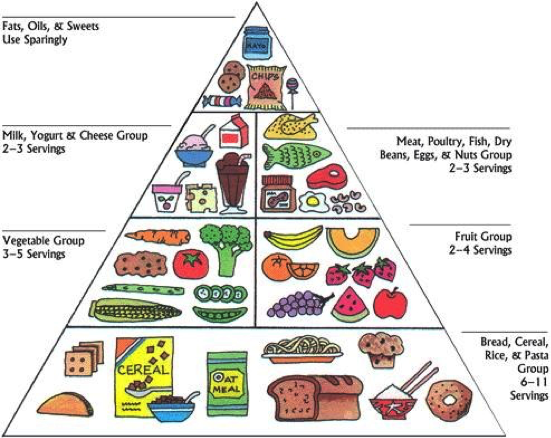
Even the basic Food Pyramid – remember this? Its emphasis on grains and drastically reduced fat intake is being questioned after so many years of use. Current thought is that it is too vague, with no indication of serving sizes, and places too much emphasis on carbohydrates.

It seems that eating healthy has become a complicated matter, with conflicting recommendations. Scientists seem to be searching for which nutrient is causing increased rates of chronic disease in North America. The fact that they seem to change their minds about what is good or bad for us every few years suggests that we need to look at the bigger picture rather than single nutrients in food.

Nutritional science is a relatively new field, in existence for about 200 years. Some have compared this “science” to the surgery in the 1600s… not yet very advanced! Well-meaning scientists’ attempts to identify individual nutrients that are causing the problems have led to a great deal of confusion for consumers. The reason behind all this research is that our Western diet has been linked to obesity, type-2 diabetes, about 80% of cardiovascular disease, and over one third of all cancers. The good news is that changing from a Western diet to a healthier one results in rapid improvements in health.

Many very different traditional diets exist that are not associated with chronic diseases. These include the high fat diet of the French, the high animal protein diet of the Masai tribes in Africa, and the high carbohydrate diet of Central American Indians. None of these traditional diets have been linked to the chronic diseases that we see associated with the typical Western diet, although they are very different from each other. Our Western diet is unique in containing large amounts of processed food and meat, lots of added fat and sugar, and lots of refined grains, but very little vegetables fruit and whole-grains.

So, after so much talk about what to avoid, what should we eat?

I think I’ve found a good answer in a little book I stumbled across called “Food Rules, An Eaters Manual” by Michael Pollan. He proposes 3 simple rules that make a lot of sense:

  1. Eat food

  2. Mostly plants

  3. Not too much

Sounds easy, right? I certainly thought so. Let me explain the rules a little and you will see why they make sense to me…

1. Eat food

This means, eat real food, with ingredients that you would find in your Mom’s cupboard, food that has not been highly processed. Food processing is designed to make food last longer on store shelves, not to make it taste better or to be healthier for us. The amount of processing of food is a major difference between the harmful Western diet and healthier traditional diets.

2. Mostly plants

Vegetarians generally tend to be healthier than those who eat meat. It is suggested, however, that using meat as a flavoring or in small amounts can result in a diet that is just as healthy as a vegetarian one. Whether it is some component of meat or the fact that larger amounts leave less room on the plate for vegetables has not been determined, but simply reducing the amount of meat in your diet and eating more plant foods is a simple rule to follow to improve your diet.

3. Not too much

How much you eat and how you eat it may be as important as what you eat. When you are distracted while eating, you tend to eat more so eating in front of the TV or while driving or working means you will likely eat more. When you eat quickly, you also often eat more, since it takes about 20 minutes for your brain to register that you are full. You should eat only until no longer hungry, rather than eating until you are full or have finished everything on your plate (in spite of what your mother may have told you!). Eating more slowly will allow you to more readily detect when you are no longer hungry before you have actually overeaten.

Here are some other suggestions for healthy eating:

  • Shop mostly on the outer areas of the grocery store; avoid the centre aisles that are mostly processed packaged foods. Buy at a farmers’ market as often as you can – they sell locally grown, whole foods that don’t need to be preserved to reach their market. If you worry about food spoiling, freezing is often the best way to preserve food without losing the nutritional value.

  • Avoid “lite”, “low-fat” and “nonfat” foods – generally these tend to be more highly processed and often sugar is added to boost flavour that is lost when fat is removed.

  • Eat only food that will eventually rot – if bacteria and fungi don’t go for the food, we probably shouldn’t either!

  • An old Chinese proverb says “Eating what stands on 1 leg (plants, mushrooms) is better than eating what stands on 2 legs (fowl), which is better than eating what stands on 4 legs (cows, pigs, etc).” Of course, this ignores healthy legless fish, but it’s an easy rule to remember!

  • Eat your colours – a variety of colours indicates a variety of nutrients and it helps your meal look more appetizing too!

  • Eat food that is grown in healthy soil (this often means organic) or is fed healthy food (usually this means pasture raised rather than grain fed). Just like us, plants and animals need healthy food to be healthy themselves! More nutritious food generally has better flavour and is more satisfying…

  • Alcohol of any kind has health benefits. It is best taken in moderate amounts with food and on a daily basis rather than binge drinking. How alcohol improves health is not well understood but it is part of several healthy traditional diets, notably the French diet.

  • “The whiter the bread, the sooner you’ll be dead” is an old saying that has merit…white flour is not much different from sugar once it’s ingested. The substances that are removed from whole grains to make them white are the most nutritious part of the grain – it just makes sense to eat the whole grain.

  • Eat when you are hungry, not when bored, as a reward, or for entertainment. Be aware of why you are eating.

  • Use a smaller plate and smaller serving containers. We eat more when a larger portion is served, and we serve ourselves more when using a larger plate or serving from a larger container.

  • Make eating an enjoyable experience – share meals with others whenever possible, take your time and enjoy the taste of the food and the company you are sharing it with. Treat the preparation and eating of meals as a family or social ritual to be enjoyed, to elevate it from a biological necessity to the enjoyable part of life that food should be!

Lastly, what matters is what we do routinely – breaking the rules for special occasions can be good for our happiness and probably also for our health. So all we really need to do to be healthy, is to keep “Everything in moderation” along with the basic 3 rules: “eat food, mostly plants, and not too much”!

To learn more, read Michael Pollan’s short, well-researched book, Food Rules: An Eater’s Manual or his more detailed In Defense of Food: An Ester’s Manifesto.

Categories
Health

Drug-induced nutrient depletion

Did you know that some drugs can cause you to lose nutrients from your body? Some side effects of prescription drugs may not be directly due to the drug itself, but may instead be caused by a nutritional deficiency caused by the drug over time.

While much research has been done in this area over the past 50 years, the results of many of these studies are not widely known… If you are aware of these potential deficiencies, you can then adjust your diet or take a supplement to replace what is being lost, and this may improve your tolerance of the medication and avoid some negative health effects.

Here are some examples:

  • Antibiotics – Broad spectrum antibiotics, those that kill a wide range of bacteria, also kill the good bacteria in your digestive system that help digest food, and protect us from harmful infections. These good bacteria, lactobacillus and bifidus, also produce a range of B vitamins and vitamin K. This interaction is of particular concern in those taking the blood thinner, warfarin, which works by blocking vitamin K’s action to promote blood clotting. Less good bacteria, means less vitamin K, which increases the effect of warfarin, leading to an increased tendency to bleed. B vitamins have many functions in the body, so a lack of these may have many effects.

  • Acid suppressing drugs – Stomach acid is necessary to absorb many nutrients, so suppressing or neutralizing acid long-term can cause depletion of various vitamins and minerals. Simple antacids can reduce absorption of calcium and phosphorus; histamine-2 receptor inhibitor drugs like ranitidine (Zantac) can deplete calcium, folic acid, iron, vitamin B12 and zinc; proton pump inhibitor drugs, such as omeprazole (Losec), pantoprazole (Tecta) and esomeprazole (Nexium) can reduce absorption of vitamins C, B6, B12, folic acid, magnesium and zinc.

  • Diuretic blood pressure medications – Hydrochlorothiazide, the most widely prescribed “fluid pill”, can deplete potassium, magnesium, Vitamin B6, coenzyme Q10, and zinc. Pharmacists will often advise to drink orange juice or eat a banana a day when taking these to replace lost potassium but potatoes actually contain more potassium than bananas… In extreme cases, potassium supplements are necessary, but changing to a different fluid blood pressure medication is a simpler approach to correcting the problem.

  • Birth control pills – Hormonal birth control medications deplete vitamins B2, B6, B12 and C, folic acid, magnesium and zinc. Low folic acid is associated with the birth defect, spina bifida, and this is one reason it is advised to stop birth control pills a few months before trying to become pregnant.

  • Beta-blockers and “statin” cholesterol drugs – Both of these classes of medications, often used together in heart patients, can reduce production of coenzyme Q10. CoQ10 is used in the mitochondria, the energy factories inside our cells, to produce the energy that is needed for all body functions, and it is an important antioxidant as well. Low coQ10 can affect many functions, in particular heart function. It is widely used in Japan as a treatment for various cardiovascular problems. Although coQ10 is present in small amounts in many foods, it would be difficult to get an amount comparable to what is normally produced by the body, making supplementation the best way to prevent coQ10 depletion.

  • Metformin – This drug, used to treat type-2 diabetes, depletes vitamin B12, a vitamin that is necessary for producing red blood cells and nerve growth and repair. One of the long-term consequences of diabetes is numbness of the extremities, due to nerve damage, known as peripheral neuropathy. In one study, nursing home residents with peripheral neuropathy who were taking metformin were given vitamin B12 supplements – 30% reported that their neuropathies improved, suggesting that lack of B12 was the cause. Deficiencies of B12 in the elderly can also cause moodiness, confusion, abnormal gait, memory loss, agitation, delusions, dizziness, dementia and hallucinations. Vitamin B12 is also depleted by numerous other drugs, as noted above. A simple blood test can readily identify low B12.

  • Mineral oil and stool softeners – Used for treating constipation, mineral oil is poorly absorbed from the digestive system and it works by creating a lubricant effect in the bowel. Stool softeners also stay in the bowel where they mix with stool, preventing it from hardening and causing constipation. However, vitamins A, D, E and K as well as the vitamin A precursor, betacarotene, tend to dissolve in these laxatives, reducing their absorption into the system and, instead, being excreted in the stool. Laxatives containing mineral oil or stool softeners can deplete these fat-soluble vitamins, especially if taken multiple times daily with meals. For this reason, they are best taken at bedtime, away from meals.

These are just a few examples of nutrients that can be depleted by medication. So, if you are taking medications regularly, ask your pharmacist to research whether you may need to replace any particular nutrients. To ensure they have sufficient time to research your question properly, I would suggest leaving your request and checking back in a day or two, rather than expecting them to give a quick answer from memory.

Not all nutrient depletions will occur in all individuals, however; ask your doctor to include tests for nutrients that may become depleted due to medication you are taking, along with your regular annual blood tests, to avoid taking unnecessary supplements. Also ask whether simply adjusting your diet would be adequate, given the degree of nutrient depletion found in testing.

Reference: Drug-Induced Nutrient Depletion Handbook; R Pelton, JB LaValle