Categories
Public Health

Is plastic making us gain weight?

Increasing evidence suggests that plastic is making us gain weight. A common ingredient in plastic, Bisphenol A (BPA), is the suspected culprit…it disrupts the normal actions of our hormones leading to a hormone imbalance that can cause an increase in body weight.

BPA has been identified as an “obesogen”… a chemical that can inappropriately change stability of fat metabolism (or fat homeostasis) and fat storage, change setpoints of metabolism, disrupt energy balance or change the regulation of appetite and feeling of satiety (or fullness) to promote fat accumulation and obesity.

A study in 2012 found that children and teenagers who had higher levels of BPA in their urine were more likely to be overweight. Similar results were found in studies of adults. Data from the American Centers for Disease Control (CDC) show that 92.6% of people age 6 and over have detectable levels of BPA in their urine.

Worries about BPA toxicity have led to BPA-free products being produced, using BPS and BPF instead. But are these products safer?

They may not be. A new study, published in the Journal of the Endocrine Society in July 2019, suggests that all of the biphenols are linked with obesity and weight gain. Although diet and exercise are still considered the main factors in controlling weight, these chemicals may also be a factor.

Researchers point out that an association between bisphenols and obesity doesn’t necessarily prove they cause weight gain. They say more research is needed. However, this is just another reason to avoid use of plastic, and especially to ensure that it doesn’t come in contact with our food and drinks. Transfer of chemicals from plastic to food is more likely to occur when the food is hot or contains fats or oils, since these hormone-disrupting chemicals tend to dissolve in fats and oils, just like our own hormones do.

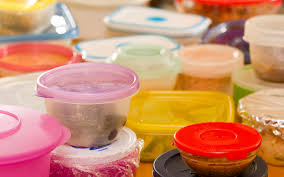
So,whenever possible, choose foods that are sold in paper, cloth or metal containers or, better yet, are sold in bulk with no packaging. Aim to buy drinks that are packaged in glass bottles. If you must use plastic items, the American Academy of Pediatrics recommends washing them by hand as dishwashers can break down plastic more quickly, increasing the chance of chemicals leaking in future use. Don’t reuse plastic containers, like yogurt containers, that are designed for single use. Never microwave food in any plastic container that is not labelled “microwave safe”. Plastics labelled with 3, 6 or 7 in a triangle contain chemicals that should not come in contact with food (phthalates, styrene and bisphenols).

Avoiding plastic containers helps to reduce plastic waste and protect the environment. But, at the same time, you may also be improving your health and your waistline!

Interested in learning more about hormone disruptors? Check out my recently published book:

“Can I Speak to the Hormone Lady? Managing Menopause and Hormone Imbalances”. As well as discussing menopause problems, I also talk about what hormones do in the body and how chemicals in the environment can interfere with your hormones.

References:

Definition of “obesogen” (Wikipedia)

Chemical in Plastic Linked to Childhood Obesity

BPA-Free But Still Dangerous? Replacement Chemicals Linked to Childhood Obesity

You Shouldn’t Microwave Food in Plastic Containers or Put Them in the Dishwasher, Says New Research

Microwaving Food in Plastic: Dangerous or Not? Harvard Health

Can I Speak to the Hormone Lady? E-Book: Universal Book Link to several book services or Print: Amazon Canada Amazon US
Categories
Public Health

What Do the Metric System, Smoking, Carbon Tax and Plastics Have in Common?

The metric system, smoking, carbon tax and reducing plastic pollution all require us to accept change to make things better in the future… for our children and our grandchildren. What can we do to help people change when it’s really important?

The Metric System

Canada changed from miles, ounces and Fahrenheit degrees to the metric system of kilometers, grams and Celsius degrees back in the 1970’s. I was in university then and found it a bit easier since my high school science labs had been in metric, but they made it easier by giving measurements, like weather temperatures and speed signs, in both systems for years until everyone got used to the new system.

We also bought thermometers and rulers with both scales on them. I told customers not to convert fever temperatures but, instead, to just remember that 37C was normal and 40C was really high (equal to 104F). For pharmacists, actually, it was a relief…as we had to learn the Canadian system of weights and measures (like the British), the American system (with it’s slightly different ounce and gallon), the metric system AND the obscure Apothecary system with it’s grains, scruples, drams and ounces (yes…pharmacists do have scruples!). It was a relief to use the simple conversions of the metric system!

So, our government legislated the change but continued the old system until everyone became used to the new way of measuring.

Smoking

To discourage smoking, based on research showing second hand smoking is harmful, cities banned smoking in public and eventually in restaurants and other public areas. This made smoking an activity that had to be done in a special area and not acceptable everywhere as it had been. Along with government-sponsored education, this “denormalization” of smoking has led to steadily decreasing rates of smoking in North America.

A combination of restricting where smoking was acceptable and educating people why it was dangerous worked to gradually change behaviour. However, I read this week that smoking rates have increased again recently, possibly due to the availability and popularity of e-cigarettes. There’s still more work for governments to do to eliminate this harmful habit, but there are still fewer smokers than there once were!

Carbon Tax

The Carbon Tax is a fee imposed on the burning of polluting carbon-based fuels, like coal, oil and gas. While the tax is much debated, experts say it will change behaviour: The tax will encourage people to choose products and services that are less polluting to avoid the tax. Nothing like money to make people consider changing! Our Canadian government tells us the Canadian version of this tax will be revenue-neutral for government and much of the population – the tax collected will be rebated to consumers – but studies say it will still work as an incentive to change.

Plastics

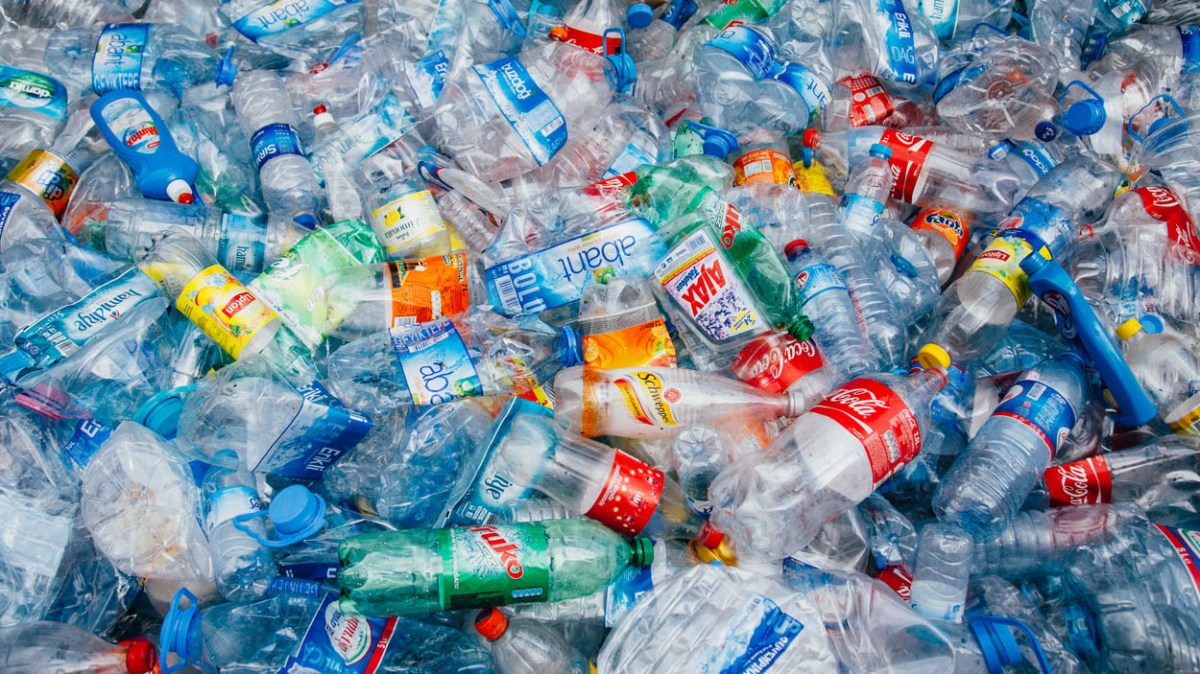
There’s a huge problem with plastic that most of us don’t see… tons of plastic waste are ending up in our oceans and lakes and it takes years and years to degrade. As it breaks down it becomes “microplastics” that enter our food supply. Substances in plastics affect our hormone function and our health.

So, what can be learned from other system changes we’ve made that can be applied to plastics? We need awareness, education and system changes to make us want to correct what we’re doing. Scientists estimate that by 2050 there will be more plastic by weight in oceans than sea life…

Here are 9 suggestions for things you can do:

  1. Use reusable items instead of disposable:

    1. This includes bags, cutlery, straws, coffee cups, plastic wrap and anything else you can think of.

  2. Stop buying bottled water

    1. Filter water instead and use reusable bottles. You can even get bottles with a filter built in!

  3. Boycott products with plastic microbeads, such as soaps, body wash, toothpaste.

    1. These tiny beads often slip through water treatment systems and look like food to fish.

    2. Microbeads are already banned in some countries.

  4. Cook more at home to avoid packaging.

    1. If you do order out, ask for no cutlery to be added to your order.

  5. Buy second-hand.

    1. Second-hand items are not packaged, you’ll prevent these items from ending up in landfill and you’ll save money!

  6. Recycle!

    1. Already many communities require us to separate plastics and other items in our garbage, so they can be recycled. And in some communities, if you don’t, they may just leave your garbage at the curb (my neighbours call them the garbage police!). So, changes are happening at the community level. However, not all communities participate in separating and recycling garbage. If yours doesn’t, suggest it!

    2. And recycle in your home too! Reusing plastic bags and containers means fewer will end up in the garbage.

  7. Support bag charges and bans.

    1. These can be one of the fastest ways to make people change their habits quickly.

  8. Buy in bulk (yogurt, snacks, etc.).

    1. Buy large sizes and repackage these into reusable containers or, better yet, make your own snacks! Might be tastier and better for you too…

  9. Put pressure on manufacturers and retailers to change.

    1. Email, Tweet or just buy elsewhere when you notice bad plastic practices!

Please watch the short video on the plastic problem on the Plastic Pollution Coalition website. In addition to further explaining the problems we are facing with excess use of single-use plastic, there are links to information on how to reduce the problem and live “plastic free”.

Categories
Environment Health

Plastic? Think twice…

Plastic doesn’t decay…it breaks into smaller and smaller bits until you can no longer see it. We call these microplastics. And these tiny particles are making their way into our drinking water—and our bodies. They can take hundreds of years to decompose, if they do… Plastics have only been around for 50 years, so that’s just an estimate. The bigger problem is that they are not inert…plastics contain substances that can compete and interfere with our hormones.

You don’t have to ingest the actual plastic for it to affect your health either. Substances, sometimes called “plasticers” that keep the plastic soft and flexible can be transferred into your food when you cook, store or serve food in plastic. These fat-soluble chemicals can mix with oily or fatty foods and your body can store them in fatty areas. Hot food, fat or oils, and damage to the surface of the plastic makes it easier for chemicals to transfer into food. Softer plastics are thought to transfer their chemicals more readily.

Plastic in our food

Sometimes you can even taste the plastic…coffee in a Styrofoam cup, a dairy that always sold their chocolate milk in glass bottles because they noticed plastic ones affected the taste. I even noticed water, served in a scratched plastic pitcher at a conference, tasted strongly—unpleasantly—of plastic. I didn’t drink it.

We’ve all put tomato sauce into a plastic container and noticed the orange colour became imbedded into the walls of the container. Plastic takes up oily substances, just as its chemicals pass into fatty foods. Questions have been raised about other substances plastics in the environment could be absorbing and transporting. The United Nations Food and Agriculture Organization is concerned that some plastic particles may be small enough to pass into our bloodstream and collect in our organs where chemicals they contain can gradually leach into our system.

Plastic can affect our hormones

Some of these chemicals are “hormone disruptors”…chemicals that interfere with how your hormones act in your body. And some, like bisphenol A (BPA) have been linked to hormone-related cancers and possible effects on unborn babies because of their hormone-like activity. More study is needed on the health effects of plastics.

Results of a new study conducted by Orb Media, a partner of CBC News, found microplastics in 93% of 11 brands of bottled water they tested from 9 different countries. They were only able to identify particles 100 microns (0.1mm) or larger. It seems likely that there were more smaller particles they were unable to detect.

They defined microplastics as pieces of plastic 5mm or smaller. They are created when plastic waste disintegrates and were also manufactured for use in exfoliant skin care products. The European Food Safety Authority has suggested that most swallowed microplastics are excreted by the body, but researchers have found microplastic beads from skin care products in stomachs of fish in the Grand Lakes. This has lead to banning of these beads in commercial products.

Plastic “islands”

Plastic waste continues to build in coastal waters. Researchers estimate that by 2050 there will be more plastics in the oceans than fish. Ocean currents cause them to collect in some areas, creating plastic “islands”. They block the sun’s rays from entering the water and trap sea life.

It’s easy to think we can’t be ingesting enough plastic to harm us. But we humans are at the top of the “food chain”—everything our food sources take up we consume and concentrate. We need to pay attention to what we put into the environment…and to what we are essentially “feeding” our food!

You can help…

This weekend, go buy yourself a water bottle made of glass, metal or ceramic and stop buying bottled water. If your tap water at home has an unpleasant taste, get a water filter. It’s a simple thing you can do to save the environment, save money, and save your health at the same time.

References:

Exposure to Chemicals in Plastic – Breast Cancer.org http://www.breastcancer.org/risk/factors/plastic

CBC: Microplastics article http://www.cbc.ca/news/technology/bottled-water-microplastics-1.4575045

Categories
Health

Hormones and chemicals in plastic

I used to think that “microwave-safe” simply meant that the container would not melt or warp when used in the microwave. However, many plastics contain harmful ingredients that can leach into food, especially when heat or oils are present, and should never be used in a microwave. So, in addition to being structurally intolerant to heat, some plastics actually become harmful to our health when used in the microwave.

I learned this the hard way. When my kids outgrew their Tupperware “sip ‘n’ seal” cups and lids I thought they would work well for coffee in the car. Eventually, the plastic taste in my coffee became so strong I discarded the cups, never realizing I had been endangering my health.

During this time I had a series of health problems with mammogram and Pap test recalls… but I didn’t connect the two until I attended a lecture on environmental connections to breast cancer, sponsored by our local breast cancer support group.

We watched a film entitled “Exposure: Environmental Links to Breast Cancer” then participated in a discussion with the producer and director of the film. They described many different types of environmental chemicals that have been connected to increased rates of cancer, including ingredients in plastic that contacts our food, some of which can disrupt the action of hormones in the body. I believe this film may still be available – I found a source online (www.womenshealthyenviroments.ca) or you could check with your local library if you are interested in seeing this film.

So, when it comes to plastics, some are safer than others. A numbering system, 1 to 7, has been developed to help sorting plastics for recycling, but the numbers also help us know which plastics are considered safer. You’ve probably noticed these numbers surrounded by a triangle, embossed or printed on the plastic container, usually on the bottom.

Basically, types 2, 4 and 5 are considered safest, with types 1 and some 7’s considered safe with some precautions. Here are the details:

  1. PET (or PETE) – Polyethylene Terephthalate

    • Thin, clear plastic

    • Used in water bottles, cooking oil, peanut butter jars, soda pop bottles

    • Safe for one use only

    • Do not heat or reuse (or leave in a hot environment, such as in a car)

    • Can be recycled once into other products

  2. HDPE (High density polyethylene)

    • Thick, opaque plastic

    • Used in milk/water jugs, juice bottles, containers for detergent, shampoo, motor oil, toys

    • Limit how often they are refilled

    • Can be recycled as with type 1 plastic

  3. PVC (Polyvinyl chloride)

    • Can be rigid or flexible

    • Used for bibs, mattress covers, commercial plastic wrap, some food and detergent containers

    • Recommended to avoid. Manufacture of PVC creates dioxin, a potent carcinogen

    • PVC may also contain phthalates to soften it. These are hormone-disrupting chemicals linked to reproductive problems and birth defects. (It seems likely that I mistakenly exposed myself to this type of chemical)

    • Difficult to recycle

  4. LDPE (Low density polyethylene)

    • Soft flexible plastic

    • Used for grocery bags, household plastic wrap, garbage bags

    • One of the safer plastics but best to recycle and reuse when possible to reduce impact on the environment

  5. PP (Polypropylene)

    • Hard but flexible

    • Used to make ice cream and yogurt containers, drinking straws, syrup bottles, salad bar containers, some dishware, diapers

    • One of the safer plastic, but recycle when possible as with type 4 plastic.

  6. PS (Polystyrene)

    • Rigid

    • Used for styrofoam coffee cups, meat trays, opaque plastic spoons and forks

    • Avoid. Can leach styrene, a known neurotoxin with other harmful effects

  7. Other (includes polycarbonate, bioplastic and acrylic)

    • Polycarbonate – used for 5-gallon water bottles, sports bottes, clear plastic cutlery, linings of food cans

    • Bioplastics – uused for biodegradable garbage bags

    • Safety grab bag:

      • Polycarbonate is made from BPA (bisphenol-A), a harmful synthetic estrogen (hormone disruptor). Usually labeled “Not for microwave use”. Best to avoid.

      • Bioplastics are considered safe for their stated use. Must not be recycled with other plastics (due to programmed degradation)

      • Acrylic (Plexiglass) – non-BPA, usually labeled “hand-wash”, “BPA-free”, safe to use but microwavable

      • Tritan (SAN) – BPA-free clear plastic. Looks similar to polycarbonate but does not contain BPA.

      • Melamine – considered less safe, not microwavable. Melamine is toxic if ingested with food.

    • Often type 7 plastics are not labeled. Check if BPA-free labeling.

So, to uncomplicated things a bit, here are some basic recommendations to follow to reduce potential exposure to harmful ingredients in plastic and protect the environment at the same time…

  • Choose glass, metal or food-safe ceramic to heat and store food whenever possible

  • Plastics labeled as recycle types 2, 4 and 5 are safest, with type 1 acceptable for single use only. Type 7 plastics need further investigation. Avoid food contact with other types of plastic.

  • Avoid exposing any plastic to high temperatures as much as possible (do not microwave or put in dishwasher)

  • Even with safer plastics (2, 4 and 5) acidic food, fat/oils and heat will promote breakdown of plastic and leaching of plastic ingredients into food

  • Recycle or discard cracked or worn plastic items as these are more likely to leach chemicals

  • Always recycle plastic except for biobased plastics

  • Avoid buying processed and packaged foods if possible. Buy from bulk and use reusable containers from home as much as possible

  • Use reusable shopping bags and lunch containers (stainless steel, glass, ceramic or wax paper) whenever possible

If you are interested in a chart of plastic types to download or print, a good one is available here.

References: healthychild.com, babygreenthumb.com, davidsuzuki.org