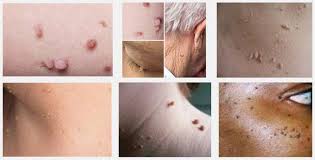
Skin tags are very common small, soft, skin growths that usually occur in a fold of skin. They are harmless but some people find them unsightly and annoying. These growths are most commonly found on the neck, underarms, groin, eyelids, or under breasts – any area where skin rubs against itself or clothing.
They are thought to be caused by friction, and are more common in obese and middle age or older adults. However even babies can develop them… Up to 60% of people will develop skin tags at some point in their lives.
Skin tags can be the same color as skin or slightly darker. They are usually 2 to 5 millimeters in diameter (roughly the size of an apple seed) but are occasionally as large as 1 cm (0.5 inch) or even 5 cm (2 inches). They are generally attached to underlying skin by a small band of tissue called a stalk or “peduncle” that is narrower than the body of the tag.
Skin tags do not actually require any treatment, unless irritation is occurring. Removal will not cause more to grow. They do not become cancerous if left untreated.
Treatment
Treatment is by removal. Keep in mind most skin tags do not need to be treated. Most doctors only recommend removal if they become irritated from rubbing or catching in clothing, jewelry or seat belts but most removals are for cosmetic reasons.
Skin tags can be removed by freezing, burning, or cutting them off. Currently, no creams are approved as treatment, and using products designed for other uses may cause irritation of the area and possibly secondary complications, such as infection.
Your doctor will usually numb the area (by injection or by applying an anesthetic cream), especially if the skin tag is large, then cut the stalk with sterilized scissors.
Alternatively, the stalk will be tied with thread or dental floss to block blood circulation to the tag, causing it to drop off after a few days.
Your doctor may choose to burn the tag using medical electrical cautery, which passes electrical current through it with a special device.
Skin tags can also be removed by freezing with liquid nitrogen. This can be done by your doctor or kits are sold at pharmacies to do yourself this at home. Usually this skin tag will drop off 7 to 10 days after treatment.
These procedures can be performed by a family doctor or dermatologist. You may need to see an eye specialist for removal of tags near the eye. Skin tags may drop off spontaneously if they become twisted, blocking off blood supply.
Occasionally, your doctor will have the removed tissue examined to confirm the diagnosis, especially if the tag has bled, grown noticeably, or is multicolored… symptoms that could suggest presence of skin cancer. However, it is generally rare for a skin cancer to resemble a skin tag.
Risk factors
-
Obesity – more skin folds creating increased friction
-
Pregnancy or hormone imbalance – higher levels of estrogen and progesterone
-
Infection with HPV-6 (a strain of human papilloma virus)
-
Individuals with diabetes (if increased insulin levels due to insulin resistance)
-
Note that people who are overweight also may have higher insulin levels due to insulin resistance
-
-
Possible association with high cholesterol, high blood pressure, and elevated CRP (C-Reactive Protein, a marker of inflammation)
-
Possible genetic factor – people with close family members may be more likely to develop skin tags
Prevention
Based on the understanding that skin tags are likely caused by friction, preventing clothing from continually rubbing on the same area of skin or reducing rubbing of surfaces in skin folds (for example, by using powder) may possibly reduce the formation of these small harmless tumors. Treating underlying modifiable risk factors theoretically could also be helpful. However, I could not find evidence of any studies that had examined the effectiveness of these strategies.
 Jeannie Beaudin, Artist and Author