Categories
Uncategorized

Sleep Stories and Myths

Edgar Allen Poe called sleep “Those little slices of death”… but our sleeps are really essential slices of life, needed to keep us healthy, both mentally and physically.

There are lots of myths that surround sleep and how to get a good night’s worth… Here are a few of them that have been shown not to be true:

1. “Your brain shuts down during sleep”—No, there is a lot going on in your brain while you’re sleeping. Of course, your brain has to continue your breathing and other essential functions. But there’s much more than that happening while you sleep, and this brain activity occurs in 4-stage cycles, one of which includes dreaming. The dream stage of sleep is also known as Rapid Eye Movement (REM) sleep as the eyes have been observed to move quickly while a person is dreaming. The amygdala, an important center for emotions in the brain, is active during sleep, suggesting we process emotions while sleeping. The thalamus, which acts as a relay station for sights, sounds and feelings, sending them to the cerebral cortex for translation, is quiet during sleep except during the dreaming phase. This suggests it is collecting information from our dreams and passing it along for processing in the cortex.

2. “After a good sleep, you remember your dreams”—Actually, even though we usually have 5 or 6 dream sessions per night, we rarely remember any of them. There are nerve cells that are active during dreaming that produce a chemical called melanin-concentrating hormone (MCH). MCH regulates sleep but also inhibits the hippocampus, an important area of the brain for storing memories. Researchers think this chemical might be why we rarely remember our dreams. But we’re also more likely to remember dreams if we wake up during or right after them. So if you remember your dreams, this may mean you had a poor night’s sleep with frequent awakening. When you wake in the morning thinking that you dreamt a lot, this might just mean you woke during the night more often than usual. One research study backs this up: they found that people who woke more often at night tended to remember their dreams more often.

3. “You shouldn’t wake up someone who is sleepwalking”—The claim that waking a sleepwalker could cause them to have a heart attack or even die isn’t true. However, waking them could cause confusion or fear. My younger sister, that I shared a room with for several years, would sleepwalk occasionally. I learned that I could just tell her to go back to bed and she usually would! Experts suggest this is the best plan, as sleepwalking can result in injury to the person. They may also strike out in fear if you try to wake them, causing injury to you. I had some fun with my husband years ago when he was talking in his sleep. “It’s more sexy!” he said. Knowing I could likely get a conversation going, I asked “What’s more sexy?”. “To do it in the summer” was the answer. This sounded like it was going somewhere interesting… so I asked “To do what in the summer?”. I cracked up when he said “Smoke Virginia cigarettes!” His brain must have been processing an ad he’d seen…

4. “Having a few drinks before bed will guarantee a good night’s sleep.”—Nope… Although alcohol can shorten the time needed to fall asleep and can make a person harder to awaken, experts tell us it reduces the quality of sleep, leaving you feeling less rested the following day. To feel refreshed after a night’s sleep, your brain needs to pass through the 4 phases of sleep for several cycles, usually 5 or 6. Alcohol tends to disrupt these repetitions, particularly reducing the REM dreaming phase of sleep in the early cycles of the night as well as the total percentage of time spent dreaming. Heavy alcohol users also report more sleep problems and 35 to 70% are diagnosed with clinical insomnia. So alcohol does get you to sleep more quickly but the sleep will likely be less refreshing.

5. “Cheese before bed can cause nightmares”—I hadn’t heard this one before, but a heavy meal just before bed makes your digestive system active when you’re trying to sleep and might be disruptive to sleep for some. However, many cultures eat late routinely and seem to be OK with it. We were surprised that restaurants in some countries we’ve visited (France and Spain) often don’t open for supper until 6 or even 7pm! But, if you suffer from heartburn, having food in your stomach increases the chance that some could regurgitate during the night, just because there’s something there. Advice for reducing heartburn at night includes avoiding food for 2 hours before bed. As described earlier, waking more often means you will remember your dreams, some of which might be scary ones! There is a suggestion that this myth might have started from certain cultures that feature cheese boards at the end of an elaborate meal eaten late in the evening. On the other hand, a glass of warm milk is often suggested to help a person sleep. The theory is that milk contains the amino acid, tryptophan, that the body can change into serotonin and subsequently into melatonin, that plays a role in sleep. However, studies have been unable to show that there is enough tryptophan to actually increase melatonin significantly. But a warm milk ritual would be relaxing and could be a helpful part of a person’s bedtime routine and definitely a good substitute for a caffeine containing beverage that might keep you awake.

A chronic lack of sleep can increase your risk of several health conditions, such as obesity, heart disease, depression and diabetes, and being tired during the day from a lack of sleep can increase the chance of injuries from drowsy driving or not be as alert when operating dangerous equipment. So what can you do to get a better night’s sleep?

Exercise—20 to 30 minutes during the day can help you sleep better. It’s often recommended not to exercise just before bed though.

A comfortable bed—a mattress that’s old or not suited to your preference (too hard or soft) can be a cause of sleep issues. The National Sleep Foundation recommends replacing a mattress after 9 or 10 years.

Have a sleep-friendly bedroom—a cool room temperature and removing devices that make noise (like your cellphone!) or emit light helps to avoid sleep disruptions. If you wake because of overheating (cue the hot flash, ladies!) having a fan to help you quickly cool off can help you get back to sleep quickly.

Have a relaxing bedtime routine—meditation or yoga, reading a book, a bath or shower or listening to music can help you unwind before bed and fall asleep more quickly. Experts suggest avoiding devices with screens if you have sleeping problems.

Limit alcohol at night—too much alcohol can disrupt sleep by increasing snoring and sleep apnea (stopping breathing for a short time while asleep). And, as mentioned earlier, it can disrupt sleep patterns and increase night awakening.

Keep a regular bedtime—a regular bedtime and wake up time helps to establish your natural sleep-wake cycle.

Avoid large meals and excessive liquid before bedtime—This advice seems to depend on the person but having a small snack is recommended if you’re hungry. Drinking too much liquid before bed can increase the chance you’ll need to get up to pee during the night, disrupting your sleep. Caffeine beverages up to 6 hours before bedtime can disrupt sleep.

Napping?—naps during the day can recharge your energy but keep them to less than an hour. Twenty to 30 minutes may be all you need to refresh.

Avoid tossing and turning—if you have trouble falling asleep, experts recommend getting up and doing something relaxing for a while. Even a short walk around the house before returning to bed may make a difference.

Taking steps to improve your sleep is referred to as “sleep hygiene”. If you have long-standing sleep problems and have tried these suggestions, talk to your doctor about what else might help. But use sleep medications with caution—sleeping pills are a well-known cause of insomnia and most are recommended to only be used continuously for up to 7 days as you can easily become dependent on them. Unfortunately, your body also tends to adapt to sleeping medications quickly, leading to the need for an increase in dose to gain the same effect while also guaranteeing you will likely have insomnia when you decide to stop the medication. This rebound insomnia can last for days to weeks, depending on how long you have been continuously taking it.

References:

Medical myths: The mystery of sleep — Medical News Today

Tips for sleeping better — Medical News Today

#sleep #sleeptips

Categories
Uncategorized

Plants that “bite”

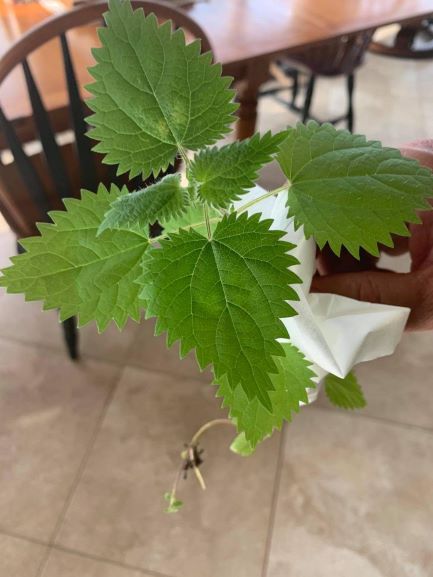
I had a new experience this week…I tried to pull a weed from an indoor plant, and it bit back! Turned out that the weed was stinging nettle. A seed must have somehow made its way into the commercial potting soil or manure that I bought for my indoor plants.

The burning pain from stinging nettle is instant. Tiny hairs on the stem injected an irritating substance into the surface of my skin, causing a reaction so quickly that I didn’t actually pull out the weed that was growing among my plants!

Finding some relief…

Fortunately, I had grabbed for the weed with my right hand (I’m a lefty…) so I wasn’t totally incapacitated. My first instinct was to run cold water over the area and wash it with soap to try to remove the offending plant substance, and that really helped. But my next choice was a mistake that many make… I smeared the area with a numbing cream I keep on hand for first aid use, to make sure my hand wouldn’t start to burn again when it warmed up to room temperature. It happened to be an antibiotic cream with lidocaine. Bad choice, as it turned out.

The lidocaine and the antibiotics irritated the area and started up the burning sensation again with a vengeance! Ice wrapped in a paper towel applied to the area numbed it to a tolerable level and I turned to my favourite social media channel for sympathy. Fortunately, a former pharmacy student of mine who is now a doctor came to my rescue! Here were her recommendations:

  • Take a fast-acting antihistamine ASAP (the stinging hairs contain a substance that causes a release of histamine stimulating the reaction)
  • Wash off the irritating lidocaine and antibiotics, and apply a hydrocortisone cream
  • Continue using ice or a cold pack wrapped in a towel as needed.

Another pharmacist friend also suggested mixing a vitamin C ointment, if I had any on hand, and applying it to the area. Apparently, this is a trick used by hikers who often carry vitamin C tablets with them. I’m not sure how it works, perhaps through its anti-oxidant activity, but I wanted to try all avenues. Being a compounding pharmacist, I had some vitamin C powder (ascorbic acid), and I added a little to the hydrocortisone cream I found in my medicine cabinet. However, I must confess…being somewhat one-handed at this stage, I didn’t compound this to my usual pharmaceutical standards!

I slathered this mixture on and covered it so I could continue to cool the area with a cold pack wrapped in a towel. In case you weren’t aware, it’s important not to put ice or a frozen cold pack directly on the skin as it could cause frostbite… a freezing burn of the skin!

In a little more than 12 hours the pain and irritation were gone and my hand felt completely normal! So, here’s my advice gained through experience: learn to recognize stinging nettle (pictured above) to avoid some misery. But, if you do accidentally touch one of these plants, wash with soap and cold water then apply hydrocortisone and/or vitamin C (ascorbic acid). If you don’t have either of these on hand, they’re available at any pharmacy. If you want to try the combo I used, your pharmacist or pharmacy technician can quickly mix this up for you as I did! Ask them to use hydrocortisone 1% ointment as the base and add 5 to 10% ascorbic acid (vitamin C) to make a paste. The ascorbic acid is more stable in a non-water ointment base and will oxidize (turn brown) quickly in a water-based cream. Call ahead so they can start mixing it before you arrive and be sure to explain your emergency!

Other stinging plants

There are similarities and differences between stinging nettle and poison ivy/oak/sumac reactions. The poison ivy family of plants don’t have the stinging needle-like hairs on the stem, so the reaction takes longer to develop—usually 12 to 48 hours. And the poison ivy reaction can last 2 to 3 weeks, while stinging nettle is usually resolved within 24 hours. Poison ivy can also cause blisters.

But the treatment is similar. Wash the area well with soap and water. Take an antihistamine (preferably a fast-acting one like cetirizine/Reactine) and apply hydrocortisone cream to the area to reduce irritation and itchiness. With poison ivy you also need to be careful with any clothing or items (including pets!) that might have been in contact with the plant. The irritating oil can remain active for months, even longer than a year, and can cause a rash later if it contacts the skin. Handle items carefully (best to wear disposable gloves and turn them inside out when removing them) and wash well with soap and water.

It’s important to avoid scratching, too, as this could introduce infectious bacteria into the skin. If any lesions develop pus or other signs of infection, an antibiotic might be needed, and this would be a reason to see a doctor. Also see a doctor if a large area is affected as cortisone tablets might be preferred to the cream.

Learn to recognize poisonous plants

Want to avoid poison ivy? My daughter advises, “leaves of 3, let it be”. Both poison ivy and poison oak have leaves that grow in groups of three’s… while stinging nettle can be recognized by its spiky pairs of leaves. And never burn these poisonous plants—the toxin can be inhaled in the smoke causing a dangerous respiratory reaction!

One last tip: jalapeño peppers can cause a similar fiery reaction if you chop them with bare hands…always wear protective gloves when trying out that yummy salsa recipe.

Meanwhile, I’ll be stocking up on some gardening gloves to protect my hands when pulling weeds in the future!!

#stingingnettle #poisonivy

References:

Stinging Nettles — Ministry of Health, New Zealand

Poison Ivy Rash — Mayo Clinic

Relief from poisonous plants while on the trail — Outdoor Herbivore Blog

Categories
Uncategorized

Adults get acne too!

Most of us think of acne pimples as a teenager’s problem and that, as adults, we’ve left all that far behind. But adults can get acne too… and it can be just as distressing as it is for teens! The strategies for controlling acne, however, are the same no matter what your age.

What causes acne?

Acne occurs when skin pores become blocked, with oil and bacteria inside. It’s all about inflammation…caused by bacteria breaking down the oil that is trapped inside the pores of the skin, creating irritating fatty acids that cause inflammation and swelling.

So, reducing the amount of oil on the skin, killing skin bacteria and keeping pores open will all help to reduce the formation of acne pimples. And reducing inflammation in the body helps too. Changes in hormones can trigger increased oil production in the skin that promotes acne, and dramatic hormone shifts occur with puberty and with menopause so that’s why we see more problems at these ages. Some people have called menopause “puberty part II”!

Blackheads are plugs of oil that have become trapped in the skin pores and have oxidized, causing them to turn dark. Removing oil by cleansing the skin helps to prevent blackheads. Whiteheads are just blackheads that haven’t oxidized yet. But there are efficient ways of removing them without damaging the skin that I’ll tell you about too!

So, the 3 main strategies to prevent and improve acne are:

  1. Cleanse to remove oil
  2. Keep pores open so bacteria and oil won’t get trapped inside, and
  3. Kill bacteria so it can’t break down skin oil into irritating fatty acids

Cleansing

I talked about skin cleansing last week and, if you have acne, you likely have more oily skin. Washing with only water probably won’t be enough to help although, if you have a mixed complexion with oily and dry areas, you might want to only use a cleanser on the oily area (often these are located in the “T” area of the face, the forehead, nose and chin).

It’s best to cleanse twice daily, morning and night, to remove excess skin oil effectively and reduce bacteria. Any treatment creams should be applied after cleansing.

Opening pores

Salicylic acid is a commonly used “keratolytic” agent, a chemical that loosens surface cells and helps them to slough off. While this type of ingredient is often marketed to help skin look fresher and younger by removing fine lines and surface wrinkles, it also helps to keep pores open, preventing acne by removing dead surface skin cells around the pore openings.

It’s available in cream form and in cleansﻌers. I’ve been using a liquid face cleanser with 2% salicylic acid for the past few years and find it works well for me, as I generally have oily skin with pores that tend to clog easily.

Other keratolytics are available too, such as the water-soluble alpha hydroxy acids, glycolic acid, lactic acid and citric acid. But salicylic acid, a Beta Hydroxy acid, offers the advantage of being oil soluble. This allows it to penetrate oil-clogged pores more easily, helping to dissolve forming blackheads and whiteheads (blackheads that haven’t oxidized and turned dark yet). Salicylic acid is often less expensive than some of the other similar agents also.

If you have a lot of blackheads on an area of the face, they can be efficiently removed without damaging the skin by using blackhead removal strips, such as Bioré. A home-remedy that is almost as good, is a mixture of 2 tsp unflavoured gelatin and 2 tsp milk. Heat in the microwave for 10 seconds, let cool slightly, then apply to the skin. Let it set, then peel off, removing blackheads at the same time, similar to how the commercial strips work. And I’ve heard you can even use Elmer’s White Glue in the same manner (no need to heat) with similar results!

Killing bacteria

Benzoyl peroxide is the best non-prescription antibacterial I know of for the skin. It’s available in 5% (non-prescription) and 10% (non-prescription in the US, prescription in Canada but, in some provinces, pharmacists can prescribe it). As well as killing the bacteria that cause acne, it also has a mild peeling action that helps keep pores open. It was a small miracle when I discovered benzoyl peroxide 10% as a teenager, as the 5% and several other remedies had made little difference for me. And I still use it today whenever I see any sign of a blemish starting.

However, if you have sensitive skin, you should try 2.5 to 5% first, as it can cause irritation. Also, use it with caution near sensitive areas like the eyes and mouth, and wash your hands well after applying to avoid inadvertent contact with eyes.

Benzoyl peroxide is also an ingredient in some cleansers, combining all of the above actions into one product for milder cases of acne. But be aware that it acts like a bleach…I accidentally created big white splotches on my mom’s green towels when I first tried one of these cleansers as a teenager! However, this problem is easily solved by using white towels and facecloths…

Of course, using benzoyl peroxide as a cream or gel is more effective for active acne, as the ingredient will stay on the skin longer and in a higher concentration. A dab of 10% cream on a newly forming blemish can stop it in its tracks within a few hours. Amazing stuff!

Anti-inflammatory diet

The amount of inflammation your body creates in response to the irritating fatty acids produced by the action of bacteria on skin oils depends on how many inflammatory chemicals your body produces. Inflammation throughout the body can be reduced by following an anti-inflammatory diet.

Simply described, an anti-inflammatory diet involves avoiding any foods you are allergic or sensitive to, plus eating foods that are known to be metabolized into anti-inflammatory substances in the body while reducing those that are made into inflammation-promoting substances. Oils in fatty fish, nuts, flax, hemp, and green leafy vegetables are broken down in the body into the omega-3 oils, EPA and DHA which are used to make anti-inflammatory substances. Fats in corn oil, safflower oil, sunflower oil, soybean oil, dairy products, and traditionally raised meats and poultry are metabolized into omega-6 oils that are subsequently made into pro-inflammatory substances in the body. Olive oil and canola oil are considered neutral.

So, the balance of omega-3 to omega-6 oils in your diet can affect the amount of inflammation your body can produce. This affects not only your skin, its blemishes and aging, but also inflammation throughout the body. An anti-inflammatory diet can help reduce asthma symptoms, inflammatory bowel disease, heart disease and many other inflammation-related conditions. But that’s a topic for another blog…

Another tip I read recently–zinc tablets 10 -50mg daily can help reduce inflammation and speed healing of blemishes and might be worth considering when trying to heal a more extensive case of acne. They are inexpensive, available without prescription and can be found with the vitamins and minerals in any pharmacy. Take with food, as zinc can irritate the stomach.

As well, a mild non-prescription cortisone cream, such as Hydrocortisone 0.5 to 1%, could be used sparingly for a short time to reduce inflammation in highly inflamed areas of acne. Be aware, however, that long-term use of steroids on sensitive facial skin can make the skin thinner over time, allowing blood vessels to show through the skin as fine red lines. Use only a small amount for a short time, and only on very inflamed areas to prevent this from occurring.

If all else fails…

If acne doesn’t respond to a consistent skin care regimen, similar to what is described above, it’s worth seeing your doctor. Be sure to tell them what you’ve already tried, and they will work with you using available higher-level treatments. This could involve prescription creams, such as retinoids that increase the turnover and shedding of skin, injections of cortisone (a potent anti-inflammatory) directly into deep acne cysts, antibiotics by mouth to more effectively kill skin bacteria or other strategies.

#adultacne #skincare

References:

The Ultimate Omega-3 Diet – Evelyn Tribole

The Clear Skin Prescription – Dr. Nicholas Perricone

Alpha Hydroxy Acids – FDA https://www.fda.gov/cosmetics/cosmetic-ingredients/alpha-hydroxy-acids

Beta Hydroxy Acids – FDA https://www.fda.gov/cosmetics/cosmetic-ingredients/beta-hydroxy-acids

Categories
Uncategorized

Playing with cosmetics

Some years ago, as a compounding pharmacist I became interested in making cosmetics. I had stumbled on a book by a dermatologist in California, Dr. Nicholas Perricone, who helped movie stars look younger. I learned what ingredients actually work to improve the look of the skin. Later I attended a conference in Houston on making cosmetics, and learned more about how to make products that were effective and “cosmetically elegant”.

So, I decided to make a basic cream that contained all of the best ingredients. Why not have it all in one cream? I shared it with my family (I have 2 sisters and 8 sisters-in-law!) who helped me improve the formula and used it myself for many years. And I sold lots of jars at my pharmacy for a very reasonable price. It was never intended to be a big money maker… just good fun.

One day my interest in cosmetics took a turn… a man came to see me at the pharmacy with a case of water packed in 500ml soda bottles and information on research being done at a local university. The company was called Inventures, and they had patented a method of putting large amounts of oxygen into water (19-times the amount in the atmosphere). They had been using the water in the fish culture industry to increase oxygen in salmon tanks, and they noticed a distinct improvement in the appearance of the fish’s skin.

Apparently salmon are genetically close to humans, so they wondered whether the oxygenated water would improve human’s skin too. Researchers at the University of New Brunswick were testing whether it would be useful to treat skin conditions like eczema. They’d heard I was doing some different work in my pharmacy, and wondered if I’d be interested in playing with some of their oxygen water…

My first suggestion was to make a gel out of the water so it could be applied to the skin instead of filling a container and soaking in it. I still remember the fellow saying,”You can do that?” “That’s what I do…” I told him… For a compounding pharmacist, making a gel out of water is simple stuff. I later heard the company’s engineers were so excited they were practically jumping up and down when they heard my idea!

Well, I had a lot of fun with that water…and I added it to some pharmaceutical compounds too. Muscle spasms are painful because of a lack of oxygen, so having oxygen in a muscle relaxant gel formula helps relieve pain. But the company was more interested in the cosmetic side, as it’s less complex to get market approval for a cosmetic than for a medicine. I sometimes wonder whether a pharmaceutical company might have been interested in producing something like the “Relax Gel” I used to make…

I worked with them on their cosmetic product on a volunteer basis for several years. At one point, they set up a manufacturing plant in our spare bedroom at my home, complete with systems to oxygenate and sterilize the water, automated mixing in a giant pressure cooker with lots of gauges and valves, and a labelling machine. We wore masks, gloves and even Hazmat suits to protect the product we were producing. My husband, who was involved in this part, joked that he was worried the neighbours might think we were making “crack” if they saw us through the window!

The company was a lot of fun to work with, but eventually they built a small commercial facility to produce oxygenated gel for the US market. Apparently it works well to soothe the skin after a chemical peel!

This story came to mind as I started reading a new book about cosmetics today. I thought of sharing some of what I’ve learned in a mini-series on cosmetics…what works, what doesn’t, and what you can do without taking extreme measures or spending a lot of money to look your best at any age. Does that sound interesting? I hope so…

Looking great while you “age gracefully”….

While I believe in accepting who you are, how you look, and aging gracefully, I also think it doesn’t hurt to put your “best foot forward”, as they say. It’s well worth it if what you’re doing is non-invasive, non-toxic, and not expensive or overly time-consuming. As one friend says, we all have our skin care routines. Some are simple, others more complex. Perhaps some of what I’ve learned can help improve your routine…

Prevention vs repair…

First, you need to know your skin. Some of us have skin that is much more sensitive than others or has special requirements. I know I have pores that clog easily and I need to cleanse thoroughly and exfoliate regularly to prevent skin problems. But others need to avoid harsh cleansers or excessive rubbing to prevent redness and increased skin sensitivity. This could mean just washing with clear water is best for you, avoiding soaps and cleansers altogether.

It’s always better to prevent than to cure, too. Many of our lines and wrinkles are caused by habitual frowns or tensing of facial muscles. Look in the mirror to see where grooves and lines are beginning to form and you will see what areas of your face you tense up when you´re worried or concentrating. Consciously relax these areas during the day to prevent deepening of these lines. I have created a little habit of rubbing my trouble spots to smooth them and make my muscles relax in those specific areas. But the new book I’m reading suggests putting a piece of tape on the problem area in the evening to bring your attention to the muscles you are tensing so you can train yourself to stop. I may give it a try!

The other preventive strategy is to keep skin hydrated and healthy. I´ll talk more about diet for healthy skin in a later post, but we all know that dry skin looks older and less healthy. Using moisturizer, or just plain olive oil for your body, makes a huge difference in the appearance of your skin. Note that olive oil takes longer to absorb into the skin than commercial moisturizers but it’s a wonderful emollient and moisturizer. And moisturized skin is more resilient too. Thin dry skin can be more susceptible to abrasion or injury. Just drinking plenty of fluids can help improve the hydration of skin as well.

Even folds in the skin caused by your sleeping position can become permanent wrinkles if creased the same way every night. Sleeping on your back can avoid this and helps gravity work for you for a while. Using a smooth satin pillow can reduce sleep skin folds if your habit is to sleep on your side.

There are four other contributors to skin aging you should be aware of:

  • Excess UV radiation can cause sun damage and speeds aging of the skin.
  • Smoking constricts blood vessels to the skin, depriving it of oxygen and nutrients, plus it dehydrates the skin and increases free-radicals that damage skin cells.
  • Excess sugar in the diet increases damaging inflammation in the skin and glycation of collagen (attachment of sugar molecules) that stiffens the skin’s collagen.
  • Excess alcohol causes flushing and dehydration of the skin, creating a ruddy, blotchy complexion.

All of these causes of increased skin aging create increased free radicals, damaged oxygen molecules that cause cell damage and aging throughout the body.

Vitamin C and other antioxidants neutralize free radicals and this is the mechanism behind vitamin C serums. Consuming vitamin C in the diet or as a supplement would be expected to give a similar effect.

Perhaps after a significant birthday — 30, 50 or maybe 65 — you suddenly noticed a change in your skin you were sure wasn’t there before… Chances are, these gradual changes had already started, but you were looking with a more critical eye because of the number of candles on that cake. But, relax… if it bothers you, there’s plenty you can do to slow the development and minimize the appearance of skin lines and wrinkles.

So, start with prevention. Consuming sweet snacks with an alcoholic drink and a cigarette at the beach could be a recipe for looking older than you are! Try ice water, SPF 60 or an umbrella, and some fruit to snack on at the beach instead, and protect your skin…

And next week I’ll talk about some simple and inexpensive ideas to make improvements to changes that may have already happened…

References:

The Perricone Prescription — Nicholas Perricone, MD

The Age Fix — Anthony Youn, MD

#compoundingcosmetics #aginggracefully #avoidskindamage

Categories
Uncategorized

We’re cooler than we used to be…

I’ll bet you didn’t know we’re all cooler than we used to be… I’m talking about our body temperature, of course. You always thought 37C (98.6F) is your normal temperature when you’re not sick, right? And that you should treat a fever that is higher than 38.5C (102F)? Well, both of these facts have been questioned by researchers recently.

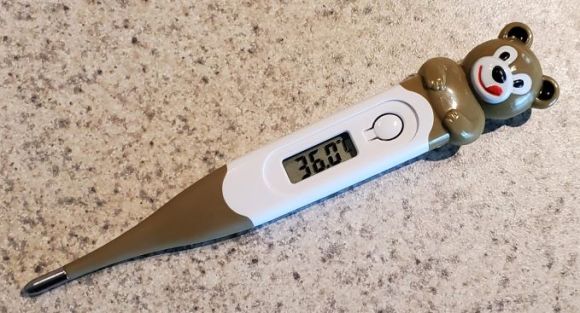
According to newer studies, “normal” body temperature can actually range from 36.1 to 37.1C ((97 to 99F), depending on the time of day and what you’re doing. Your temperature changes slightly over the day, too, and gradually decreases as you get older. Because these are “averages”, some of us are often outside that range, even when we aren’t sick. I’m usually around 36 to 36.6C… cool, eh? The average human resting body temperature, often referred to as “basal body temperature”, has gradually been declining over the past 150 years.

The standard average body temperature of 37C or 98.6F was determined by a German physician, Carl Wunderlich, in the 1850s by measuring millions of axillary (underarm) temperatures from 25,000 patients and calculating the average.

First, note that he used axillary temperatures—the temperature of the armpit is actually 0.5C (1F) lower than when taken orally (under the tongue). It’s interesting that this measurement somehow, over the years, came to be used as a normal oral temperature when what he measured was actually equal to 37.5C or 99.1 if taken orally.

Researchers in the US recently compared recorded body temperature measurements from 3 sets of records: Union Army Veterans of the Civil War from 1862 to 1930; a large nutrition study, the National Health and Nutrition Examination Survey I (NHAINS survey); and the Stanford Translational Research Integrated Database Environment study (STRIDE study). On the graph below, you can see that body temperatures, on average, declined with age and were lower in more recent times. Note: the blue lines are temperatures taken in 1860-1940, the green lines are 1971-1975 and the orange are from 2007 -2017:

They noticed that body temperature rose slightly as the day went by and increased slightly in response to increased room temperature. But the average temperatures also decreased by about 0.03C each decade, even within each set of data, showing that the decrease was not simply due to more accurate thermometers. The trends were consistent in men and women, and different ethnic groups.

They calculated that men’s temperatures have decreased 0.59C since the early 1800s and women (who weren’t included in the army veteran study) had cooled by 0.32C since the 1890s. Given that the older temperatures were taken under the arm, while the more recent ones were taken orally, the total decrease in body temperature is actually greater than that. Since the 1850s our body temperatures have dropped, on average, by about 1C or 2F, and researchers suspect they’re still dropping.

What would cause body temperatures to drop?

Body temperature is an indication of your metabolic rate. A drop in average body temperature suggests our metabolisms must be slower than they once were.

Improved standards of living and sanitation, decreased chronic infections from injuries, improved dental hygiene, fewer cases of tuberculosis and malaria and the use of antibiotics for infections have also likely combined to decrease chronic inflammation since the 1800s. Inflammation and infections increase body temperature, so fewer chronic infections means less inflammation and lower average body temperature in the population. (Note that temperature measurements above 39C were not included in the study as these would indicate a fever associated with an acute illness.) A small study of heathy volunteers from Pakistan, a country that continues to have tuberculosis and other chronic infections, found temperatures that were closer to the averages recorded by Wunderlich in the 1850s.

Better dental care means fewer cases of periodontal disease, a source of chronic inflammation. Use of anti-inflammatory drugs may also be reducing inflammation, with many people taking daily aspirin to prevent heart disease or to treat diseases like arthritis that are inflammation based.

Our heating and cooling systems in homes and workplaces may also have had an influence in body temperature. Air conditioning is now found in 85% of homes in the US. Maintaining a consistent body temperature when the room is too cold or too hot requires energy and increases the resting metabolic rate (RMR). And remember that body temperature is a crude indication of metabolic rate. So, lower body temperature may have also partly resulted from needing to expend less energy simply to adjust to a warm or cold room.

But another factor, not discussed in this study of temperatures, is the possibility that thyroid dysfunction could be influencing average temperatures. Although we now have blood tests to measure thyroid function, low body temperature was once used to diagnose low thyroid. Thyroid hormone replacement is one of the most prescribed medications these days. Autoimmune disease, where the immune system attacks your own tissues, is the most common cause of hypothyroidism, or low thyroid. Could it be possible that some environmental factor is interfering with thyroid function in humans? Scientists believe autoimmune hypothyroidism could be caused by a combination of genes and an environmental trigger. Perhaps a study in the future will identify this cause more precisely and whether it could be contributing to our “cooling”…

So, what should we do with this information?

In spite of good evidence that lower body temperatures are the norm now, many doctors and hospitals continue to use normal values recorded in the 1800s. Normal body temperatures vary in individuals from 36.1C to 37.1C (or 97 to 99F) and sometimes beyond this. It might be a good idea to determine your basal body temperature when feeling fine, so you will know how much it has elevated when you become ill.

It’s best to measure your basal body temperature first thing in the morning, before eating or drinking anything or doing any exercise to determine your lowest normal healthy temperature. This would allow you to more accurately determine when your temperature has increased by more than 1.5C, the point considered to indicate a fever, and when a person should consider treating or at least to look for the cause. Doctors who are aware of temperature variations report they generally look for extremes in body temperature, such as a significant fever that means there’s something wrong or a very low temperature (below 34.5C/94F) that indicates hypothermia.

But should we treat fevers?

Given that fever is a natural response to infection, some have suggested we should let nature take its course, and that fever may even help us fight off an infection. Should we suppress a fever or let it ride? This has been debated since the 5th century BC when Hippocrates first identified fever as part of the immune system’s response to infection. Thomas Sydenham, in 1900, described fever as “nature’s engine which she brings into the field to remove her enemy.” Today we understand fever as a sign of a disease, not a disease itself. The decision of whether to treat a fever is controversial and not well supported by studies, surprisingly.

Should we suppress it or let it ride?

In the “suppress it” camp, it is assumed that fever is noxious, and treating it will make it less harmful and unpleasant. It is also suggested that since it requires energy to maintain the increased body temperature, at some point, the energy cost must exceed the benefit. But neither of these assumptions have been measured or proven. Even febrile seizures, seizures in children associated with high fever, have not been shown in studies to be reduced by preventing fever with medications.

Those who suggest we should “let it ride” when a patient has a fever, advocate that fever is a protective mechanism that enhances immune cell function and promotes antimicrobial activity. They recommend that fever should be left to run its course under most circumstances. And there are a few studies done in the past 15 years that support this approach.

But, despite this evidence, the choice of whether to treat a fever is not well proven scientifically, although one would think it should be after having treated fevers with medications for so many years (aspirin was first formulated in the 1890s). If we take an evolutionary approach, survival of the fittest, it could be that developing a fever may be helpful in fighting off infections, even though inflammation (which causes an increase in body temperature) is associated with many damaging chronic illnesses.

Perhaps the best approach is to treat what is causing the fever whenever possible, rather than the fever itself.

So, some quirky controversies for you this week… Medicine doesn’t always have the answers. As much as we try for evidence-based medicine, some treatments continue to be based instead on standard historical practice, habits, and opinions.

References:

Decreasing human body temperature in the United States since the Industrial Revolution – eLifeSciences.org

Body temperature norms – MedlinePlus

Fever: suppress or let it ride? – Journal of Thoracic Disease

Average normal body temperature isn’t 98.6 anymore and it’s getting lower, research shows – Medical Xpress

Hypothyroidism – Mayo Clinic

#bodytemperature #feverscreening

Categories
Uncategorized

How to talk to someone with depression

Everyone has their ups and downs in life, but major depression is different than feeling sad for a short while after a negative event. Mood disorders, like depression, are very real illnesses that can have serious and sometimes fatal results. They are one of the most common mental illnesses and can affect the body as well as the mind, with physical symptoms like fatigue, stomach complaints, or muscle/joint pain as well as changes in mood.

There are several depressive mood disorders, including bipolar disorder (or manic-depressive illness), and perinatal depression, but major depression (also called clinical depression) is the most common mood disorder. The 2012 Stats Canada survey found that 4.7% of respondents met the criteria for major depression in the previous 12 months, and almost 1 in 8 (12.6%) met the criteria for a mood disorder at some point in their life. American statistics show that over 17 million adults (7.1% of the population) and 1.9 million children aged 3 to 17 experience depression in the United States each year. Women are twice as likely as men to be diagnosed with depression.

Causes

There is no single cause of mood disorders. Several risk factors interact to increase the chance of developing a mood disorder:

  • Family or personal history – Having already experienced an episode of depression or having an immediate family member who is affected don’t guarantee a person will develop depression, but they do increase the risk. Over 50% of those who have had an episode of major depression will develop a recurrence.
  • Traumatic life events – Some are more susceptible to depression when in a difficult or abusive relationship, after a divorce, after a death of a loved one, as a result of low income, poor housing or workplace stress or from other distressing major life events.
  • Chronic medical conditions – Chronic conditions such as stroke, heart disease, obesity, Parkinson’s disease, epilepsy, arthritis, cancer, AIDS, chronic obstructive pulmonary disease (COPD), and dementias like Alzheimer’s Disease can trigger depression, especially if the person suffers from more than one of these.
  • Physical changes – Changes in hormones, neurotransmitters (the chemicals that pass signals from one nerve to the next) or the immune system, a disability or poor quality of life itself are thought to be contributing causes. New research suggests that gut bacteria may also have an influence on brain function and mood.

Symptoms

Although each person is unique and will have different symptoms, there are some that are common:

  • Depressed mood
  • Feelings of guilt, worthlessness, helplessness, or hopelessness
  • Loss of interest or pleasure in activities usually enjoyed
  • Change in weight or appetite
  • Decreased energy or fatigue, even without physical exertion
  • Thoughts of death
  • Poor concentration or difficulty making decisions

Symptoms can be mild or so debilitating the person has difficulty getting out of bed. If these symptoms persist on most days for more than 2 or 3 weeks, it is advised to contact a doctor or mental health professional. It is very important to get medical help right away if a person has recurring thoughts of suicide.

What should you say to someone who has depression?

There are no magic words that will heal a major depression, although talking with a professional over time (“cognitive therapy”) is a form of treatment that can be successful. For family and friends, being comforting and supportive is the best way to help someone manage their symptoms.

Without being forceful or exerting pressure, it helps to ask a person with depression how they are feeling. This gives them space to talk and vocalize thoughts, making them less powerful. Not everyone feels like talking all the time, though, and it’s important to respect that, so ask if they want to talk.

Sometimes just being there can help too. Ask if they’d like some company. Offer to do something fun to distract them from their thoughts, like watching a movie, sharing a meal, or going for a walk or outing. Even being there quietly without speaking can give comfort.

Let the person know you care, even if you don’t understand or know what to do or say. Ask them how you can help or what is best to do or avoid doing. Know that simply saying “I love you” can be supportive.

The best time to talk is when both of you are calm and not distracted or tired. Never bring up depression during an argument or times of high stress. Avoid spending all your time together talking about mood problems and be sure to take care of your own needs, too, if you feel uncomfortable. Often talking about good times or doing activities the person once enjoyed can be helpful.

What NOT to say…

But here are some examples of things you might want to say that are not usually helpful:

  • “Have you tried eating better/exercising more/ getting outside?” Although lifestyle changes can help improve the effectiveness of depression treatment, it is better to be supportive, leaving treatment to the professionals. Some people may find these suggestions disrespectful, as though you think a minor change in lifestyle could easily cure their major depression.
  • “It’s not that bad.” Or “But you look fine!” If you appear to doubt or disbelieve what they are saying, you are invalidating their feelings and they may be unlikely to talk about them in the future. Minimizing their feelings can make the person feel ashamed and alone.
  • “I know how you feel.” Even if you have suffered a major depression yourself, you cannot know what another person is feeling. You also don’t want to shift the discussion to yourself when a person is expressing their deep feelings.
  • “You’re making me feel bad.” While listening to a person sharing their thoughts and feelings of depression can be overwhelming, don’t blame them or make them feel guilty. However, loving a person who is depressed can be difficult and it’s OK to set boundaries if necessary or get external support for yourself from friends, family or a therapist.

Like everyone else, I’ve had times when life events have made me sad and depressed but, fortunately, not a major depression. My husband has always helped by encouraging me not to focus on the event for long periods of time and to keep it in perspective and balance with the good parts of life. We can all try to be that person for others, whether they are dealing with major depression or a depressing life event, by being loving and supportive and asking what they need.

References:

What to say to someone with depression – Medical News Today

What is Depression? – Government of Canada website

#depression

Categories
Uncategorized

How to Spot Fake News

The internet can be an amazing source of information, but some health news reports we see there can be based on sketchy science, and many social media posts are often simply an opinion based on hearsay and rumors. How do you tell what is real news and important information we should act on?

McMaster University’s Optimal Aging Portal suggests 6 tips to identify health information we can trust:

  1. Look at the source – Look for claims or recommendations that are supported by studies, ideally published in a credible academic journal, or ones that are based on information from a government, university or other site that is unlikely to have a biased agenda.You may have noticed I almost always have a list of references at the bottom of my blogs. I want you to be able to check out where my information and facts came from.
  2. What’s in it for them? – Years ago, when the internet was new, I had a pharmacy student with me while searching for information on the herbal medicine, ginko. I quickly found what looked like a perfect site. My student didn’t say a word, but scrolled down and pointed to a button that said, “click here to buy”. The purpose of the website was to sell product. I looked through the site with a different eye and quickly noticed the statement “this medicine is safer than aspirin”… as a pharmacist, I know that aspirin can cause severe bleeding in the digestive system in some people. Suddenly, I realized information can be presented in a way that encourages people to buy when they have something to sell you, rather than just to inform. Even studies will skew to emphasizing the positive and explaining away the negative if they are trying to keep their sponsor happy. We can all learn from our students, and she was much more savvy than I was back in the mid-90s!
  3. How large was the study? – The larger a study is, the less likely the results happened by chance, and the more likely the results will apply to the general population. If, say, a new vaccine was tested on 10 people and none got sick on exposure to the virus, there would still be the possibility that all 10 could be individuals who were naturally resistant. But if it was tested on 1000 people, it is more likely this group would be representative of the general population.
  4. Was there a control group? – Good quality studies are “randomized” (they select participants randomly) and they compare the treatment group to a “control” group that does not receive the treatment. The control group helps to account for factors other than the medication or procedure being studied that could influence the result. Studies of pain medications, for example, sometimes find that as many as 90% of the control group can respond to a placebo (or sugar pill that looks like the medication). This shows that medications can sometimes have a positive effect based simply on the belief that they will work. Scientists believe this happens through an action of our immune system, and it is known as the “placebo effect”. Amazingly, the placebo effect can work even when the patient knows it’s a placebo. So, it’s very important to factor in this effect when evaluating a medicine or procedure.
  5. How long did the study continue? – Short-term benefits from treatments are important (e.g. how quickly does an antibiotic cure an infection?) but studying for a longer time can provide information about long-term benefits and what side-effects or harms can be caused by the treatment. Also, repeating the study in a different location and, ideally, with different researchers is important to verify the study results.
  6. Does this information/study apply to me? – We are all individuals with our own characteristics, but studies are designed to predict average results in a large population. Vaccines are a good example of this: overall, vaccines reduce the chance a disease will spread through the population. But there are certain individuals who have experienced negative reactions and should not take vaccines, and others (e.g. with a weak immune system) who do not respond to vaccines. It is important to identify these individuals and find other ways to protect them from the disease. However, the overall benefit to the rest of the population from vaccines is still valid. In fact, when most of the population is vaccinated against an infection, it cannot spread and this will protect those who cannot take the vaccine or who do not respond to it.
  7. — You may also have your own needs, preferences and circumstances to consider when you make a health decision. For example, those with breathing problems such as emphysema or asthma, may not be able to tolerate wearing a filtering mask to protect them from exposure to the coronavirus when in public. However, if those around them wear one, even a simple cloth mask, they will be protected.
  8. — It is beneficial to talk to a health professional that knows you, like your doctor, nurse practitioner or pharmacist, to help you interpret health information and make health decisions.

Lately, there has been a lot of news about possible treatments and vaccines for the coronavirus. We are all anxious for a cure or prevention so we can get back to our normal lives, so early results of studies can make the news even though the testing process is really just beginning. Science takes time…results must be tested and proven and, as with hydroxychloroquine, initial suggestions of positive results may be proven incorrect as the testing process evolves. We all need to realize that “preliminary results” are just that… a suggestion that this might work, but just an early suggestion. We need to remember we’re in this pandemic for the long haul and continue the tested prevention strategies of physical distancing, hand washing, staying home and now, wearing a mask when in public when distancing cannot be maintained. It will take time to find a cure or prevention. We want to stop the current spread and prevent the second wave that scientists predict will happen.

So, it’s always a good idea to be cautious about health information in the news and especially on social media. Always look for the original source of the information—who is making the claim—before you act on it or share it with others, no matter how logical it might sound.

References:

Don’t believe the hype: 6 tips to identify trustworthy health information—McMaster Optimal Aging Portal

Categories
Uncategorized

Einstein and Feynman’s advice for learning…

I came across an article that really resonated with me on a site called Mind Café…about 2 secrets to learning faster and remembering more of what you learn, as suggested by Albert Einstein and Richard Feynman, 2 famous physicists. Let me summarize it for you…

The first tip, from Albert Einstein, is to enjoy what you are learning… my take on that is to learn about subjects you are interested in. For example, I’ve been studying Spanish. I love to go to Spain, and it’s been helping me to understand signs and menus there. I’m still trying to learn to speak better, and that’s my current challenge.

Of course, sometimes you need to learn something that is, shall we say, less than exciting to advance in your job or to continue to do the job you’re already doing correctly. But, at the very least, you can set yourself challenges and take satisfaction on the achievement when you finish.

Increasingly, learning is being presented in an entertaining way. “Gamification” of learning, where lessons are turned into a game, is designed to hold your attention on the material, make it more fun and challenging, and give you a series of rewards throughout the program to give a feeling of achievement. Some learning games even create a competition between users to inspire them to study harder and longer!

The second secret, from Richard Feynman, is to teach others what you are learning. In addition to repeating the material as you do this, you also need to understand a concept well to explain it to another person. Even being able to summarize the essentials of what you are learning, requires you to have a good understanding of what you’ve been reading or studying. Feynman explained that the hallmark of true genius is the ability to explain a complex subject very simply… simple enough for an 8-year-old to understand! He was noted for being able to do this with quantum physics.

Using the material you have learned is known to be a good way to remember more of it, especially for adults. And teaching it to someone else is an effective way to use your new knowledge. Often the person you are teaching will have questions that will make you think more deeply about what you have learned, solidifying the new memories you have formed.

I think these two tips, enjoying what you learn and teaching or explaining it to others, resonated with me because (without realizing it) this is what I’ve been doing since I retired. I use a game called Duolingo every day to learn Spanish, and I write this blog to tell others about what I’ve been reading and learning! With my blog, not only do I constantly read so I will have something interesting to write about, I learn more about writing through this weekly practice I really enjoy. Interaction with readers is the icing on the cake. It’s so nice to hear from people and know that some actually read or listen to my articles!

Life-long learning is something that was not only encouraged but required when I was a practicing pharmacist. I still review educational programs for Canadian pharmacists, so I guess I never stopped my pharmacy learning. The practice of pharmacy constantly changes—new drugs, new regulations and, these days, new diseases to learn about. With the current pandemic evolving, there is new information almost every day, requiring us to change our behaviour. Even the experts are learning constantly about this virus. While this learning may not be enjoyable, I think we all realize how important it is for us to get it right. For some, it could be illness or death, for those around us if not for ourselves.

Lastly, learning something new keeps your mind sharp and your brain functioning, helping you to age well. And it helps to make you a more interesting person to socialize with too! You’ll always have lots to talk about when you keep learning new things.

So, leave a note below in the comments about something you’ve enjoyed reading or learning recently. It will help you remember and learn better, and maybe you’ll interest other readers in your favourite topic!

Reference:

2 Secrets to Learning Anything Faster: Lessons From Albert Einstein and Richard Feynman — Mind Cafe

#agingwell #lifelonglearning

Categories
Uncategorized

COVID is in the air…

A new study has found that “Airborne transmission of COVID-19 represents the dominant route for infection” and “wearing of face masks in public corresponds to the most effective means to prevent interhuman transmission”.

These are conclusions from a study done by the PNAS (The Proceedings of the National Academy of Sciences of the USA), published June 16th. The combination of airborne transmission plus asymptomatic carriers is a recipe for an epidemic that is difficult to control. And that’s what we’re seeing.

Asymptomatic spread

We now know that there is a high rate of viral spread through asymptomatic carriers—people with no symptoms. Estimates vary from 25% to over 50% of cases originating from those who never get symptoms or have not yet started to show symptoms like fever and cough.

Airborne transmission

And, while 2 meters (6 feet) is known to greatly reduce virus transmission, other factors like air currents, temperature and humidity, can affect the length of time viral droplets and mists remain in the air and are able to infect those who inhale them. This makes it possible to transmit the virus in some situations even when physical distancing is maintained, and hands are washed properly. And we’ve all been in situations when you can’t keep even 1 meter (3 feet) distance.

Enter the mask…

This new study calculates that thousands of cases have been prevented in cities and countries where governments have mandated masks must be worn in public places. By examining changes in the rates of new infections after masks were mandated to be worn by everyone in public, the researchers estimate that over 78,000 infections were prevented by masks in Italy and over 66,000 in New York City from April 17th to May 9th.

The study looked at rates of new infection in various countries, and how the rates changed as they implemented various measures, as a way to scientifically determine the effectiveness of different strategies. While some countries, like China, mandated lock-downs, hand hygiene and wearing masks all at the same time, other countries made these changes separately, allowing researchers to determine the effect of each measure.

By analyzing the changes in the curve of disease cases when each new strategy was started in Wuhan, China, Italy and New York City between January 23rd and May 9th, they were able to illustrate the impact of each measure. The study showed that, while physical distancing made a small difference, the change was greater when masks were mandated to be worn by everyone when in public.

The reduction in new cases of COVID-19 when masks were mandated is clearly visible on graphs—with a “flattening of the curve” easily seen. This contrasts with the rest of the world where physical distancing, quarantine and isolation continued to be used alone. Here is one of the graphs… the circled dots show when masks were mandated to be worn in public in Italy and New York City:

You can see that the curve of the pink line representing NYC doesn’t change significantly as it crosses the 2 lighter blue lines representing social distancing and stay-at-home orders, but it drops noticeably after the circled dot marking the mandating of masks in public.

Researchers concluded that “wearing of face masks in public corresponds to the most effective means to prevent interhuman transmission, and this inexpensive practice, in conjunction with simultaneous social distancing, quarantine and contact tracing, represents the most likely fighting opportunity to stop the COVID-19 pandemic.” They also stated, “Other mitigation measures…are insufficient by themselves in protecting the public.”

Virus behaviour

We now know the main way of passing the coronavirus is breathing in air after an infected person has exhaled. Because of the high rate of asymptomatic transmission, chances are, this person wouldn’t even know they were infected. Washing your hands won’t prevent you from inhaling infected droplets. But masks can. This virus likes to hang out in the nose (as compared to SARS and MERS that preferred to stay in the lungs) so it is more likely to be breathed or coughed out that those previous similar infections. Shouting, singing, and even talking loudly can send a mist of tiny viral droplets into the air, some as an aerosol that can linger for much longer than suspected initially. Hand washing can protect you from virus in larger droplets that have settled on surfaces, and physical distancing reduces the number of particles that reach you, but masks are needed to prevent those who are sick but not diagnosed from unknowingly creating a contaminated aerosol mist that others can inhale.

World Health Organization (WHO)

However, the World Health Organization (WHO) insists that “masks alone are not a replacement for physical distancing, hand hygiene, and other public health measures.” But, they say, cloth masks may provide a “modest reduction in transmission” by:

· “reducing the risk of asymptomatic carriers spreading the virus”

· “reminding the population that the pandemic is ongoing and everyone can play a role in stopping it” as well as

· Stimulating the economy by “encouraging the public to create their own masks.”

They also suggest there are disadvantages to cloth masks worn by the public:

· Touching the mask too often (usually due to a poor fit)

· Potential to cause headaches, breathing difficulties or skin irritations and

· The possibility of creating a “false sense of security” as they are not 100% protective

Note that these disadvantages are not supported by objective research. I find it odd that a high level of proof is required to recommend a measure, but they readily share disadvantages with no objective studies. I can’t help wondering why they are so hesitant to recommend a safe measure like masks, especially now that plenty of supporting science is emerging for this strategy. You can read or listen to more about reasons to wear or not wear a mask in my blog “Masks 4 All” (Blog or audio track).

And this week (to add to the confusion) the WHO stated there was no evidence of asymptomatic virus spread, despite many studies that found this is a major problem with COVID-19. They later explained that they were referring to non-symptomatic people who never showed symptoms but had had a positive test, not those who were pre-symptomatic and developed symptoms within a day or two. Pre-symptomatic people are known to be highly infectious. There are plenty of examples of “super spread” events involving infected individuals who progressed to symptoms soon afterward.

This certainly demonstrates the importance of clear communication. As one friend said, whatever they tell us today will probably change by next week. Confusing messages create mistrust of advice from authorities and result in fewer people following recommendations to limit viral spread. We are seeing this especially in increased numbers of infections in young people in their teens and 20s.

Meanwhile, the WHO reported the highest number of new cases yet on June 8th, bringing the global total to 8 million, and they stated that the pandemic is worsening. We need to continue physical distancing, hand washing, and staying at home as much as possible. And there’s enough evidence now to know that adding a mask whenever we cannot stay away from others will further reduce new cases. It’s so easy to become complacent… but we’re not out of the woods yet. In fact, you could say we’re still in the middle of the forest!

In Canada…

In Canada, British Columbia and New Brunswick (my province!) are leading the way with good control and low numbers of cases. Experts attribute this to:

· strong leadership with clear communication and quick decision-making,

· better data transparency with open reporting of cases and

· a high level of cooperation by the public. New Brunswick’s mainly rural population is also believed to be a helpful factor.

So, why do I keep talking about masks?

I feel compelled to keep talking about masks when I read they work but still see how few people in my community wear them. While reports suggest there are very few cases in our area, it’s only a matter of time until one arrives here, as happened recently in northern NB, and without masks the virus can quickly spread until it’s detected and those affected are traced and isolated. It’s even more important in urban areas with higher population density.

Governments are too often slow to respond, but the evidence is clear now. If at least 80% of people wear masks when in public places, the pandemic can be controlled. If you can’t wear a mask for health reasons, it’s OK as long as the people around you wear one. If you dislike wearing a mask or can’t wear one, minimize your time in public places—and just stay home. That works too! But, most of us need to do our part and find some type of face covering we are comfortable wearing, if we want to stop the spread of COVID-19.

So, what’s your favourite type of mask? Are you able to adjust it properly so it feels comfortable? I keep searching for the perfect design…

References:

Identifying airborne transmission as the dominant route for the spread of COVID-19 – PNAS

A modelling framework to assess the likely effectiveness of facemasks in combination with ‘lock-down’ in managing the COVID-19 pandemic – Proceedings of the Royal Society

Geography, leadership and sheer luck: Why BC and NB flattened the curve so quickly – CTV News

#domaskswork #howdoesCOVIDspread

Categories
Uncategorized

Masks and Condoms…More in common than you think!

Oooh… really?

I have a riddle for you this week. How are face masks and condoms alike?

Answer: Most people would rather not use either of them! But…

Masks and condoms both protect the person wearing them, they reduce the chance of passing a disease to the person you are with (even if you don’t know you don’t have one), they are a minor inconvenience and they’re inexpensive. They both have also become more popular because of dangerous diseases—COVID-19 for masks, and HIV/AIDS for condoms. And neither works perfectly…but they’re better than using nothing at all! But some people still don’t want to use them, even though they know they really should!

People all over the world are wearing masks in public now as part of the strategy to slow the spread of the coronavirus and save lives. But some North Americans are refusing to use this minor inconvenience even though there is plenty of evidence now that face coverings of any kind can make a difference. Are people just too uncomfortable? Embarrassed? Don’t believe the experts? I was curious so, of course, like any typical baby boomer, I started reading… and I learned there are many different reasons people will refuse to wear a mask.

Culture

First, wearing a mask isn’t part of our culture here in North America (except among health care workers) and people often feel uncomfortable with change. Other parts of the world, like Asia, had already started using masks in public when previous viruses that didn’t reach here caused deaths. They also used them to protect themselves from high levels of pollution in dense cities. Apparently, wearing a mask when you’re ill there is so imbedded into the culture, it is considered very rude and inconsiderate to cough or sneeze into your hand or sleeve—you are expected to wear a mask if you are sick, even with a cold. So, the culture was already different in Asian countries. However, masks were accepted quickly in Europe and Scandinavia when they were threatened by COVID-19, so that’s only a small part of the explanation.

Vanity

Our face is what we show the world—part of what makes us attractive to others and recognized by friends. Women wear makeup to enhance their looks. Men show their character through grooming, facial hair, and a healthy smile.

One article I read, even suggested some people feel wearing a mask makes them appear weak and overly worried about an invisible threat. Healthy, strong people usually only get a mild case, so wearing a mask must suggest you aren’t healthy and strong, right?

But, because we now know that the virus is easily spread by those with no symptoms, we all need to think about the people we could unknowingly pass the virus along to. How could you not feel guilty if you caused someone else to suffer and possibly die? Young, healthy people wear masks to protect others more than themselves… caring for others isn’t a weakness.

Communication

A large part of communication is visual. The expression on a face tells a lot of what a person is thinking. A smile brightens someone’s day. Some people worry about that loss of communication, and it’s important. But they say the eyes are the window to the soul…perhaps we can learn to read expressions in the eyes better, just like those who are blind become more sensitive to sounds. And, like the blind, we can learn to be more sensitive to the tone of voice that speaker is using.

But another option to improve visual communication and facial recognition, is the face shield. Although not considered quite as effective as a well-made mask, shields still make a difference in reducing dispersion of droplets so use will reduce the spread of the coronavirus. There is also an option for children, who might have difficulty with a mask, with the shield attached to a sun hat. Note that masks are not recommended for children under age 2.

Physical discomfort

Many people find wearing a mask just plain uncomfortable. It can be stuffy and hot, feeling your breath in your own face. The elastics can make your ears sore, the fabric can make your nose itchy…

The key here is to have a mask that fits properly. You want it snug but not so tight it pulls your ears forward. It should have enough room for your nose and be made of a material that is smooth enough not to irritate your face. It needs to fit closely enough that air doesn’t pass around the edges and be “breathable” enough that you can breathe easily through the fabric. And, especially as summer arrives, you want it to be absorbent so it will stay cooler on your face. I hope manufacturers and researchers are working on this! Since it is likely to be over a year until we have a vaccine for everyone, we need good quality reusable masks and information on the best materials to use if making them yourself.

Confusion

Another problem in convincing people to wear masks in North America, is the confusion over whether we really need to wear one in public. Initially, authorities told us masks were not necessary and might even increase our risk but, with research, this has been shown to be incorrect. Recommendations have gradually changed from “don’t wear a mask” to “they might help” to “you should/must wear a mask when you cannot stay more than 2 meters (6 feet) away from others”. The initial recommendations were based on a lack of information (because the virus is so new) and the worry that the public would buy all the available masks, leaving none for front line health care workers who needed them more. Enter, the homemade or store-bought reusable cloth mask…problem solved!

We know that staying at least 1 meter (3 feet) apart lowers the risk of catching the virus and that 2 meters (6 feet) is better, and that a mask isn’t needed if you can maintain that physical distance. But there are lots of places that this is just impossible…like at the Costco! There are just so many aisles and corners, and people going everywhere, that you never know when you’ll end up too close to someone you don’t know. And some services, like the post office, paying for purchases, or getting your hair done, require a small distance between people to complete the service. Wearing a mask in some cases is necessary for the worker and the client to stay safe. Essentially, masks allow more people to go back to work with much lower risk to their health and for the safety of those they serve.

Political

It’s hard to imagine, but the health-related issue of wearing a mask has become a political issue in some areas. Some people tolerate change better than others, and I suspect that the wholesale changes we’ve endured with self-isolation, quarantines, and physical distancing are taking their toll on the mental health of many. Demanding that they also cover their face has just been too much for some, adding to the mental stress that’s already sky-rocketed over the past few months. Refusing to wear a mask when required is a way of rebelling, of demanding a return to a normalcy we can’t safely have right now. Life is hard for so many in 2020. It will be difficult to find a cure for all of what’s happening, but we have to keep moving ahead, one step at a time.

And me? Do I wear a mask?

I’m what you’d call an “early adopter” … I started wearing a mask in mid-March when I arrived home from a winter vacation a month earlier than planned. My husband and I were in Spain as the country was shutting down due to the virus and we were lucky to get a flight home as quickly as we did. We tried to buy masks to protect ourselves on the 3 flights and 4 airports we had to pass through, but there were none left for sale anywhere. I started making masks for myself, friends and family as soon as I arrived home, knowing what was coming.

I also accepted covering part of my face more readily than many would because of my past experiences. As a hospital pharmacist, I prepared sterile medicines and was required to wear a surgical mask (sometimes for hours at a time) to protect the products I was making. We all breathe out little droplets containing bacteria when we talk and exhale and just a single droplet falling on the medicine meant it would no longer be sterile. Later, as a compounding pharmacist, I worked with potent drugs in powder form. I needed to upgrade to an N-95 mask then to filter the air I was breathing, so I wouldn’t inhale powders that escaped into the air. So, I was used to the concepts of protecting myself and others by wearing a mask.

Of course, some people cannot tolerate wearing a mask—for example, those with breathing problems like asthma or emphysema, those with mental health problems, or children under 2 years. But, as with vaccines, if those who can wear a mask do it, those who can’t will be protected. Recent modelling suggests that, if 80% of people wore a cloth mask in public, the spread of the virus could be stopped. Over 90 countries now require masks to be worn in public places and countries that adopted this policy early along with other measures all have had less than 1000 deaths due to COVID-19.

But we all need to realize that most of us only need to wear a mask for short periods of time—only when we are not sure we can stay at least 2 meters away from others. I keep one in my pocket or purse whenever I go out so I can slip it on when needed. Here in New Brunswick, Canada, we are told we must put one on when entering a public place, but we can remove it if we see that we will be able to keep our distance from others once inside.

I have never had to wear mine for more than an hour at a time. It is different for workers, though, and they should have several washable masks, so they can change to a fresh one every few hours. They would also benefit from breaks during the day in a place where it’s safe to remove the mask for a while. But, like health care workers, it’s something you just get used to because it’s necessary.

And what about you?

Have you started wearing a mask when you can’t keep the required physical distance from others? Are there other reasons not to wear a mask that I haven’t discussed? Please send me a comment!

References:

The psychology behind why some people won’t wear masks—CNN https://www.cnn.com/2020/05/06/health/why-people-dont-wear-masks-wellness-trnd/index.html

A Doctor Explains Why 45% of All Americans Refuse to Wear a Protective Mask—Forbes https://www.forbes.com/sites/johnbbrandon/2020/05/06/a-doctor-explains-why-45-of-all-americans-refuse-to-wear-a-protective-mask/#2a188b29213d

Why are people refusing to wear masks amid coronavirus threat?—KSAT.com https://www.ksat.com/news/local/2020/05/27/why-are-people-refusing-to-wear-masks-amid-coronavirus-threat/

Refusing to Wear a Mask Is a Uniquely American Pathology—SLATE https://slate.com/news-and-politics/2020/05/masks-coronavirus-america.html

Over 100 health leaders to governors: Require masks to help contain the coronavirus—USA Today https://www.usatoday.com/story/opinion/2020/05/14/require-masks-stop-coronavirus-spread-over-100-health-leaders-column/5182076002/

#whywearamask #howeffectiveareclothmasks